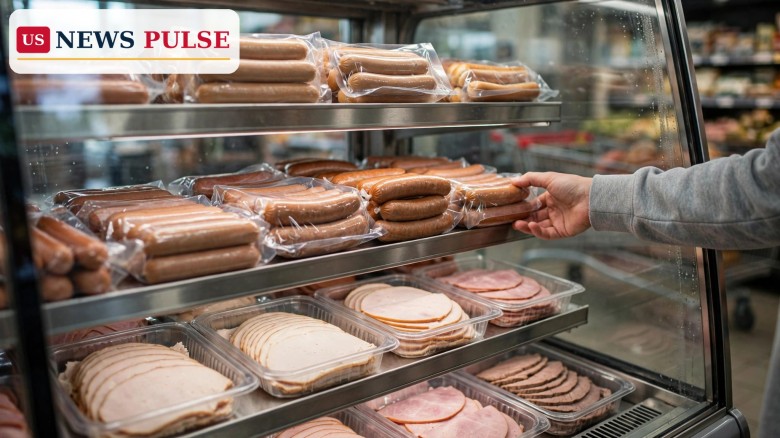
The Kayem Foods recall covers about 1.58 million pounds of ready-to-eat meat and poultry products sold across the United States, after federal food safety officials said the products may have been stored at unsafe temperatures. The recall, announced by the U.S. Department of Agriculture's Food Safety and Inspection Service (FSIS) on October 17, 2026, is the agency's most serious kind: Class I, meaning there is a reasonable probability that eating an affected product could cause serious adverse health consequences or death.
No illnesses linked to the recalled products had been confirmed when FSIS published its notice, and that point matters. This is not a recall built on a confirmed outbreak. It is built on a broken cold chain: a warehouse cooler that drifted out of temperature, a delivery that arrived warm, and a long list of products that are normally eaten without any further cooking step that might kill bacteria.
That combination is why FSIS is worried about home refrigerators. Ready-to-eat hot dogs, sausages, bacon and deli meats can sit in a fridge for days or weeks after purchase, and the agency said plainly that some of the recalled product may still be in consumers' refrigerators. If you have one of these products, the advice is simple: do not eat it. Throw it away or return it to the place of purchase.
FSIS published its recall notice on October 17, 2026, under recall number 026-2026. Kayem Foods Inc., a Chelsea, Massachusetts, establishment, was recalling approximately 1,584,361 pounds of ready-to-eat meat and poultry products because they may have experienced temperature abuse during storage. The products, of various weights, were produced approximately March 31, 2026, to October 7, 2026, and shipped to retail and foodservice locations nationwide and in Hong Kong.
The problem came to light after a retail customer complained on October 1, 2026, that products had arrived warm at delivery. Kayem investigated and determined that various ready-to-eat products had been stored in a warehouse cooler that experienced temperature deviations. In its own recall notice, the company attributed the issue to a cooling-system malfunction at one of its warehouses. FSIS, for its part, described the trigger in the same terms: a complaint about warm product temperatures at the point of delivery, followed by an investigation that found temperature deviations in a warehouse cooler.
Temperature abuse is a specific food-safety failure, not a vague one. Ready-to-eat products are designed to be eaten as sold, without a cooking step at home. Their safety therefore depends on the cold chain holding from the plant to the warehouse, to the store, to the home fridge. When that chain breaks, bacteria that would otherwise be kept in check can grow, and there is no later step in the kitchen to undo it. That is the logic behind a Class I classification even in the absence of confirmed illness: the risk is the reasonable probability of serious harm, not a body count.
FSIS also said it routinely conducts recall effectiveness checks, verifying that recalling firms notify their customers and that steps are taken to make sure the product is no longer available to consumers. When available, retail distribution lists were to be posted on the FSIS recalls page. At the time of the announcement, FSIS had not named specific stores or restaurants that received the products, beyond the nationwide scope of the shipment.
Kayem Foods is a Massachusetts processor with a long history in the region's meat business, and the recall list reaches well beyond a single brand. That is common in a plant-level recall: one facility makes products under several names, and when a storage failure touches that facility's output, every affected brand goes on the list. The result is a recall that looks, to a shopper, like a whole deli counter rather than one product.
The timing also matters for anyone checking a fridge now. Products produced as far back as March 31, 2026, are included, and many ready-to-eat meats carry long refrigerated shelf lives, especially vacuum-packed items. A package bought weeks ago, or one still sitting in a second fridge or a foodservice cold room, could still match the recall even though the October 17 announcement feels like old news. FSIS's warning that some product may be in consumers' refrigerators was written precisely for that situation.
It is also worth being precise about what this recall is not. FSIS did not name a pathogen, and no specific bacterium was identified in the notice material reviewed for this article. The hazard is temperature abuse during storage, and the Class I classification reflects the risk that abuse creates. Shoppers should not assume a particular organism is involved, and should not assume a product is safe simply because it looks and smells normal. Temperature-abused product can look entirely ordinary.
The recall also landed in a busy season for food-safety alerts in the United States, with recent weeks bringing recalls and warnings across categories from pain relievers to produce to seafood. That context does not make any single recall less important; if anything, it makes the checking habit more important, because the products involved are everyday items bought on routine shopping trips.
The recall covers ready-to-eat meat and poultry products including hot dogs, sausages, bacon and deli meats such as ham, turkey and bologna, sold under multiple brand names. According to a breakdown of the federal product list, the brands include Kayem's own lines, among them Old Tyme, Natural and Lower Sodium products, plus Fenway Franks, the 14-ounce package listed under UPC 003077101114.
Several other brands made in or shipped from the same operation are also included, according to that breakdown: Al Fresco chicken sausages, chicken patties, chicken meatballs and oven-roasted turkey breast; McKenzie Natural Classic Franks, liverwurst, Angus beef, bacon and ham products; Triple M Budaball Ham, Chef Delight Tavern Ham and boneless ham steaks; Deutschmacher honey ham and liverwurst; Jordan's Ballgame Treats Franks and Natural Casing Franks; and Essem, Genoa and Winnisimmet St. Butchery frankfurters, hot ham and slow-smoked bacon. The list also covers kielbasa, a Polish loaf, extra-lean corned beef and original bologna.
The brand name alone is not enough to establish that a particular package is affected. Shoppers should check the product label and UPC against the FSIS product list, and look for the establishment numbers EST. M/P 7839, EST. P 20935A and EST. M 9520 inside the USDA mark of inspection. Those numbers, together with the product name and UPC, are the identifiers that decide whether a package in your fridge is part of the recall.
Walmart has said it sold affected products at stores in Connecticut, Maine, Massachusetts, New Hampshire, New York, Pennsylvania, Rhode Island and Vermont. That is a useful geographic clue for shoppers in New England and the Northeast, but it is not the limit of the recall: FSIS said the products were shipped nationwide, to retail and foodservice locations, and also to Hong Kong. A package bought outside the Walmart states can still be affected if its label and establishment number match.
One date detail deserves care. FSIS gives the approximate production period as March 31 to October 7, 2026. Kayem's own October 16 announcement described the affected products as those stored and shipped between June 7 and October 14. Those ranges describe production on one hand and storage or shipping on the other, and they do not replace the product-specific label and UPC checks. When in doubt, check the identifiers rather than relying on a purchase date alone.
FSIS stated its position without ambiguity. "There have been no confirmed reports of illness due to consumption of these products," the agency said in its notice, adding: "Consumers who have purchased these products are urged not to consume them. These products should be thrown away or returned to the place of purchase." Anyone concerned about an illness was advised to contact a healthcare provider.
Kayem's own account focused on the cause. The company attributed the problem to a cooling-system malfunction at one of its warehouses, a description consistent with FSIS's finding of temperature deviations in a warehouse cooler. The company also gave consumers a direct route for questions: Kayem Foods Customer Service at 800-426-6100, Monday through Friday from 7:30 a.m. to 4 p.m. Eastern Time, or by email at info@kayem.com. Media questions were directed to the company's media spokesperson.
For general food-safety questions, FSIS pointed consumers to the toll-free USDA Meat and Poultry Hotline at 888-MPHotline (888-674-6854) or MPHotline@usda.gov, and to the online Electronic Consumer Complaint Monitoring System, available 24 hours a day, for reporting a problem with a meat, poultry or egg product. Those channels matter because a recall of this size generates exactly the kind of question no article can answer for an individual package: is this specific UPC, with this specific establishment number, on the list? The hotline and the product list can answer it.
The Kayem Foods recall matters for three reasons. First, scale: 1.58 million pounds is a very large recall, and it covers products that are staples rather than rarities. Hot dogs, sausages, bacon and deli meats are lunchbox and cookout foods, bought in bulk and eaten by children and adults alike. A recall at this scale touches ordinary weekly shopping, not a niche product.
Second, the nature of the hazard. A temperature-abuse recall is harder for a shopper to spot than a recall for a visible defect or a wrong label. There is nothing to see on the package. The only defences are the label, the UPC and the establishment number, and the discipline to check them. That is why FSIS framed its advice as a fridge check rather than a warning about a single product: the risk hides in plain sight among familiar items.
Third, the foodservice dimension. These products were shipped not only to retail stores but to foodservice locations, which means restaurants, cafeterias and other outlets that serve ready-to-eat meats could also hold affected stock. A consumer-side fridge check is only half the picture; foodservice operators need to check their own cold rooms against the same list, and FSIS's effectiveness checks exist to push that process along.
Related reading on US News Pulse: ValuHealth acetaminophen recall: 100,134 bottles pulled over wrong label; Virginia oysters Salmonella outbreak: 27 sick in 12 states after recall; Darwin's cat food Salmonella alert: FDA warns two lots after cat hospitalised.
The immediate next step belongs to shoppers and foodservice operators: check labels and UPCs against the FSIS product list, look for the three establishment numbers, and throw away or return anything that matches. Do not taste a product to decide whether it is safe, and do not rely on appearance or smell.
FSIS will continue recall effectiveness checks and, when available, post retail distribution lists on its recalls page. Those lists, when they appear, will give a clearer picture of exactly which stores and foodservice locations received the products. Until then, the nationwide scope of the shipment means no region should assume it is clear.
Kayem, meanwhile, will face the longer task of demonstrating that the cooler failure has been fixed and that its cold-chain controls can be trusted. For a processor whose products are eaten without further cooking, that is not a paperwork exercise: it is the core of the business. Consumers, for their part, can watch for any expansion of the recall or update to the product list, and can use the Kayem customer service line or the USDA hotline for package-specific questions.
Kayem Foods Inc. of Chelsea, Massachusetts, recalled approximately 1,584,361 pounds of ready-to-eat meat and poultry products because they may have experienced temperature abuse during storage. FSIS announced the recall on October 17, 2026, and classified it as Class I, its most serious category.
Ready-to-eat hot dogs, sausages, bacon and deli meats such as ham, turkey and bologna, under multiple brands including Kayem, Fenway Franks, Al Fresco, McKenzie, Triple M, Deutschmacher, Jordan's, Essem, Genoa and Winnisimmet St. Butchery. Check the product label and UPC, and the establishment numbers EST. M/P 7839, EST. P 20935A and EST. M 9520 inside the USDA mark of inspection.
No confirmed reports of illness had been recorded at the time of the FSIS notice. The Class I classification reflects a reasonable probability of serious harm from temperature-abused ready-to-eat products, not a confirmed outbreak.
Do not eat it. Throw it away or return it to the place of purchase. For questions, contact Kayem Foods Customer Service at 800-426-6100, Monday through Friday from 7:30 a.m. to 4 p.m. Eastern Time, or the USDA Meat and Poultry Hotline at 888-674-6854.
Compare the product name and UPC on your package with the FSIS product list for recall 026-2026, and check for the establishment numbers EST. M/P 7839, EST. P 20935A or EST. M 9520. The brand name alone is not enough, because only specific products from the Chelsea operation are included.
Sources for this article: USDA FSIS recall notice for Kayem Foods Inc., October 17, 2026 (recall 026-2026); Simply Recipes reporting on the recall, including the Walmart state list and Kayem customer service details; and a breakdown of the federal product list covering the affected brands.
Leave a Comment



 | Today's Date: