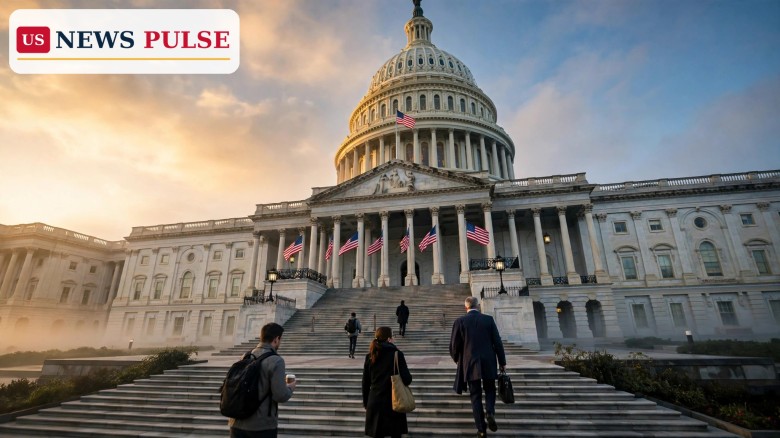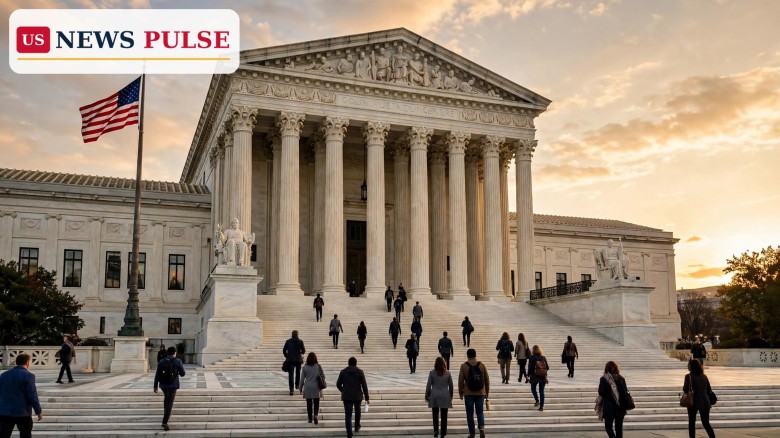
No name from the Supreme Court midterms contest will appear on any ballot on Tuesday, November 3, 2026 — yet the Supreme Court midterms fight may be one of the most consequential contests of the year. Voters will decide control of Congress, and with it, whether President Donald Trump can fill a future vacancy on the nine-member court, whether Democrats can block his nominees, and whether long-stalled proposals to expand the court, set term limits for justices or impose a binding ethics code ever get a vote.
That is the paradox at the heart of the final days of the campaign. The president and the justices are not on the ballot, but both parties are campaigning as though the court itself were. Republicans are warning their voters that a Democratic Senate would stall judicial confirmations and thwart the president's agenda. Democrats are warning theirs that a Republican Senate would hand Trump a fourth appointment and entrench the court's 6-3 conservative majority for a generation.
With four days to go before Election Day, both parties have made the court a closing argument. Senator Steve Daines of Montana, who leads the Republican campaign committee for Senate candidates, put the message bluntly on Fox News on October 6: "I think it's important to remind some of these Republicans who are not energized yet that the Supreme Court's on the ballot."
Senate Minority Leader Chuck Schumer, Democrat of New York, answered in kind on September 30. "Look, the bottom line is, one of the reasons that we want to do everything we can to take back the Senate is to not let Trump put such horrible justices, MAGA justices, on the Supreme Court and the lower courts," he told reporters.
The stakes are concrete because the Senate, not the House, confirms justices. Republicans currently hold 53 Senate seats, so Democrats need to flip four to win the majority. Even a one- or two-seat edge would give the majority party control of the Senate Judiciary Committee and of whether a nomination ever reaches a floor vote — the main lever by which a party opposing the president can stop a nominee.
Trump himself has kept the vacancy question alive throughout the campaign. In an April interview with Fox Business News he praised Justice Samuel Alito as a "brilliant justice" who is "in very good physical health", but added: "In theory, it's two or three, they tell me, if you just read the statistics. It could be two, could be three, could be one. I don't know. I'm prepared to do it." At the Lubbock rally on October 27, he went further, telling supporters: "I would pick Ted Cruz to be the next Supreme Court justice, and I wouldn't have to worry about it."
Trump appointed three of the court's nine justices in his first term: Neil Gorsuch, Brett Kavanaugh and Amy Coney Barrett. Together with the court's other conservatives they form a 6-3 majority that has delivered landmark rulings overturning the right to abortion, giving the president more power to fire staffers in the executive branch, and curbing the Voting Rights Act in a way that allowed Republicans to redraw congressional maps to their advantage.
The most recent vacancy fights explain why both parties treat the next one as existential. After Justice Antonin Scalia died in February 2016, the Republican-controlled Senate refused to consider President Barack Obama's nomination of then-Judge Merrick Garland for nearly ten months, leaving the seat open until after the election. Trump won, and Gorsuch filled the seat. When Justice Ruth Bader Ginsburg died six weeks before the 2020 election, Republicans reversed course and confirmed Barrett just 30 days after her nomination — eight days before Election Day.
Democrats say they would use the same strategy if a vacancy arose under Trump and they controlled the Senate. Senator Richard Blumenthal, Democrat of Connecticut, told NBC News this month: "Well, given the history of Trump nominees, I think it is slim to none that we would support a nominee from this administration. Because we've seen this movie, we know how it ends, which is a politician in robes who is following Trump's orders on most major questions."
Retirement speculation centres on the court's oldest members. Thomas, 78, is nearing the record for the longest-serving justice, a mark he would reach in May 2028. Alito, 76, told USA TODAY he was "amused and puzzled" by an erroneous report in June about him retiring, but said he is not leaving yet. On the liberal wing, Sotomayor, 72, who has diabetes, was the subject of retirement speculation at the end of former President Joe Biden's term, but she has given no signal she will step down.
The court has also been a live issue in individual Senate races. In Maine, Democrat Troy Jackson, a former state Senate president running to unseat Republican Senator Susan Collins, said on social media that Collins "can't be trusted" to determine who sits on the court because she voted to confirm Alito, Gorsuch and Kavanaugh — the three justices who in turn voted to overturn Roe v. Wade in 2022. Collins called that decision "ill-considered" and "a sudden and radical jolt to the country that will lead to political chaos, anger, and a further loss of confidence in our government", adding that it was "inconsistent with what Justices Gorsuch and Kavanaugh said in their testimony and their meetings with me, where they both were insistent on the importance of supporting long-standing precedents that the country has relied upon."
Beyond vacancies, the election will decide whether three long-running reform proposals ever advance. Democrats in the House and Senate have proposed for years to expand the court to 13 justices, from the nine set in statute in 1869, to dilute conservative power on the bench. Former President Joe Biden did not embrace the proposal, and Republicans denounced it. Senator Ed Markey, Democrat of Massachusetts, has argued for years that Republicans "stole" two seats on the court in 2016 and 2020, and that expanding the membership to 13 would restore balance. "Our democracy is in jeopardy today because the Supreme Court's standing is sorely damaged. And the way we repair it is straightforward," Markey said at a 2021 news conference promoting the legislation in front of the court.
House Republicans answered in September with a constitutional amendment to limit the number of justices to nine. House Speaker Mike Johnson, Republican of Louisiana, said in a statement that "defending the integrity of the Supreme Court shouldn't be a controversial vote." The measure failed on a 212-206 vote for lack of the required two-thirds majority. Representative Jamie Raskin, Democrat of Maryland, called it "another partisan power grab by MAGA, our colleagues who fear for the results of the November election, as their policies have brought us nothing but war, inflation, corruption, lawlessness, and a $40 trillion debt, one-quarter of it supplied by this presidential administration."
A second proposal would set 18-year term limits for justices, with a new justice seated every two years. Four Democratic senators proposed the idea in July. "Term limits and regular appointments would make the Court more representative of everyday Americans and help restore the Supreme Court to the proper independent body it was created to be," Senator Sheldon Whitehouse, Democrat of Rhode Island, said in a statement. Abdul El-Sayed, the Democrat campaigning for Senate in Michigan against Republican former Representative Mike Rogers, said he supports ending lifetime appointments and allowing the same number of appointments for each presidential term. "I understand that the Supreme Court itself has become a major impediment to democracy," he said, citing decisions on voting rights, civil rights and reproductive rights. Similar proposals have languished for years, and some legal scholars contend it would take a constitutional amendment to end lifetime tenure, warning that faster turnover could cause "whiplash" from changing personnel more frequently.
The third dispute is ethics. The court has long faced questions over how justices police themselves off the bench, and a series of reports by ProPublica in 2022 documenting lavish travel Justice Thomas accepted from Republican donor Harlan Crow added fuel to the debate. The ethics code the court adopted in response failed to satisfy critics because it lacks an enforcement mechanism. The Senate Judiciary Committee approved legislation in 2023 that would have required justices to adopt the ethics code already in place for lower-court judges, with complaints reviewed by a "judicial investigation panel" of five lower-court judges. Republicans opposed the bill, and Senator John Kennedy of Louisiana called it "dead as fried chicken on the Senate floor." Senators Elizabeth Warren and Representative Pramila Jayapal proposed legislation in 2022 and 2023 to require a binding and enforceable ethics code, with restrictions on gifts and privately funded travel, a ban on trading individual stocks and a requirement for written responses to recusal requests. That legislation did not go anywhere.
The court itself has pushed back against the idea that it belongs to either party. Justice Elena Kagan, one of the court's three liberals, said on October 20 in public remarks at Catholic University Law School that the court has gotten a "bum rap" for supposedly being in Trump's pocket. "I think that that view of the court is wrong," Kagan said.
Trump, meanwhile, has publicly regretted appointing Gorsuch, Kavanaugh and Barrett after a series of losses on his tariffs policy, efforts to eliminate birthright citizenship and a push to restrict mail voting. "This Supreme Court is bullied and cajoled by the Radical Left into making decisions that have set America back at least a hundred years," Trump said in a social media post on September 15.
That frustration sits alongside the administration's wins at the court. The justices sided with the Trump administration in a handful of redistricting cases that could boost Republican chances for holding their slim majorities in Congress, and in a pair of campaign-finance cases dealing with broadcast advertising rates and party spending. But they refused to allow the US Postal Service to restrict mail-in ballots, one of Trump's top priorities, and repeatedly rejected a new Republican congressional map in Missouri.
The court fight matters because the court decides the rules under which elections themselves are fought. Its rulings on maps, campaign spending, voting rights and mail ballots shape who can vote, how districts are drawn and how much money can flow into campaigns. A single vacancy can therefore reshape American law for decades: justices serve for life, and the court's current 6-3 conservative majority was built across three presidencies and several Senate majorities.
The Senate arithmetic makes the point concrete. If Democrats win the Senate, they can slow or stop a Trump nomination even without passing a single law, simply by refusing to schedule hearings or votes — the mirror image of the Garland blockade. If Republicans hold the Senate, Trump could fill any vacancy quickly, as the Barrett confirmation showed, and the reform proposals on expansion, term limits and ethics would remain stalled. And because justices' retirements are unpredictable, voters are effectively choosing the confirmation environment for a vacancy that may not yet exist.
There is a second, quieter consequence. The court's public standing has become a campaign issue in its own right, with both parties accusing the other of politicising it. That rhetoric, repeated nightly on the trail, shapes how the public receives the court's rulings long after the election — whether as law or as politics by another name.
On Tuesday, November 3, voters will settle the Senate question, and the court fight will move from the campaign trail to the confirmation calendar. If Democrats take the Senate, expect an immediate test of their blockade threat at the first vacancy — and a legal and political fight over whether a president can force a vote. If Republicans hold it, expect the White House to keep its shortlist warm and the court's oldest justices to face renewed retirement questions.
The reform proposals will also be sorted by the result. A Democratic Senate could advance term-limits and ethics bills at least to a floor debate, even if a presidential veto or the filibuster blocks them. A Republican Senate would bury them again, while the nine-justice amendment — which needs two-thirds of both chambers and three-quarters of the states — remains out of reach for either party. Either way, the court that emerges from this election cycle will be shaped less by anything the justices do than by what voters decide on Tuesday.
No. Neither the president nor any justice is on the ballot on November 3, 2026. But voters will choose the Senate that confirms justices, so the results will decide whether President Donald Trump can fill a future vacancy and whether reform proposals advance.
Three in his first term: Neil Gorsuch, Brett Kavanaugh and Amy Coney Barrett. Together with the court's other conservatives they form a 6-3 majority. Trump has said he could fill one, two or even three more vacancies in his final two years.
Democratic senators have threatened to block a Trump nominee, with Senator Richard Blumenthal saying the chances of supporting a pick from this administration are "slim to none". The Senate majority controls committee hearings and floor votes, so it can stall a nomination indefinitely.
Democrats in Congress have proposed expanding the court from nine justices — the number set in statute in 1869 — to 13, to dilute the conservative majority. Former President Joe Biden did not embrace the plan, and House Republicans instead voted in September on an amendment to cap the court at nine, which failed 212-206.
Possibly. Four Democratic senators proposed 18-year term limits in July 2026, with a new justice seated every two years. Some legal scholars contend ending lifetime tenure would require a constitutional amendment, and warn faster turnover could cause "whiplash" in the court's direction.
Related coverage: Supreme Court extends block on full SNAP payments as shutdown deal heads to House vote, Supreme Court backs Trump in deportation case as immigration judges lose pause power and Kagan warns Supreme Court rulings are damaging US democracy before midterms.
Leave a Comment



 | Today's Date: