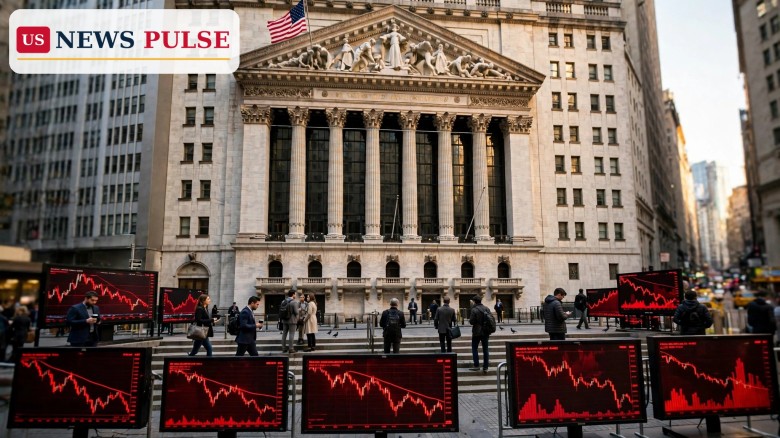
Wall Street fell on Thursday, October 29, 2026, as a sharp sell-off in Alphabet shares revived fears about the cost of the artificial intelligence build-out and dragged the technology-heavy Nasdaq sharply lower. The Nasdaq falls story of the day was concentrated in big technology names, even as many other stocks held up better, leaving the Dow and the S&P 500 with only modest losses by the closing bell.
Trading opened under pressure and stayed there for technology shares. Alphabet, which reported its third-quarter results late on Wednesday, was the clear trigger: revenue of $127.6 billion missed expectations, search advertising disappointed, and free cash flow turned negative by about $9.1 billion as AI-related spending accelerated. Reuters reported that Alphabet shares skidded 11.7% during the session and were set for their steepest one-day fall on record, on track to lose more than $464 billion in market value and accounting for most of the more than $500 billion the Nasdaq-100 was set to erase. Investopedia's market wrap put Alphabet more than 12% lower by the close, with the Nasdaq Composite and the Nasdaq 100 both finishing down 1.4%.
The Dow and the S&P 500 fared better, each finishing about 0.3% to 0.4% lower. The S&P 500 lost 0.36% to close at 7,715.80, down from 7,743.98 on Wednesday, while the Dow shed 0.35% to 52,291.94, down from 52,475.10. The Nasdaq's 1.43% fall to 26,171.04, down from 26,549.85, was more than four times the percentage drop of the other two benchmarks, underlining how concentrated Thursday's selling was. The Roundhill MAGS exchange-traded fund, which tracks the seven mega-cap technology stocks, was almost 2% lower in afternoon trading, according to Investopedia.
Other big technology and software names added to the drag. Microsoft edged lower even after a strong quarter built on cloud demand, and Reuters reported it fell 1.5% after media reports that the company planned to raise at least $25 billion through a bond sale. Amazon fell ahead of its results after the closing bell. Software stocks were broadly weak: ServiceNow tumbled nearly 25% in one account of the session despite reporting a 20% year-on-year revenue rise to $4.1 billion, and Fortinet dropped more than 20% after its own results. Chip-related names also slipped, with the Philadelphia Semiconductor index down 0.9%, set to snap a four-day winning streak, and memory stocks Micron and SanDisk sliding more than 5%.
Not every sector fell. Drugmaker Eli Lilly climbed more than 6% to a record high after forecasting annual revenue above Wall Street's estimate, and Mastercard rose 4.2% after beating third-quarter profit estimates. Financials and healthcare showed strength through much of the day, which helped explain why overall market breadth stayed positive: Reuters reported that advancing issues outnumbered decliners by 1.97 to 1 on the New York Stock Exchange and by 1.5 to 1 on the Nasdaq. The 10-year Treasury yield stood at around 4.95%, down from late Wednesday, as bond prices firmed.
Thursday's pullback followed three straight higher sessions. On Wednesday, all three major indexes had closed higher after the Federal Reserve held interest rates steady at 3.75% to 4.00% in a 10-2 vote, with Lisa Cook and Beth Hammack dissenting in favour of a quarter-point rise. The Dow had risen 0.19% to 52,475.10, the S&P 500 0.28% to 7,743.98 and the Nasdaq 0.27% to 26,549.85, helped by semiconductor stocks. The mood had also been lifted early in the week when Claude maker Anthropic filed its paperwork to go public, an event Reuters said offered only a short-lived reprieve from worries about AI spending before those fears resurfaced on Thursday.
The economic backdrop on Thursday was, on paper, reassuring. The Commerce Department's advance estimate showed the US economy growing at a 3.4% annual rate in the third quarter, the fastest pace in a year and above forecasters' expectations. September's personal consumption expenditures price index, the Fed's preferred inflation gauge, came in slightly cooler than economists expected, even though the annual rate remained well above the Fed's 2% target. Yet neither report calmed technology investors, because the market's worry is no longer mainly about growth or inflation: it is about whether the hundreds of billions of dollars pouring into data centres, chips and power will turn into profits and cash flow quickly enough to justify today's valuations.
That worry has been building all month. Investors have grown uneasy that the AI build-out is increasingly financed with debt, just as borrowing costs stay high, with the 10-year yield near 5%. Alphabet's numbers crystallised the fear: a company with record-scale revenue still burned cash once its capital spending was counted. Microsoft, by contrast, delivered a big cash-flow beat and forecast strong cloud growth, yet still slipped, a reminder that even good results are being judged harshly when valuations are stretched. Caterpillar's drop added a different warning: the industrial bellwether fell more than 9% after keeping its annual sales forecast unchanged, raising questions about how long the data-centre boom can keep driving demand for power-generation equipment.
The Nasdaq fell hardest because the stocks that dominate it are the stocks most exposed to the AI-spending debate. Alphabet alone accounts for a large weight in both the Nasdaq Composite and the Nasdaq-100, so a record one-day slide in its shares mechanically pulls both indexes down. The same logic applies to the software sell-off: ServiceNow and Fortinet are not mega-caps on Alphabet's scale, but their 20%-plus falls show investors punishing any sign that growth, margins or cash generation are not keeping pace with spending. Marvell Technology slumped 11.6% after media reports said it was in advanced talks to buy data-centre optics maker Lumentum Holdings, whose shares rose 3.5%, adding another tech-specific drag.
The Dow's smaller fall reflects its different mix. Caterpillar was its biggest weight, but the blue-chip index also holds banks, healthcare companies and industrials that fared better on Thursday, and its 0.35% decline to 52,291.94 kept it well within its recent trading range. The S&P 500, which blends technology with every other sector, fell 0.36% to 7,715.80 for the same reason: technology's losses were partly offset elsewhere. That pattern — a sharp Nasdaq fall, modest Dow and S&P 500 declines, and positive breadth — is the market's way of saying this was a repricing of technology, not a verdict on the whole economy.
Trevor Slaven, global head of asset allocation at Barings, summed up the mood in comments reported by Reuters: "The factors that are at play that's creating these manic depressive sentiment swings is you have an ecosystem around the AI buildout that is increasingly debt financed. (While) it in many ways grows the potential economic profits over time... it also creates more leverage and just creates a bit more risk in the system as well." The quote captures the two-sided argument running through markets: the AI build-out may raise long-run profits, but funding it with borrowed money adds risk if borrowing costs stay high or payoffs arrive slowly.
Reuters' own framing was blunter: Alphabet's results "rekindled worries about ballooning AI costs, outweighing strength in other sectors, including financials and healthcare, as earnings continued to dominate investor focus." Investopedia struck a similar note, reporting that tech stocks fell "as shares of Alphabet sold off and investors digested financial results from big companies and fresh inflation data that was cooler than expected." Neither account suggested a single company caused the whole session: Alphabet was the spark, but software earnings, Caterpillar's outlook and the debt question all fed the same reassessment.
On the policy front, traders held onto their bets for a December rate rise. Investopedia reported that traders saw about an 80% likelihood the Fed will raise rates by at least a quarter point at its December meeting, according to CME FedWatch, after the Fed held steady on Wednesday. Fed Chair Kevin Warsh had said after that decision that he would not prejudge December but would watch incoming data, while stressing that inflation remains elevated. Thursday's slightly cooler PCE reading did not move those odds much, because the annual inflation rate is still far from the Fed's 2% goal.
Thursday matters because it tests the central trade of the past two years: that spending whatever it takes on AI will be rewarded. For months, investors tolerated soaring capital expenditure as long as revenue and cloud growth kept beating expectations. Alphabet's quarter broke that bargain in one place — revenue missed, search advertising disappointed and cash flow went negative — and the market's response was swift and severe. If other mega-caps report the same pattern, the whole AI trade could reprice lower, pulling the Nasdaq, retirement accounts and index funds with it.
It also matters for ordinary savers in a less obvious way. Because the Nasdaq and the S&P 500 dominate index funds and pension portfolios, a 1.4% Nasdaq fall and a 0.36% S&P 500 fall trim the value of those holdings even when most individual stocks rise, as they did on Thursday by breadth. The session is a reminder that headline index moves can hide a split market: a concentrated technology correction can feel like a broad sell-off in a portfolio even while banks, drugmakers and payment companies climb. The December Fed decision adds a second risk: if the central bank raises rates while AI spending is already straining cash flows, borrowing gets more expensive for exactly the companies spending the most.
There is a reassuring side too. The economy grew 3.4% in the third quarter, inflation came in slightly cooler than expected, breadth stayed positive, and the Dow and S&P 500 fell only modestly. That combination argues against reading Thursday as the start of a bear market. It looks more like a valuation check: investors are still willing to own stocks, but they are no longer willing to pay any price for AI promises without cash to back them up.
Friday's session is the next test. Amazon reported after Thursday's closing bell, and its results — along with Intel's — will show whether the cloud and AI story looks stronger or weaker once the full set of mega-cap numbers is in. Traders will also watch whether Alphabet stabilises or keeps falling, whether software stocks find buyers after their steep drops, and whether the 10-year yield stays near 4.95% or pushes back above 5%.
Beyond Friday, the calendar points to the Fed's December meeting as the next big decision, with markets pricing about an 80% chance of a quarter-point rise. Fresh inflation and jobs data between now and then will shape that call, as will the next round of earnings. If upcoming reports show AI spending turning into cash flow — the Microsoft pattern rather than the Alphabet pattern — Thursday could be remembered as a buying opportunity. If they show more cash burn, the rotation out of high-valuation technology and into cheaper sectors like financials and healthcare could run further.
The Nasdaq Composite fell 1.43% to close at 26,171.04, down from 26,549.85 on Wednesday. The tech-focused Nasdaq 100 fell about 1.4% as well.
The Dow Jones Industrial Average fell 0.35% to 52,291.94, and the S&P 500 slipped 0.36% to 7,715.80. Both declines were far smaller than the Nasdaq's, reflecting strength in financials, healthcare and other non-technology sectors.
Alphabet reported third-quarter revenue of $127.6 billion that missed expectations, disappointing search advertising results and a surge in cash burn as AI spending accelerated, with free cash flow turning negative by about $9.1 billion. Shares fell more than 12%, on course for the company's steepest one-day fall on record.
Mostly technology. Advancing stocks outnumbered decliners on both the New York Stock Exchange and the Nasdaq during the session, and stocks such as Eli Lilly and Mastercard rose sharply. The sell-off was concentrated in mega-cap technology and software names.
The Federal Reserve held rates at 3.75% to 4.00% on October 28, and traders see about an 80% chance of a quarter-point rise at the December meeting, according to CME FedWatch. Incoming inflation and jobs data will shape that decision.
Read more on US News Pulse: Wall Street October 28: stocks edge higher as Fed holds rates; US GDP Q3 2026: economy grows 3.4% as investment beats forecasts; Amazon Q3 earnings beat forecasts as AWS surges 39%.
Leave a Comment



 | Today's Date: