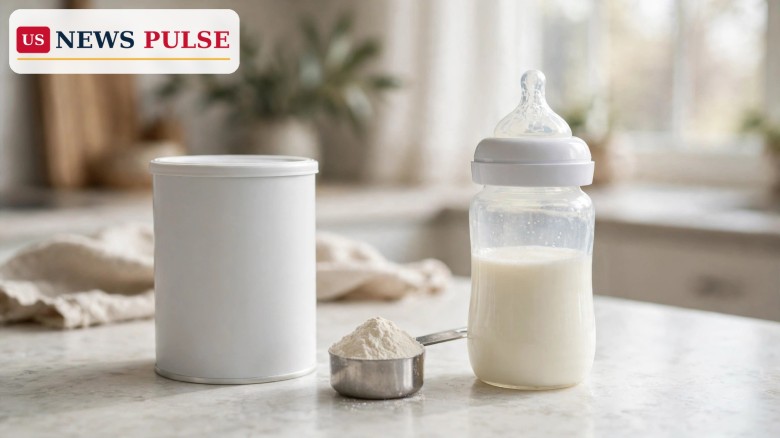
Comments close on Friday, October 30, 2026, on a citizen petition that would require the United States Food and Drug Administration (FDA) to add botulism-causing bacteria to the mandatory testing list for powdered infant formula, after two outbreaks hospitalised 52 babies. The draft petition, prepared by food safety attorney Bill Marler on behalf of 23 parents, argues that the current rules test finished formula for only two organisms and leave out the very pathogen that put dozens of infants in hospital. The deadline lands one day after the FDA announced the first update to infant formula nutrient standards in nearly 30 years, an announcement that did not touch pathogen testing at all.
The petition is not a call to ban any product or brand. It asks the FDA to finish work the agency itself started in 2023, when it warned the whole powdered formula industry that Clostridium botulinum should be treated as a hazard in production controls. Three years later, the organism is still not on the finished-product testing list, and nothing in federal regulation requires any formula maker to test for it before a can reaches a family kitchen.
Marler posted the draft petition on October 15, 2026, with 31 footnotes to public sources and four appendices, and invited comments from scientists, laboratories, public health officials, formula manufacturers, dairy processors, pediatricians and parents. Comments are to be emailed to him by Friday, October 30, 2026, after which he plans to file the petition. He represents each of the 23 families in litigation, and the petition says so openly.
The timing matters. On Thursday, October 29, 2026, Health and Human Services Secretary Robert F. Kennedy Jr., standing at a children's centre in Des Moines, Iowa, announced the first of three planned proposed rules updating infant formula nutrient requirements, the first comprehensive review since 1998. The proposal would update iodine, manganese, vitamin A and vitamin D, reaffirm chloride, potassium, selenium and sodium, and ask whether nutrients most makers already add, such as DHA, ARA and L-carnitine, should be required. Comments on that rule are due February 26, 2027. But the announcement said nothing about Clostridium botulinum, Cronobacter or Salmonella, and nothing about pathogen testing, even as the botulism petition's comment window was closing.
The contrast is the heart of the story. The nutrient update looks at what is in the can. The petition looks at what must never be in it, and at whether anyone is required to check. As Marler put it in the draft: "Babies cannot read a label or be warned. The testing has to happen before the can is opened."
Infant botulism is a rare and serious illness that strikes babies under one year old, whose gut microbiomes are still immature. When an infant swallows spores of Clostridium botulinum, the bacteria can grow in the gut and produce a toxin that attacks the nerves. The signs listed by the Centers for Disease Control and Prevention include constipation, poor feeding, drooping eyelids, pupils that react slowly to light, a face showing less expression than usual, a weak cry that sounds different, loss of head control, and difficulty swallowing. It can progress to difficulty breathing, and it can be fatal. Treatment includes BabyBIG, an antitoxin priced by the State of California at $69,300 a dose, according to reporting on the outbreaks.
The ByHeart outbreak sickened 48 infants in 17 states, with illness onsets from December 2023 through November 2025. The Nara Organics Whole Milk Organic Infant Formula outbreak sickened four infants in California, Pennsylvania and Washington in April and May 2026. Every one of the 52 babies was hospitalised, and many were on ventilators, according to reporting on the cases. ByHeart later expanded its voluntary recall to all of its products sold nationwide, including Whole Nutrition Infant Formula and Anywhere Pack pouches, after the FDA recommended the expansion as the case count grew.
On August 27, 2026, the FDA reported that whole genome sequencing linked the two outbreaks. Formula from both brands was made with milk supplied by Organic West Milk and spray-dried by Dairy Farmers of America, and the agency said the evidence points to a common source. The root cause has still not been found: the FDA has said there is not enough evidence to determine where the milk was contaminated.
The investigation exposed a gap that finished-product testing alone cannot close. ByHeart reported 472 environmental samples from its plants, covering food-contact surfaces, the areas around them and heating and ventilation filters, and every one was negative. The FDA, by contrast, found the organism in a lot of organic whole milk powder that matched a sick infant by whole genome sequencing. A rule aimed only at the plant environment would have found nothing, because the bacteria came in with the ingredient.
The same pattern showed up in the FDA's own sampling. When the agency sampled 48 powdered milk samples from four suppliers to infant formula makers in February 2026, two came back positive for a Clostridium carrying a botulinum toxin gene. During the 2025 investigation, the milk supplier gave the FDA an incomplete customer list that left out Nara's manufacturers, and the first Nara baby fell sick 160 days after the ByHeart recall. Reporting last week said the FDA traced the milk to 22 dairies that have never been publicly identified.
The petition asks the FDA to amend its own list, with no new law needed. In order of priority, it seeks seven things. First, add botulinum neurotoxin-producing clostridia to the finished-product testing table at 21 C.F.R. § 106.55(e), with a result of none detected in not fewer than thirty 200-gram samples per production aggregate, or an equivalent plan. Second, require testing of each lot of dairy ingredients before use, including whole milk powder, nonfat dry milk, milk protein concentrate and whey, with a negative result as a condition of use. Third, require makers to notify the FDA within one business day of any confirmed positive, whether or not the product has left the plant.
Fourth, finalise the test method within 180 days, and say that the older direct-plating method is not good enough. Fifth, require supplier verification and lot-level records identifying the drying facility and each dairy farm behind the milk. Sixth, add environmental monitoring as a secondary control. Seventh, in the alternative, grant what can be granted now, with priority on ingredient testing and the method.
The petition also notes a legislative tailwind. A bill, S. 272, which passed the Senate unanimously in April, requires one-business-day notice for any organism on the testing list. Add botulism to the list, and that notice requirement reaches it automatically.
Testing is possible now, the petition argues. ByHeart ran about 5,000 C. botulinum tests during its root-cause investigation, and it now says it tests all dairy ingredients, bulk powder and finished product before release. Nothing, however, requires ByHeart to continue, or any other company to begin. At a July 2026 roundtable, the FDA presented an interim testing method that is still pending validation.
The history makes the omission harder to defend, the petition says. The FDA added Cronobacter to the testing list in 2014 on a record of about one reported illness a year, because it concluded that voluntary industry testing might not be enough for a food that is an infant's sole source of nutrition. The botulism record is 52 hospitalised infants in two outbreaks. And on March 8, 2023, the FDA Commissioner wrote to the entire powdered infant formula industry and named Clostridium botulinum as a hazard to be considered in designing controls. The agency wrote to industry again on July 13, 2026, after both outbreaks, saying manufacturers' responsibility reaches every ingredient and every supplier. The organism is still not on the list.
Marler has framed the petition as a narrow, technical fix, not a campaign against formula itself. "I want to hear from scientists, laboratories, public health officials, formula manufacturers, dairy processors, pediatricians and parents," he wrote when he posted the draft, asking in particular whether thirty 200-gram samples is the right finished-product plan, whether the ingredient list is right, whether farm-level traceability is practical, and what information unfavourable to the petition he might be missing. "Edits and redlines are welcome," he added.
The FDA has not responded to the draft, because nothing has been filed yet. The petition is still in its comment phase, and the agency's public position so far is the July 2026 industry letter and the interim method presented at the July roundtable. Critics of the nutrient announcement argue that the gap is now conspicuous: the October 29 release described new chemical contaminant testing data as reaffirming the safety of infant formula, while saying nothing about the pathogen that hospitalised 52 babies. Most powdered formula is not affected by these outbreaks, health authorities stress, and parents do not need to stop using a formula their baby tolerates. Families should check that any ByHeart or Nara Organics product at home is not from a recalled lot, and talk with a pediatrician before switching brands rather than making changes on their own.
For parents checking cans at home, a county health alert republished on October 29 lists ByHeart Whole Nutrition Infant Formula in 24-ounce containers among the recalled products, including lots 206VABP/251261P2 and 206VABP/251131P2, both marked use by December 1, 2026. Because ByHeart later recalled all of its products sold nationwide, families with any ByHeart formula should check the company's recall notice and the FDA's recall pages rather than relying on a single lot number.
This is about the one food that, for many babies, is everything. Powdered formula is often an infant's sole source of nutrition, which is why the testing list exists at all. A contaminant that survives typical pasteurisation as a spore, that can take two weeks or more to confirm in the laboratory, and that arrives with a bulk ingredient rather than from a dirty factory floor, defeats the controls built for other pathogens. If the testing list does not name it, no maker is obliged to look for it, and no regulator is automatically told when it is found.
The stakes are also about trust. The 2025 recall and the 2026 Nara cases showed that a single ingredient stream can reach more than one brand, and that an incomplete customer list can leave a second brand's babies exposed for months. Lot-level traceability back to the drying facility and the dairy farm is the petition's answer to that failure. Without it, the next investigation starts from scratch, again.
There is a policy window too. The nutrient rulemaking, the pending validation of the interim test method, and the Senate-passed notice bill all converge on the same question: whether infant formula safety rules will be updated as a system, or nutrient by nutrient while the pathogen gap stays open. The petition's comment deadline forces that question into the open on Friday, even before the petition itself is filed.
After comments close on Friday, Marler plans to file the petition with the FDA, incorporating comments and redlines from the scientists, manufacturers, pediatricians and parents who responded. The FDA will then decide whether to grant it, deny it, or open its own rulemaking, a process that can take months and has no fixed deadline in the petition itself, beyond the request to finalise the test method within 180 days of any grant.
Separately, comments on the nutrient proposal are due February 26, 2027, and the FDA has said two further proposed rules will follow under the Operation Stork Speed programme. The agency's interim botulism testing method remains pending validation, and the question of whether the FDA will add the organism to the testing list on its own, without waiting for a petition decision, is now squarely before it. Parents, meanwhile, should watch the FDA's recall pages and their pediatrician's advice, and seek immediate care if a baby shows constipation, poor feeding, drooping eyelids, weak muscle tone or difficulty swallowing or breathing.
Infant botulism is a rare, serious illness in babies under one year old. Spores of Clostridium botulinum swallowed by the baby can grow in the immature gut and produce a toxin that weakens muscles and nerves. It can progress to breathing difficulty and can be fatal, which is why early medical care matters.
According to the CDC, signs include constipation, poor feeding, drooping eyelids, pupils that react slowly to light, a face showing less expression than usual, a weak cry that sounds different, loss of head control, and difficulty swallowing or breathing. Any of these signs in a young baby warrants immediate healthcare.
ByHeart Whole Nutrition Infant Formula was linked to 48 hospitalised infants in 17 states, and Nara Organics Whole Milk Organic Infant Formula to four infants in California, Pennsylvania and Washington. ByHeart later recalled all of its products sold nationwide. Most powdered formula is not affected by these outbreaks.
It would add botulinum neurotoxin-producing clostridia to the mandatory finished-product testing list, require testing of dairy ingredients lot by lot before use, require one-business-day notice of confirmed positives to the FDA, finalise the test method within 180 days, and require lot-level traceability to the drying facility and dairy farms.
No. Health authorities say most powdered formula is not affected, and parents should not stop using a formula their baby tolerates. Check recalled lots, follow FDA recall notices, and talk with a pediatrician before switching brands.
Related coverage on US News Pulse: the draft petition and the 52 hospitalised babies, the FDA's first infant formula nutrient update in nearly 30 years, and the FDA's warning over Darwin's cat food after a cat was hospitalised.
Leave a Comment



 | Today's Date: