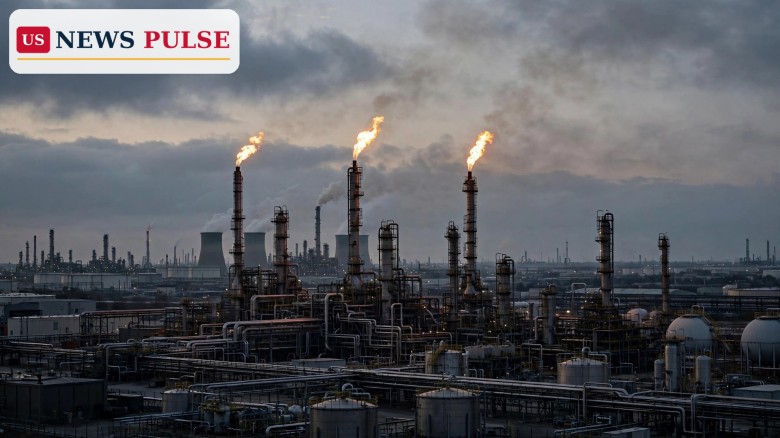
Ukraine has paused its strikes on Russian oil refineries after pressure from United States President Donald Trump, The Wall Street Journal reported on Thursday, October 29, 2026, in a shift that could reshape both the war and the politics of fuel prices in the final days before America's midterm elections. The Ukraine refinery strikes pause, described as unofficial and unconfirmed by Kyiv, was reported even as Russian forces pounded Ukrainian cities on the same day, killing at least 20 people in a wave of drone and missile attacks, according to Ukrainian officials.
Ukrainian units carrying out long-range strikes were told in mid-October that the campaign against refineries was effectively on hold once missions already in motion were completed, the Journal reported, citing people with knowledge of the operations. The unofficial pause is expected to last until after the US midterm elections on November 3 and potentially deeper into November, the report added. Reuters, which carried the Journal's account, said it could not immediately verify the report, and Ukraine had not commented publicly on it at the time of publication.
The report landed on Thursday as Washington's attention was fixed on the last days of the midterm campaign. According to the Journal's account, the instruction went out in mid-October: finish what was already in motion, then stop launching new missions against Russian refineries. A separate summary of the reporting said President Trump's son-in-law and adviser, businessman Jared Kushner, had urged Ukraine to halt its attacks on Russian oil refineries for 30 days. The pause, as described, applies to attacks on Russian energy infrastructure, including oil refineries, and is unofficial rather than a declared ceasefire.
The timing matters. Fuel prices had become a sensitive domestic political issue for the Trump administration, with diesel prices at record highs, and the report said the pause coincided with the final days before the midterms. The Journal's reporting also placed the pause against renewed efforts to revive US-backed negotiations aimed at ending Europe's deadliest conflict since World War II, a war now in its fourth year. Three-way discussions involving Ukraine, Russia and the United States are expected next month, according to the Arab News account of the developments.
At the same time, Russia's own attacks did not pause. A Russian drone strike on a crowded railway platform in the central city of Dnipro killed at least 14 people on Thursday, according to Ukrainian officials. Five other people were killed in daytime attacks on the northern city of Chernihiv and the central city of Kremenchuk, while a late-evening Russian missile strike on Kyiv killed another person, bringing the reported death toll to at least 20. The attacks continued despite the renewed diplomatic efforts and despite a six-day, US-brokered local truce in the southern Kherson region, aimed at allowing humanitarian assistance to reach the Russian-occupied town of Oleshky and enabling residents to leave if they wished.
Ukraine's long-range drone campaign against Russian energy infrastructure has been one of Kyiv's most consequential weapons in a war where it is outgunned on the front line. Unable to match Russia's artillery and manpower, Ukraine has used drones to strike refineries, depots and other energy targets deep inside Russia, aiming to cut the fuel and revenue that sustain Moscow's war machine. Kyiv had previously refused to halt the strikes, saying its long-range drone campaign is its only viable response to years of Russian bombardment.
That refusal set up the clash with Washington described in the new reporting. Relations between Trump and Ukrainian President Volodymyr Zelensky have taken a sharp downward turn in recent weeks, the reports said, with Trump growing increasingly frustrated over Kyiv's attacks on Russian energy infrastructure as diesel prices hit record highs. That frustration prompted Trump to announce a deal to buy diesel from Moscow and waive sanctions on Moscow authorised by a bill he signed into law in September, according to the Arab News account. The move underlined how directly the refinery campaign now connects to American pump prices and to the president's domestic standing.
The backdrop in Ukraine itself is grim. Russian drone and missile strikes on critical infrastructure, including the country's railway network, have disrupted civilian life and further damaged an economy already under severe pressure, and Ukraine has faced an acute shortage of air-defence missiles. In Dnipro, a jet-powered Russian drone struck a platform at the city's main railway station as a commuter train was preparing to depart, according to state railway operator Ukrzaliznytsia, leaving bodies scattered across the platform and damaging the area with shrapnel as air-raid sirens continued to sound. A separate attack on a student dormitory in the city set the building ablaze, regional governor Oleksandr Hanzha said, and the day's assaults disrupted electricity supplies to about 350,000 households.
In Chernihiv, two teenage girls were killed in a drone attack on a busy downtown street, while 23 people, including four children, were wounded, local officials said. Three people were killed and 32 injured in attacks on residential buildings in Kremenchuk. Russian drones also struck city buses in three separate attacks in southeastern Zaporizhzhia, wounding six people. In Kyiv, warehouses caught fire and falling debris damaged a building on the eastern side of the Dnipro River after the late-evening missile attack that killed one person.
The significance of the reported pause depends on how long it holds and what, if anything, Ukraine gets in return. A pause that lasts only until after the midterms would be a tactical concession to an ally whose support Kyiv cannot afford to lose, timed to help that ally through a domestic election. A pause that stretches deeper into November, as the Journal report suggested it might, would begin to look like a genuine change in Ukraine's approach to targeting Russian energy infrastructure — one that trades away one of its few means of striking back at Russia's war economy.
For Moscow, the pause would be welcome relief. Refinery strikes have forced shutdowns, driven up domestic fuel prices and exposed the limits of Russia's air defences around its most valuable industrial sites. For Washington, it removes, at least temporarily, a source of tension with Kyiv and a driver of the diesel prices that voters notice. For Kyiv, the calculation is harder: every week without refinery strikes is a week in which Russia's fuel supplies recover, even as Russian attacks on Ukrainian civilians continue unabated — the very asymmetry that Ukrainian officials highlighted on Thursday.
That asymmetry was the sharpest criticism available to Kyiv's defenders. The reported suspension came as Russia continued its attacks on Ukrainian civilian and critical infrastructure, and Ukrainian officials called on Kyiv's international partners to increase pressure on Moscow rather than restrain Ukraine. The contrast between a Ukrainian pause and a Russian escalation is likely to dominate the debate in Kyiv and among its supporters in the coming days, especially if the death toll from Thursday's attacks rises further.
Ukrainian Prime Minister Sergiy Koretskyi accused Russia of deliberately targeting civilians in Thursday's attacks. "Russia is deliberately hunting civilians: on trains, at stations, in residential buildings," he said in a statement on Telegram, adding that there could be no justification for the attacks. President Volodymyr Zelensky described Thursday's attacks as particularly cruel and deliberate, coming at a time when people were expecting steps toward de-escalation, according to the Arab News account.
Zelensky also warned that Ukrainian intelligence had detected preparations for further Russian ballistic missile strikes, urging Kyiv's allies to provide the means to counter them. Meanwhile, Moscow said its air defences had intercepted 16 drones heading towards Moscow on October 30, according to the Tass news agency, as reported in summaries of the day's events. Both Moscow and Kyiv said de-mining operations had been completed in the Oleshky area and that preparations were under way for the humanitarian mission there, even as the local arrangement failed to stop Russian attacks elsewhere in Ukraine.
Neither Kyiv nor Washington had publicly confirmed the pause itself at the time of publication, and Reuters stressed that it could not immediately verify the Journal's report. That caution matters: the story rests on the Journal's sourcing, and its details — the mid-October instruction, the 30-day suggestion attributed to Kushner, the expected duration beyond the midterms — may be clarified, denied or refined as officials respond.
This story matters to American readers for three reasons. First, it goes directly to the price of fuel: diesel at record highs feeds into the cost of trucking, farming and heating, and therefore into the prices Americans pay for food and goods. Second, it goes to the midterm elections: the reported pause is explicitly tied to the November 3 vote, and how voters judge the administration's handling of both the war and the economy will shape the next Congress. Third, it goes to the future of the war itself: if the pause holds and peace talks resume next month, it could be remembered as the moment the conflict's most effective Ukrainian campaign was traded for diplomacy; if it collapses, it will be remembered as a brief, politically driven interruption.
It also matters because it tests the limits of American leverage over an ally at war. Trump has used pressure, public frustration and even a diesel deal with Moscow to steer Kyiv's targeting choices, and the reported pause suggests that pressure worked, at least for now. Whether that leverage extends to a broader settlement — and whether Russia reciprocates with any restraint of its own — is the question the coming weeks will answer. So far, Thursday's death toll suggests Moscow has not reciprocated at all.
Watch for three things. The first is an official response: Kyiv has not commented on the reported halt, and any statement from Zelensky's office, the Ukrainian military or the White House will confirm, deny or qualify the Journal's account. The second is the battlefield evidence: if no new refinery strikes are reported in the coming days, the pause will look real regardless of official silence; a major new strike would end the story quickly. The third is the diplomatic track: three-way discussions involving Ukraine, Russia and the United States are expected next month, and the pause, if it holds, will be presented by Washington as evidence that restraint can create space for talks.
Also watch the Oleshky humanitarian mission, which is proceeding under the separate six-day local truce in Kherson, and watch for further Russian missile attacks of the kind Zelensky warned about. The war's next phase may be decided less by a single pause than by whether restraint on one side is met by anything other than escalation on the other. For now, the reported pause is a fragile, unverified and politically charged development — and Thursday's funerals in Dnipro, Chernihiv and Kremenchuk are a reminder of what is at stake while it lasts.
Related coverage on US News Pulse: Melania Trump ceasefire brings hope to Oleshky as Ukraine aid mission begins, Nordic leaders urge Putin to end Ukraine war, and Trump weighs RDIF sanctions relief amid diesel deal.
Not publicly at the time of publication. The pause was reported by The Wall Street Journal, citing people with knowledge of the operations, and Reuters said it could not immediately verify the report. Ukraine had not commented on it in the accounts read for this article.
According to the Journal's reporting, the unofficial pause is expected to last until after the US midterm elections on November 3 and potentially deeper into November. One summary said Jared Kushner had urged a 30-day halt.
The reports link his frustration to record-high diesel prices and to the political sensitivity of fuel costs before the midterms. Trump had also announced a deal to buy diesel from Moscow and waive related sanctions.
No. On the same day the pause was reported, Russian attacks killed at least 20 people across Ukraine, including at least 14 at a railway platform in Dnipro, according to Ukrainian officials.
Three-way discussions involving Ukraine, Russia and the United States are expected next month, as Washington seeks to revive negotiations to end a war now in its fourth year.
Leave a Comment



 | Today's Date: