With four days to go before the November 3 midterm elections, the Michigan Senate race has become something larger than a contest for one seat: a public argument over whether a Muslim American can be trusted to serve in the United States Senate. A CNN analysis published on Friday, October 30, 2026, says the Republican argument against Democratic nominee Abdul El-Sayed is becoming perilously close to a simple message — do not vote for him because he is a Muslim.
The Michigan Senate race matters far beyond Michigan. The seat could help decide control of the Senate, where Republicans now hold 53 of 100 seats and Democrats need a net gain of four to win a majority. But in the closing days, the campaign's sharpest exchanges have not been about taxes, health care or trade. They have been about faith, loyalty and what the Constitution actually requires of anyone seeking public office.
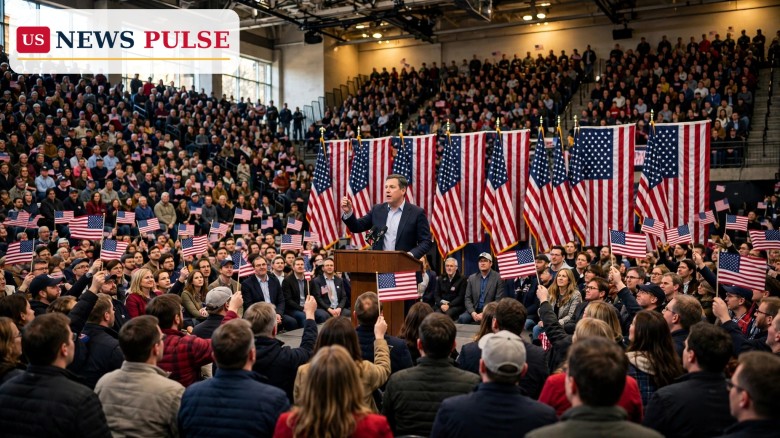
The latest flashpoint came on Wednesday, October 28, at a Trump rally in Chillicothe, Ohio, where Moreno went further than either Trump or Rogers had gone in public. "This character Abdul El-Sayed can be nowhere near Washington, DC," Moreno said. "Do you think he understands that concept that our rights come from God almighty, that Jesus came here for our salvation?" He added: "He should be nowhere near Washington, DC, and (GOP nominee) Mike Rogers is going to kick his ass on Tuesday."
Trump himself has built the attack over weeks. CNN's analysis records that he has called El-Sayed a "jihadist", said metal detectors would be needed at the Senate if the Democrat is elected, and deliberately mangled his name as "Mohammed" and "Abdul Ramadan". On Thursday, Trump returned to a familiar argument — that voters should judge a candidate through the lens of their own group identity. "If you're Black, or if you're Jewish, and if you vote for Abdul, you're crazy," the president said.
Rogers, the former congressman running against El-Sayed, has drawn a line that Trump and Moreno have not. He says he wore the uniform of the US Army to safeguard the freedom of Muslims to pray as they please, and he has stuck to questions about El-Sayed's political affiliations rather than mocking his name or faith. But in their last debate clash, Rogers said El-Sayed had links to the Muslim Brotherhood, an Egyptian Islamist group, and questioned his loyalties directly: "Are you for America, or are you for these terrorist groups overseas?" El-Sayed has disavowed the group.
El-Sayed answered the loyalty charge himself at a town hall earlier in October, rebuking a questioner for assuming "that because I am Muslim, that somehow I would have some allegiance to something that is not our Constitution". He added: "For me, that Constitution is the guiding light."
El-Sayed, a former public health official, won a bitter Democratic primary in August by just one percentage point over Representative Haley Stevens, powered by strong support among Arab American and Muslim communities, young voters and progressives in college towns. Stevens had clear strengths of her own, notably among Black voters in and around Detroit and Jewish voters who have long expressed concerns about El-Sayed, who is Muslim and a strident critic of Israel's actions in Gaza. Michigan has not elected a Republican senator in 30 years, yet this race has stayed competitive in a state where more than $280 million has been spent on television advertising since the 2026 midterm cycle began.
The Muslim Brotherhood, the group at the centre of the Republican attack, is a transnational Sunni Islamist organisation founded in Cairo, Egypt. Republicans have seized on old social media posts from El-Sayed's half-sister describing how their mother — who left in El-Sayed's early childhood — had been active in the organisation in the 1970s. El-Sayed wrote an article in HuffPost in 2011 arguing that if the Brotherhood took over Egypt, instead of its ruthless military rulers, the consequences could be more favourable than many people thought. That came during the Arab Spring, when governments across the Middle East were falling and long-persecuted opposition forces like the Brotherhood were emerging as alternatives. After the toppling of Egyptian dictator Hosni Mubarak, the Brotherhood's political wing won democratic elections under Mohamed Morsi, who became president; his rule ended amid huge protests over his economic reforms, and he was later ousted in a military coup. The Trump administration has designated some chapters of the Muslim Brotherhood as terrorist organisations, including over support for Hamas.
The debate also unfolds against the political turmoil unleashed by Israel's response to the Hamas terror attacks of October 7, 2023, which killed around 1,200 people in Israel. Tens of thousands of Palestinians have died alongside many of the movement's operatives in the operation that followed. Many Democrats as well as Republicans are uneasy with El-Sayed's positions on Israel and his calls for a change in US foreign policy toward the Jewish state. At the same time, the race is shaped by forces that have nothing to do with faith: Trump's unpopularity, soaring living costs, a trade war with Canada that has hit border states such as Michigan especially hard, and splits between Democratic moderates and progressives.
The constitutional question is unusually clear, and it is why CNN's analysis treats this race as different from an ordinary campaign clash. Article VI of the Constitution stipulates that "no religious Test shall ever be required as a qualification to any Office or public Trust under the United States". The First Amendment says Congress "shall make no law respecting an establishment of religion, or prohibiting the free exercise thereof".
Corey Brettschneider, a Brown University professor who hosts the podcast "The Oath and the Office", told CNN that the anti-El-Sayed rhetoric has troubling constitutional implications. "When you are saying we can't trust people who are Muslims and that he's going to need to enter a metal detector — unlike everyone else in Congress — to get in, that's nothing less than a religious test for office," Brettschneider said.
Moreno's supporters might point to the word "Creator" in the Declaration of Independence to argue that the founders regarded the new United States as an officially Christian nation. Brettschneider rejected that reading, noting that George Washington and other founders took action specifically to ensure that the country did not have an official religion. "I don't think Jefferson, who of course is a primary drafter of the Declaration, was a Christian nationalist, and the framers of the Constitution and the document itself are explicitly anti-Christian nationalism. It's a rejection of theocracy," Brettschneider said.
There is also an irony that CNN's analysis does not shy away from: unlike El-Sayed, Moreno was not born in the United States — he is a naturalised citizen from Colombia. Yet he implied that the Michigan Senate nominee does not deserve the same rights because he is not a Christian. Such a view, the analysis notes, might also bar Jews, Hindus and Buddhists, all of whom are currently represented in Congress, from government service.
El-Sayed's own response has been the most direct of any in the race. At the town hall, he refused the premise of the loyalty question altogether, insisting that his faith creates no competing allegiance and that the Constitution guides him. His campaign has also pointed to support from prominent Jewish leaders, including Michigan Attorney General Dana Nessel, who has said El-Sayed has largely stopped attacking AIPAC, as she urged him to do, and that she considers his record on Jewish safety sufficient to back him, even while wishing he had done more outreach.
Rogers, for his part, has tried to keep his argument on political ground. He said on CNN that he has "never called him a terrorist" and that he does not "speak for the president", while continuing to accuse El-Sayed of aligning with the Muslim Brotherhood. Rogers has also boasted of building coalitions that are "very untraditional for a Republican candidate", courting Black and Jewish voters and supporters of his former primary rival Haley Stevens — a strategy his campaign calls an appeal to "Haley Stevens Democrats".
Brettschneider's warning frames the wider reaction: the issue is not whether El-Sayed's views on the Brotherhood or on Israel should be questioned — CNN's analysis says it is entirely appropriate to question those positions — but whether the questioning has crossed into a test of faith itself. "When you are saying we can't trust people who are Muslims," he said, the campaign has imposed "nothing less than a religious test for office".
Trump, meanwhile, has shown no sign of softening the line. His Thursday remark — "If you're Black, or if you're Jewish, and if you vote for Abdul, you're crazy" — repeated a trope he has used before: that minorities see politics through one exclusive racial or theological lens. CNN's analysis places that rhetoric in a longer pattern, recalling that in one of the first official acts of his first term, Trump tried to impose a travel ban on Muslims, and that when speaking of his first presidential predecessor, Barack Obama, he rarely drops his middle name, Hussein.
The Michigan result will help decide whether Democrats win the Senate, and with it the power to confirm judges, shape legislation and check the final two years of Trump's presidency. But the race has also become a platform for a deeper struggle over religious diversity, pluralism and the Constitution — over what it means to be an American. If a candidate can be disqualified in voters' minds simply for being Muslim, the no-religious-test clause becomes a dead letter in practice, whatever it says on paper.
The stakes are visible in the numbers. A new CNN/SSRS poll on Thursday casts doubt on whether the attacks are working in a state with a large Muslim minority and amid signs that Democrats are uniting behind El-Sayed after the bruising primary: he led Rogers by 49% to 42% among likely voters. That lead sits outside the poll's margin of error, but Michigan's recent history counsels caution — the state has not elected a Republican senator in three decades, yet Rogers has kept the race close by assembling an unusual coalition and by pressing El-Sayed on foreign policy positions that trouble voters across party lines.
The contest also tests how far cultural and religious rhetoric can carry a campaign when voters are worried about their bills. Living costs are soaring, the trade war with Canada has battered Michigan's border economy, and Trump himself is deeply unpopular in the state. If faith-based attacks cannot move the race in those conditions, it suggests their power has limits. If they can, it suggests the opposite — and other campaigns will take note.
Michigan voters decide on Tuesday, November 3, alongside voters across the country in elections for all 435 House seats and 35 Senate seats. Trump is still scheduled to hold a rally in Daytona Beach, Florida, on Friday, October 30 — now his final in-person rally after cancelling weekend events in Kansas and Iowa in favour of tele-rallies in at least 19 states. Early voting is already well under way nationally, with tens of millions of ballots cast, and Michigan's in-person early voting window closes on October 30.
In the final days, expect Rogers to keep pressing the Brotherhood question while insisting his argument is about politics, not faith, and expect El-Sayed to keep answering with the Constitution — and with the coalition he has built among Arab American, Muslim, young and progressive voters, plus the Democratic establishment figures who have rallied to him since the primary. Whatever the result, CNN's analysis concludes, the race will leave scars: it has turned into a deeper argument than the normal clashes between Republicans and Democrats, and it has opened a new front in a perennial American question.
Abdul El-Sayed is the Democratic nominee for the US Senate in Michigan, a former public health official who won the August primary by one percentage point over Representative Haley Stevens. If elected, he would be the first Muslim senator from Michigan in a race that has become a national test of religious pluralism.
Mike Rogers is the Republican nominee, a former congressman and US Army veteran. He argues that El-Sayed's past associations, including with the Muslim Brotherhood, raise legitimate questions about his loyalties, while saying he does not malign Islam generally and does not speak for President Trump.
Article VI states that "no religious Test shall ever be required as a qualification to any Office or public Trust under the United States". The First Amendment bars Congress from establishing a religion or prohibiting the free exercise of religion. Scholars cited by CNN argue that treating a Muslim candidate as unfit because of his faith amounts to such a test in practice.
At a Trump rally in Chillicothe, Ohio, on October 28, Moreno said El-Sayed "can be nowhere near Washington, DC", questioned whether he understands that rights come from God and that "Jesus came here for our salvation", and predicted Rogers would "kick his ass on Tuesday".
The midterm elections are on Tuesday, November 3, 2026. A CNN/SSRS poll published on Thursday, October 29, had El-Sayed leading Rogers 49% to 42% among likely voters in Michigan, with Democrats needing a net gain of four seats nationally to win control of the Senate.
Related coverage on US News Pulse: Trump cancels Iowa and Kansas rallies and switches to tele-rallies before the midterms; Trump and Obama duel in Ohio and Georgia in the final week; Dark money floods the 2026 midterms with more than $1 billion in secret cash.
Leave a Comment



 | Today's Date: