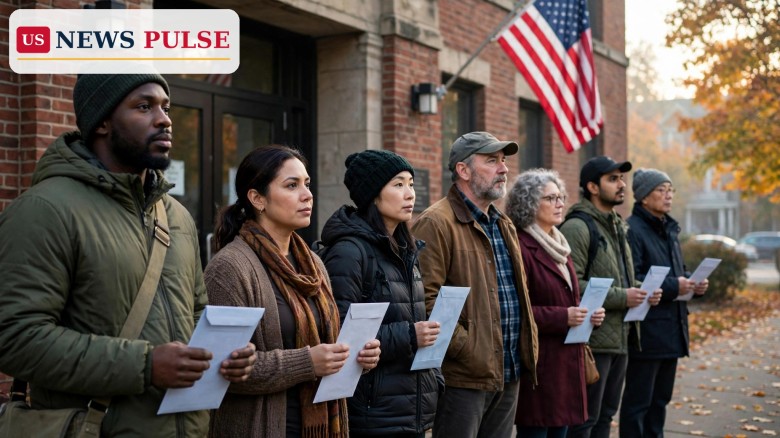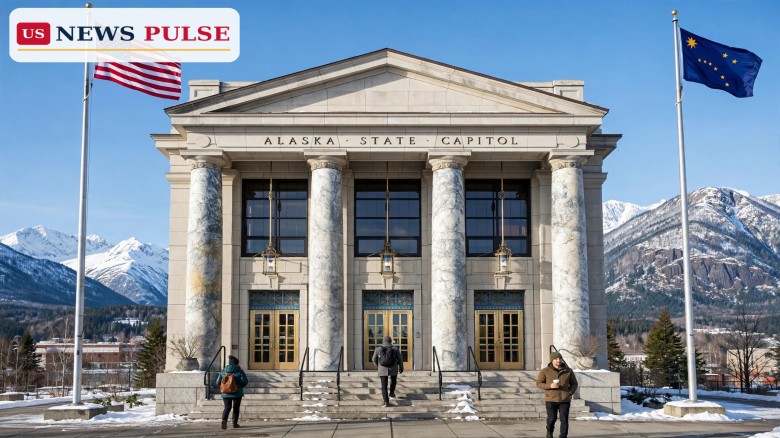
The United States Department of Justice has filed a revised lawsuit seeking to block certification of Alaska's Senate election results if Republican incumbent Dan S. Sullivan loses narrowly, escalating a bitter fight over a second candidate named Dan Sullivan just four days before the November 3 midterms. The Alaska election results case, updated on Thursday, October 29, 2026, turns a long-running ballot dispute into a federal courtroom battle over who gets to decide a close election — and whether Washington can intervene in a contest the Constitution leaves to the states.
The amended complaint, reported by Al Jazeera and Reuters, accuses Democrats of recruiting a retired teacher, Dan J. Sullivan Jr., to run for the Senate as a spoiler candidate designed to confuse voters and draw votes away from the incumbent. It asks a court to bar Alaska from certifying its results if Senator Sullivan loses by a narrow margin. At the same time, the Justice Department has issued more than 40 subpoenas and document-preservation requests, a source told Reuters, with more expected. The recipients include the campaigns of both Dan J. Sullivan and Democratic challenger Mary Peltola.
The revised lawsuit is the latest step in a Justice Department case first filed on October 22, 2026, seeking conditional intervention in the certification of Alaska's Senate race. The updated filing leans heavily on a New York Times report published on Wednesday, October 28, which alleged that members of Peltola's campaign helped recruit Dan J. Sullivan Jr., a retired teacher from Petersburg, into the race. According to the Times, campaign aides began searching Alaska voter records in the summer of 2025 for people named Dan Sullivan who might enter the Senate contest, and an operative, Jerid Kurtz, was involved in bringing the retired teacher into the field.
The Justice Department's amended complaint puts the allegation in blunt terms. "They orchestrated his sham campaign for the purpose of misleading Alaskan voters and getting Peltola elected," Justice Department lawyers wrote, according to Al Jazeera's account of the filing. Prosecutors argue that the second Sullivan's presence on the ballot was not a genuine candidacy but a partisan trick that undermines voters. The filing does not, by itself, remove any candidate from the ballot, and it does not change any vote already cast. What it seeks is a court order that would stop Alaska from certifying the outcome if the incumbent loses narrowly — a remedy that critics say would be almost impossible to apply fairly, because no final tally can show how any individual voter intended to vote.
The subpoena wave gives the case a second front. Reuters, citing a source familiar with the matter, reported that the Justice Department issued more than 40 subpoenas and preservation requests on Thursday, with recipients including the campaigns of Dan J. Sullivan and Peltola. The source said more were expected. Separately, House Oversight Chairman James Comer opened a congressional investigation on Thursday into the same allegations, adding a Capitol Hill inquiry to the federal court case and the state criminal investigation ordered by Governor Dunleavy on Wednesday evening.
Alaska's Senate race is one of seven key toss-ups that will likely decide whether Republicans keep their majority in the upper chamber, where they now hold 53 of 100 seats. Democratic challenger Mary Peltola, a former member of Congress, is seeking to unseat Sullivan, a Republican ally of President Donald Trump. Polling has consistently shown a close race: Data for Progress, surveying 694 likely voters from October 8 to 16, put Peltola at 47 percent and Sullivan at 44 percent on first choices, with Dan J. Sullivan Jr. at 4 percent, and Peltola ahead 51 to 49 in a simulated final ranked-choice round. Decision Desk HQ's forecast on October 29 gave Peltola a 60 percent probability of winning. None of those figures is a result — but they explain why both sides treat a handful of percentage points as decisive.
The two-Sullivan story began well before this week's court filings. Dan J. Sullivan Jr. filed for the Senate race on May 29, 2026. On June 15, Alaska's Division of Elections disqualified him, citing concerns about misleading voters and the good faith of the candidacy. That decision did not survive: Alaska's Supreme Court ruled that he could compete in the midterms, finding no good-faith requirement that would justify keeping him off the ballot, and the state's election office has since taken steps to reduce confusion between the two Sullivans on the ballot itself.
Alaska held its primary on August 18, and the general-election field eventually included Peltola, both Sullivans and Gerald Heikes. More than 61,000 ballots had already been cast by the time the governor ordered his investigation on Wednesday evening, according to earlier reporting on the probe — a fact that underlines how late in the voting period these challenges have arrived. Early voting in Alaska, as in much of the country, was already well under way when the Times report landed and the Justice Department moved.
The practice at the centre of the dispute has a name: ballot stacking, the recruitment of candidates to split an opponent's vote. It is generally considered legal, and it has been used by both parties in Alaska, Al Jazeera noted. The New York Times itself did not establish that Peltola personally directed the recruitment effort or that perjury occurred, a distinction that matters because the public debate has often run ahead of what the reporting proved. Peltola's campaign and the Democratic Senatorial Campaign Committee have denied involvement in Dan J. Sullivan Jr.'s bid, and Dan J. Sullivan Jr. himself has denied coordinating with the campaign.
The Justice Department's broader election push provides the wider context. The department has attempted to challenge voting processes in several states in the run-up to the midterms, including California, where a federal judge in Los Angeles rejected its bid to set aside more than 20,000 ballots flagged as likely cast by noncitizens. It has also pressed demands in Washington state and pursued criminal cases over alleged noncitizen voting. Supporters of the Alaska suit say it protects voters from deception; critics say the pattern amounts to federal meddling in state-run elections, and they note that President Trump has suggested he may not accept the midterm results if his party loses its congressional majorities.
What makes the Alaska case different from an ordinary campaign dispute is the remedy being sought. Most election lawsuits ask a court to change a rule before voting or to count or exclude a defined set of ballots afterwards. This one asks, in effect, for a conditional veto on certification itself: if the incumbent loses narrowly, Alaska should not be allowed to certify the result. That raises questions no court has yet answered in this case. How narrow is narrow? Who decides? And what happens to the votes of Alaskans who cast ballots in good faith, including the tens of thousands who voted before the latest filings?
Alaska's ranked-choice system adds another layer. Voters rank candidates, and if no candidate wins a majority of first choices, the lowest-placed candidates are eliminated and their supporters' next choices are counted. In a four-candidate field, a second Sullivan polling at around 4 percent could matter at the margins — but ranked-choice counting also means that a voter's second or third preference still counts, which complicates any claim that a single candidacy simply "stole" a fixed number of votes. The Data for Progress survey illustrated the point: Peltola led 51 to 49 only after ranked-choice transfers were simulated, not on first choices alone.
The Senate stakes are national. With 53 seats, Republicans can afford to lose only a few races before losing their majority, and Alaska is rated a toss-up by both the Cook Political Report and Sabato's Crystal Ball. A Peltola victory would flip a seat long held by Republicans and narrow, or erase, the party's margin — which is why a dispute over a few thousand votes in a state of about 730,000 people has drawn the attention of the Justice Department, the House Oversight Committee and the White House at once.
The Justice Department's language in the amended complaint is unusually direct. "They orchestrated his sham campaign for the purpose of misleading Alaskan voters and getting Peltola elected," its lawyers wrote, in the passage quoted by Al Jazeera. The department has not publicly detailed what federal violations it believes the recruitment effort committed, and that gap has become the focus of criticism from election-law experts.
Justin Levitt, a former Justice Department official under President Joe Biden, questioned the legal basis for federal involvement in comments to the Associated Press. "I don't know what they're putting out subpoenas to investigate because I don't know what federal violations are implicated that DOJ would have jurisdiction over," Levitt said. "Sure makes it seem like the point of the investigation is to become the story." His point goes to jurisdiction: under the US Constitution, election administration falls to the states, not the presidency, and federal courts have historically been reluctant to intervene in state certification decisions without a clear federal violation.
Governor Dunleavy, a Republican, ordered the Alaska Department of Public Safety to investigate the recruitment allegations on Wednesday evening, a step that gives the state its own criminal inquiry alongside the federal case. Senator Sullivan has demanded that Peltola "come clean" about the affair, while former Senator Lisa Murkowski has described a "pattern of lies" around it. President Trump has gone further, demanding on social media that Peltola be removed from the ballot and calling the episode "ELECTION FRAUD" — a demand no court has granted and which the state's own Supreme Court ruling, allowing Dan J. Sullivan Jr. to stand, cuts against.
Peltola's campaign has denied involvement in Dan J. Sullivan Jr.'s candidacy, as has the Democratic Senatorial Campaign Committee. Election officials, for their part, have said there is no basis for claims of systematic harm to the integrity of the election, and the Central Elections Committee-style safeguards in Alaska — including the ballot design changes made after the June court ruling — remain in place. The state Division of Elections has not said it will halt certification, and no court order blocking certification had been issued as of Friday morning.
The Alaska fight matters for three reasons. First, it could decide control of the Senate. In a chamber split 53 to 47, a single flip changes the arithmetic for judicial confirmations, legislation and oversight for the remainder of President Trump's second term. Second, it tests how far the federal government can go in second-guessing a state's election result. If a court accepted the Justice Department's theory, it would create a precedent for federal intervention in certification whenever a losing side could point to a controversial candidacy — a precedent that would not be limited to Alaska or to one party. Third, it lands in a midterm environment already charged with distrust: the president has raised the prospect of not accepting results, the Justice Department is active in multiple states, and voters are being asked to trust a process that is being litigated in public while they are still voting.
There is also a practical point that gets lost in the rhetoric. More than 61,000 Alaskans had already voted before this week's escalation. Any order affecting certification would not just affect the candidates; it would affect those voters' ballots, and the officials who must count and certify them under state law. That is why critics argue the remedy is disproportionate to the allegation, even if the recruitment effort was, as many commentators have called it, ethically questionable. Ballot stacking may be legal, but legality and legitimacy are different questions — and the court will have to decide whether the first can justify overturning the second.
Several tracks now run in parallel. The Justice Department's amended lawsuit will be tested in court, where a judge must decide whether the federal government has standing and a valid legal theory to block certification, and whether the requested relief is even workable. The subpoena investigation will continue, with more requests expected, and the campaigns' responses to those subpoenas could produce new documents or new disputes over privilege and scope. Governor Dunleavy's criminal investigation will proceed under the Department of Public Safety, and Chairman Comer's House Oversight inquiry will seek testimony and records of its own.
Meanwhile, voting continues. Early voting runs through the weekend, and Election Day is Tuesday, November 3, 2026. Alaska's Division of Elections will count ballots under its ranked-choice rules, and certification will follow the state's normal timetable unless a court orders otherwise. If the race is as close as the polls suggest, the ranked-choice tabulation itself could take days, and the second Sullivan's share — around 4 percent in the most recent survey — will be scrutinised as closely as the top two candidates' totals. If Sullivan wins, the certification fight may fade; if Peltola wins narrowly, the lawsuit's conditional request will be tested in earnest, and the country may watch Alaska become the defining legal battle of the 2026 midterms.
Its revised lawsuit seeks to bar Alaska from certifying the Senate election results if Republican incumbent Dan S. Sullivan loses narrowly, on the grounds that a second candidate named Dan Sullivan was recruited to confuse voters.
Dan J. Sullivan Jr., a retired teacher from Petersburg, Alaska, who filed for the Senate race on May 29, 2026. Alaska's Division of Elections initially disqualified him, but the state Supreme Court ruled in June that he could stand.
No. Peltola's campaign and the Democratic Senatorial Campaign Committee deny involvement, and the New York Times report did not establish that Peltola personally directed the recruitment. Dan J. Sullivan Jr. has also denied coordinating with the campaign.
Recruiting candidates to split an opponent's vote is generally considered legal and has been used by both parties in Alaska, although critics call it ethically questionable. The Justice Department has not publicly specified which federal violations it alleges.
Election Day is November 3, 2026. Ranked-choice counting in a close race could take days, and certification follows the state's timetable unless a court orders otherwise.
Related coverage on US News Pulse: Alaska ballot probe: Dunleavy orders investigation into Peltola Senate race, Trump demands Peltola off Alaska ballot in fake Dan Sullivan fraud row, and California ballots ruling: judge rejects DOJ bid to set aside 20,000 votes.
Leave a Comment



 | Today's Date: