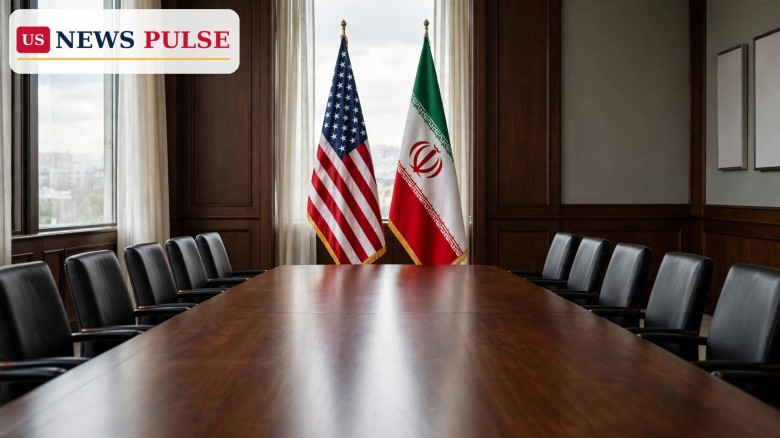
A Vance letter to Iran has become the latest flashpoint in the eight-month war between the United States and Iran, after Tehran confirmed it had received the message while President Donald Trump publicly denied that it was an attempt to restart peace negotiations. The Vance letter to Iran, reported by two leading American newspapers, was said to be aimed at reviving talks and heading off a new round of United States strikes. Trump, however, insisted the contact was about something far narrower: helping sick Iranians get medical supplies.
The contradiction matters because it goes to the heart of where the war stands. Washington has spent weeks threatening fresh military action while Tehran has insisted that any path back to negotiations runs through a set of seven conditions it says it has already stated plainly. The letter, whoever's account of it is right, arrived in that narrow space between a threat and a negotiation — and so far, Iran has answered it with silence.
The story broke in stages. On Wednesday, the Wall Street Journal and the New York Times reported, citing United States officials and people familiar with the matter, that Vance had sent a letter to Rezaei. According to the Journal, the letter was sent at Trump's direction and the contact that followed focused on a possible framework for negotiations rather than on specific terms for a peace deal. The aim, as reported, was to revive a diplomatic process that has stalled while the war has continued, and to reduce the risk of new American strikes.
Later on Wednesday, Trump was asked directly by reporters whether he had directed Vance to reach out to Iran to restart peace negotiations. His answer was a single word: "No." He then offered a different explanation for the contact. "What that is is they need help with medical supplies and various things. He asked me what I thought. I said, if you want to do that, that's OK. Basically, it's getting supplies in to help people that are not well," Trump told reporters.
On Thursday, Iranian media confirmed the letter's arrival without confirming its contents. Tasnim reported that "Iran has received the letter, but has not yet responded," while Fars carried a similar account citing a source familiar with the matter. A senior Iranian security official quoted by Fars dismissed media speculation about what the letter said, describing published accounts of its contents as inaccurate. Neither Iran's mission to the United Nations in New York nor Vance's office immediately responded to requests for comment on the letter or on Trump's remarks.
The sequence is unusual on its face. Vice presidents do not routinely write directly to the security chiefs of countries at war with the United States, and when such a channel opens, both sides usually guard its contents closely. Here, the existence of the letter is confirmed by Tehran, its purpose is disputed in public by the American president, and its text has not been published by either side. That leaves the most important question — what Vance actually proposed, if anything — unanswered for now.
The United States and Israel launched a war against Iran at the end of February, and the conflict has now run for about eight months. The war has repeatedly widened beyond the battlefield: shipping through the Strait of Hormuz, the narrow waterway that normally carries about one-fifth of global oil consumption, has been disrupted, and oil prices have climbed as supply fears have grown. In recent days, Brent crude has traded above $115 a barrel, with traders watching both the fighting and the diplomacy for any sign of a break.
Diplomacy, meanwhile, has moved in fits and starts. Iran's Foreign Minister, Abbas Araghchi, said on Wednesday that Tehran was discussing a plan with mediators, mainly Qatar and Pakistan, aimed at ending the war and reopening the Strait of Hormuz. High-level talks in Tehran this week with officials from Saudi Arabia, Turkey and Pakistan were described as positive, though no formal second round has been set. Iran's Supreme Leader, Mojtaba Khamenei, reiterated earlier in the week that Tehran has certain conditions that must be met before an end to the war can be agreed.
The military pressure has not eased while the diplomacy has flickered. On Thursday, the United States military's senior officer overseeing the Middle East, Admiral Brad Cooper, the head of Central Command, met Trump at the White House to outline military options in Iran, the Wall Street Journal reported. That briefing, covered earlier by US News Pulse, is part of the same pattern: Washington weighing a possible resumption of major combat operations even as it explores whether a negotiated framework might still be possible. The letter and the briefing, arriving within days of each other, capture the two tracks running in parallel.
Iran's complaint about medical supplies is not new. Tehran has long blamed United States sanctions for hindering civilian access to medicines and medical equipment, and in an August letter to the United Nations Security Council it accused Washington of intentionally depriving civilians of such supplies. American officials have generally said humanitarian goods are exempt from sanctions, while critics of the sanctions regime argue that banking and shipping restrictions create a chilling effect that makes suppliers reluctant to deal with Iran at all. Trump's framing of the Vance contact as a medical-supplies matter lands directly in that long-running argument.
The Vance letter to Iran now sits at the centre of a contest over interpretation. On one reading, advanced by the Wall Street Journal and the New York Times, it was a deliberate diplomatic opening: a senior American official writing to the hardline chief of Iran's Supreme National Security Council, at the president's direction, to test whether a framework for negotiations could be built before the next round of fighting. On the other reading, offered by Trump himself, it was a humanitarian gesture that the newspapers over-read.
Both readings cannot be fully true in the same way, but they are not necessarily mutually exclusive either. A letter that offers help with medical supplies could also serve as a channel through which a wider framework is explored, and a framework discussion could begin with humanitarian questions. What is clear is that neither Washington nor Tehran has published the letter, and Reuters has said it could not immediately independently verify the newspaper reports. Until the text emerges, or one side confirms its contents, the public is left with two authoritative-sounding accounts that point in different directions.
Tehran's own signals have been carefully measured. Parliament Speaker Mohammad Bagher Ghalibaf, one of Iran's negotiators in previous talks to end the war, wrote on X after the letter was reportedly received that "Iran's conditions have been repeatedly and clearly stated to the mediators" and that "the carrot-and-stick approach has no effect on Iran." He did not mention Vance's letter by name, and it was not clear whether his post constituted a formal reply. The message, however, was unmistakable: Tehran does not intend to trade its stated conditions for the mere fact of contact.
The choice of recipient also matters. Rezaei — spelled Rezaee in some reports — is a hardline figure at the top of Iran's security establishment, not a foreign-ministry diplomat of the kind who normally handles negotiations. Writing to him directly, if that is what happened, suggests an attempt to reach the centre of Iran's decision-making rather than to work through the usual diplomatic layers. It also means any reply, when it comes, is likely to reflect the security establishment's view of the war, not just the foreign ministry's.
Trump's denial was the most direct reaction from Washington. Asked whether he directed Vance to contact Tehran to restart peace negotiations, he said "No," and then reframed the contact as humanitarian. "What that is is they need help with medical supplies and various things," he said. "He asked me what I thought. I said, if you want to do that, that's OK. Basically, it's getting supplies in to help people that are not well."
From Tehran, the reactions were terse and conditional. Tasnim's report — that Iran had received the letter but had not yet responded — was the factual anchor for the Iranian side of the story. Ghalibaf's post added the political message: "Iran's conditions have been repeatedly and clearly stated to the mediators. The carrot-and-stick approach has no effect on Iran." The parliament speaker's words, coming from a man who has sat in previous negotiations, read as a warning against expecting a swift or grateful reply.
Araghchi's remarks on Wednesday gave the mediator track its clearest public outline. He said Tehran was discussing a plan with mediators, mainly Qatar and Pakistan, to end the war and reopen the Strait of Hormuz. The emphasis on mediators is itself significant: it suggests that whatever direct channel the Vance letter represents, Tehran still prefers to test proposals through intermediaries it trusts, at least in public.
No reaction has yet come from Vance's office, which did not immediately respond to requests for comment, nor from Iran's mission to the United Nations. The absence of a statement from the vice president's office is notable, because it leaves Trump's account as the only official American explanation on the record — an account that contradicts the newspapers' reporting about his own direction of the letter.
This episode matters for three reasons. First, it is a test of whether any diplomatic channel to Tehran still works. If a letter from the vice president cannot produce even an acknowledgement of its contents, let alone a reply, the space for negotiation is narrower than Washington may hope. If, on the other hand, Tehran's silence is simply the pause before a considered answer, the letter may yet prove to be the opening the newspapers described.
Second, it exposes a tension inside American messaging. The administration is simultaneously threatening new strikes, briefing military options at the White House, and — on the newspapers' account — reaching out through a back channel. That combination can be read as a classic pressure-and-diplomacy strategy, but it can also confuse allies, adversaries and the public about what Washington actually wants. Trump's public denial of the peace-talks account, if taken at face value, removes the diplomacy from the picture and leaves only the pressure.
Third, the stakes extend far beyond the two capitals. The Strait of Hormuz carries about a fifth of the world's oil, and its closure or disruption feeds directly into fuel prices, inflation and the calculations of central banks — including the Federal Reserve, which has just held interest rates steady while warning about inflation. A war that began in February has already reshaped energy markets; whether it ends through a letter, a mediator's plan or another round of strikes will shape them further.
The most immediate question is whether Tehran replies, and in what form. A reply through mediators — Qatar or Pakistan — would keep the process deniable and flexible. A direct reply to Vance would signal that the channel is real and that Tehran is willing to engage with it. No reply at all, sustained over days, would suggest that the security establishment has judged the letter unworthy of an answer, or that it is waiting for a clearer American position.
Watch also for what happens to the mediator track. Araghchi's reference to a plan discussed with Qatar and Pakistan gives that track a concrete shape, and any progress there — a second round of talks, a draft framework, a limited confidence-building step such as a humanitarian delivery — would tell observers more than the dispute over the letter's purpose. Conversely, if the mediator track stalls and the military briefings continue, the balance will tilt back toward escalation.
For American voters, the timing is not incidental. The midterm elections fall on November 3, just days away, and the war with Iran has become one of the defining foreign-policy questions of the campaign. A breakthrough, a breakdown or simply a week of silence from Tehran will each land differently in that context. The letter, whatever it contained, has already ensured that Iran policy will be debated not in abstractions but in the concrete question of what one message said and what the other side does next.
What is the Vance letter to Iran? It is a letter Vice President JD Vance reportedly sent to Mohsen Rezaei, chief of Iran's Supreme National Security Council. The Wall Street Journal and the New York Times reported it was aimed at reviving peace negotiations; President Trump said it was about medical supplies.
Has Iran responded to the letter? Not yet, according to Iranian media. Tasnim reported on Thursday that Tehran had received the letter but had not responded, and a senior security official quoted by Fars dismissed speculation about its contents.
What are Iran's seven conditions? Tehran says its conditions include a ceasefire across the Middle East, the unfreezing of Iranian assets abroad, the lifting of sanctions on its oil sector and an end to the United States naval blockade, along with other demands it says have been repeatedly stated to mediators.
Why does the Strait of Hormuz matter? The waterway normally carries about one-fifth of global oil consumption, so its closure or disruption pushes up oil prices and feeds into inflation and interest-rate decisions around the world.
Is the United States about to strike Iran again? Washington has not announced a decision. Admiral Brad Cooper briefed President Trump on military options on Thursday, and the administration has repeatedly threatened to resume strikes, but no new campaign has been confirmed.
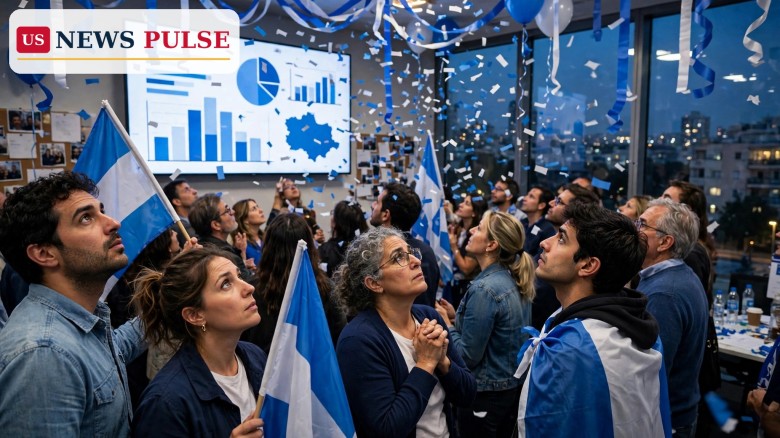
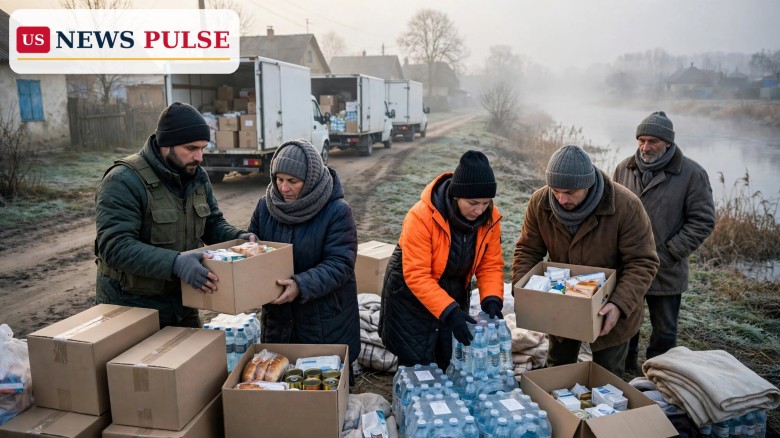
Related coverage on US News Pulse: the report on American strike options briefed to the president (US Iran strike plans), the Ukraine ceasefire and aid mission (Melania Trump ceasefire in Oleshky) and Israel's 2026 election (Israel election 2026). More world news on the US News Pulse homepage.
Sources: Dawn, October 30, 2026; The Standard (Reuters), October 30, 2026; Telegraph India / PTI, October 30, 2026; Business Times, October 30, 2026; Vietnam.vn, October 30, 2026; The Diplomatic Insight, October 30, 2026.
Leave a Comment



 | Today's Date: