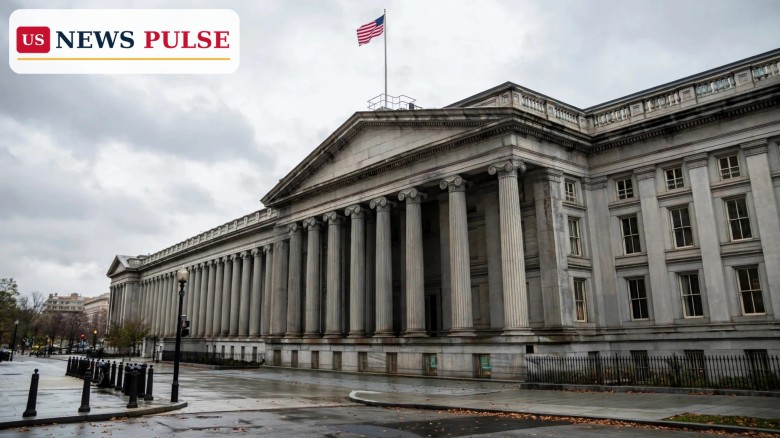
US sanctions Rwanda in a major escalation of pressure over the war in eastern Congo, after the Treasury Department announced on Wednesday, October 28, 2026, that it had imposed sanctions on Rwanda's Ministry of Defence and on a financial institution serving the country's security forces. Washington accuses Kigali of continuing to back the M23 rebel group in the mineral-rich east of the Democratic Republic of Congo, in breach of the US-brokered peace deal signed less than a year ago.
The measures, announced by the Treasury's Office of Foreign Assets Control together with the State Department, target the ministry that directs the Rwanda Defence Force and Zigama Credit and Savings Society, a major financial institution serving Rwanda's security forces. The United States says the ministry deployed thousands of troops across eastern Congo's North and South Kivu provinces, where they conducted operations alongside M23 and supplied the rebels with military equipment, supplies, logistical support and training.
The sanctions were announced on Wednesday, October 28, 2026, as fighting continued in eastern Congo despite a peace agreement signed in Washington on December 4, 2025, by Rwandan President Paul Kagame and Congolese President Felix-Antoine Tshisekedi alongside President Donald Trump. At that signing, Trump declared: "Today, we're succeeding where so many others have failed." Nearly eleven months later, Washington says the reality on the ground has barely changed.
According to the Treasury statement, Rwanda's defence ministry directed the Rwanda Defence Force, which Washington had previously sanctioned, to deploy thousands of troops across North and South Kivu. There, the statement says, Rwandan forces conducted operations alongside M23, the rebel group now formally known as the Refoundation of the Nation, formerly AFC-M23, and provided it with military equipment and other support.
The Treasury went further, accusing Rwandan forces of introducing advanced weaponry to the battlefield, including surface-to-air missile systems and jamming equipment, creating risks for civilian aviation in eastern Congo. It also alleged that the support network helped sustain M23's control of mineral-producing areas, including gold mining sites in South Kivu and the Rubaya coltan-mining zone in North Kivu, and that civilians in areas under M23 control faced forced labour, unsafe mining conditions and illegal taxation.
Eastern Congo has been beset by conflict for three decades, most recently an armed insurgency by M23 that the Congolese government and United Nations experts say is backed by Rwanda. M23 re-emerged as a major force in 2021 and, in an offensive with the Rwandan army, captured large swathes of eastern Congo in 2025, including Goma and Bukavu, the provincial capitals of North and South Kivu respectively.
The fighting pits M23 and its Rwandan backers, as Kinshasa and UN experts describe them, against Congolese forces and the Democratic Forces for the Liberation of Rwanda, known as the FDLR, a Hutu militia rooted in the 1994 genocide in Rwanda. Rwanda says it faces an existential threat from Congolese-based militias founded by ethnic Hutus involved in that genocide, and it has long framed its security presence in eastern Congo as protection against the FDLR rather than as support for a rebellion.
The Washington Accords for Peace and Prosperity, signed on December 4, 2025, were meant to end the fighting. They carried commitments on both sides, including the neutralisation of the FDLR, and were presented by the Trump administration as a breakthrough in a conflict that has displaced millions of people and fuelled a scramble for the region's minerals, including coltan, gold and tin. Yet clashes continued through 2026, and the accords, in Washington's telling, have been honoured in name more than in practice.
The heart of the US case is control. UN experts say Rwanda exercises significant control over M23 and continues to deploy thousands of troops in its neighbour, an accusation Kigali has repeatedly denied. The Treasury statement adopts that view, describing Rwandan troops operating alongside the rebels, supplying them and introducing advanced weapons systems.
Treasury Secretary Scott Bessent left no doubt about Washington's intent. "Today, the United States makes good on President Trump's promise to hold Rwanda accountable for its commitments under the Washington Accords for Peace and Prosperity," he said. "Rwanda must halt its support for M23 and withdraw its troops from eastern DRC."
Congo's ministry of foreign affairs welcomed the sanctions in a statement. "These sanctions send a clear message that Rwanda cannot act with impunity," it said. "Rwanda must honour its commitments under the Washington Accords, respect the UN Charter, and withdraw its tens of thousands of troops from the DRC."
Rwanda's government did not immediately respond to the sanctions announcement itself, but its officials had already set out Kigali's position in the hours before the measures landed. Government spokesperson Yolande Makolo said the Washington Accords contain commitments on the neutralisation of the FDLR that remain unmet. "Rwanda remains ready to fully implement the Washington Accords, concurrently with the willingness of the DRC to fulfill those commitments, and with the mediator holding all parties accountable," she said.
Foreign Minister Olivier Nduhungirehe, speaking on the sidelines of a Russia-Africa summit in Moscow on Wednesday, before the sanctions were imposed, pushed back against the framing of the conflict. "The situation in the DRC, the political situation, the security situation, is mainly a Congolese issue," he told AFP. "Rwanda must not be held as a scapegoat for what is happening in Congo forever." He also rejected Kinshasa's allegation that former Congolese president Joseph Kabila, who joined forces with M23 this month, was a Rwandan proxy, calling it a political issue to be settled between Congolese parties.
The sanctions matter first for the people of eastern Congo, where the war has displaced millions and where control of mining areas has long funded armed groups. If the measures bite, they could constrain the resources flowing to M23 and raise the price of continued fighting for Kigali. If they do not, they will join a long list of international steps that changed the diplomatic weather without changing the facts on the ground.
The immediate question is whether Rwanda changes course, retaliates diplomatically, or waits out the pressure. Kigali's stated position, that it will implement the accords concurrently with Congo's own commitments on the FDLR, suggests it will demand movement on the FDLR as the price of any withdrawal, and will resist any framing that treats its security concerns as illegitimate.
Congo, emboldened by Washington's backing, is likely to press for more, including further designations and enforcement against the networks that move minerals out of M23-held areas. The next test will be whether the sanctions are followed by concrete steps on the ground: a reduction in fighting, a drawdown of troops, or progress on the neutralisation of the FDLR that both sides have promised.
Washington says the ministry directed the Rwanda Defence Force to deploy thousands of troops in eastern Congo, operate alongside M23 rebels, and supply them with equipment, training and logistical support, in breach of the Washington Accords signed in December 2025.
Rwanda's Ministry of Defence and Zigama Credit and Savings Society, a major financial institution serving Rwanda's security forces. The Rwanda Defence Force itself had previously been sanctioned by the United States.
Treasury Secretary Scott Bessent said the US was making good on President Trump's promise to hold Rwanda accountable under the Washington Accords, and that Rwanda must halt its support for M23 and withdraw its troops from eastern DRC.
Rwanda denies backing M23. Government spokesperson Yolande Makolo said commitments on neutralising the FDLR militia remain unmet, and Foreign Minister Olivier Nduhungirehe said Rwanda must not be held as a scapegoat for events in Congo.
The Washington Accords for Peace and Prosperity were signed on December 4, 2025, by the presidents of Rwanda and Congo alongside President Donald Trump, aiming to end fighting in eastern Congo. Washington says the fighting has continued despite the deal.
Related coverage: Melania Trump ceasefire brings hope to Oleshky as Ukraine aid mission begins and Jordan-Syria airstrikes kill 7 after church attack as border crossing shuts.
Leave a Comment



 | Today's Date: