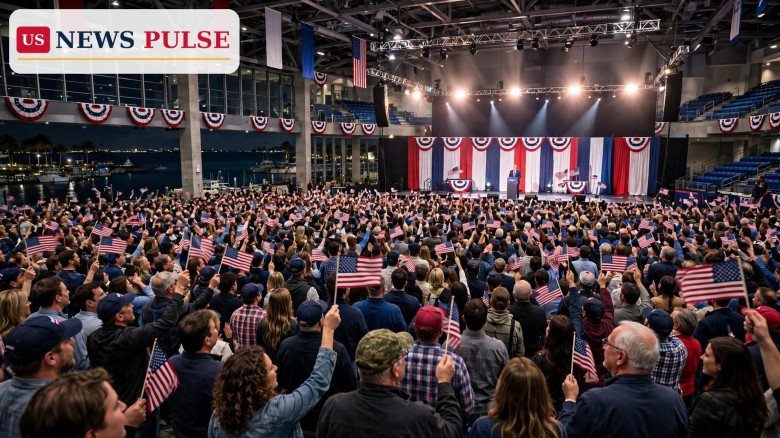
President Donald Trump brings his closing midterm campaign to the Florida coast on Friday, October 30, 2026, headlining a rally at the Ocean Center in Daytona Beach four days before voters decide control of Congress. The Trump Daytona Beach rally, with doors opening at 3:30 p.m. and the president expected to take the stage at 7 p.m., is aimed squarely at turning out Republican voters in a state his party already dominates — and at giving a final push to two of its top statewide candidates, Byron Donalds for governor and Ashley Moody for the United States Senate.
The Republican National Committee, which is organising the event, announced the Daytona Beach rally hours after Trump's October 23 appearance at Florida Gulf Coast University's Alico Arena in Fort Myers. Admission is free, with supporters asked to register in advance; registration does not guarantee entry, seating is first-come, first-served, and sign-ups are limited to four tickets each.
The Ocean Center sits on the Atlantic beachfront in the heart of Daytona Beach, and officials have said the rally could draw up to 9,000 people. The venue's own rules subject attendees at ticketed events to metal-detector or handheld-wand screening and bag checks. The Secret Service is the lead agency for the president's security, with the FBI sharing information with it, according to Jason Carley, special agent in charge of the FBI's Jacksonville field office, who was in Daytona Beach on October 28 to present an award to NASCAR Security.
A temporary flight restriction will also be in place over the Daytona Beach area during the visit, Carley said, covering a large area in which nothing can fly, including drones, while the president is in town. The prohibited-items list used at Trump's Fort Myers rally on October 23 — aerosols, alcohol, balloons, banners and signs, drones, e-cigarettes, explosives including fireworks, firearms, glass, thermal and metal containers, laser pointers, mace and pepper spray, noisemakers, packages and weapons — offers the clearest guide to what screeners will bar at the Ocean Center.
Trump's Florida schedule has been moving fast in the campaign's final week. After presiding over the White House Halloween celebration on October 29 alongside First Lady Melania Trump, he returns to his home state for the Daytona Beach event, his second Florida rally in consecutive Fridays.
Daytona Beach is familiar ground for Trump. His first political visit to the city came on August 3, 2016, when he held a rally at the very same Ocean Center as the Republican presidential nominee. He returned for the Daytona 500 at Daytona International Speedway on February 16, 2020, serving as grand marshal, and again on February 16, 2025, becoming the first sitting president to attend the Great American Race more than once.
Volusia County, home to Daytona Beach, has moved steadily in his direction. Trump has won the county in each of his three presidential elections, by larger margins each time, including 60.2% in 2024. That history is part of why local Republicans say the city is a natural rally site: it sits on Florida's East Coast, balancing the Gulf Coast stop in Fort Myers a week earlier, and it can draw supporters from across Central Florida.
Yet the choice of Daytona Beach has also raised eyebrows, because Florida looks, on paper, like safe ground for Republicans. The party now holds a voter-registration advantage of well over one million over Democrats in the state, after a transformation during the Trump era from a state with more registered Democrats. Earlier this year, Florida lawmakers redrew congressional districts at Trump's suggestion in an effort to expand the Republican delegation beyond the 20 of the state's 28 House seats the party already held.
The broader stakes are national. The November 3 midterms will decide whether Republicans keep control of the House and the Senate, shaping the final two years of Trump's term. History is against the party in power: the last president whose party gained House seats in a midterm election was George W. Bush in 2002, although Joe Biden's Democrats picked up one Senate seat in 2022. A recent Reuters/Ipsos poll completed October 26 put Trump's approval rating at 32%, up one point from a record low the week before, with Democrats leading the generic congressional ballot.
The economy and the cost of living have consistently been the top issue of the campaign, according to political analyst Susan MacManus, professor emeritus at the University of South Florida. That affordability debate has run through Trump's closing rallies, including his promise of $5,000 dividend checks if Republicans keep Congress — a pledge Democrats and even some of his own allies have criticised as a bid to buy votes, at an estimated cost of about $1.3 trillion.
The central question local observers have asked is simple: why Daytona Beach, and why a second Florida event on a second consecutive Friday, when Republicans already hold every statewide office? The answers offered by party leaders and political scientists point in the same direction — turnout, not persuasion.
Emma Hall, spokeswoman for the Republican National Committee, said: “President Trump and Republicans like Ashley Moody and Byron Donalds cut taxes, lowered prescription drug costs, slashed violent crime, and delivered the most secure border in history. As President Trump barnstorms the country, Floridians are fired up to rally with him because they love America First results and hate the insane agenda of socialist hack Angie Nixon and far-left extremist David Jolly.”
Vic Baker, Volusia County's state committeeman to the Republican Party of Florida, said not too much should be read into the choice of city. Trump will have campaigned in at least 16 states since the start of September, he noted, including four trips to Texas and two to Ohio in October alone. “He's putting emphasis on areas where he thinks he can have the best influence,” Baker said. “He gets one on the Gulf Coast and he gets one on the East Coast. And Daytona is an ideal location, where he could get a pretty good turnout.”
Aubrey Jewett, associate professor of political science at the University of Central Florida, said the visit suggests Republicans are “a little concerned about keeping Florida's Republican Senate, governor and congressional seats” and are bringing in the president to fire up the base. “It's Political Campaigning 101,” he said. MacManus added that with the Fort Myers and Daytona choices, Trump is targeting parts of the state with large concentrations of the new Republican voters who arrived during his era, “and trying to shore them up a bit.”
Ryan Owens, director of Florida State University's Institute for Governance and Civics, said the motive is straightforward: “Trump is likely coming to energize supporters and these events tend to draw news coverage and draw attention to candidates up and down the ballot. For him to come to Florida, it's a bit of a homecoming, and a way to juice up turnout among supporters.” Owens cautioned, however: “You can't take anything for granted in politics. Strange things happen.”
The polling picture in the governor's race is mixed. An FSU Institute poll of 1,247 Florida adults conducted October 2 to 9 showed Donalds with a 10-point lead over Democrat David Jolly, although other polls have shown that race and others to be much closer.
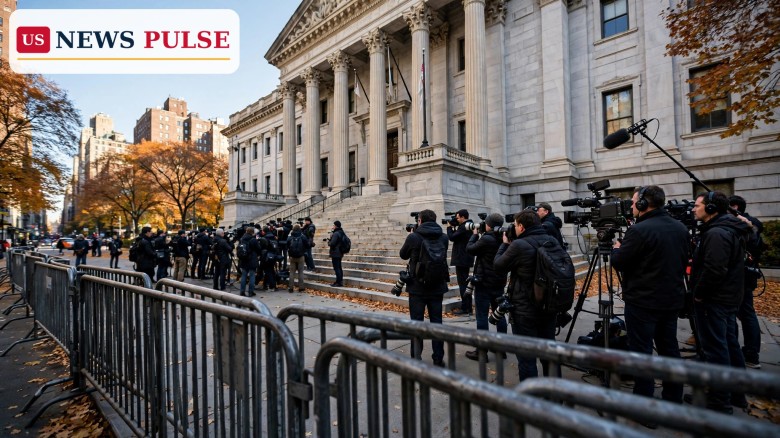
The rally's timing — on the Friday before Halloween weekend — has drawn criticism from local protest groups and some beachside businesses. Just Us Volusia, a local civic group, and the Volusia Democratic Socialists of America are among the groups planning demonstrations. Organisers say road closures and possible airline delays could disrupt Halloween events on the beachside, where many businesses make much of their money from the holiday crowd.
Kelly Czajkowski, founder and president of Just Us Volusia, said: “I think this is terrible timing, not because it's so close to the election, but because it will affect local businesses on beachside,” adding that the beachside is where people predominantly go out to party on Halloween. She also criticised Moody and Representative Randy Fine, saying Volusia County representatives should be a cause for Republican worry.
Henry Cron, co-chair of the Volusia Democratic Socialists of America, said the scale of the disruption felt outsized: “When they come to town, we close our streets, we close our businesses and roll out the welcome mat and put everything else on hold. It feels pretty kingly.”
Volusia County Democratic Chair Nick Sakhnovsky pointed to the lateness of the announcement — the rally was scheduled only about a week ahead — as a sign of Republican anxiety. “What I think is telling is the lateness at which this was scheduled, which indicates to me they know they need to shore up their base,” he said. “I think it's not going to be adequate because what people are looking for is an end to the war in Iran and a lowering of gas prices.”
Baker, the Volusia Republican committeeman, rejected that reading, saying the excitement around the visit has been intense: “He's working to reverse that trend by firing up the base, and the excitement surrounding this visit has been intense.”
Daytona Beach matters because it tests the central gamble of Trump's closing campaign: that energising his own voters can beat the midterm curse that has punished nearly every modern president's party. Florida is the purest version of that test. It is Trump's adopted home state, it has swung from swing state to Republican stronghold during his political lifetime, and it now has more than a million more registered Republicans than Democrats — yet his team is still spending the final Friday before the election rallying there rather than in a toss-up state.
The answer, as the local experts describe it, is that modern Florida Republican strength depends on voters who only recently joined the party, many of them working-class voters drawn in 2024, and on keeping them engaged when Trump himself is not on the ballot. A rally in Daytona Beach, broadcast statewide, is designed to do that work for Donalds, Moody and every Republican further down the ballot at once.
For Donalds and Moody, the stakes are personal as well as partisan. Donalds is seeking to succeed in the governor's race after a campaign in which Trump has been his most important surrogate, while Moody, who previously served as Florida's attorney general, is defending a Senate seat in a race Republicans cannot afford to let become competitive. A packed Ocean Center on Friday night would give both campaigns the closing images they want; a muted one would feed the Democratic argument that the Republican base is not as fired up as the party claims.
There is also a practical consequence for Daytona Beach itself. A presidential visit on Halloween weekend means closed streets, a restricted sky and diverted police, all landing on one of the busiest weekends of the year for beachside bars, restaurants and hotels. How the city balances a major political event against a major holiday weekend will be watched by other host cities in the campaign's final days.
Trump takes the stage at 7 p.m. on Friday, October 30, after doors open at 3:30 p.m. His remarks are expected to focus on Donalds and Moody, the economy and the cost of living, and the case for keeping Republican majorities in Congress. After Daytona Beach, the campaign enters its final weekend, with early voting already under way in many states and Election Day on Tuesday, November 3.
Watch for three things from the Ocean Center. First, the size and energy of the crowd — officials expect up to 9,000 — against the campaign's own turnout claims. Second, whether Trump unveils any new promise or attack line for the final days, as he has used late rallies to float ideas such as the $5,000 dividend and a Supreme Court suggestion for Senator Ted Cruz. Third, the scale of the protests and disruption around the venue, and whether the Halloween-weekend friction becomes a story of its own.
US News Pulse will cover the rally's outcome as it happens, including Trump's remarks, the crowd response and any notable moments from the stage.
Friday, October 30, 2026. Doors at the Ocean Center open at 3:30 p.m. and President Donald Trump is scheduled to take the stage at 7 p.m.
The Ocean Center, 101 N. Atlantic Ave., Daytona Beach, Florida — the same venue where Trump held a rally on August 3, 2016.
Republican gubernatorial candidate Byron Donalds and Republican Senate candidate Ashley Moody, four days before the November 3 midterm elections.
Officials expect up to 9,000 people. Admission is free with advance registration, limited to four tickets per sign-up, on a first-come, first-served basis.
Yes, protest groups including Just Us Volusia and the Volusia Democratic Socialists of America plan demonstrations, and road closures plus a temporary flight restriction are expected around the Ocean Center.
Related coverage: Trump's Texas rallies for Paxton, Trump's $5,000 dividend promise and the Supreme Court's SNAP payments block.
Leave a Comment



 | Today's Date: