The Congo Ebola outbreak has passed a grim milestone, with confirmed cases rising above 10,000 in the Democratic Republic of Congo, government data showed on Tuesday, October 27, 2026. The Congo Ebola outbreak, caused by the rare Bundibugyo virus, has now killed 4,887 people, making it the largest and deadliest Ebola epidemic in the country's history and the second-largest ever recorded worldwide.
The latest situation report from Congo's public health institute put confirmed cases at 10,060 and deaths at 4,887, a crude fatality ratio of about 48.6 percent. Nearly half of everyone confirmed to have caught the virus has died. The outbreak, declared on May 15, 2026, has spread from just three health zones in its first days to 66 health zones across eight provinces, and it is now moving faster than any previous Ebola outbreak in Congo.
Government data released on Tuesday showed the outbreak had crossed the 10,000-case mark, a milestone that underlines how far the epidemic has run ahead of the response. The figures, published in the public health institute's situation report and reported by Reuters and Al Jazeera, cover cases confirmed through October 25, 2026. On that single day, 96 new cases and 46 deaths were notified, including 40 deaths in the community and six in treatment centres.
Ituri province in the northeast remains the epicentre, with 7,211 cases and 3,370 deaths. North Kivu follows with 2,309 cases and 1,293 deaths, while Haut-Uélé has recorded 436 cases and 190 deaths and Tshopo 83 cases and 27 deaths. The other affected provinces are Bas-Uélé, South Kivu, South Ubangi and North Ubangi. In total, 2,684 people have recovered, according to the national institute.
The speed of the spread is what alarms epidemiologists most. The 2014-2016 West African epidemic, caused by the Zaire strain of Ebola, infected more than 28,600 people and killed over 11,000 across Guinea, Liberia and Sierra Leone over two years. Congo's current outbreak has reached more than a third of that case total in about five months, and analysts cited in coverage this week say cases and deaths have risen more than three times faster over a comparable period.
This is Congo's 17th Ebola outbreak, but it is unlike the ones before it. Earlier Congolese epidemics were mostly caused by the Zaire strain, against which vaccines and treatments exist. The Bundibugyo virus, first identified in neighbouring Uganda in 2007, is a different species of Ebola. Existing vaccines and antibody treatments were designed for the Zaire strain, and researchers are still testing whether they offer any protection against Bundibugyo.
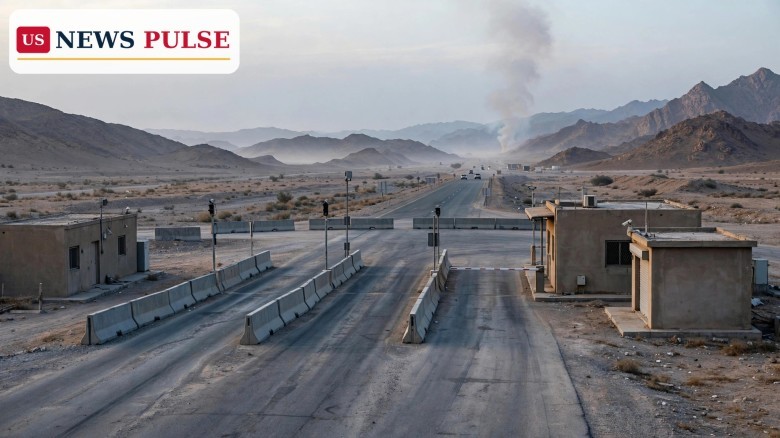
The outbreak was first identified in Ituri province after spreading undetected for weeks. Ituri and North Kivu, which together account for almost all cases, are also regions scarred by armed conflict. Parts of North Kivu are controlled by the Rwanda-backed M23 rebel group, and insecurity limits where response teams can travel. Poor roads, a shortage of medical facilities and deep mistrust of state institutions all complicate the work of tracing contacts, isolating the sick and burying the dead safely.
Congo's previous largest epidemic, in 2018-2020, killed 2,287 people. The current outbreak has already killed more than twice that number. For comparison, the deadliest Ebola outbreak on record remains the West African epidemic of 2014-2016. Congo's outbreak is now second on both measures: cases and deaths.
The single most important number in the response is not the total case count but the share of new cases found among known contacts. The Africa Centres for Disease Control and Prevention (Africa CDC) has said at least 95 percent of cases must come from the known contacts of infected people for an outbreak to be considered under control. In Congo, about 80 percent of new cases are coming from outside monitored transmission chains, meaning most new patients were not on any contact list when they fell ill.
Contact monitoring itself is running below target. Data from five provinces submitting follow-up figures for October 25 showed teams saw 16,205 of 19,853 listed contacts in the preceding 24 hours, a rate of 81.6 percent, and that figure does not cover every affected province. Attacks and threats against response teams have also interrupted reporting: the Bafwasende health zone in Tshopo could not submit data after a nurse was killed and a colleague seriously injured while responding to a suspected case.
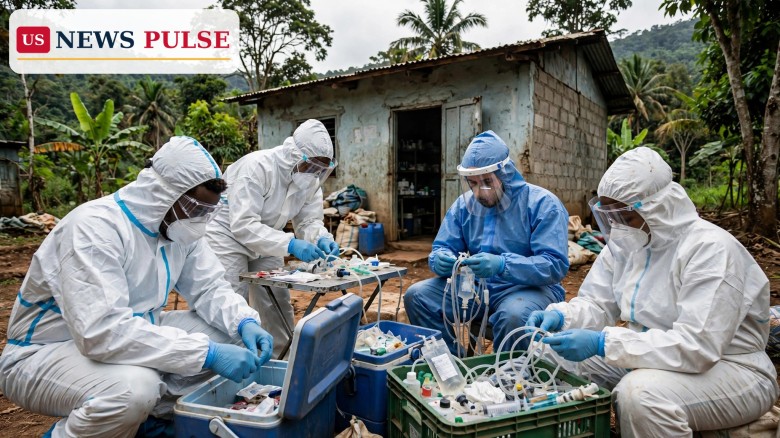
Treatment capacity is stretched thin. Responders say some treatment centres are overwhelmed, while remote and newly affected areas are short of medical supplies and health workers. Many teams lack adequate vehicles, and persuading families to hand over the sick for treatment and the dead for safe burial remains difficult. At least half of those who have died were never admitted for treatment, a figure that helps explain the high fatality ratio: Ebola patients who receive supportive care early stand a far better chance than those treated late or not at all.
The wider damage is also mounting. Routine care, including childhood vaccinations, has been disrupted, and maternal deaths doubled in some provinces soon after the outbreak was declared, according to Al Jazeera's reporting. Strikes over delayed or unpaid wages are common: last week, Ebola responders in Nia Nia, Ituri province, stopped work over bonuses owed since late August.
World Health Organization Director-General Tedros Adhanom Ghebreyesus condemned the attack on health workers in Bafwasende, writing on X: "Everyone working to protect communities from this deadly disease must be able to work in dignity and safety." A local politician, Marie-Celestin Karondwa, was fatally beaten last month after defending the Ebola response on the radio, his party said, a sign of how dangerous the work has become.
There is one hopeful development. On Friday, the WHO announced that the first clinical trial for a vaccine against this outbreak had been rolled out, with health workers administering doses of the experimental Tumaini vaccine in Ituri on October 23, 2026. Researchers are also testing whether the existing Ervebo vaccine, which works against the Zaire strain, could offer protection against Bundibugyo. Neither option is yet an approved vaccine, and a trial result will take time.
Neighbouring governments are tightening their own defences. Uganda's Health Minister Chris Baryomunsi announced on Sunday that citizens returning from Congo must quarantine for 21 days at their own expense. Uganda recorded 20 cases, mostly imported from Congo, and two deaths over the summer, but the WHO declared the country Ebola-free in August and Ugandan officials say there are no active infections there now.
This outbreak matters for the United States as well as for central Africa. The US Centers for Disease Control and Prevention has already acted: an attestation order announced on October 22 requires every passenger flying to the United States from any foreign country to declare that they have not been in Congo in the 21 days before boarding, with the rule taking effect at 11:59 p.m. EST on November 3, 2026. The 10,000-case milestone is the reason that kind of precaution exists, and it raises the stakes for keeping it in place.
It also matters because the cross-border spread is already happening. Kenya reported its first case earlier in October after a man who had travelled from Congo via Uganda died in Nairobi; its tally has since risen to nine confirmed cases, two of them fatal, with 20 contacts of the first patient released from mandatory quarantine on Monday after 21 days and 98 still under monitoring. Nigeria became the fourth African country affected last week, when a woman married to a Swiss diplomat was diagnosed there; she had not travelled to Congo, and Swiss authorities believe she was infected during a September visit to Uganda. She and her husband were flown to hospitals in Switzerland on Monday, and Nigeria has stepped up airport screening.
For global health, the outbreak is a test of whether the world can contain a fast-moving filovirus for which it has no approved vaccine. If 80 percent of new cases keep appearing outside known contact chains, the epidemic will keep outrunning the response, and the case count will keep climbing.
The immediate question is whether contact tracing can be pushed back toward the Africa CDC's 95 percent benchmark. That will require safer access for health teams in conflict-affected areas, faster payment of responders, and better transport to remote zones. The vaccine trial in Ituri is the other watchpoint: early safety and immune-response data will shape whether a wider rollout is possible.
Cross-border surveillance will also intensify. Kenya's remaining 98 monitored contacts, Nigeria's airport screening and Uganda's 21-day quarantine for returnees from Congo are all designed to catch the next imported case before it starts a new chain. The CDC's US attestation rule takes effect on November 3 and is scheduled to run until December 18 unless it is rescinded, modified or extended.
For related coverage, read our earlier report on the US travel rule: CDC Ebola attestation: new US flight declaration rule from Nov. 3 explained. Also read our coverage of another major US outbreak: Pennsylvania measles outbreak nears 1,400 cases as US total doubles. More US news is available on the US News Pulse homepage.
As of October 25, 2026, Congo's public health institute reported 10,060 confirmed cases and 4,887 deaths, a crude fatality ratio of about 48.6 percent.
It is caused by the rare Bundibugyo virus, for which no vaccine or specific treatment has been approved, unlike the Zaire strain behind most earlier outbreaks.
Yes. Kenya has reported nine confirmed cases, Nigeria reported its first case last week, and Uganda recorded 20 cases over the summer before being declared Ebola-free in August.
Not yet an approved one. The WHO announced on October 23, 2026 that the first clinical trial of an experimental vaccine, Tumaini, had begun in Ituri province.
The CDC requires passengers flying to the US to attest they have not been in Congo in the 21 days before boarding, under an order effective November 3, 2026.
Leave a Comment



 | Today's Date: