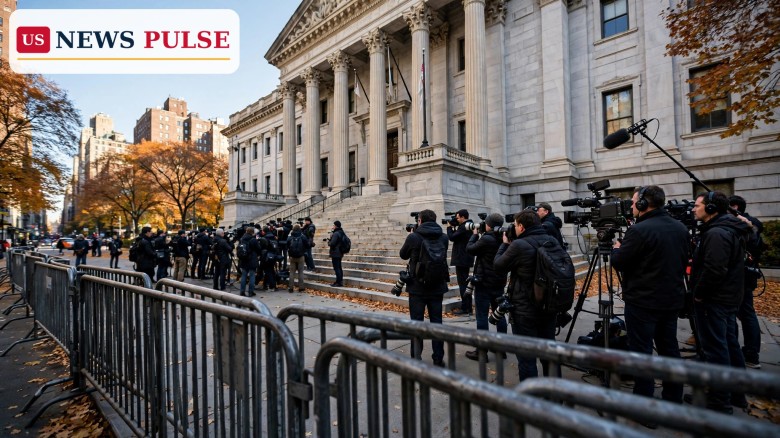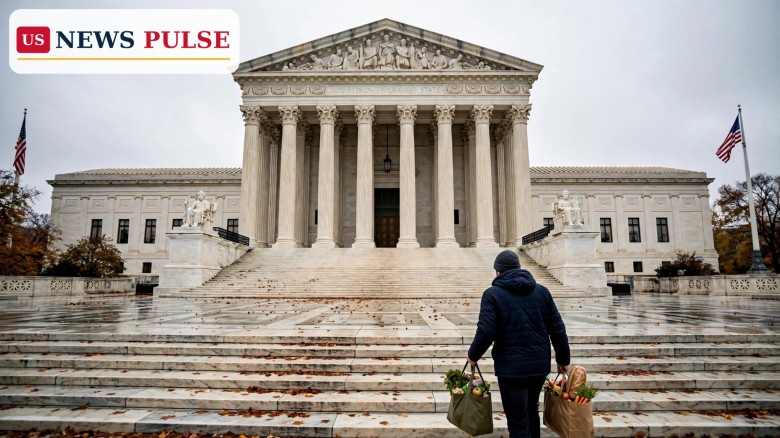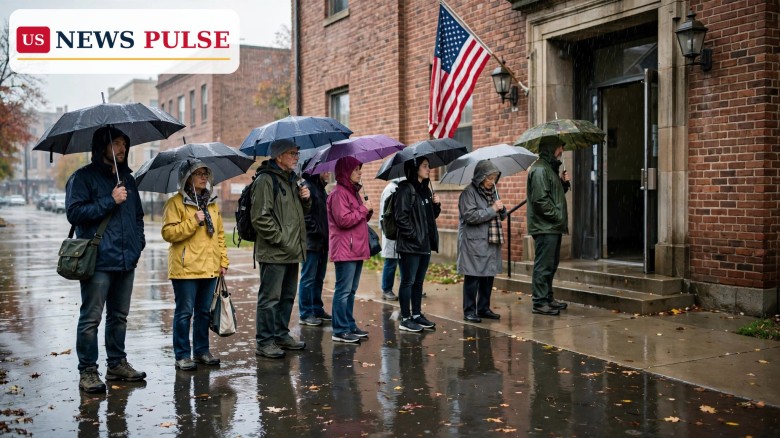
An Election Day storm is lining up to be an uninvited guest at the 2026 midterm elections, with a soggy system expected to track through the central United States on Tuesday, November 3, 2026, and rain threatening to dampen turnout in some of the country's most closely watched races. Forecasters say Iowa, Kansas, Michigan, Ohio and Texas are among the states most likely to contend with wet weather on voting day, while much of the East Coast and the West should stay dry.
The forecast, reported by CNN Weather on Wednesday, October 28, 2026, comes with an important caveat: nearly a week out, the storm's exact location and strength remain uncertain, and the picture will sharpen over the weekend. But the broad shape is clear enough that campaigns, election officials and voters in the central US are already being urged to plan for rain. With control of the House and Senate on the line and more than 34 million ballots already cast early, even a modest weather-driven dip in Election Day turnout could matter in races decided by narrow margins.
Rain on Election Day is one of the oldest variables in American politics, and researchers have spent decades trying to measure it. The evidence suggests the effect is real but modest: wet weather tends to keep some occasional voters at home, and those missing voters are not spread evenly across the electorate. That is why a storm that lands hardest on the Plains and the Upper Midwest, rather than on the coasts, is being watched so closely in the final days of the campaign.
CNN Weather reported on October 28, 2026, that a storm system will move through the central United States on Election Day and could influence turnout in key races across the region. The report stressed that the details are still a toss-up: forecast models agree on the broad pattern but disagree on precisely where the heaviest rain will fall, which is normal for a forecast issued nearly a week in advance.
The rain threat could stretch from parts of the Great Lakes and the Upper Midwest down to the western Gulf Coast. Gusty winds could accompany the rain across the Midwest and the Plains, and strong thunderstorms are possible on the storm's southern side, adding a further complication for voters travelling to polling places. Forecasters expect to refine the outlook by the weekend, when confidence in the storm's track should grow.
One part of the forecast is much firmer: voters will not need to bundle up. High temperatures across most of the eastern half of the country are expected to run 5 to 15 degrees Fahrenheit above average on Election Day, with only the Southwest tilting a little cooler than normal. Dry weather is expected to bookend the storm along much of the East Coast and in the West, with only nuisance showers possible along coastal areas of the Mid-Atlantic and Southeast.
The timing matters because Election Day voting remains a large share of the total even in an era of heavy early voting. Early ballots already cast will not be affected by the weather, but tens of millions of Americans still plan to vote in person on November 3, and in states where early voting has surged, the remaining Election Day electorate leans more heavily towards voters who vote on the day itself.
The 2026 midterms arrive with extraordinary early-voting energy. National trackers led by the University of Florida Election Lab put the early total at more than 34 million ballots as of this week, a pace on track to exceed the early vote in the 2022 midterms, when nearly 46 million Americans voted early. Texas alone recorded roughly 4.5 million early ballots in its first week, while Michigan logged about 1.39 million and Georgia more than 2 million in-person early ballots.
Michael McDonald, the University of Florida political scientist who runs the Election Lab, has cautioned against reading too much into the early numbers. He has said it is important not to overinterpret early voting data because it is often a poor predictor of final results, and that the surge may simply reflect a shift in when people vote rather than a surge in overall turnout. He has also noted that the current pace looks at least even with 2018, the highest-turnout midterm since 1914, which sets a high benchmark for Election Day itself.
That context cuts both ways for the storm forecast. A large early vote means millions of ballots are already safely banked before a single drop of Election Day rain falls. But it also means the voters still to come are, by definition, the ones who did not vote early, and research consistently finds that occasional voters are the most sensitive to added costs on voting day, including bad weather.
The central states in the storm's path are also home to several of the cycle's most competitive contests. Texas is the scene of a hard-fought Senate race, Ohio and Michigan both feature marquee statewide battles, and Iowa and Kansas have competitive House and statewide races where a few thousand votes could decide the outcome. In that environment, even a small weather effect is worth watching.
The state-by-state picture, as reported by CNN Weather, shows a sharp divide between the wet centre and the dry coasts. Iowa faces rain for at least part of Election Day, although showers could push out of the state by early morning, with highs in the 50s and low 60s. Kansas also looks like a good bet for rainfall in parts of the state, though how much and exactly where remains unclear, with highs in the 50s and 60s.
Michigan is the hardest state to call. Forecast models show vastly different outcomes there: some bring widespread rain sweeping across much of the state, while others limit the wet weather to nuisance showers in western Michigan or the Upper Peninsula. Highs are expected to range from the 40s and 50s in the Upper Peninsula to the 60s in southern Lower Michigan, so voters should prepare for a cool, potentially wet day even if the heaviest rain stays away.
Ohio sits on the edge of the system. Most forecast models keep the rainfall west of the state, but forecasters say it is too early to rule out wet weather entirely, with highs expected to reach the 60s. Texas carries the clearest rain signal: the eastern half of the state, especially along and east of Interstate 35, has the highest chance of rain, with some thunderstorms possible, and highs ranging from the 80s near the coast to the 60s in the Panhandle.
By contrast, Georgia looks likely to stay dry with highs in the 70s and low 80s, North Carolina is also expected to stay dry with highs in the 70s, Maine should be dry with highs in the 40s and lower 50s, and New Hampshire is forecast dry with highs in the 40s and 50s. For voters in those states, the Election Day weather story is one of mild, dry conditions rather than disruption.
Separately, the remnants of Tropical Storm Vance are expected to bring heavy rainfall and scattered flash flooding to Texas and New Mexico on October 29 and 30, ahead of Election Day, a reminder that the southern Plains are already in for a wet stretch before the main Election Day system arrives.
CNN Weather's assessment was deliberately measured: the storm will be a turnout factor in the central states, but exactly which races see rain is still a toss-up, and the forecast will likely change as confidence grows over the weekend. That caution reflects how far out the forecast sits; a shift of a hundred miles in the storm's track could spare one battleground state and soak another.
The academic evidence behind the concern comes from a landmark study of 14 US presidential elections from 1948 to 2000 by political scientists Brad Gomez, Thomas Hansford and George Krause, who matched weather data from more than 22,000 US weather stations to county-level turnout. They found that, compared with normal conditions, rain significantly reduces voter participation by just under 1 percent per inch, while an inch of snowfall decreases turnout by almost half a percent. They also found that poor weather tended to benefit the Republican Party's vote share, and suggested weather may have contributed to Electoral College outcomes in 1960 and 2000.
A more recent individual-level study reached a similar conclusion from the other direction, estimating that a centimetre of rainfall reduces an individual's probability of voting by about 0.95 percentage points, with the effect growing sharper at higher levels of rainfall. The authors warned that, once in a while, an election will rain out with major implications for democratic representation, particularly where marginal voter groups are large.
Election officials, for their part, have spent the week urging voters to check deadlines and ballot-return rules, and campaigns have narrowed their outreach to supporters who have not yet voted. With final early-voting deadlines arriving this week in many states, the practical advice for voters in the storm's path is simple: vote early if you can, and if you plan to vote on Election Day, allow extra travel time and check your polling place before setting out.
The storm matters not because rain alone decides elections, but because it interacts with everything else that makes the 2026 midterms so tight. Polls in several key Senate races sit within the margin of error, early-vote data show a Democratic tilt in party registration that does not reveal how ballots were actually cast, and both parties are fighting over a shrinking pool of voters who have not yet made up their minds or cast a ballot.
In that setting, a weather effect of even one percentage point in a single state could be the difference between winning and losing a close race, and a close race in one state could be the difference between which party controls the Senate. The research also suggests the effect is not politically neutral: because occasional voters skew younger, lower-income and less partisan, and because bad weather has historically benefited Republican vote share in presidential elections, a rainy Election Day in the central US could tilt the remaining electorate in subtle but measurable ways.
There is also a fairness dimension. Voting should not depend on the weather, and a system in which rain can measurably reduce participation is a system that rewards voters with flexible schedules, cars and dry routes to the polls. Early voting and mail ballots are the main tools that blunt that inequality, which is why election officials and voting-rights advocates alike treat early-vote access as a safeguard against exactly this kind of disruption.
Forecasters will update the Election Day outlook through the weekend, and by Sunday or Monday the storm's track should be much clearer. Voters in Iowa, Kansas, Michigan, Ohio and Texas should watch for updated forecasts from the National Weather Service and local election offices, which will also confirm polling-place hours and any weather-related changes.
Campaigns, meanwhile, are expected to adjust their final get-out-the-vote plans, shifting volunteers and transport help towards areas where rain looks most likely and pushing supporters in those states to vote early while they still can. In states where early voting runs through the weekend, a rainy Tuesday forecast is itself a reason to vote on Saturday or Sunday instead.
After Election Day, analysts will compare turnout in wet counties against dry ones to see whether the storm left a fingerprint on the results, just as researchers did after past rainy elections. If the rain lands where forecast, the 2026 midterms could become the latest case study in a long-running question: how much does the weather on a single Tuesday shape who governs America?
Rain is forecast for parts of the central United States on Tuesday, November 3, 2026, with Iowa, Kansas, Michigan, Ohio and Texas most likely to see wet weather. The exact track is still uncertain nearly a week out, and the forecast should sharpen over the weekend.
Eastern Texas, especially along and east of Interstate 35, carries the highest rain chance, with thunderstorms possible. Iowa and Kansas face a good chance of rain, Michigan's outlook varies widely by model, and Ohio may stay mostly dry but cannot yet be ruled out.
Research on US elections from 1948 to 2000 found rain reduces turnout by just under 1 percent per inch, and a later individual-level study estimated a centimetre of rain cuts an individual's probability of voting by about 0.95 percentage points. The effect is modest but can matter in close races.
Yes, in part. More than 34 million ballots have already been cast early and cannot be affected by Election Day rain. But tens of millions of voters still plan to vote on November 3, and those voters remain exposed to the weather.
Vote early if your state still allows it, check your polling place and local forecast before Tuesday, allow extra travel time, and bring a rain jacket or umbrella. Election officials advise checking state deadlines and ballot-return rules, since counting timelines vary by state.
Related coverage on US News Pulse: Trump's Texas rallies for Paxton in a tightening Senate race, Trump's $5,000 dividend promise back in the spotlight seven days before the midterms and Supreme Court extends SNAP payments block as shutdown deal heads to House vote.
Leave a Comment



 | Today's Date: