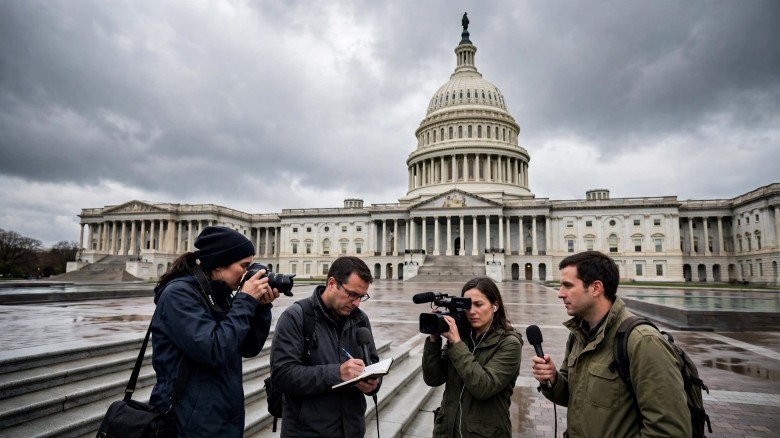
Former Vice President Kamala Harris has delivered a blunt Kamala Harris impeachment warning to her own party: do not try to impeach President Donald Trump a third time, even if Democrats win back the House of Representatives in next week's midterm elections. Speaking to MeidasTouch host Aaron Parnas in an interview on Tuesday, Harris said Democrats have limited resources and should spend them on investigations and accountability instead of another impeachment fight that, in her judgment, cannot end in removal from office.
The intervention, five days before voters go to the polls on November 3, 2026, cuts against the hopes of many Democratic voters who expect a new House majority to move swiftly against Trump. Harris, who lost the 2024 presidential race to Trump, argued that the party's energy would be better used elsewhere, and warned that a failed impeachment drive would consume time, staff and political capital without changing who sits in the White House.
Parnas asked Harris what she would recommend to congressional leadership if Democrats win the House and the Senate: should the party go down the investigations route and potentially reach impeachment one day, or should it pass policy and force the president to veto it? Harris chose investigations, and she did not hedge.
"I think that going in the direction of impeachment is not a good idea, just to be honest with you, just because we have limited resources," Harris said. "I think the energy and the resources need to be put into accountability, need to be put into investigations. And that's where the time should be spent."
She grounded the argument in personal experience. "Remember, I was in the Senate for the last go-round, and the votes aren't there," she said. Without the votes to convict, she argued, impeachment would spend scarce Democratic time and attention on an outcome that is already decided.
Harris was equally clear that caution about impeachment is not softness toward Trump. "After the election, we all have to just also agree that our attitude has to be to get stuff done, and the tone and our kind of orientation around it has to be kind of ruthless," she said. "They're [Republicans are] ruthless, but they're cruel. And when I say we should be ruthless, I don't mean cruel, but we should be uncompromising."
Trump is the only president in American history to have been impeached twice, and both impeachments came during his first term, from a Democratic-controlled House. In December 2019, the House impeached him over his dealings with Ukraine, including allegations involving withheld military aid and pressure on Ukrainian President Volodymyr Zelenskyy. The Senate acquitted him in February 2020. Harris was a senator at the time and voted to convict Trump over an alleged attempted quid pro quo involving Ukraine aid.
In January 2021, the House impeached Trump a second time, accusing him of inciting the January 6, 2021, Capitol riot and attempting to overturn the 2020 election. Harris was vice president during the Senate trial that followed. Once again, the Senate failed to muster the votes needed to convict.
That history is the arithmetic behind Harris's warning. Impeachment requires only a simple majority in the House, but conviction and removal from office require a two-thirds vote in the Senate, 67 votes. Neither party has held a Senate supermajority since the mid-1960s, when Democrats briefly held 68 of 100 seats. A Democratic House could therefore impeach Trump a third time, but on the current numbers it could not remove him, and Harris is arguing that Democrats should not spend their first months in power proving that point again.
The timing matters because Democrats are widely expected to retake the House next week, after Republicans have narrowly controlled it since 2023, so the question Parnas put to Harris is now the question facing the whole party.
At the heart of the Kamala Harris impeachment warning is a resource argument. An impeachment effort consumes staff time, hearing capacity and political capital, and it dominates a party's agenda for months. Harris's case is that the same resources, spent on investigations, could compel testimony, build a public record and expose wrongdoing, while a policy strategy could force the president to veto popular bills and own those vetoes in public.
Her Senate experience is central to her credibility on this point. She sat through the last impeachment trial as a senator and watched a House impeachment die in the Senate. Her message is that Democrats already know how this story ends.
The warning also draws a line between accountability and spectacle. Investigations, in Harris's framing, gather facts and create consequences, while impeachment without the votes to convict risks becoming a prolonged battle that ends where it started, with Trump still in office.
Democratic leadership has not adopted Harris's position outright. House Minority Leader Hakeem Jeffries has declared that Democrats haven't "ruled anything in, and we haven't ruled anything out" when it comes to impeaching Trump, while signalling that other administration officials, such as War Secretary Pete Hegseth, are likely to be pursued. Democrats have increasingly signalled plans to impeach Hegseth, a separate track that could give the party an impeachment fight with a different target.
Harris's caution echoes a striking intervention from former Secretary of State Hillary Clinton, who told journalist Kara Swisher last week: "I am against impeaching Donald Trump because I think it's a sideshow and he can't get convicted." Clinton, whose husband Bill became the first president to be impeached since Andrew Johnson, added a distinction of her own: "But I am in favor of opening impeachment investigations into some of the elected officials or the appointed officials. People like Pete Hegseth, who I think is hollowing out our military, politicizing our military, turning it into a militia for his Christian national ambitions."
Taken together, the Harris and Clinton remarks sketch a possible Democratic strategy for 2027: aggressive oversight and investigations, including impeachment investigations into senior officials, but no third impeachment of Trump himself unless the political arithmetic changes.
The debate matters because it will define what a Democratic House actually does in its first months. An impeachment drive would set the hearings calendar, the messaging and the party's relationship with the Senate. An investigations-first strategy would look very different: subpoenas, hearings, reports and policy votes designed to force the administration to defend itself in public, day after day.
It also matters for the midterms themselves. Voters deciding control of Congress on November 3 are, in part, choosing what kind of opposition Democrats would be. Harris is telling them, in advance, that her version of opposition is uncompromising but disciplined: ruthless about getting results, rather than cruel or theatrical.
The immediate next step is the election itself on November 3, 2026. If Democrats retake the House, as many expect, their leaders will have to settle the impeachment question quickly, because the first decisions of a new majority set its tone. Jeffries's open stance means Harris's advice is not yet party policy, and the debate she has joined will run through the leadership discussions that follow the vote.
Watch, too, for the Hegseth track. If Democrats pursue impeachment proceedings against the war secretary while holding back on Trump, that would match the Clinton distinction. And watch for whether Harris's "ruthless, not cruel" framing becomes the language other Democrats use, a sign her warning is shaping post-election strategy rather than simply registering a dissent.
Harris told MeidasTouch host Aaron Parnas that pursuing a third impeachment of Donald Trump is "not a good idea" because Democrats have limited resources, and that the party's energy should go into "accountability" and "investigations" instead.
Removing a president requires 67 votes in the Senate, and Harris said plainly, "the votes aren't there." Trump was impeached twice before and acquitted both times, and no party has held a Senate supermajority since the mid-1960s.
Yes, twice, both during his first term. The House impeached him in December 2019 over his Ukraine dealings and again in January 2021 over the January 6 Capitol riot. The Senate acquitted him on both occasions.
Impeachment is a charge brought by the House, which needs only a simple majority. Removal happens only if the Senate convicts by a two-thirds majority. A president can therefore be impeached and still remain in office, as Trump did twice.
Investigate the administration, hold it accountable, pass policy and force the president to veto it, and be "ruthless" but "uncompromising" about getting things done. Not every Democrat agrees: Jeffries has ruled nothing in or out, and Clinton backs impeachment investigations into officials such as Pete Hegseth even while opposing a third Trump impeachment.
Related coverage on US News Pulse: South Carolina Senate poll ties Graham and Andrews 48-48 before the midterms; Judge rules Bill Essayli unlawfully serving as LA's top federal prosecutor; Trump Texas rallies, Paxton, methane plan and a Talarico surge on October 27.
Leave a Comment



 | Today's Date: