A Moonachie trooper shooting that left an adult man dead on Wednesday evening is now the subject of a formal investigation by the New Jersey Attorney General's Office, after a New Jersey State Police trooper shot and killed the man on Gotham Parkway in the Bergen County borough. Officials have confirmed the death and the location, but they have not released the man's identity, the trooper's name, or any account of what led to the encounter — and that gap between what is confirmed and what is still unknown is now the central feature of the case.
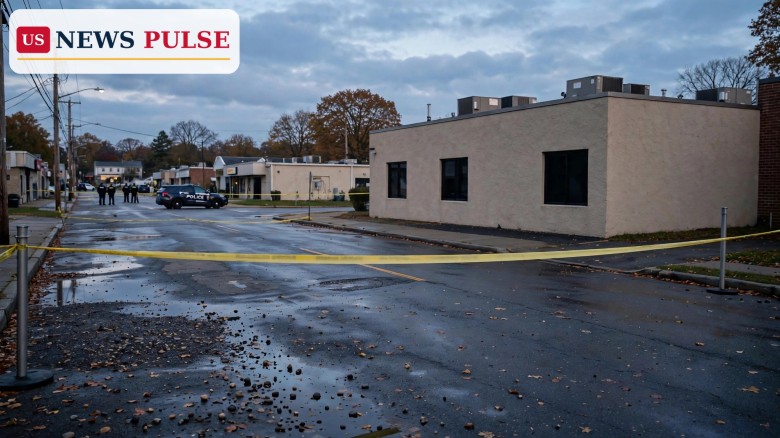
The shooting happened at approximately 5:15 p.m. on Wednesday, October 28, 2026, on Gotham Parkway near its intersection with West Commercial Avenue, according to the Attorney General's Office. The office said an adult male civilian was fatally wounded during the encounter. It said the circumstances surrounding the encounter are under investigation, and that no further information was being released at that stage.
For a small borough just north of the Meadowlands, the incident immediately closed a commercial stretch of road, drew investigators to the scene, and left residents and business owners waiting for answers that, under New Jersey's system for investigating deaths involving law enforcement, may take time to arrive.
The first official word came from the New Jersey Attorney General's Office, which announced that it was investigating a fatal police-involved shooting in Moonachie. In its statement, the office said the shooting occurred on Wednesday, October 28, 2026, in Moonachie, Bergen County, and that during the encounter an adult male civilian was fatally wounded.
The statement gave the time and place with precision: approximately 5:15 p.m., on Gotham Parkway, near the intersection with West Commercial Avenue. It identified the officer involved only as a New Jersey State Police trooper, and it said neither his identity nor the identity of the man who died was being released at this time.
Local reporting added texture to the official account. NorthJersey.com reported that West Commercial Avenue, in a commercial section of the borough just north of the Meadowlands, was closed off as of 6:30 p.m., and that investigators at the scene did not provide information to members of the media who had gathered after the incident. Moonachie Police Chief Richard Behrens said early on Wednesday evening that officers were on the "scene of an incident" and could not immediately provide information, the outlet reported.
Early reports had raised the possibility that the incident began in a neighbouring town, but that suggestion was knocked down on the record. Carlstadt Police Chief Thomas Cox told NorthJersey.com: "The incident all occurred in Moonachie." The clarification matters because it fixes the jurisdiction and the scene for the investigation that follows: one borough, one stretch of commercial roadway, and one encounter that ended in a death.
Some early local reports also described a vehicle that crashed into a building at 131 West Commercial Avenue, and said the man was taken to Hackensack University Medical Center, where his death was later confirmed. Those details have not been confirmed by the Attorney General's Office in its initial statement, and they should be treated as unverified until investigators say more. The same early reporting said two state troopers were evaluated after the incident but were not believed to have been injured — again, a detail that awaits official confirmation.
What is not in dispute is the sequence that officials have confirmed: a trooper-involved shooting, a fatal wound, a closed roadway, and an investigation now in the hands of the state's top law enforcement office rather than the local department or the State Police themselves.
Moonachie is a small borough in Bergen County, in northern New Jersey, close to the Meadowlands sports and entertainment complex and within the orbit of New York City. Its commercial corridors, including West Commercial Avenue and Gotham Parkway, mix warehouses, small businesses and through-traffic — the kind of setting where a police encounter can quickly become visible to workers, drivers and passers-by, and where a road closure is felt immediately.
The investigation itself follows a structure that New Jersey put in place in 2019. Under state law, cited by the Attorney General's Office as N.J.S.A. 52:17B-107(a)(2), the Attorney General's Office must investigate the death of a person that occurs during an encounter with a law enforcement officer acting in the officer's official capacity, or while the person is in custody. The point of that rule is independence: the agency that employs the officer is not the agency that judges the officer's conduct.
The law also sets the destination for the investigation. The Attorney General's Office said the investigation must be presented to a grand jury to determine whether the evidence supports the return of an indictment against the officer or officers involved. That is a higher and more formal bar than an internal review. A grand jury hears evidence in secret, weighs whether a crime may have been committed, and decides whether charges should follow. If it declines to indict, that decision, too, becomes part of the public record of the case.
That framework shapes everything about how information emerges in cases like this one. In the first hours, officials typically confirm only the bare facts — the death, the time, the place, and the fact of an investigation — because the investigation is designed to be insulated from outside pressure, including from the media cycle. Families, too, are often notified before names are released publicly, which is one reason identities can remain withheld even after a death has been confirmed.
The Moonachie case also sits within a wider national conversation about fatal encounters with police, body-worn cameras, and the time it takes for official findings to reach the public. New Jersey's system is among the more structured in the country precisely because it removes the decision from the officer's own department, but structure does not mean speed. Complex investigations — involving forensic evidence, video, witness interviews and medical findings — routinely take weeks or months before a grand jury presentation is complete.
The central questions in the Moonachie trooper shooting are straightforward to list and difficult to answer without evidence. Investigators will need to establish why the trooper and the man encountered each other in the first place, what happened in the moments before the shot or shots were fired, how many shots were fired and from what position, and whether the man's death resulted directly from the shooting.
They will also need to account for the physical scene: the roadway on Gotham Parkway, the reported vehicle and building at West Commercial Avenue, and any evidence recovered from the area. Road closures in the hours after a shooting are not only about safety; they preserve a scene so that measurements, photographs and forensic collection can be completed before traffic resumes.
Witness accounts will matter, as will any video. In New Jersey, many law enforcement encounters are recorded by body-worn cameras, dashboard cameras or nearby surveillance systems, but officials have not yet said what recordings exist in this case, or when any of them might be released. The Attorney General's Office has a process for releasing video in fatal police encounters, but release decisions are typically made as the investigation allows, not in the first hours.
Medical evidence will form another strand. The official statement confirms a fatal wound but does not describe its nature or location. Early media reports mentioning a gunshot wound to the neck and transport to Hackensack University Medical Center remain unconfirmed by the Attorney General's Office, and responsible reporting must keep that distinction clear until investigators confirm or correct those details.
Finally, investigators will need to establish the identities that have so far been withheld. The man who died has a family, and the trooper has a service record; both will become part of the case as the investigation proceeds, but neither name has been released by officials at this stage, and this article does not publish names that officials have not confirmed.
The Attorney General's Office statement was deliberately narrow, and its most important sentence was also its most restrained: "The circumstances surrounding the encounter are under investigation, which is ongoing." That single sentence is both a confirmation that the inquiry is live and a signal that officials will not speculate about motive, justification or sequence while evidence is still being gathered.
The office also set out the legal basis for its role in plain terms, noting that the 2019 law "requires the Attorney General's Office to conduct investigations of a person’s death that occurs during an encounter with a law enforcement officer acting in the officer’s official capacity or while the decedent is in custody." It added that such investigations must be presented to a grand jury "to determine if the evidence supports the return of an indictment against the officer or officers involved."
Local police chiefs, speaking to NorthJersey.com, were similarly brief. Moonachie Police Chief Richard Behrens said officers were on the "scene of an incident" and could not immediately provide information. Carlstadt Police Chief Thomas Cox clarified the geography, telling the outlet: "The incident all occurred in Moonachie." A State Police spokesperson referred questions to the Attorney General's Office, which handles all investigations of deaths during law enforcement encounters under the 2019 law.
No family statement had been reported at the time of writing, and no official has offered a public assessment of whether the shooting was justified. That silence is normal at this stage of a New Jersey investigation, but it is also the reason the case will be watched closely: the first official narrative is often the one that frames public understanding, and here the first official narrative is intentionally incomplete.
A fatal shooting by a law enforcement officer is always a matter of public interest, but the Moonachie case matters for reasons that go beyond a single evening on Gotham Parkway. First, it tests the system New Jersey built to handle exactly this kind of death. The 2019 law was designed to give the public confidence that an officer's conduct will be judged independently, by prosecutors who do not work for the same agency. How the Attorney General's Office handles this case — how much it discloses, how quickly, and how thoroughly — will either strengthen or strain that confidence.
Second, it matters to the community where it happened. Moonachie is a small borough, and a fatal police shooting on a commercial street is not an abstract event there. Business owners saw their road closed, residents saw investigators at work into the evening, and neighbours will know, soon enough, who died. For a community, the period between a death and an official explanation is often the hardest part, filled with rumour and partial accounts.
Third, it matters because the details that are still missing are the details that determine accountability. Whether the encounter began as a traffic stop, a call for service, or something else entirely; whether the man was armed; whether commands were given and understood; whether video exists — each of these facts could change the legal assessment. Until they are established, any judgement about justification would be premature, and this article makes none.
Finally, the case matters as a record. Fatal police encounters are often remembered through the first headlines, which can be wrong or incomplete. A careful, updated account that separates confirmed facts from early reports helps ensure that the public record reflects what investigators actually found, not only what was first rumoured.
The investigation is now in the hands of the Attorney General's Office, and the next steps follow the pattern set by the 2019 law. Investigators will continue to gather physical evidence, interview witnesses, review any video, and obtain medical and forensic findings. The State Police, as the involved agency, will not be the body that decides whether charges are warranted.
At some point, officials are expected to release the identity of the man who died, once family notification and other procedural steps are complete. The trooper's identity may also be released in due course, subject to the office's policies and any safety considerations. Neither release has a timetable in the initial statement, and readers should be wary of unofficial identifications that circulate before officials confirm them.
The investigation will then be presented to a grand jury, which will decide whether the evidence supports an indictment. If the grand jury indicts, a criminal case will follow. If it declines, the Attorney General's Office typically explains the outcome and may release additional information, including video, to account for the decision. Either way, the grand jury presentation is the formal checkpoint that the 2019 law requires.
US News Pulse will update this story as the Attorney General's Office releases further information, including the identities of those involved, any video or findings, and the grand jury's decision when it comes.
On Gotham Parkway, near its intersection with West Commercial Avenue, in Moonachie, Bergen County, New Jersey, at approximately 5:15 p.m. on Wednesday, October 28, 2026.
An adult man, whose identity has not been released by the Attorney General's Office. This article will update once officials confirm his name.
The New Jersey Attorney General's Office, as required by a 2019 state law governing deaths that occur during encounters with law enforcement officers acting in an official capacity or while a person is in custody.
That decision rests with a grand jury, to which the investigation must be presented. The grand jury will decide whether the evidence supports an indictment. No charging decision has been announced.
What led to the encounter, the sequence of events before the shooting, whether video exists, and the details of the man's injuries and transport to hospital. Early media reports about a vehicle crash and a hospital have not been confirmed by the Attorney General's Office.
Related coverage: Alex Pretti's parents demand DOJ release evidence nine months after ICE shooting; Oberlin shooting: professor Pipo Nguyen-Duy and wife found dead in Ohio; Canby, Oregon kidnapping: girl, 10, found alive after abduction.
Sources: New Jersey Attorney General's Office statement, October 28, 2026; NorthJersey.com, October 28, 2026. Early local reports about a vehicle crash and hospital transport are attributed as unconfirmed in the text.
Leave a Comment



 | Today's Date: