Peter Medak dies at 88, closing a six-decade directing career that moved from a haunted house in Seattle to the London underworld, from a Cannes satire to the sets of Breaking Bad and The Wire. The Hungarian-born filmmaker died in Los Angeles on Tuesday, October 27, 2026, his family announced, and the news was reported by Variety on Wednesday. The Guardian reported that he died peacefully. No cause of death has been given. Tributes have poured in from across film and television, where Medak was remembered as a director without a signature style but with an unmistakable seriousness about whatever material stood in front of him.
The announcement of Medak's death came from his family and was carried by Variety, the entertainment industry's leading trade publication, before being picked up around the world. He was 88. Reports on Wednesday, October 28, confirmed that he had died in Los Angeles the previous day, and that his family had announced the death. The Guardian, reporting the same announcement, said he died peacefully. No further details about the circumstances of his death have been released, and no funeral arrangements have yet been made public.
Medak is survived by his four children, Christopher, Joshua, Karen and Cornela, and by five grandchildren, according to the reports of his death. He had been married three times: to Katherine La Kermance from 1963 to 1972, to Carolyn Seymour from 1973 to 1984, and to Julia Migenes from 1988 to 2003. The obituaries that followed his death led, almost without exception, with The Changeling, the 1980 supernatural thriller that remains his most widely seen and most imitated film. Horror outlets were among the first to pay tribute, with Dread Central calling him an extraordinary talent and noting that his work would be missed by genre fans who may not even have known his name.
Medak was born in Budapest in 1937. He spent part of his childhood in hiding during the Second World War because of his family's Jewish heritage, and he fled Hungary for England during the 1956 uprising against Soviet rule. The escape shaped everything that followed: an exile who had to learn a foreign film industry from the ground up, and who therefore learned to be adaptable rather than to cultivate a single recognisable style. Through an aunt who was an internationally renowned opera singer, he found work at Associated British-Pathé, the newsreel company, and worked his way through studio jobs, including as an assistant director, before he was given a feature of his own.
That feature was Negatives, released in 1968 and starring Glenda Jackson. Four years later came the double act that announced him as a serious talent. A Day in the Death of Joe Egg adapted Peter Nichols's play about a couple raising a severely disabled daughter, and The Ruling Class adapted Peter Barnes's stage satire. In The Ruling Class, Peter O'Toole plays a British aristocrat who believes he is Jesus Christ and, later, Jack the Ripper. The film competed for the Palme d'Or at Cannes, earned Medak a nomination for his direction, and brought O'Toole an Academy Award nomination for best actor. It was a ferocious, funny and unsettling attack on the English upper classes, and it remains the film that established Medak's reputation among critics.
Success, however, did not build into a smooth career. His next major project, Ghost in the Noonday Sun, a 1974 comedy starring Peter Sellers and Spike Milligan, collapsed into one of the most troubled productions of its era. In a 2007 interview, Medak called the shoot "the biggest nightmare of my life" and said it derailed his film career for years. The film went unreleased in cinemas for more than a decade. Rather than bury the episode, Medak eventually turned a camera on it: his documentary The Ghost of Peter Sellers, about the wrecked production, premiered at the Venice Film Festival in 2018, more than four decades after the original shoot.
The Changeling arrived in 1980, six years after the disaster of Ghost in the Noonday Sun, and it changed Medak's standing for good. George C. Scott plays John Russell, a composer who, after losing his wife and daughter in a car accident, rents a grand old house in Seattle and finds himself drawn into a supernatural mystery involving a murdered child. The film, a British-Canadian production, builds its fear slowly: a locked room, a child's ball bouncing down a staircase, a house that will not let its occupant alone. It won eight Genie Awards, Canada's national film prizes, including best motion picture.
What set The Changeling apart was the admiration it drew from other directors. When Steven Spielberg was preparing Poltergeist, he screened The Changeling for his crew to set the tone he wanted. Medak recalled Spielberg telling them: "This is what it should be." Medak also said that Spielberg and Martin Scorsese each owned a 35mm print of the film. Scorsese later cited it as one of his favourite horror films. The bouncing ball on the staircase has been quoted, consciously or not, in countless horror films since, and the film's refusal to rely on a monster, preferring grief and dread, is regularly cited as the reason it still frightens audiences more than four decades on.
Medak followed his horror triumph with a very different kind of menace. The Krays, released in 1990, told the story of the London gangster twins Ronnie and Reggie Kray, played by Gary and Martin Kemp of Spandau Ballet. The film won Medak the Evening Standard Award for best director and confirmed his range: the same director who had made a ghost story out of bereavement could now make a crime film out of family loyalty and public notoriety. He followed it with Let Him Have It, about the hanging in 1953 of Derek Bentley, who was 19 and had not fired the shot that killed a police officer. It was, by Medak's standards, a harder kind of material than a ghost story, because the dead were real and the verdict was official.
The rest of his feature filmography reads like a deliberate refusal to repeat himself: the swashbuckling comedy Zorro: The Gay Blade, the Los Angeles drama The Men's Club, the Gary Oldman crime film Romeo Is Bleeding, and the science-fiction sequel Species II. There is no single thread running through those titles beyond a director who said yes to a wide range of work and treated each job with the same seriousness. Neal Purvis and Robert Wade, who worked with Medak on Let Him Have It, remembered him as a "kinder, more respectful collaborator" who treated them as equals, and said he was still eager to make future projects well into his eighties.
The first wave of tributes came from the horror world, where The Changeling holds a special place. Dread Central, reporting his death, called Medak an extraordinary talent and said the hearts of its writers went out to his friends and family. The site reminded readers that even viewers who had never seen The Changeling had seen its influence, pointing to the bouncing ball on the stairs that recurs across the genre. The American Cinematheque, whose social media post was cited in early reports of his death, was among the institutions marking the passing of a director whose work bridged art-house cinema and popular horror.
The most telling tributes, though, were the ones Medak himself had collected during his lifetime. Spielberg's verdict on The Changeling, "This is what it should be," has been repeated in every obituary because it captures what other filmmakers valued in him: not a brand, but a standard. Scorsese's ownership of a print, and his ranking of the film among his favourite horrors, said the same thing. And the recollection of Purvis and Wade, that Medak treated young writers as equals and remained hungry for the next project in his eighties, described a working director rather than a retired legend. Medak's own frankness about failure also featured heavily: his description of Ghost in the Noonday Sun as "the biggest nightmare of my life" was quoted as evidence of a man who did not airbrush his career.
Medak's death matters because his career answers a question that film culture keeps asking about directors: whether a great filmmaker must have a recognisable signature. The auteur theory, which holds that a great director leaves one visible style across everything, has never quite known what to do with a man like Medak. A deranged aristocrat, a haunted house, a pair of London gangsters and a wrongful hanging do not share a palette, a camera style or a subject. What they share is nerve: a willingness to take the material in front of him, whatever it was, and treat it as seriously as the last thing.
His television career makes the same point from the other direction. Critics sometimes treat a film director's move into television as a comedown. In Medak's case it looks more like the same job in a different room. He directed episodes of Homicide: Life on the Street and The Wire, two of the most admired crime series ever made, as well as House, Hannibal, The Twilight Zone and Breaking Bad. That run, stretching across decades and genres, is part of why his death has been felt beyond film circles: for many younger viewers, Medak is not the man who made The Changeling but one of the steady hands behind the prestige television they grew up watching.
There is also a historical dimension. Medak belonged to a generation of European exiles who rebuilt their lives in British and American film industries after war and revolution. Born in Budapest, hidden as a child, a refugee at 19, he arrived in London with no connections beyond a singing aunt and worked his way from newsreels to Cannes. His story is a reminder that some of the most durable figures in English-language cinema were not born into it at all, but learned it as outsiders and kept the outsider's adaptability for the rest of their working lives.
No funeral or memorial details have been announced yet, and further tributes from collaborators, studios and festivals are expected in the coming days. Repertory cinemas and streaming services frequently respond to a death of this kind with retrospective screenings and collections, and The Changeling, in particular, is likely to return to screens as audiences rediscover it. The film's reputation has grown steadily over the years, and a new wave of viewing, driven by obituaries and recommendations, may introduce it to viewers who know its imitators better than the original.
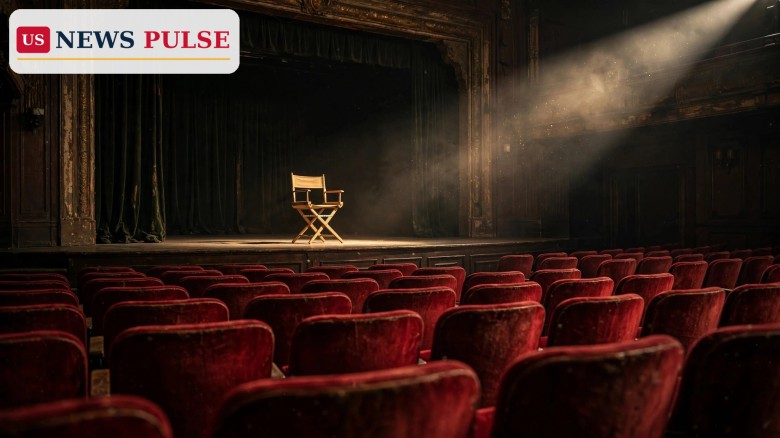
Medak's final documentary, The Ghost of Peter Sellers, also seems likely to find a wider audience now, as the companion piece to his most famous disaster and his most famous success. Together, the two films tell the story of a career that contained both a wreck and a classic, and a director who refused to hide either. For now, the film world is left with the image that has dominated the tributes: an empty chair in a darkened cinema, a projector beam, and a ghost story that other directors still screen when they want to show a crew what the job should feel like.
Related coverage on US News Pulse: Barbara Barrie dies at 95 after terminal cancer diagnosis, family says; Jay-Z to headline Super Bowl LXI halftime show at SoFi Stadium on Feb. 14, 2027; Neil Young lawsuit: rock legend sues Trump committee for $10 million over song use.
Peter Medak was 88. He died in Los Angeles on Tuesday, October 27, 2026, according to an announcement from his family reported by Variety.
He was best known for The Changeling (1980), the supernatural thriller starring George C. Scott that won eight Genie Awards including best motion picture, and for The Krays (1990), which won him the Evening Standard Award for best director.
Yes. His television work included episodes of Breaking Bad, as well as The Wire, Homicide: Life on the Street, House, Hannibal and The Twilight Zone.
When preparing Poltergeist, Spielberg screened The Changeling for his crew to set the tone he wanted. Medak recalled Spielberg telling them: "This is what it should be." Spielberg and Martin Scorsese each owned a 35mm print of the film.
The 1974 Peter Sellers comedy became one of the most troubled productions of its era and went unreleased in cinemas for more than a decade. Medak later called it "the biggest nightmare of my life" and made a documentary about it, The Ghost of Peter Sellers, which premiered at Venice in 2018.
Leave a Comment



 | Today's Date: