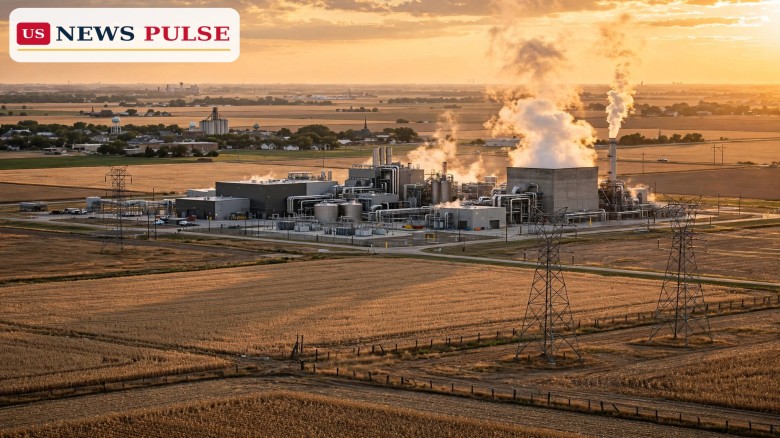
The United States Energy Department has closed a $5.1 billion loan package for Alliant Energy, a major Midwest utility, to expand power generation and strengthen the electricity grid at plants in Iowa and Wisconsin. The deal, announced on Wednesday, October 28, 2026, will support new natural gas-fired power plants, energy storage systems and upgrades to existing generation facilities. It is one of the clearest signs yet of how the current administration is reshaping a powerful federal lending office, turning a programme once aimed mainly at emerging clean-energy projects into a vehicle that also backs large-scale natural gas.
For households and businesses across the two states, the headline numbers are substantial. The department says the investments will create hundreds of construction-related jobs and deliver more than 2.6 gigawatts of new or upgraded generation capacity, enough power for nearly 1.8 million homes. The loan is also much larger than the version first proposed in the final days of the previous administration, when it stood as a conditional $3 billion package. The increase of about $2.1 billion reflects both a broader scope and a different set of energy priorities in Washington.
Reuters reported from Washington on Wednesday that the Energy Department had closed the loan, with the investments flowing through the department's loans office. That office, called the Loan Programs Office under Biden, is now known as the Office of Energy Dominance Financing. It holds hundreds of billions of dollars in available financing, and Energy Secretary Chris Wright has said the bulk of it will support nuclear power. The Alliant deal shows, however, that the office's current reach extends well beyond nuclear.
The department's loan office director, Gregory Beard, framed the package as a move to make power more dependable and more affordable. "By bringing new, dependable power online, we are strengthening our nation's energy security and lowering electricity costs for families and businesses across Iowa and Wisconsin," Beard said in a release reported by Reuters. The department did not, in the Reuters report, name individual plant sites or publish a project-by-project timetable, leaving those details for Alliant and state regulators to spell out in the months ahead.
Alliant Energy, listed on the Nasdaq as LNT and headquartered in Madison, Wisconsin, serves about 1.01 million electric customers and about 435,000 natural gas customers through two utility subsidiaries: Interstate Power and Light in Iowa and Wisconsin Power and Light in Wisconsin. Its service area covers about 53,500 square miles, and its maximum summer peak demand is about 5,465 megawatts. Against that yardstick, more than 2.6 gigawatts of new or upgraded capacity is a very large addition, equal to roughly half of the company's peak-hour demand.
The loan's history explains why it has grown and changed character. In its last days in office in January 2025, the Biden administration proposed a conditional loan of $3 billion for Alliant. Under Biden, the loans office was designed mainly to support emerging clean-energy projects and alternative vehicle technologies that struggled to secure ordinary bank lending. Energy storage, which typically means large battery systems, was part of the package then, and it remains part of the closed loan now.
What has changed is the wider mission. Reuters reports that the office now also supports projects such as natural gas that have typically been able to obtain bank loans. That shift matters because natural gas plants, unlike some of the technologies the office was created to nurture, are a mature and commercially proven form of generation. Supporters argue that dependable, dispatchable power is exactly what a grid under strain needs. Critics of gas expansion, in the broader energy debate, point to the long operating lives of new gas plants and to the emissions they lock in for decades, even though no critic of this specific loan was quoted in the initial Reuters report.
Alliant itself has been moving in several directions at once. The company says it owns and operates nearly 1,800 megawatts of wind energy, enough to power nearly 600,000 homes, and has added about 1,500 megawatts of solar energy in Wisconsin and Iowa since 2022. Its annual operating revenues are about $4.4 billion. The new loan therefore sits alongside, rather than replacing, a substantial renewable fleet, and the storage element is the bridge between the two: batteries can hold energy when wind and solar are plentiful and release it when demand peaks or the weather turns.
The package falls into three broad buckets. The first is new natural gas-fired power plants, which can be switched on when demand rises and which provide the kind of firm capacity that wind and solar, on their own, cannot guarantee. The second is energy storage systems, which help smooth out peaks, support the grid during outages and severe weather, and reduce the need for some traditional grid upgrades. The third is upgrades to existing generation facilities, extending the useful life and improving the performance of plants already in service.
Taken together, the three buckets point to a strategy of reliability first. Gas provides the backbone, storage provides flexibility, and upgrades squeeze more value from assets already built. That combination is also the pattern visible across much of the American power sector in 2026, as utilities and developers respond to a demand surge that, after more than a decade of flat growth, has returned with force.
The most direct on-the-record statement in the announcement came from the loan office itself. Beard's claim that the package will "strengthen our nation's energy security and lower electricity costs for families and businesses across Iowa and Wisconsin" sets the administration's test for the deal: more dependable power at a lower cost. Reuters immediately added a caution to that promise, noting that any lowering of electricity costs could take many years because the loans take place over decades.
That caution is worth keeping in view. A loan that funds plants built over several years, and repaid over decades, does not cut a household bill next month. Construction jobs arrive first, capacity follows, and the effect on prices depends on fuel costs, state regulatory decisions about how the investment is recovered from customers, and how much of the new capacity displaces more expensive power at peak times. None of those outcomes is settled by the closing of the loan alone.
Wright's broader statement, reported by Reuters, that the bulk of the office's hundreds of billions in financing will support nuclear power, also frames the Alliant deal in context. Gas is part of the current portfolio, but it is not, on the secretary's own account, the office's main long-term bet. How the balance between nuclear, gas and storage evolves will shape the office's next large closings.
The deal lands at a moment when American electricity demand is rising again, driven above all by large computing facilities. The US Energy Information Administration has said demand has grown at about 1.7 percent a year since 2020, after more than a decade of flat growth, driven primarily by the expansion of large-scale computing. The agency forecasts nationwide load growth of 1.9 percent in 2026 and 2.5 percent in 2027. In a higher-demand scenario, it projected natural gas-fired output rising 7.3 percent between 2025 and 2027, compared with 1.7 percent in its baseline forecast.
The pipeline tells a similar story. Developers reported plans for about 68 gigawatts of new fossil-fuel generating capacity in the United States from 2026 through 2030, nearly all of it natural gas, according to an October 13 report from the Environmental Defense Fund and Atlas Public Policy cited in recent coverage, a total about 45 percent higher than six months earlier. Those are proposals, not committed construction, but they show where developers believe demand and returns are heading. A $5.1 billion federal loan for gas and storage in the Midwest fits squarely inside that national shift.
For Iowa and Wisconsin, the stakes are practical as well as political. Reliable power underpins factories, farms, hospitals and homes through Midwestern winters and summer heatwaves, and the region's grid must now also serve a growing set of large electricity users. Hundreds of construction jobs are a tangible near-term benefit, while the longer question, whether the investment genuinely holds down costs for the 1.01 million electric customers Alliant serves, will be answered plant by plant and rate case by rate case.
Watch first for the project list. Alliant and the department are expected to identify which plants will be built, expanded or upgraded, and on what timetable, and those details will show how much of the 2.6 gigawatts is genuinely new capacity and how much is an upgrade of existing assets. State utility commissions in Iowa and Wisconsin will also have a central role, since major generation investments typically pass through regulatory review before their costs reach customer bills.
Construction timelines, hiring announcements and storage deployment will be the next visible milestones, followed by the slower test of prices. If the new gas and storage capacity displaces expensive peak power and improves reliability during extreme weather, the administration's case strengthens. If gas prices rise or the savings are slow to materialise, the Reuters caution about timing will look prescient. Either way, the Alliant closing is a marker for how the Office of Energy Dominance Financing intends to use its vast lending firepower, and the next large closings will show whether gas remains a major part of that story.
What is the Alliant Energy loan? It is a $5.1 billion loan package closed by the US Energy Department on October 28, 2026, to Alliant Energy for new natural gas plants, energy storage and upgrades to existing generation in Iowa and Wisconsin.
Is the $5.1 billion a grant? No. It is a loan package from the department's loans office, now called the Office of Energy Dominance Financing, which lends on terms that are repaid over time, rather than giving the money outright.
How much power will it add? More than 2.6 gigawatts of new or upgraded capacity, which the department says is enough power for nearly 1.8 million homes, alongside hundreds of construction-related jobs.
Why is the loan bigger than the original $3 billion? The package began as a conditional $3 billion proposal in the final days of the Biden administration in January 2025. It has since grown by about $2.1 billion and broadened to include natural gas projects under the office's changed mission.
Will my electricity bill fall straight away? Not necessarily. Reuters notes that any lowering of electricity costs could take many years, because the loans take place over decades and the plants themselves take time to build. The near-term effects are more likely to be construction work and added capacity.
Related coverage on US News Pulse: Meta's $95 billion AI raise and the surge in AI power spending, the Federal Reserve's October 2026 rate decision and how utility bills are rising in Queen Creek, Arizona.
Sources: Reuters, Washington, October 28, 2026; US Energy Department release via Reuters; Alliant Energy company profile, updated February 20, 2026; US Energy Information Administration Short-Term Energy Outlook; Environmental Defense Fund and Atlas Public Policy report, October 13, 2026.
Leave a Comment



 | Today's Date: