The Michigan Senate race entered its final week as a genuine dead heat with a national cast on Tuesday, October 27, 2026, when Vice President JD Vance rallied for Republican Mike Rogers in Howell, while a new statewide poll put Democrat Abdul El-Sayed ahead by about six points. The contest for the open seat held by retiring Democratic Senator Gary Peters could help decide control of a Senate now held by Republicans 53-47, and both parties have poured their biggest names — and tens of millions of dollars — into Michigan in the closing days before the November 3 midterms.
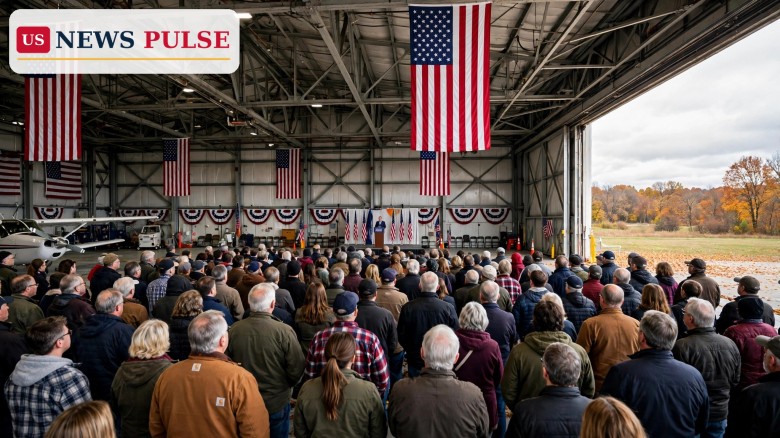
Vance travelled to Howell, in Livingston County, for a rally at CHI Aviation on Bowen Road, organised by the Trump 47 Committee, a joint fundraising venture involving the Save America committee and the Republican National Committee. Doors opened at 10 a.m. local time, with the main programme at noon and Vance scheduled to speak at 1:55 p.m. The venue sits in Michigan's 7th Congressional District, where first-term Republican Representative Tom Barrett faces Democrat Will Lawrence in another competitive race, giving the stop a double purpose for Republicans.
The Howell visit was Vance's second Michigan campaign stop in less than two weeks. He had previously rallied in Monroe on October 15, also for Rogers. It followed Trump's Sunday rally in Port Huron, on Michigan's border with Canada, where the president spent nearly two hours backing Rogers and other Republican candidates. The sequence — Trump on Sunday, Vance on Tuesday — underlined how central Michigan has become to the Republican closing argument: hold the Senate, and do it through a state Trump himself carried.
On the Democratic side, the closing stretch has been built around turnout rather than a single rally. Obama appeared in Detroit on October 24 alongside El-Sayed and Democratic gubernatorial candidate Jocelyn Benson, on the first day of early voting in Michigan. El-Sayed, a former Detroit health official from Ann Arbor, has campaigned heavily on lowering the cost of living and expanding access to health care, presenting himself as a doctor and public-health leader rather than a conventional party politician.
The seat is open because Peters, a Democrat from Bloomfield Township, is retiring. That makes Michigan one of the few genuine open-seat Senate races of 2026, with no incumbent advantage on either side. Rogers, a former seven-term congressman from White Lake Township, is a known quantity in Michigan: he lost a Senate race in 2024 by about a third of a percentage point, the second-narrowest Senate margin in the country that year, behind only Pennsylvania.
El-Sayed won the Democratic nomination after narrowly defeating moderate Representative Haley Stevens in a closely contested primary. If elected, he would become the nation's first Muslim senator. He is a US-born citizen who has pledged to uphold the Constitution, and he has repeatedly dismissed attacks on his faith as distractions from kitchen-table issues.
The race has also become one of the most expensive in the country. One account of national investment put Republican groups at roughly $104 million against about $55 million from Democratic organisations. That spending has funded a bruising advertising war, including AI-assisted ads that have drawn national scrutiny in this cycle, with Michigan among the states where such spots have appeared.
The newest numbers give El-Sayed a lead, but not a comfortable one. The Detroit News/WDIV-TV survey, conducted by the Lansing-based Glengariff Group among 600 likely voters from October 19 to 22, found El-Sayed at 51.4% and Rogers at 45.1%, with a margin of error of plus or minus 4 percentage points. Among voters who said they definitely plan to vote, the lead narrowed to 4.2 points, at 50.7% to 46.5%.
That result sits at the wider end of a run of close polls. A Marist poll conducted October 15-18 among 1,185 likely voters put El-Sayed at 50% and Rogers at 48%, inside its plus-or-minus 4.3-point margin. A CNN poll-of-polls average published October 22 put the race at 49% to 47% for El-Sayed. Earlier October surveys — Rasmussen, YouGov, InsiderAdvantage and Quantus Insights — all showed El-Sayed ahead by between one and five points, but none by a margin that would settle the race.
Forecasters reflect that uncertainty. The Cook Political Report rates Michigan a toss-up, while Inside Elections and Sabato's Crystal Ball rate it Lean Democratic. Prediction markets have been more bullish for the Democrat: one Michigan Senate contract tracked on October 27 priced El-Sayed at 69 cents to Rogers at 32 cents, an implied probability of about 69% against 32%. Polls, ratings and markets agree on one thing, however: this is a race either candidate can still win in seven days.
Trump's Port Huron speech set the tone for the Republican closing message. “He would be the only senator that will have to go through a metal detector before he is allowed to go into the Senate,” Trump said of El-Sayed. “I want him to have a metal detector.” He added: “I'm here to keep a jihadist Muslim Brotherhood member from becoming a United States senator.”
Trump also claimed El-Sayed wanted the country to adopt Sharia law, saying: “So Abdul… also wants our country to go to Sharia law, and if he ever pulls that off, he should be the first one that's tried. I'll be a witness.” He went further on immigration and culture, warning: “If Abdul and the Democrats win, they will open the floodgates and invite hordes of jihadists to our shores, creating a nightmare of violence and terror until you cannot even have a Christmas.”
There is no evidence that El-Sayed was ever a member of the Muslim Brotherhood or any foreign organisation, and he is not a member of the Democratic Socialists of America, despite Rogers also painting him as DSA-affiliated at Port Huron. Rogers told the crowd, without offering evidence: “This DSA-affiliated candidate is also taking a lot of money from organizations that support the Muslim Brotherhood, Hamas and Hezbollah.” All three groups are designated as terrorist organisations in the US, making material support for them illegal.
El-Sayed has previously largely dismissed the anti-Muslim rhetoric as an attempt to create distractions, saying he is focused more on domestic issues, including lowering the cost of living and expanding access to health care. Rogers, for his part, has previously called for an end to the war on Iran and urged an end to the trade war with Canada, which borders Michigan — positions that have sometimes put him at odds with the administration he is now campaigning alongside. At Port Huron he attended the rally and took the stage alongside Trump in a display of mutual support.
The economy, not identity, is what voters say matters most. The Detroit News/WDIV poll found voters ranked improving the economy as a top factor in their choice. In Michigan, the average price of a gallon of petrol was $4.83 on Sunday, up from $2.91 before the start of the war on Iran, according to reporting from the Port Huron rally. Trump told the crowd he had no regrets about the war, saying: “I made that decision, and I have no second guess.” He also defended it on nuclear grounds, saying: “The number one state sponsor of terror is Iran by far, and we had to make sure they didn't have a nuclear weapon.” Iran has denied seeking a nuclear weapon.
Michigan matters because the arithmetic of the Senate leaves Democrats almost no room for error. Republicans hold 53 seats to 47 for Democrats, and only 35 Senate seats are up for election in 2026. If Rogers flips Peters' seat, Democrats would need to flip five other seats to regain control — a steep task in a midterm map with few obvious targets. If El-Sayed holds it, the Democratic path, while still narrow, stays alive.
The race also matters as a test of two closing theories. Republicans are betting that national star power and a security-focused message can lift a proven, close-run candidate over the line in a state Trump carried. Democrats are betting that a candidate running to the left of his own party on health care and costs, backed by a broad labour coalition including the UAW, can hold a diverse, working-class state even as the national environment tightens. Michigan has been a recurring battleground precisely because neither theory has ever fully won it.
There is a third test, too: whether attacks on a candidate's faith help or hurt in the final week. Trump has weaponised anti-Muslim rhetoric since his first campaign, from the 2015 call for a “total and complete shutdown of Muslims entering the United States” to the travel order that became known as the “Muslim ban”. In Michigan, where Arab-American and Muslim voters are a visible part of the electorate, that strategy carries a particular risk — it may energise the base while alienating the swing voters both campaigns need in Howell, Monroe and the Detroit suburbs.
Early voting is already under way in Michigan, and the final week will be dominated by turnout operations in the Detroit area, the Grand Rapids suburbs and the Howell-Lansing corridor. Expect both campaigns to return to the economy — petrol prices, grocery costs and tariffs on Canadian goods — as the closing message, even as the identity attacks continue on the stump.
Rogers needs to close a polling gap of roughly two to six points while holding Republican voters who have sometimes kept their distance from Trump. El-Sayed needs to convert a polling lead into actual ballots, particularly among younger and first-time voters who poll strongly for Democrats but vote less reliably in midterms. The Detroit News poll's narrower margin among definite voters is a warning to his campaign on that front.
Polls close on Tuesday, November 3. Michigan is not expected to be called immediately if the margin is as tight as the surveys suggest, and the result could take days to finalise if mail ballots and close counts are involved. Whatever the outcome, it will be read nationally as a verdict on both the Trump administration's second-term record and the Democrats' ability to defend a seat they cannot afford to lose.
Who is leading the Michigan Senate race? The latest Detroit News/WDIV-TV poll puts Abdul El-Sayed ahead of Mike Rogers 51.4% to 45.1%, but earlier October polls showed leads of only one to two points, so the race remains a toss-up.
When is the Michigan Senate election? The election is on Tuesday, November 3, 2026. Early voting began in Michigan on October 24.
Why is the Michigan Senate seat open? Democratic Senator Gary Peters is retiring, so neither candidate is an incumbent.
What did Trump say about El-Sayed in Port Huron? Trump called El-Sayed a “jihadist” and a Muslim Brotherhood member and claimed he wanted Sharia law. El-Sayed denies any such ties, and no evidence for the claims has been produced in the reporting reviewed.
Why does Michigan decide Senate control? Republicans hold a 53-47 Senate majority. A Rogers win would flip a Democratic seat and force Democrats to gain five other seats to take control.
Related coverage: Kansas Senate Race: Vance Rallies for Marshall as Kansas Polls Show a Dead Heat; Early Voting Surge: Over 30 Million Ballots Cast a Week Before Midterms; AI Political Ads Top $137 Million as Deepfakes Flood the 2026 Midterms.
Leave a Comment



 | Today's Date: