Donald Trump has cancelled his weekend campaign rallies in Iowa and Kansas and will instead phone in to a series of "tele-rallies" across at least 19 states, his allies said on Thursday, as the president scales back a gruelling month of travel just five days before the November 3 midterm elections. The Trump cancels Iowa and Kansas rallies decision caps a four-week blitz in which he has held 25 rallies in 19 states, and it leaves Florida on Friday as his final scheduled in-person rally of the campaign.
The change of plan unfolded over the course of Thursday. Trump told reporters he did not "feel like I have to go to Kansas," a state where Senator Roger Marshall, a fellow Republican, is in what Reuters described as an unexpectedly competitive race against Democratic challenger Adam Hamilton. "He is doing very well," Trump said of Marshall. "We are going to have a strong Tuesday night."
Later on Thursday, the Republican National Committee said in a statement that it would also cancel a planned rally in Iowa, home to several competitive congressional races. The two cancelled in-person events were set for Salina, Kansas, on Saturday and Dubuque, Iowa, on Sunday. The RNC said that, with Republicans in a strong position in Kansas and Iowa, the previously planned in-person rallies would no longer take place as scheduled.
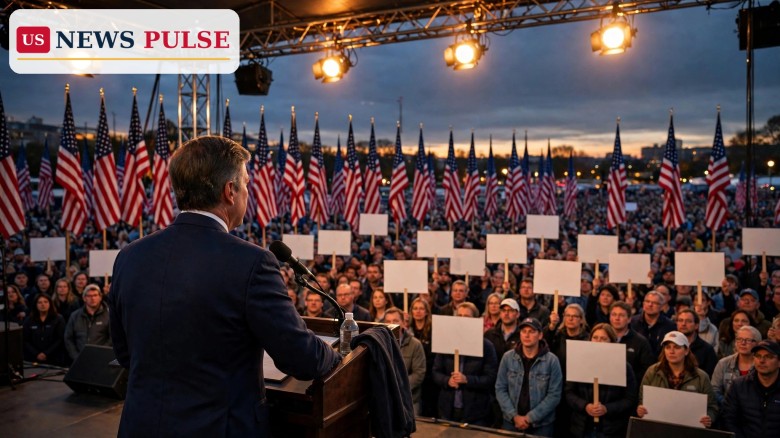
In their place, MAGA Inc said it would host a series of tele-rallies with the president in at least 19 states, including Kansas and Iowa, before Election Day. The format lets Trump address supporters in many states at once by phone, without the travel, staging and security operation of an arena rally. The Kansas Republican Party had already confirmed the Salina cancellation earlier, citing scheduling conflicts, and said tele-town halls would reach more voters across the country.
Trump's October schedule has been relentless. Since October 1 he has hosted 25 rallies in 19 states, often speaking for his party in rural areas of Republican-friendly states, according to Reuters. The tour has taken him from Mississippi to Ohio, Texas, South Carolina and beyond, with the president repeatedly urging Republicans to "pretend I'm on the ballot" to maximise turnout, even though his own name is not on it.
On Thursday, Trump returned to Washington from a campaign trip to South Carolina, where he had campaigned for Senator Darline Graham in Rock Hill. He has acknowledged that the pace has been punishing. Sounding hoarse in Mississippi on Monday, he told a crowd: "God didn't make your vocal cords to do a rally every day." The president, who at 80 is the oldest person ever elected president, has kept up a near-daily rally schedule throughout October.
The stakes on Tuesday are control of Congress. Republicans currently hold a narrow 53-47 majority in the Senate and a 218-214 edge in the House, so Democrats need a net gain of four seats in the House and four in the Senate to take both chambers. Forecasters and prediction markets now favour Democrats to win the House, with the Senate genuinely contested. In Kansas, Marshall's race has tightened unexpectedly, while Iowa holds several competitive House races that could help decide the majority.
The decision to swap arenas for telephones is, in part, an admission that the final days of a campaign are about reach, not spectacle. A single arena rally energises one city; a tele-rally can touch supporters in a dozen states in one evening. With early voting already under way and millions of ballots cast, the campaign's remaining currency is attention in the places where races are closest.
It is also a risk calculation. In-person rallies are Trump's signature weapon, and cancelling two of them in the final weekend invites questions about stamina and momentum. The campaign's answer is that the president is not retreating but reallocating: he still plans to travel to rallies in several states before Tuesday, including Florida on Friday, which is now set to be his final in-person rally of the campaign. The tele-rallies, allies argue, let him be everywhere at once in the last 96 hours.
There is a political logic specific to Kansas and Iowa. Both are states where Republicans have historically been strong, and the RNC's framing — that Republicans are in a strong position there — suggests the campaign believes the ground game and the tele-rallies are enough. Critics will read it differently: that even in friendly territory, the campaign wants to avoid a thin crowd or an unflattering split-screen in the final weekend.
Trump himself dismissed suggestions that he was tired of travelling. Asked by a Reuters reporter on Thursday how he felt after weeks of rallies and whether he was sick of travelling, he replied sharply after returning from South Carolina: "You've been following me for two weeks. I feel perfect." In a separate exchange reported by the Manila Times, he told the reporter: "You're sick to ask that question. You are sick. I feel perfect. You are disgusting. Put yourself in shape, you look like hell."
His own words earlier in the week told a more human story. In Mississippi on Monday, his voice hoarse, he said: "God didn't make your vocal cords to do a rally every day." And on Kansas, his message was confidence, not retreat: of Marshall, he said, "He is doing very well. We are going to have a strong Tuesday night."
The RNC's statement was brief and pragmatic, saying only that the Kansas and Iowa in-person rallies would no longer take place as scheduled and that a large number of virtual tele-rallies would take their place. MAGA Inc framed the tele-rallies as an expansion, not a contraction, promising events in at least 19 states before Election Day.
Midterm elections are usually decided by turnout, and Trump's rallies have been the Republican Party's most reliable turnout machine in 2026. Every rally generates local television coverage, social media clips and volunteer sign-ups that a phone call cannot fully replicate. If the tele-rallies fail to move voters in the same way, the decision could matter in the handful of House and Senate races decided by a few thousand votes.
The move also signals how the campaign reads the map. Cancelling in Kansas and Iowa while keeping Florida suggests the campaign is prioritising states where a presidential visit can still change the outcome, and trusting its organisation elsewhere. With Democrats leading the generic congressional ballot in recent polling and forecasters giving them a strong chance of winning the House, Republicans need every edge in the final days — and a president who can speak to 19 states in one night is, on paper, a bigger edge than one arena.
Finally, the episode fits a pattern of the closing week: a campaign managing an 80-year-old candidate's energy in public while insisting nothing has changed. Trump has repeatedly said he feels "perfect." The schedule now says he will do the last stretch differently — by phone as much as in person.
Trump is expected to travel to Florida on Friday for what is now his final in-person rally of the campaign. Over the weekend, the MAGA Inc tele-rallies will roll out across at least 19 states, including Kansas and Iowa, with details of each call expected to be announced state by state. Early voting continues through the weekend in many states, and Election Day is Tuesday, November 3.
Watch for three things: whether the tele-rallies draw the same local media attention as arena events, whether Marshall's Kansas race and Iowa's House races tighten or stabilise in final polling, and whether Trump adds any further travel beyond Florida. Any additional cancellation would change the story from a tactical switch to a broader wind-down.
He cancelled in-person rallies planned for Salina, Kansas, on Saturday and Dubuque, Iowa, on Sunday, in the final weekend before the November 3 midterms.
Tele-rallies are campaign events held by telephone, in which the president addresses supporters in multiple states at once without travelling to an arena. MAGA Inc said it would host them in at least 19 states before Election Day.
Yes. He is still expected to travel to rallies in several states before Tuesday, including Florida on Friday, which is now set to be his final in-person rally of the campaign.
The RNC said Republicans are in a strong position in both states. Trump said he did not "feel like I have to go to Kansas" and said Senator Roger Marshall "is doing very well." He has also spoken about the strain of near-daily, hour-long speeches.
Election Day is Tuesday, November 3, 2026. All 435 House seats and 35 Senate seats are on the ballot, and the results will decide whether Republicans keep control of Congress.
Related coverage: Trump's Kansas rally cancellation and the switch to tele-town halls, Sabato's Crystal Ball shifts 21 midterm races toward Democrats, and Trump's Rock Hill rally backs Graham in a tied South Carolina Senate race.
Leave a Comment



 | Today's Date: