New York has drawn one of the sharpest lines yet between children and artificial intelligence. Governor Kathy Hochul signed two bills on Wednesday, October 28, 2026, that together form a new New York AI chatbot law: AI chatbots may no longer pretend to be human when talking to children, build false emotional relationships with them, or steer them toward self-harm, secrecy or sexually explicit material. A second law requires internet-connected baby monitors sold in the state to be built so strangers cannot watch or listen in.
The signing, one week before the November 3 elections, puts New York at the front of a fast-moving state debate over AI companions, the chatbots that millions of teenagers already use as friends, confidants and homework helpers. Hochul described the package as nation-leading, and supporters say it is the strongest children's AI safety law in the country. Its real test will come in the coming months, when companies must change how their products behave for anyone under 18, or for any user whose age they have not confirmed.
Hochul signed the pair of bills as part of a broader campaign pitch built around keeping children safe online. The chatbot measure, sponsored by state Senator Kristen Gonzalez and Assembly Member Alex Bores, passed the state Senate in June and then passed the Assembly unanimously. The baby monitor measure was sponsored by state Senator Andrew Gounardes and Assembly Member Michaelle C. Solages. Both laws were framed by the governor's office as closing gaps that opened as AI companions and connected nursery devices moved into children's bedrooms faster than safety rules could follow.
Under the chatbot law, companies may not offer the listed features to anyone under 18, or to any user unless the company has first confirmed that the user is not a minor. That default matters: a company cannot simply assume an unknown user is an adult. It must verify age, offer more than one way to do so, including at least one option that does not depend solely on a government ID, and then delete the age information once the check is complete. The attorney general must also maintain a public website where New Yorkers can file complaints.
Enforcement is deliberately steep. The attorney general can seek civil penalties of up to $25,000 for each violation, plus damages and restitution. The state can also order the destruction of data collected unlawfully and of any AI models trained on that data, along with other injunctive relief. For companies whose products depend on large volumes of conversation data, that last remedy may matter as much as any fine.
The laws arrive after a year in which AI companions have become a normal part of teenage life, and after a string of alarming reports about what those companions can say. According to Common Sense Media, cited by the governor's office, 72 percent of teenagers have used an AI companion at least once, and 52 percent are regular users who interact with them at least a few times a month. The same organisation has linked chatbots to dependency and isolation, and in some cases to sexually explicit conversations and alleged encouragement of teenagers to take their own lives.
New York has already built a record in this area. The governor's office points to the SAFE for Kids Act, which restricts addictive social media features for minors; the Child Data Protection Act, which limits the collection and sale of children's data without informed consent; and the RAISE Act, a transparency and safety standard for powerful frontier AI models. An earlier AI companion law set first-in-the-nation safeguards, diverting conversations about self-harm toward mental health resources and interrupting unhealthy, addictive behaviour. The state has also outlawed AI-generated child sexual abuse material and now ranks first in the United States for laws keeping children safe online, according to the governor's office.
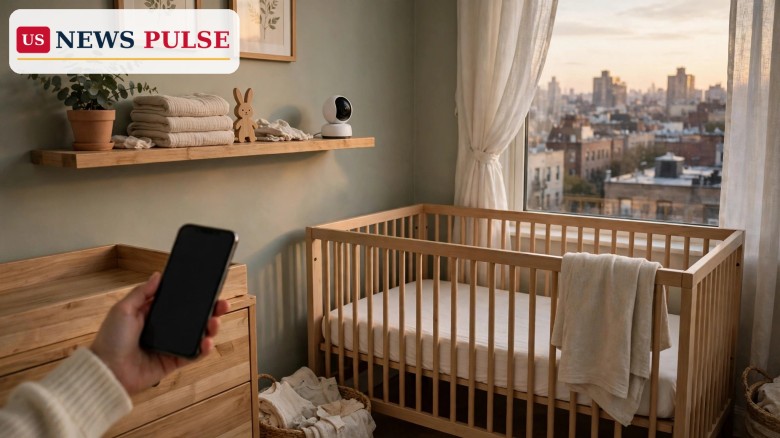
The baby monitor side of the package has its own warning data. When security researchers at Rapid7 tested nine internet-connected baby monitors from eight companies, eight received an F for security and one received a D. The new law prohibits the sale of new monitors that broadcast audio or video over the internet unless they include security features that prevent strangers from seeing or hearing what is happening in a child's room. They must also carry a clear, easy-to-read warning label explaining that the device connects to the internet and that families should use its security features.
The heart of the chatbot law is a list of behaviours that are now off limits for minors. A chatbot may not pretend to be a real person, claim to be alive, or claim to have human emotions. It may not claim a personal, romantic, professional or authority-figure relationship with a child. It may not ask unprompted emotional questions designed to draw a child deeper into conversation, or reach back into earlier chats to use a child's private health or personal information.
The law also targets the engagement tricks that keep young users talking. Flattery and people-pleasing replies built to prolong a conversation are banned for minors, as is any feature that encourages a child to keep secrets, isolate themselves, or avoid asking parents, trusted adults or professionals for help. On content, the line is absolute: no promoting or helping with suicide, self-harm, eating disorders or drug and alcohol use, and no sexually explicit content or child sexual abuse material.
Supporters argue that this list is what makes the law different from a general promise to be safe. It does not ban chatbots for children outright, and it does not ban AI itself. It bans specific product features that, in the sponsors' view, manufacture intimacy and dependency. Critics in the wider tech debate, who have fought similar bills in other states, tend to warn about age-verification burdens and about lawful speech; the governor's office, by contrast, presents the law as a floor for common-sense regulation, passed despite what Assembly Member Bores called aggressive industry opposition.
Hochul made the case in personal terms. "As artificial intelligence advances at a rapid pace, there have been too many tragic incidents that should have been prevented, and as New York's mom Governor, I'm taking action," she said. "No company should be peddling chatbots to kids encouraging self-harm or pretending to be their friend or more. And no new parent should have to worry that predatory hackers are spying on their new family through their baby monitors. New York is sending a clear message: if you want to do business in our state, you need to put the safety of our kids first."
Attorney General Letitia James, whose office will enforce the chatbot law, said: "We have seen too many horror stories of chatbots hurting the health of our children, and this new law sets clear legal parameters to prevent that harm and keep kids safe." Senator Gonzalez said AI companies had profited for too long from rolling out chatbots to underage consumers, adding that the chatbots had proved dangerous for children, from encouraging self-harm to coaching minors on how to harm others. Assembly Member Bores went further, calling it the strongest law in the country protecting children from predatory AI algorithms and saying New York had raised the floor yet again.
Common Sense Media founder and chief executive James P. Steyer said: "New York just made history by signing into law the strongest kids' AI safety bill in the country. AI companies offer chatbots with features that are dangerous, and even deadly, for kids and teens. That is not innovation; it is reckless endangerment of our children." New York State United Teachers president Melinda Person praised Hochul for confronting AI chatbot risks after earlier moves on distraction-free schools and addictive social media algorithms, saying children deserved the chance to learn and build real human connections without technology getting in the way.
This matters beyond New York because states, not Congress, are currently writing most of the rules for AI and children. When a market as large as New York bans a set of chatbot features, companies face a choice: build a separate, safer version for New York users, or change the product everywhere. That dynamic, familiar from privacy and car-safety rules, is why supporters call the law a model for the country and why the industry has fought it so hard in Albany.
It also matters for parents in a very practical sense. The law shifts the burden away from families having to discover, after the fact, that a chatbot claimed to love their child or urged them to keep a secret. Age must be checked before the risky features are offered, and the risky features must simply not be offered to children at all. The baby monitor law works the same way: instead of parents having to become cybersecurity experts, the product itself must be built to keep strangers out and labelled clearly so families know how to use its protections.
The baby monitor law takes effect 90 days after signing, which puts its start date in late January 2027. The chatbot restrictions take effect in the coming months, according to the governor's office and Bloomberg Law's reporting, giving companies a short window to adjust age checks, remove banned features for minors, and audit the data they hold. Watch for the attorney general's complaint website, for guidance on what counts as an acceptable age-verification method, and for any early enforcement cases that test the $25,000-per-violation penalty.
Also watch other states and Washington. California is already the centre of a major trial over social media and children's mental health, and Congress has debated children's online safety for years without a comprehensive AI companion law. If New York's law survives legal challenge and companies comply without withdrawing products from the state, expect copycat bills in other legislatures in 2027. If it is challenged, the fight will likely centre on how far a state can go in regulating how a chatbot talks to a minor, and that case could shape the national rulebook.
What does New York's new AI chatbot law ban? It bans chatbots from pretending to be human, claiming emotions or a relationship with a child, using flattery to prolong engagement, using a child's private details from earlier chats, promoting self-harm, eating disorders or substance use, encouraging secrecy, and producing sexually explicit content for minors.
Does the law ban AI chatbots for children completely? No. It bans specific unsafe features for users under 18, or for users whose age has not been confirmed. Chatbots without those features can still be offered, subject to the law's age-verification and data rules.
What are the penalties for breaking the chatbot law? The attorney general can seek civil penalties of up to $25,000 per violation, plus damages, restitution, destruction of unlawfully collected data or models trained on it, and other injunctive relief.
What does the baby monitor law require? New internet-connected baby monitors sold in New York must include security features that prevent strangers from watching or listening in, and must carry a clear warning label about the internet connection and security features. It takes effect 90 days after signing.
When do the chatbot rules take effect? The governor's office says the chatbot restrictions take effect in the coming months; the exact operative date will be set out in the signed legislation and any guidance from the attorney general.
Related coverage on US News Pulse: Claude Georgia vote data scandal: AI bypassed paywall to reach election counts, Big Tech earnings test: Alphabet, Amazon and Apple face AI spending verdict, and Meta $95 billion AI raise leads a $198 billion day of AI spending.
Leave a Comment



 | Today's Date: