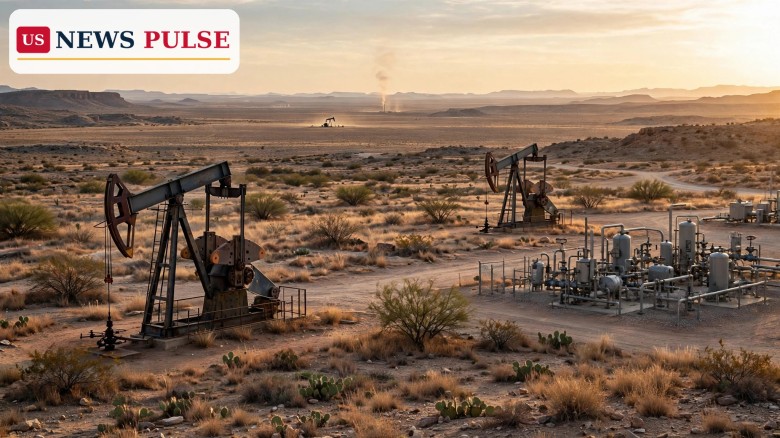
The Trump methane rules rollback was formally proposed on Tuesday, October 27, 2026, when the Environmental Protection Agency unveiled a plan to rescind key parts of the Biden-era methane standards for oil and gas producers. President Donald Trump announced the proposal at a campaign rally in Lubbock, Texas, casting it as a way to produce more American energy and bring down fuel costs one week before the November 3 midterm elections.
The proposal is the administration's most detailed methane move yet. It would end the Super Emitter Program, which used approved third parties to find and report large methane leaks, give regulatory relief to small, low-output wells, and ease inspection, control-device and routine-flaring requirements for many smaller operators. The EPA says the changes would save the oil and gas sector about $45 billion and boost domestic output by hundreds of millions of additional barrels of oil and trillions of cubic feet of gas over time.
Trump used a campaign swing through Texas on Tuesday to announce the Environmental Protection Agency proposal, according to Reuters reporting from Washington. The trip took in remarks in Corpus Christi and a rally in Lubbock for Ken Paxton, the president's hand-picked Republican Senate candidate, who is locked in a close race with Democrat James Talarico. The administration framed the methane rollback as part of a pre-election push on fuel prices, which have become a political liability for Republicans amid the war with Iran.
The proposal itself targets the 2024 methane standards put in place under former President Joe Biden. Those rules required companies to fix leaky equipment and regularly check wells for escaping methane, a potent greenhouse gas and the second-biggest cause of climate change after carbon dioxide. Under the Trump plan, the third-party Super Emitter Program would be scrapped, meaning companies would no longer have to react when outside groups report suspected large leaks detected by remote sensing.
Smaller operators would see the broadest relief. Wells producing 15 barrels of oil equivalent per day or less, known as marginal wells, would face lighter requirements, and inspection and control-device rules would be eased for many smaller producers. The plan would also ease rules aimed at phasing out the routine burning off of gas at oil wells, a practice known as flaring. The administration had already delayed implementation of the Biden-era programme and stopped enforcing existing oil and gas methane regulations, so the new proposal formalises a retreat that has been under way for months.
Methane is the main component of natural gas, and it leaks from wells, pipelines and processing plants across the American oil patch. Unlike carbon dioxide, which lingers in the atmosphere for centuries, methane is short-lived but far more potent in the near term, which is why cutting methane leaks is widely seen as one of the fastest available levers for slowing warming in the coming decades. Every tonne of methane captured instead of leaked is both an emissions saving and recovered product that could have been sold, a point even some industry voices have acknowledged as leak-detection technology has improved.
The Biden-era standards, finalised in 2024, were designed to force that capture: regular monitoring, prompt repair of leaks, limits on routine flaring, and a backstop in which approved third parties could flag the largest leaks, known as super emitters, for mandatory company action. The Trump administration, which took office last year, has pursued a broad programme of slashing regulations it says burden American businesses as it seeks to boost fossil fuel production. In October, EPA Administrator Lee Zeldin had already signalled the direction of travel, telling an industry audience in New Mexico that the agency would soon propose scrapping the super-emitter rule.
Texas is central to the politics as well as the policy. The state is the heart of American oil and gas production, and Trump's October campaign blitz has taken him repeatedly to states that were expected to be safely Republican but have become midterm battlegrounds, including Oklahoma, Alabama, Nebraska, Iowa, Ohio, South Carolina and Mississippi. Tuesday's Texas trip was his third visit to the state this month, and pairing the methane announcement with rallies for Paxton was designed to turn energy policy into votes in a longtime Republican stronghold.
The most consequential change is the end of third-party oversight. Under the Super Emitter Program, approved outside groups could use satellites and other remote-sensing tools to detect very large leaks and notify regulators, triggering a requirement for the operator to investigate and fix the problem. Industry groups have long argued that those provisions were duplicative and exposed operators to unreliable third-party data. Removing them shifts leak detection back to the companies themselves and to regulators, with no independent trigger for the biggest events.
The second change concerns scale. Marginal wells, which produce small volumes but number in the hundreds of thousands across the United States, would receive relief from requirements that small operators say are disproportionately costly for the amount of energy they produce. The proposal also eases inspection frequencies and control-device requirements for many smaller operators, and loosens the phase-out of routine flaring, under which gas that cannot easily be captured is burned at the wellhead rather than released raw into the atmosphere.
What does not change, at least not yet, is important too. A proposal is not a final rule. The plan must go through a public comment period, after which the EPA must consider the comments received before issuing any final version, which could then face legal challenge. Existing state rules in places such as Colorado and New Mexico, which have their own methane programmes, are not erased by a federal rollback, and larger producers that have already invested in leak detection may keep those systems for commercial and reputational reasons. The administration's own output and savings estimates, hundreds of millions of barrels and trillions of cubic feet of gas, and about $45 billion in savings, are agency projections, not measured outcomes.
EPA Administrator Lee Zeldin set out the administration's case when the super-emitter rescission was first previewed in October. "Americans must be able to afford to heat their homes in the winter and fill up their car and drive to work. They can't do that when the people producing the energy are weighed down by unnecessary burdens," Zeldin said in a statement after making the announcement at a meeting with oil and gas industry representatives in New Mexico.
Environmental and public-health groups reacted sharply. "This giveaway to fossil fuel executives is foolish and short-sighted, and reveals who the Trump administration really works for - its political donors," said Mahyar Sorour, director of the Sierra Club's Beyond Fossil Fuels campaign, in a statement. The Environmental Defense Fund said the repeal would put polluters first and waste American energy, arguing that the compliance costs of the rule were dwarfed by the value of the gas recovered when leaks are fixed.
Industry groups, by contrast, have long pressed for relief from the Biden-era standards, arguing that the rules imposed heavy paperwork and monitoring costs on small producers and duplicated state programmes. The White House, meanwhile, has cast the rollback as a cost-of-living measure, arguing that producing more energy at home is the surest route to lower gasoline prices for voters feeling the squeeze from inflation and higher interest rates. That framing will be tested in the coming days, as fuel prices respond to far larger forces, including global oil markets and the war with Iran, than to any single regulatory change.
The rollback matters on three levels at once. For the climate, methane policy is one of the few areas where action pays off quickly: because methane breaks down faster than carbon dioxide, cutting leaks now slows warming in the near term more than equivalent long-term carbon cuts. Weakening leak detection, repair and flaring limits therefore risks measurably higher emissions in exactly the window scientists say matters most, even if the precise increase depends on how the final rule is written and enforced.
For the economy, the stakes run in both directions. The EPA's $45 billion savings figure speaks to compliance costs avoided by producers, but the gas that escapes from leaks is also lost revenue, and the wider costs of climate-driven heat, storms and droughts fall on households, insurers and taxpayers. For voters, the proposal is also a test of a central Trump campaign argument: that deregulation delivers lower prices at the pump. If gasoline prices stay high, the political benefit of the rollback may prove limited; if they fall, the administration will claim vindication, whatever the underlying cause.
For the election, the timing is the message. Announcing a major environmental rollback at a campaign rally, for a Senate candidate in a tightening race, seven days before voting, fuses policy and politics in a way that guarantees both support and scrutiny. Democrats will use the proposal to argue that the administration prioritises fossil-fuel donors over public health; Republicans will use it to argue that Washington red tape, not global markets, is what keeps energy expensive. The Paxton-Talarico race, and the wider battle for the Senate, will be an early verdict on which argument voters found more convincing.
The proposal now enters the federal rulemaking process. A public comment period will open, during which industry groups, environmental organisations, state regulators, researchers and ordinary citizens can submit views and evidence. The EPA must then weigh those comments before publishing a final rule, which could differ from the proposal in scope and detail. Legal challenges are likely whichever way the final rule lands, and a future administration could revisit the standards again, continuing a cycle in which methane policy swings with each change of government.
In the meantime, the political calendar moves faster than the regulatory one. Early voting in Texas runs through October 30, and the November 3 midterms will decide whether Republicans retain control of both houses of Congress. The Federal Reserve's October 28 rate decision, expected to hold rates steady, will also shape the economic backdrop against which voters judge the administration's cost-of-living claims. Watch for the EPA's formal publication of the proposal, the length of the comment period, and any reaction from major producers, who may welcome relief while quietly keeping leak-detection systems that investors and buyers increasingly expect.
Related coverage on US News Pulse: Trump's Texas rallies for Paxton, the methane plan and a Talarico surge and Trump floats Venezuela as 51st state at Corpus Christi rally.
The agency has proposed rescinding key parts of the 2024 Biden methane standards, including ending the Super Emitter Program, easing requirements for marginal wells producing 15 barrels of oil equivalent per day or less, and loosening inspection, control-device and routine-flaring rules for many smaller operators.
It allowed approved third parties to use remote sensing, such as satellites, to detect very large methane leaks and report them, triggering a requirement for the operator to investigate and repair the leak. The Trump proposal would end that third-party trigger.
No. It is a proposal, not a final rule. It must go through a public comment period, after which the EPA must consider comments before issuing a final version, which could also face court challenges.
The administration argues that producing more domestic energy will ease prices, but gasoline prices are driven mainly by global oil markets, refining and geopolitical events such as the war with Iran. Any effect from the rollback would be indirect and would take time to appear.
They argue that weaker leak detection and repair rules will increase methane emissions, worsen near-term warming and harm local air quality, and that the gas lost through leaks is wasted energy that could otherwise have been sold.
Leave a Comment



 | Today's Date: