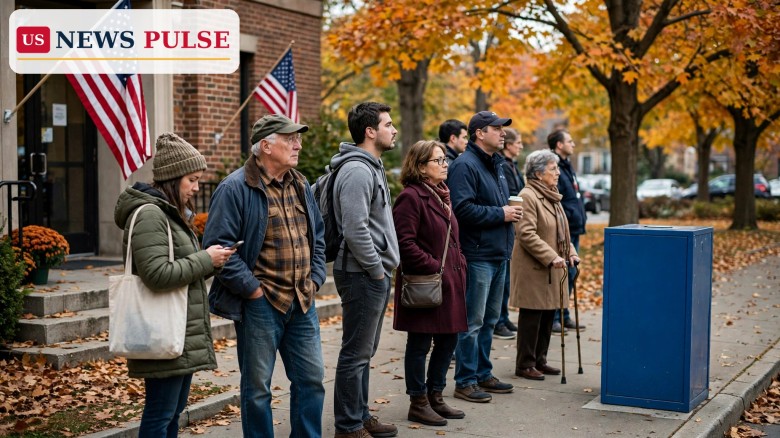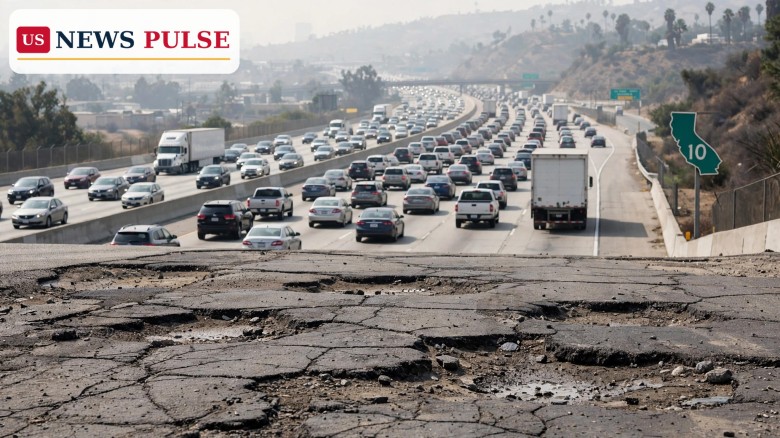
California drivers could soon be taxed for every mile they travel if Democratic gubernatorial candidate Xavier Becerra gets his way, after the frontrunner in the race to succeed Governor Gavin Newsom said a California mileage tax is firmly on the table as the state searches for a way to pay for its crumbling roads. Becerra's remarks, made in an interview with KCRA television's Ashley Zavala and reported on October 29, 2026, have ignited a fierce row just five days before Californians vote on November 3, with Republicans warning that a per-mile charge would hammer working families already squeezed by the highest cost of living in the nation.
Becerra was asked directly in the KCRA interview whether he would support a mileage-based tax if elected governor. His answer left no doubt that he is willing to consider it. "Everything should be on the table," he said, before laying out the funding logic behind the idea. "Our roads aren't maintained just by some magic wand. We have to pay for it. Do I want to tax people more than necessary? No. Should we pay a gas tax? Yes. Should people who drive electric vehicles, who don't need gas, pay for those roads to be repaired as well? Absolutely."
The comments landed as state officials wrap up a study of whether to replace the traditional gas tax with a vehicle-miles-travelled fee. The timing is politically charged: California's gas tax is one of the main sources of money for building and maintaining roads and highways, but hybrid and electric vehicles use very little petrol, or none at all, and therefore pay far less in fuel taxes. State transportation officials warn that as more drivers switch to vehicles that use less fuel, the funding base for road maintenance will keep shrinking, leaving a growing gap between what the roads need and what the state collects.
Becerra, a former California attorney general and President Joe Biden's health secretary, is running to replace Newsom, who is term-limited and cannot seek a third term. His Republican opponent is Steve Hilton, a former television host. The two emerged from California's June top-two primary and have made affordability and the state's high cost of living the central themes of the campaign. Becerra's willingness to consider the mileage fee comes as he has also floated higher taxes on wealthy Californians and new fees on corporations that fail to provide sufficient health benefits to full-time workers.
California has been exploring mileage-based fees for years. A pilot programme included in Senate Bill 1 in 2018 tested the concept, and San Diego County officials considered a local version in 2021 before abandoning the effort following public opposition. The most recent and most serious test is the California Road Charge Collection Pilot, run by the California Department of Transportation (Caltrans) from August 2024 through January 2025. Participants drove normally for six months, reported their miles each month and paid real road charges, receiving a credit at the end for the gas taxes they had paid during the pilot, while electric vehicles received a partial credit against the annual Road Improvement Fee.
The pilot set its rate at 2.8 cents per mile for passenger vehicles, roughly equal to what the typical driver already pays through gas taxes, according to Caltrans. Participants could report their mileage in several ways: a plug-in device that could use GPS location or not, vehicle telematics through a connected-car account, or a photograph of the odometer submitted each month. The final report from the pilot is due to the Legislature by December 2026, meaning the next governor will inherit the decision about whether to take the idea any further.
The debate is not only about money. At a California Transportation Commission presentation, staff described a ten-year statewide assessment that identified roughly $570 billion in transport needs against a revenue baseline adjusted to about $541 billion after accounting for declining fuel consumption, a shortfall of just over $250 billion. Commission staff recommended studying a phased approach to any long-term replacement for the gas tax, and noted that any change to the statewide tax system would require legislative action, likely a two-thirds vote, and possibly a public vote if constitutional changes were required. Public commenters raised privacy concerns about GPS tracking, equity concerns for low-income and rural drivers who travel farther for work, and worries from tribal leaders about tribally owned petrol stations that benefit from state-tax exemptions.
The governor's race itself has been shaped by frustration over living costs. A California Post poll conducted by McLaughlin and Associates between October 17 and 20 found Becerra leading Hilton 55 percent to 39.3 percent, even though 56.2 percent of voters said the state is heading in the wrong direction and 44 percent said they had seriously considered leaving California in the last four years. The Public Policy Institute of California's statewide survey, conducted October 16 to 22, put Becerra further ahead, 61 percent to 37 percent among likely voters, with 92 percent of Democrats backing Becerra and 89 percent of Republicans backing Hilton. Affordability is the thread running through both surveys: nearly 45 percent of voters in the California Post poll named inflation and affordability among their top concerns.
Under a road-usage charge, the tax would attach to distance rather than fuel. Instead of paying at the pump, drivers would pay a small fee for each mile they travel, with the rate calibrated so that a typical driver pays roughly the same as they do today under the gas tax, regardless of whether they drive a petrol car or an electric one. Supporters argue this is fairer: road wear depends on use, not on how much fuel a vehicle burns, and a mileage charge ensures that electric-vehicle drivers, who currently escape most road funding, contribute like everyone else.
The numbers, however, are where the politics get heated. DeMaio, the Republican assemblyman who has been sounding the alarm over the idea, argues the charge could run at 6 to 9 cents per mile on top of existing gas and vehicle taxes, rather than replacing them. At 6 cents a mile, a driver covering 15,000 miles a year would pay an additional $900 annually, which DeMaio compared to an 87-cent-per-gallon increase in the gas tax. That figure is far above the 2.8-cent pilot rate, and the gap between the two numbers is now the heart of the argument: supporters point to the pilot as proof the charge can be revenue-neutral for a typical driver, while critics warn that once a per-mile system exists, the rate can rise and the charge can stack on top of taxes drivers already pay.
Privacy is the other flashpoint. GPS-based reporting can separate in-state from out-of-state travel and avoid charging for private-road miles, but it creates detailed records of where a vehicle has been. Odometer readings and photographs share far less data but limit what the system can verify. Caltrans has emphasised that the pilot offered participants a choice of reporting methods precisely so they could control how much data they shared, and pilot feedback showed many participants valued privacy over potential tax savings.
DeMaio has framed the proposal as the latest blow to household budgets in a state he says already has the highest cost of living in the nation. "Because of the extreme policies of Democrats in Sacramento, California has the highest cost of living in the nation, and now the Democrats want to make it worse by imposing a crazy new Mileage Tax on all drivers," he said. He added: "We already pay a gas tax and a car tax for roads that are falling apart, and that money has been diverted elsewhere." He also warned the tax could disproportionately burden working-class Californians who have been forced to live farther from job centres because of the state's expensive housing market, a point echoed by commenters at transportation commission hearings who argued a mileage fee would hit low-income and rural drivers hardest.
Becerra's own words, by contrast, frame the question as one of basic fairness. "Should people who drive electric vehicles, who don't need gas, pay for those roads to be repaired as well? Absolutely," he said, while insisting he does not want to tax people more than necessary. His campaign has not, in the reporting reviewed, proposed a specific rate, a start date, or a guarantee that a mileage charge would replace rather than add to the gas tax, and that silence is what his critics are exploiting. Hilton has campaigned on making California "Califordable," with proposals focused on lowering costs and making housing more accessible, and has blamed the state's climate policies and regulations for its high petrol prices, giving him a ready-made frame for the mileage-tax row: another Sacramento cost layered onto drivers who are already paying more for everything.
No statement from Becerra's campaign clarifying a rate or a replacement guarantee was carried in the reporting reviewed for this article, and none has been invented here. What is on the record is the candidate's own position: everything is on the table, including a mileage tax.
The mileage-tax row matters for three reasons. First, it exposes the central fiscal dilemma of the electric transition: states built their road budgets on petrol, and as fleets electrify, that revenue erodes whether politicians act or not. California is the test case because it has pushed electrification furthest, and whatever it decides will be watched by every other state facing the same arithmetic. Second, it lands in a governor's race where affordability is the deciding issue, and where a single phrase, "everything should be on the table," can be turned into an attack ad in hours. Becerra's large polling lead gives him room to absorb a controversy, but the California Post poll's finding that most voters think the state is heading in the wrong direction suggests that lead is partisan loyalty as much as enthusiasm, and a new tax proposal is exactly the kind of issue that can energise an opposition base.
Third, the row raises a question that goes beyond California: who pays for roads when nobody buys petrol? A mileage charge is the most direct answer, but it requires the state to track, or at least verify, how far every vehicle travels, which is a step change from the anonymous tax at the pump. The pilot's privacy trade-offs, the equity questions for rural and low-income drivers, and the legislative hurdles, including a possible two-thirds vote, mean the next governor will not settle this with a signature alone. What the next governor can do is set the direction, and Becerra has now told voters which direction he is open to.
Californians vote on Tuesday, November 3, 2026, and early voting is already under way, with Los Angeles County vote centres opening on October 24. The Caltrans pilot's final report is due to the Legislature by December 2026, so the winner of the governor's race will receive the study's findings within weeks of taking office. If Becerra wins, as polls suggest, expect the mileage-charge debate to move quickly from campaign rhetoric to legislative drafting, with the rate, whether the charge replaces or supplements the gas tax, and the privacy rules for mileage reporting as the three fights to watch. If Hilton pulls off an upset, the first Republican governor of California since Arnold Schwarzenegger would inherit the same road-funding gap but with a mandate to solve it without a mileage tax. Either way, drivers will be watching what replaces the gas tax, because the roads, as Becerra himself put it, are not maintained by a magic wand.
In an interview with KCRA's Ashley Zavala, Becerra said "everything should be on the table" when asked whether he would support a mileage-based tax as governor, arguing that electric-vehicle drivers should also pay for road repairs.
There is no agreed rate. The Caltrans pilot charged 2.8 cents per mile, roughly equal to current gas-tax payments for a typical driver. Republican Assemblyman Carl DeMaio warns a statewide charge could run 6 to 9 cents per mile on top of existing taxes, or about $900 a year for 15,000 miles at the lower rate.
Because gas-tax revenue falls as drivers switch to hybrid and electric vehicles that use little or no petrol. Caltrans ran a road-charge collection pilot from August 2024 to January 2025 to test whether a per-mile fee could replace the gas tax fairly and sustainably.
The state has studied the idea for years, including a pilot programme in 2018 and a San Diego County proposal in 2021 that was abandoned after public opposition. No statewide mileage tax has been enacted.
Election Day is Tuesday, November 3, 2026. Becerra, a Democrat and former California attorney general and US health secretary, faces Republican Steve Hilton, a former television host, to succeed term-limited Governor Gavin Newsom.
Related coverage: California ballots ruling: judge rejects DOJ bid to set aside 20,000 votes; Midterm elections 2026: Trump and Obama duel in Ohio and Georgia in final week; Trump Texas rallies: Paxton, methane plan and a Talarico surge on Oct. 27.
Leave a Comment



 | Today's Date: