The NFL Sunday Ticket verdict is back on the books. A federal appeals court ruled on Friday, October 30, 2026, that the jury's finding against the league in the long-running Sunday Ticket antitrust case must be reinstated, reviving one of the largest and most consequential lawsuits in professional sports history and sending the question of how much money the league owes back for a fresh trial.
The ruling from the San Francisco-based 9th US Circuit Court of Appeals restores the liability verdict a Los Angeles federal jury delivered in July 2024, when subscribers who bought Sunday Ticket through DirecTV won roughly $4.7 billion in damages. A trial judge threw that award out months later. Now the appeals court has said the judge went too far, even as it ordered a new trial to decide damages alone, meaning the headline $4.7 billion figure is not, for now, the amount the NFL must pay.
The three-judge appeals panel reversed the trial court's decision to set aside the jury's verdict as a matter of law and affirmed its order granting a new trial on damages in the class action brought under Sections 1 and 2 of the Sherman Act by DirecTV subscribers. In plain terms, the court held that the trial judge was wrong to discard the plaintiffs' expert evidence, and that a jury's verdict must stand unless it is clearly unsupported by the evidence.
At the same time, the panel accepted that the damages calculation itself was flawed. Quoting the decision, Front Office Sports reported the panel's reasoning: "The jury clearly awarded damages based on its improper consideration of the evidence rather than according to the district court's instructions. This warrants a new trial on damages. We remand this case for the district court to reinstate the jury's liability verdict and hold a new damages trial."
That distinction matters, and it explains the confusion in the first hours after the ruling. An initial Reuters report was widely read as saying the $4.7 billion verdict itself had been restored. NBC Sports, citing Front Office Sports' reading of the decision, flagged that the ruling instead restores the finding of liability and sends damages back for a second trial, where the new figure could come in lower, similar, or, in theory, higher than the original award.
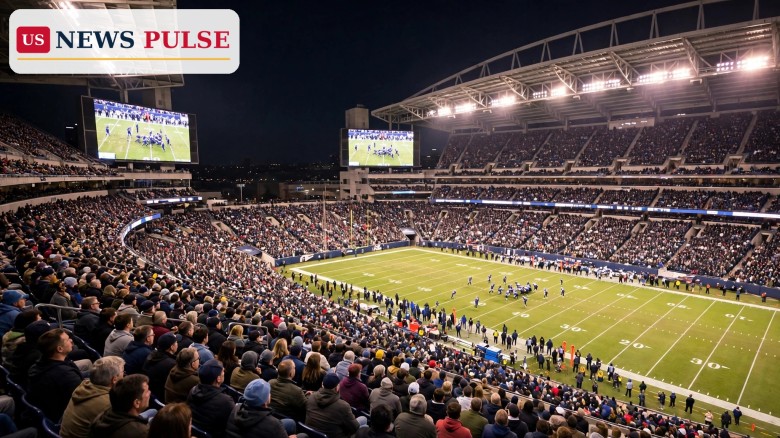
The case dates back to 2015 and centres on how the NFL sold its out-of-market games. Sunday Ticket is the package that lets fans watch Sunday afternoon games played outside their local television market, games they could not otherwise see on their regular broadcasts. For years the package was sold exclusively through DirecTV, and the subscribers who sued argued that the exclusivity arrangement restricted competition and forced fans, along with commercial establishments such as bars and restaurants, to pay inflated prices.
The case finally reached a jury in the summer of 2024 in Los Angeles. Jurors found the league liable on every element of the plaintiffs' antitrust claims and awarded approximately $4.7 billion: about $4.61 billion to residential subscribers and around $97 million to commercial subscribers. It was a staggering number, and it sent shock waves through the league, in part because antitrust damages are tripled once a verdict becomes a final judgment, which would have pushed the bill past $14 billion before interest.
Then came the reversal. Judge Gutierrez overturned the verdict, throwing out the testimony of two key witnesses for the plaintiffs and concluding that the evidence presented did not support the damages figure. For more than two years the case has sat in that posture, with the liability finding wiped out and the subscribers' victory erased, until Friday's appeals court decision.
Friday's ruling splits the case in two. On liability, the subscribers win: the jury's conclusion that the NFL's Sunday Ticket arrangements violated federal antitrust law stands, and the trial court is instructed to reinstate it. On money, nobody wins yet: the damages award is vacated and a new trial must determine what subscribers are actually owed.
The stakes of that second trial remain enormous. The original award, if it had survived intact and been tripled as antitrust law requires, would have required each of the league's teams to come up with roughly $440 million in cash, with statutory interest pushing the total higher still. A new damages trial gives the NFL a chance to argue for a far smaller number, but it also leaves the league exposed to a figure that could again run into the billions, and it keeps the threat of trebling hanging over any final judgment.
The ruling also carries weight beyond this one package. How leagues are allowed to bundle and sell their broadcast rights is one of the foundations of modern sports economics, and a final, affirmed liability finding against the NFL would be cited in every future fight over exclusive television deals, streaming packages and the price fans pay to watch games that are not shown in their home market.
The NFL said in a statement that it was disappointed by the decision and is weighing its options for further court review. That wording leaves open another appeal, potentially to the US Supreme Court, although legal commentators noted the case may not be ripe for Supreme Court review until the new damages trial has taken place and a final judgment exists.
Coverage of the ruling underlined its scale. NBC Sports called the situation, whatever happens next, the most consequential piece of litigation in the league's more than 100-year history, a measure of how much money and how much of the league's broadcast model is now back in play.
For subscribers, the reaction is more measured than celebratory. They have their liability victory back, but the money remains unresolved, and the path to any payout still runs through another trial, further appeals and, quite possibly, settlement talks that the renewed pressure of a reinstated verdict may now accelerate.
Three things make this ruling matter far beyond a courtroom in San Francisco. First, the money: even a reduced damages award, once tripled, would rank among the largest antitrust judgments ever entered against a sports league, and it would land on all 32 teams at once. Second, the precedent: a standing liability verdict against the NFL's exclusive broadcast model invites fresh challenges to how every major league packages and sells its games. Third, the timing: the case returns to life just as live sports rights are being carved up for streaming, when the question of who gets to watch which games, and at what price, is being renegotiated across the entire industry.
For fans, the practical question is simpler. The subscribers who sued were not asking for a different league; they were asking why watching out-of-market games had to cost what it cost. Friday's ruling does not answer that question with a dollar figure, but it does say a jury was entitled to find that the price was inflated by an unlawful arrangement, and that answer alone reshapes the negotiation over every future television deal.
The case now returns to the district court in California, which must reinstate the jury's liability verdict and set a new trial on damages. No date for that trial has been announced. Before it begins, the NFL may seek further review of the liability ruling, and either side could push for a settlement that avoids the cost and uncertainty of a second damages trial.
Watch for three milestones. The first is the NFL's next legal move: whether it seeks rehearing before the full 9th Circuit or petitions the Supreme Court. The second is the scheduling of the damages trial and the expert evidence each side presents there, since the first trial foundered on exactly that evidence. The third is any sign of settlement talks, because a reinstated liability verdict gives the subscribers leverage they have not held since the summer of 2024.
Until then, the $4.7 billion figure should be treated as history, not as a bill. What Friday changed is that the NFL is once again a league found liable for how it sold Sunday Ticket, with the size of the penalty still to be decided.
What did the appeals court actually decide? It reinstated the jury's finding that the NFL violated antitrust law in selling Sunday Ticket, but it ordered a new trial to decide damages. The original $4.7 billion award does not stand as the amount owed.
Does the NFL owe $4.7 billion now? No. That was the July 2024 jury award, which the trial judge threw out. A new damages trial will produce a fresh figure, which could be lower, similar or higher, and antitrust damages are tripled once a verdict becomes a final judgment.
What is NFL Sunday Ticket? It is the package that lets fans watch Sunday afternoon NFL games played outside their local television market. The lawsuit covers the era when it was sold exclusively through DirecTV.
Who brought the case? A class of DirecTV subscribers, residential and commercial, who argued the NFL's exclusive arrangement restricted competition and inflated the price of out-of-market games. The case was filed in 2015.
What happens next? The case returns to the district court for a new trial on damages. The NFL may seek further court review, and a settlement remains possible now that the liability verdict is back in force.
Related coverage on US News Pulse: Messiah Hampton arrested: Oregon freshman WR faces eluding police charges, MLB lockout looms after Brewers title as salary-cap fight threatens 2027 season and Cowboys beat Eagles 38-21 as Barkley suffers new injury in Monday night rout.
Leave a Comment



 | Today's Date: