The Trump administration has promised tariff relief to Audi to help secure the German carmaker's $4 billion assembly plant in Georgia, two sources briefed on the matter told Reuters on Thursday, in the clearest sign yet that the White House is willing to trade lower duties for factory jobs. The Audi Georgia plant deal, announced at a campaign rally in Perry, Georgia, on October 24, would build 200,000 premium SUVs a year and create about 4,500 jobs — but it still needs a final decision from Volkswagen's supervisory board, and the tariff talks now under way could decide whether that decision goes ahead.
According to Reuters, US officials told Audi executives that the government plans to offer a broad tariff relief programme for automakers making significant investments in US production. The Wall Street Journal reported details of the plan earlier, and the two sources briefed on the matter said other announced US investments by automakers would also qualify. The Commerce Department did not immediately comment, and Audi declined comment.
The numbers at the heart of the negotiation are stark. Audi has pushed the US to cut the 15% tariffs it pays on imports from the European Union to 7.5%, but the sources said the Commerce Department was expected to agree to around 10%. That five-point cut would still leave a substantial duty on every Audi imported from Europe or Mexico, but it would materially narrow the gap that has made the US market so expensive for the brand. Audi has said Trump's tariffs on autos, steel, aluminium and parts cost it around 1.2 billion euros — about $1.4 billion — last year, because it imports all of its vehicles for the US market from Europe or Mexico.
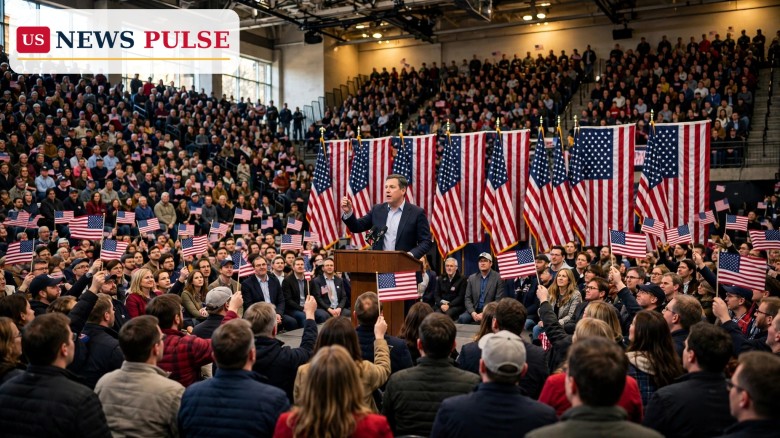
The plant itself was unveiled in classic campaign style. Audi chief executive Gernot Doellner stood alongside Trump on Saturday, October 24, at a rally in Perry, near Macon in central Georgia, where the president said the automaker planned to build an assembly plant producing 200,000 SUVs annually. "We are planning to bring our biggest and most premium SUVs and produce them here in Macon, Georgia," Doellner said at the event. "This is a long-term investment because we believe in the American market." A US official told Reuters the plant is expected to assemble the Audi Q7, Q8 and Q9 SUVs.
Audi is the odd one out among Germany's premium carmakers. BMW has built SUVs in Spartanburg, South Carolina, since the 1990s, and Mercedes-Benz has a large plant in Tuscaloosa, Alabama. Audi, by contrast, has never had its own US assembly plant. Its parent, Volkswagen Group, has just one US vehicle plant — in Chattanooga, Tennessee, where it builds the VW Atlas and Atlas Cross Sport — and Audi reportedly considered a "twin plant" in Chattanooga before choosing a greenfield site in Georgia.
The choice of Georgia was the result of a search lasting nearly three years, during which Audi examined more than 70 sites, according to trade reporting. The winner was the roughly 1,500-acre Middle Georgia Megasite in Peach County, south of Macon. Georgia Governor Brian Kemp said the state had bought and improved the megasite "for just this purpose: to bring a job-creating, high-calibre automotive manufacturer to this region." The state already hosts Kia in West Point, Hyundai's Metaplant in Ellabell and Rivian's planned R2 plant at Stanton Springs, making Georgia one of the anchors of the Southern auto belt.
For Audi, the timing is also about a broader Volkswagen reset. The group announced its Future Plan 2030 strategy in early September, cutting its global model line-up by about half and refocusing North America around SUVs, pickups and what it calls "rugged vehicles," with Audi as its premium SUV brand. Audi said the Georgia plant will be designed around its future manufacturing requirements, with an emphasis on efficiency, flexibility and the ability to respond to evolving demand in North America, and that it will reduce its exposure to trade and currency risks, including the 15% tariff on European auto imports.
The tariff relief promise reframes the Georgia plant as a bargain, not just a bet. Trump has pressured automakers to move production to the US and has raised tariffs on autos, steel, aluminium and parts as the lever. Audi's answer — a $4 billion plant, 4,500 jobs and 200,000 SUVs a year — is exactly the kind of investment the tariff strategy was designed to extract. The relief programme now on the table would reward that answer, and, crucially, would extend to other automakers that have already announced US investments, turning a one-off deal into a template.
That template carries risks on both sides. Critics of the tariffs say they have already damaged the US market, increasing vehicle prices and delaying some automaker investments, and a relief programme tied to investment announcements could reward companies for promises that take years to deliver — Georgia production is not expected until the early 2030s. Supporters will argue the opposite: that without the tariff pressure, Audi would never have chosen Georgia at all, and that a phased cut to around 10% keeps pressure on while giving the company a reason to break ground in 2027.
There is also a German dimension the White House cannot ignore. In Germany, the tariffs have added to the pressures on European industry and to tension between Volkswagen management and workers, who face job cuts and possible plant closures. Audi has insisted that Germany and Europe will remain its industrial backbone, with its engineering expertise and technological capabilities staying at home, and that the US expansion will complement rather than replace its existing production network. How that message lands with German workers — and with a supervisory board that must still sign off — will shape whether the Georgia plant moves from announcement to construction.
Doellner defended his appearance alongside Trump at the Perry rally when he spoke to reporters the following day. "This decision was preceded by many months of careful planning and intense negotiations," he said. "If the American president invites you, you accept the invitation. That is what respect for the office and for the country in which we invest demands."
His pitch at the rally itself was about belief in the American market rather than about tariffs. "We have much greater ambitions for Audi in America," he said. "The United States is one of the world's most important premium markets, and we have not yet realised our full potential. We are determined to change that — with premium products, a stronger brand and a competitive local production base. This is about building a stronger Audi business in America — not only about building a factory."
Governor Kemp welcomed the project in a statement, saying Georgia had prepared the Middle Georgia Megasite precisely to attract a manufacturer of this calibre. Manfred Doess, chairman of Audi's supervisory board, added: "We need the courage to invest, to pursue new opportunities and to make decisions that will shape our company for decades to come. This planned investment demonstrates our determination to do exactly that."
In Germany, the reaction has been more sceptical. Reporting in German media after Doellner's appearance at the Trump rally described mounting doubt over the billions tied to the new Audi factory, and criticism of a chief executive appearing at a campaign event. That unease — over jobs at home, over political entanglement abroad — is part of why the tariff relief talks matter: they give Audi's board a concrete financial reason to approve a project that is politically sensitive on both sides of the Atlantic.
For Georgia, the stakes are immediate and tangible: about 4,500 direct jobs, plus suppliers, service providers and workforce-training partners that Audi says will follow, in a region that has spent years preparing the megasite for exactly this kind of employer. For the US auto industry, the relief programme could become the new rules of the game — invest in America, and your tariff bill falls — which would favour companies with the capital to build, and penalise importers that cannot.
For American car buyers, the effect is slower but real. Tariffs on imported Audis have added costs that flow, in part, into showroom prices; a cut from 15% to around 10% would ease that pressure on imports in the years before Georgia production starts, while local production in the early 2030s would eventually remove the tariff altogether on the Q7, Q8 and Q9. For the midterm campaign, the plant is already a talking point: Trump announced it at a rally five days before the November 3 vote, as evidence that his tariff strategy brings factories home.
And for Europe, the deal is a warning. If tariff relief becomes the price of US investment, every major exporter will face the same choice Audi faced: build in America, or keep paying. That is the logic of the administration's industrial policy — and the Georgia plant is its latest test case.
Three things to watch. First, the tariff relief programme itself: the sources said details could be unveiled in the coming weeks, and the final rate — 7.5%, 10% or something in between — will tell automakers how generous the bargain really is. Second, Volkswagen's supervisory board, which must make the final investment decision; no date has been announced, and board approval is not a formality given the tensions over German jobs. Third, the ground-breaking: Audi says construction is scheduled to begin next year, with production in the early 2030s, and any slip in that timetable will be read as a signal about how firm the commitment is.
If the board approves and the relief programme lands, expect other automakers to test the same template — and expect the debate in Germany over factory jobs at home to intensify. If either stalls, the Georgia plant risks joining the long list of announced factories that never broke ground.
According to Reuters, citing two sources briefed on private talks, the Trump administration has promised tariff relief to help secure Audi's $4 billion Georgia plant, as part of a broad programme for automakers making significant US production investments.
Audi has pushed for its 15% tariff on EU imports to be cut to 7.5%, but the sources said the Commerce Department is expected to agree to around 10%. The final rate has not been confirmed.
At the Middle Georgia Megasite in Peach County, near Macon. It is expected to assemble the Audi Q7, Q8 and Q9 SUVs, producing 200,000 vehicles a year and creating about 4,500 jobs.
Construction is scheduled to begin next year, with production starting in the early 2030s, according to Audi. Volkswagen's supervisory board must still give final approval.
Audi imports all of its US-market vehicles from Europe or Mexico, and has said Trump's tariffs on autos, steel, aluminium and parts cost it around 1.2 billion euros ($1.4 billion) last year.
Related coverage: US-India trade deal nears finish as White House calls talks productive, US warns EU that $3.4B Airbus loan threatens hard-won aircraft trade truce, and Fed rate decision October 2026: why a pause looks likely despite high inflation.
Leave a Comment



 | Today's Date: