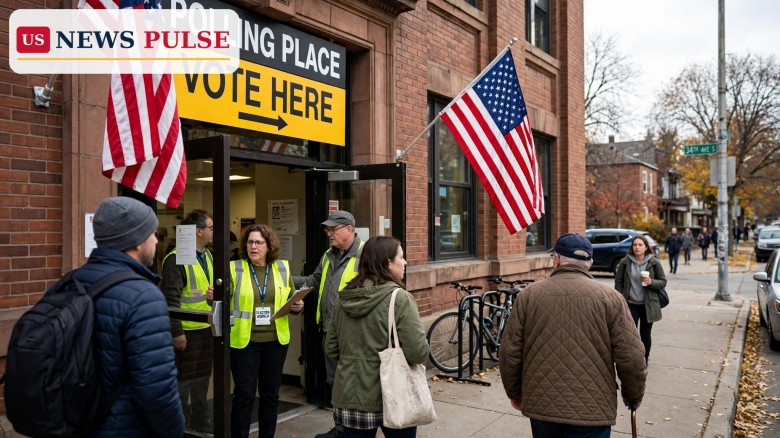
James O'Keefe has been charged with felony unlawful voting and identity theft in Minnesota, after prosecutors say he and fellow influencer Cam Higby posed as registered voters at Minneapolis polling places during the August primary as part of a hidden-camera stunt. The charges, announced on Wednesday, October 28, 2026, land just five days before the November 3 midterm elections, and they turn a viral video about election security into a criminal case about the very conduct it claimed to expose.
Hennepin County Attorney Mary Moriarty, the chief elected prosecutor in Minneapolis, announced the charges at a news conference. She said O'Keefe, 42, and Higby, 26, filmed themselves visiting several precincts and giving election judges the names of registered voters without those voters' knowledge or permission, in an apparent attempt to test — and, prosecutors say, to cast doubt on — Minnesota's voter vouching system. Neither man actually voted, Moriarty stressed, but she said that does not matter under Minnesota law.
"You cannot begin to apply for a ballot and misrepresent yourself," Moriarty told reporters.
According to the criminal complaint described by prosecutors, O'Keefe and Higby went to polling places in Minneapolis during Minnesota's August 11 primary elections and identified themselves using the names of registered voters in those precincts. They filmed the encounters with hidden cameras and later posted the videos online, where clips racked up more than 10 million views on X, according to USA TODAY.
In one clip, O'Keefe, wearing traditional Arab attire and using an accent, asks about vouching to register "other Muslims." Higby, wearing a full-facial covering and claiming to be a "Muslim woman," repeated the stunt at other sites in Minneapolis. A version of the video quoted by prosecutors in the complaint was posted on YouTube on August 14 with the title "I Wore Burqa To EXPOSE Election FRAUD In Minneapolis." O'Keefe had posted a version on social media on August 13, two days after the primary.
Prosecutors say the pair were trying to use Minnesota's vouching system, which allows a registered voter to confirm the residency of up to eight other people so they can register and vote on the same day. But Moriarty said the pair never completed that process: they did not sign the oaths required to go through with a vouching registration, and the video shows the group leaving each site after asking the question, without attempting to complete a registration.
"A group of people were attempting to cast doubt on the state's vouching system by posting videos of themselves on social media," Moriarty said. "Elections are the bedrock of democracy and their protection is one of our highest priorities. Individuals engaging in unlawful conduct related to our elections will be held accountable."
Moriarty also said it remains unclear where the pair obtained the personal information of the registered voters whose names they used. The Hennepin County Attorney's Office said it received information about the activity from the Minnesota Secretary of State's Office, after poll workers grew suspicious of the behaviour, reported it to election officials, and police were asked to investigate.
Minnesota's vouching system is one of the most misunderstood parts of the state's election rules — and that misunderstanding is at the heart of this case. Under state law, a registered voter in a precinct may vouch for up to eight other voters, but only as proof of residence. The prospective voter must still provide a Minnesota driver's licence or ID number, or the last four digits of a Social Security number, to verify identity. The voucher must sign an oath under penalty of perjury, and the form is retained for at least 22 months.
That is very different from simply borrowing someone else's name at the check-in table. Moriarty put it bluntly: "Minnesota law states clearly that no individual shall intentionally misrepresent their identity in applying for a ballot." Prosecutors say that is exactly what O'Keefe and Higby did when they began the process of receiving ballots using other people's names — even though they stopped short of voting.
The office of Secretary of State Steve Simon said in an August 14 statement that the video was heavily edited and reflected ignorance of Minnesota election law. A Reuters fact check article previously found that a video O'Keefe posted on social media on August 13 misrepresented the state's election vouching law.
Vouching is also rare. Moriarty said its use accounts for just 0.6 percent of votes in the 2024 general election, and it is typically used by retirees who have newly moved into assisted living situations — not, as the videos implied, by strangers walking in off the street. Fewer than 0.6 percent of votes cast in the 2024 general election used the vouching process, according to the Secretary of State's Office.
O'Keefe is a well-known figure in conservative activist media. He founded Project Veritas, a group known for hidden-camera videos targeting ideological opponents and often accused of using deceptive tactics and editing. He left the organisation in 2023 and has since launched O'Keefe Media Group. Higby is an independent journalist and conservative political commentator known for filming videos at protests and debating students on college campuses. Both men have in the past characterised their activities as attempts to expose the potential for fraud.
The core allegation is narrow, and prosecutors have been careful to draw its boundaries. The complaint does not claim that a fraudulent ballot was cast or counted. It claims that O'Keefe and Higby intentionally misrepresented their identities while applying for ballots — giving election judges the names and addresses of four registered voters in Minneapolis without those voters' permission, according to reporting on the complaint.
That distinction matters for two reasons. First, it answers the most obvious defence: that nothing happened because nobody voted. Moriarty addressed that directly at her news conference. "I think it's pretty clear they did not intend to vote. That's not the question here," she said. The question, in her framing, is whether entering a polling place and using another person's identity to apply for a ballot is itself a crime. Prosecutors say it is, and that the charges were "appropriate" given that the pair "entered polling places without legitimate purposes and intentionally misrepresenting their identity to election judges in applying for a ballot."
Second, the narrow charge keeps the focus on conduct rather than performance. "It is not against the law to be performative. It is not against the law to be offensive," Moriarty said, according to reporting on the announcement. What is against the law, she argued, is using someone else's identity in the ballot-application process, whether or not the person intends to follow through and vote.
Each man faces one count of unlawful voting and one count of identity theft, both felonies. Each charge carries a maximum of five years in prison, a $10,000 fine, or both. Charges are allegations, not convictions, and prosecutors must still prove their case in court.
Moriarty framed the prosecution as a defence of the system itself, not of any candidate or party. "Elections are the bedrock of democracy and their protection is one of our highest priorities," she said. "Individuals engaging in unlawful conduct related to our elections will be held accountable." She added that the county's safeguards are working well and that local officials are prepared to handle any issues that might arise around the midterms.
She also rejected the argument that the stunt was protected investigative journalism. "You have to identify yourself as a journalist in the polling place, which they did not do," Moriarty said, adding that arguments that the two were doing "investigative journalism" would not hold up in court.
Higby, by contrast, treated the charges as vindication. "This video caused Minnesota to charge me with a felony," he said in sharing one of the videos on social media. "Watch it, they're afraid of it." O'Keefe could not be immediately reached for comment when the charges were announced, and O'Keefe Media Group and Higby did not respond to Reuters' requests for comment for its story. The pair have previously defended their hidden-camera videos as "guerrilla" journalism.
In the video itself, Higby said he posed as a veiled Muslim woman in order to "point out the vulnerabilities in the system and how easily exploitable it is. I mean, I walked into a polling station with my face covered and non-visible." In a caption on the clip, Higby wrote that Minneapolis poll workers were prepared to let him and other outsiders vote fraudulently — a claim prosecutors and election officials dispute, and one that the Secretary of State's Office said rested on a misreading of the vouching law.
The charges arrive in a heated national context. The state charges, brought by a Democratic prosecutor, come as President Donald Trump, a Republican, escalates a campaign to exert control over the November midterm elections. Trump has often claimed fraud without evidence in voting systems and procedures, which are run by the states. The Hennepin County move comes less than a week ahead of the midterms, when Republican-aligned activists and officials have tried to raise the spectre of election fraud and unlawful voting.
This case matters because it tests a line that has become increasingly blurred in American politics: the line between exposing a vulnerability and committing the offence you claim to be exposing. O'Keefe and Higby say they were demonstrating that Minnesota's system could be exploited. Prosecutors say they demonstrated something else — that the system has tripwires. Poll workers grew suspicious, reported the behaviour, election officials referred it to police, and a criminal investigation followed. In that sense, the case is as much about deterrence as punishment: if staging a fake ballot application is itself a felony, the cost of manufacturing a viral fraud claim rises sharply.
It also matters because of timing. With early voting already past 40 million ballots nationwide and Election Day on November 3, every claim about voting rules travels fast and lands hard. Videos that rack up more than 10 million views can shape what voters believe about the integrity of the process before a single charge is filed or a single fact is checked. A prosecution that carefully separates what the videos showed from what the law actually requires — and that concedes upfront that no ballot was cast — is an attempt to put the record straight while the election is still being contested in public.
Finally, the case puts a spotlight on Minnesota's vouching system itself. The system exists for a practical reason: to let people who have recently moved, including elderly voters entering assisted living, register and vote without being shut out by paperwork. Its safeguards — the ID number, the sworn oath, the retained form — are what make it work. Whether those safeguards are well understood by the public is another question, and this prosecution is likely to become Exhibit A in that debate, whichever way the court rules.
O'Keefe and Higby will now face the criminal process in Hennepin County, where prosecutors must prove the unlawful voting and identity theft counts beyond a reasonable doubt. Court dates, pleas, and any motions — including a likely First Amendment and newsgathering defence — will follow in the coming weeks and months. Legal experts will watch closely for how the court treats the journalism argument, given Moriarty's position that the pair failed to identify themselves as journalists in the polling place.
Meanwhile, Minnesota election officials say they are prepared for the midterms. Moriarty said local officials are ready to handle any issues that might arise, and the Secretary of State's Office has already pushed back publicly on the videos' account of the law. Voters in Minnesota can check their registration status and polling place through the Secretary of State's Office, and early voting continues through the weekend before Election Day.
For the national debate, the case is unlikely to settle anything quickly. Supporters of the pair will frame the prosecution as political retaliation for embarrassing journalism; critics will frame it as proof that safeguards work and that manufacturing fraud claims carries consequences. What is not in dispute is the timeline: a stunt filmed in August, posted within days, investigated after poll workers raised the alarm, and charged in late October — five days before Americans vote.
Each man is charged in Hennepin County, Minnesota, with felony unlawful voting and felony identity theft, over allegedly posing as registered voters at Minneapolis polling places during the August 11, 2026, primary.
No. Prosecutors say neither man voted or completed a registration, and neither signed the oath required under the vouching system. The charges rest on allegedly misrepresenting their identities while applying for ballots.
It allows a registered voter to vouch for the residency of up to eight other people so they can register and vote the same day. The new voter must still provide an ID number or the last four digits of a Social Security number, and the voucher must sign an oath under penalty of perjury.
Each charge carries a maximum of five years in prison, a $10,000 fine, or both. The charges are allegations, not convictions.
The charges do not change any ballot or result. Minnesota officials say the state's safeguards worked — poll workers reported the conduct — and that local officials are prepared for Election Day. Early voting is already underway nationwide.
Related coverage: Early Voting Passes 40 Million as Midterm Ballots Surge Before Nov. 3 | DOJ Says FBI and ICE Agents Will Not Serve as Midterm Poll Monitors | Tens of Thousands of Election Observers to Watch the Polls on Nov. 3
Leave a Comment



 | Today's Date: