A 15-year-old boy accused of opening fire after Florida A&M University's homecoming game will now face the case as an adult, after prosecutors filed 11 counts of attempted second-degree murder against him in the Tallahassee mass shooting that left 12 people injured, six of them children. Anthony Rivers III was transferred on Tuesday from a juvenile facility to the Leon County Detention Facility, and his first appearance in adult court is scheduled for 11 a.m. Wednesday at the Leon County Courthouse, a step that moves one of the worst mass shootings in Tallahassee history into the adult criminal justice system.
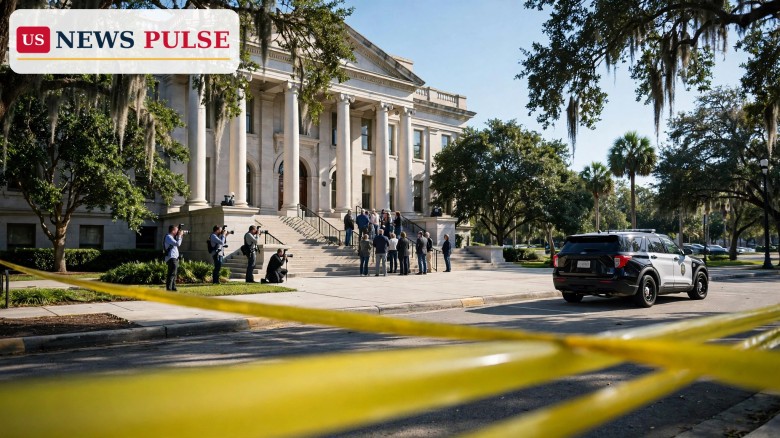
The shooting broke out shortly before 8 p.m. on Saturday, October 24, 2026, at Perry and Manatee streets, just outside Florida A&M University's Bragg Memorial Stadium, as crowds were still spilling out of the school's homecoming celebrations. Police say a physical altercation between people who knew one another came first, and then gunfire tore through a crowded street where, investigators believe, none of the people who were shot were the intended targets. Eleven people suffered gunshot wounds and a 12th person, the grandmother of one of the victims, was hurt while fleeing, police said.
According to the Tallahassee Police Department, the shooting happened at about 8 p.m. on Saturday, October 24, near the corner of Perry and Manatee streets, across the street from Bragg Memorial Stadium, where Florida A&M had played its homecoming football game against the University of Arkansas at Pine Bluff earlier in the day. The area was packed with people celebrating one of the university's biggest weekends of the year, and that crowd itself became part of the emergency: Police Chief Lawrence Revell said the crush of people made it hard for ambulances to reach the wounded, and officers carried some victims to emergency vehicles themselves.
Detectives arrested Rivers the next day, Sunday, October 25. Police said preliminary findings indicated a physical altercation occurred before the shots were fired, and that the incident stemmed from a dispute between individuals known to one another. At this stage of the investigation, police said, none of the victims appear to have been the intended targets — a detail that has haunted families and neighbours alike, because it means the dozen people hurt were, in the police account, bystanders to someone else's fight.
The human toll was severe. Six of the 11 people shot were juveniles, including an 11-year-old, and the Leon County school district said four of its students were among the wounded. As of Sunday, six victims remained in hospital, one in critical condition and three others seriously wounded, according to information released by police. No deaths have been reported. A 12th person, the grandmother of one of the victims, injured an ankle while running from the gunfire.
On Monday, October 26, Rivers appeared in juvenile court for a detention hearing. Leon Circuit Judge Andrew Sheeran ordered him held in secure detention while the case was pending, barred any contact with victims or witnesses, and appointed a public defender to represent him. The next day, State Attorney Jack Campbell filed direct charges against Rivers as an adult: 11 counts of attempted second-degree murder, one for each person shot, plus one count of possession of a firearm by a delinquent. Rivers was transferred the same day from the Juvenile Assessment Center to the Leon County Detention Facility.
Florida A&M's homecoming is one of Tallahassee's signature weekends, drawing alumni, students and families to the campus and the streets around Bragg Memorial Stadium. Saturday's game against Arkansas-Pine Bluff had filled the stadium, and the celebration spilling onto Perry Street afterwards is, in ordinary years, the point of the weekend. Instead, the night ended with evidence markers snaking down Perry Street behind the stadium and a police investigation that was still, days later, sealing its own paperwork.
The shooting was the second mass shooting in Tallahassee this year and the 19th in Florida in 2026, according to the Gun Violence Archive, as cited in USA TODAY Network reporting on the case. It also followed a pattern city officials described with grim familiarity at a community gathering on Perry Street on Tuesday, October 27: Undersheriff Ron Cave noted that the community had seen shootings on four consecutive days, beginning with the previous Saturday's mass shooting. Cave pointed to a joint Florida Sheriffs Association and Leon County Sheriff's Office project, The Anatomy of a Homicide, which analysed 141 homicides from 2015 to 2020 and found that 81 of 108 victims were Black — described as significantly disproportionate for a county in which 32 per cent of residents were Black.
Florida law allows prosecutors to file adult charges directly against a 15-year-old accused of serious felonies, and Campbell's office took that route rather than waiting for a juvenile judge to transfer the case. The distinction matters for what comes next: an adult prosecution opens the case to adult court procedures, adult sentencing exposure and a public record, though the sealing order in this case has kept the underlying affidavit out of public view for now.
The 11 attempted second-degree murder counts track the 11 people shot, and the additional firearm-possession count reflects Rivers' status as a juvenile accused of possessing a gun. In Florida, attempted second-degree murder is a serious felony, and the adult filing means Rivers, who is 15, will be tried under adult criminal procedure rather than the juvenile system, where cases are generally more closed and dispositions more limited. The case has now been assigned to Leon Circuit Judge J. Lee Marsh, who presides over felonies.
What the charges do not yet answer is almost as important as what they do. Police Chief Revell initially described Rivers as the only gunman, but police later said more arrests were possible, and Campbell declined to say in a recent interview whether investigators have ruled out other shooters. Detectives are reviewing surveillance footage and other digital evidence and continuing to interview witnesses, and police have said the investigation remains open and active. That open-ended status is the stated reason for the sealing order: nearly all of the records in the case were sealed at the request of prosecutors and police, including the probable-cause affidavit, which contains details of the crime and what led to Rivers' arrest.
The sealing order itself explains the reasoning in formal terms: the confidentiality of the pickup orders, search warrants and probable-cause affidavits shall be sealed to preserve the integrity of the investigation and to avoid potential substantial injury to a party by the disclosure of said matters, and the Clerk of the Circuit Court is directed to seal immediately any and all pleadings and records related to this matter and to keep such materials from public access. For families waiting for answers, that means the fullest official account of what happened on Perry Street is, for now, not public.
Tallahassee Police Chief Lawrence Revell, announcing the arrest on Monday, struck a note that mixed progress with grief. "What should have been a weekend of celebration in our community instead became a night of fear and violence for the victims and their families," Revell said. "While this arrest marks a significant step forward, our work is far from over. We remain committed to holding those responsible accountable and getting answers for every family impacted by this tragedy."
At Tuesday's community gathering on Perry Street, steps from Bragg Memorial Stadium, Tallahassee City Commissioner Jack Porter said the city has already implemented many solutions to curb violence but believes there are ideas the city needs to invest in and take action on. "You have my word that I will advocate for the kinds of long-term solutions that we know this community needs and all communities need to end violence permanently," Porter said.
The shooting has also landed in the middle of Florida's governor's race, six days before the November 3 election. Less than 24 hours before the shooting, Republican candidate Byron Donalds, who is endorsed by the National Rifle Association, had rallied supporters in Fort Myers to defend the Second Amendment. Donalds later called the shooting "senseless violence" and said he was praying for the victims, their families and the Florida A&M community. Recent public polling has shown the race between Donalds and Democrat David Jolly within the margin of error, making gun policy a potentially deciding issue in the closing days of a campaign that had been dominated by housing costs, insurance rates and the economy.
Rivers' lawyers have not commented publicly on the adult charges, and no plea in adult court had been entered as of the filing of the charges. The charges are allegations, and Rivers is presumed innocent unless proven guilty.
This case matters for three reasons that go beyond a single night in Tallahassee. First, it is a test of how Florida treats serious violence by a child: a 15-year-old accused of shooting 11 people will now be judged in adult court, with adult stakes, and the outcome will shape how prosecutors, judges and families think about juvenile violence in the state. Second, the sealing of the affidavit means the public is being asked to trust a process it cannot yet fully see, at a moment when a community is grieving and demanding answers about a shooting that, by the police account, hit only bystanders. Third, the timing — six days before an election in which gun violence has suddenly become a closing issue — means the case will be argued about in campaign speeches as well as in courtrooms, whether the families involved want that or not.
There is also a quieter, longer story here. The Anatomy of a Homicide figures cited by Tallahassee officials this week describe a county where lethal violence has fallen disproportionately on Black residents for years. A single prosecution, however serious, does not change that pattern. What Commissioner Porter's promise of long-term solutions amounts to — funding, programmes, intervention work — will be measured in the months after the cameras leave Perry Street, not in the week of the charges.
Rivers' first court appearance as an adult is scheduled for 11 a.m. Wednesday, October 28, at the Leon County Courthouse. That appearance is expected to deal with formal matters such as counsel, the charges and the next hearing dates, rather than the evidence itself, which remains sealed. Detectives continue to investigate, and police have not ruled out further arrests.
In the coming days, attention will turn to whether prosecutors unseal any part of the affidavit, whether any additional suspects are identified from surveillance footage and witness interviews, and how the victims — including the six children shot and the four Leon County students among them — recover. The school district, the university and the city have all been drawn into the aftermath of a homecoming weekend that was supposed to be a celebration, and all three will face questions about safety at large public gatherings in the weeks ahead.
Florida voters, meanwhile, go to the polls on November 3, and the Perry Street shooting is now part of the final argument in the governor's race. Whether it changes votes, or simply hardens positions already held, is a question only the election can answer.
Anthony Rivers III, 15, was arrested on October 25 and charged as an adult on October 27 with 11 counts of attempted second-degree murder and one count of possession of a firearm by a delinquent.
Twelve people were injured: 11 suffered gunshot wounds and one person, the grandmother of a victim, was hurt while fleeing. Six of those shot were minors, and the youngest victim was 11 years old. No deaths have been reported.
The shooting happened shortly before 8 p.m. on Saturday, October 24, 2026, at Perry and Manatee streets near Florida A&M University's Bragg Memorial Stadium, after the school's homecoming football game.
Prosecutors and police asked for the probable-cause affidavit, pickup orders and search warrants to be sealed to preserve the integrity of the continuing investigation and to avoid potential substantial injury to a party. Police say more arrests remain possible.
Rivers is scheduled to appear in adult court at 11 a.m. Wednesday, October 28, at the Leon County Courthouse, with the case assigned to Leon Circuit Judge J. Lee Marsh. The charges are allegations, and Rivers is presumed innocent unless proven guilty.
Related coverage on US News Pulse: the George Washington Bridge road-rage murder indictment of a former NYPD detective, the Ohio fentanyl death case in which a mother was arrested after her 17-month-old died, and the Justice Department charges against green-card holders accused of illegal voting in five states.
Leave a Comment



 | Today's Date: