The United States has warned several Gulf Arab states to be ready for a short, intense military campaign against Iran after the November 3 midterm elections, The Wall Street Journal reported on Wednesday, October 28, 2026, in the clearest sign yet that Washington and Jerusalem are preparing a new round of heavy combat operations against Tehran. The warning, delivered through diplomatic and military channels, comes as American forces restock munitions, move troops away from vulnerable bases and send additional air defences to Israel, while President Donald Trump is said to be leaning toward a large post-election attack — though no final decision has been made.
The report lands six days before Americans vote in the midterms, and it sharpens a question that has hung over the region for weeks: whether the war that began in the spring with the heavy US-Israeli bombing campaign known as Epic Fury is about to enter a second, sharper phase. The White House declined to confirm or deny the planning, saying only that the president keeps all options on the table to ensure Iran can never obtain a nuclear weapon.
According to the Journal's account, published from Dubai and based on people briefed on the conversations, the messages to Gulf capitals are among a growing number of indications that the US and Israel are readying a fresh round of fighting. The aim, the report says, would be to degrade Tehran's strength and push it toward negotiations — a major escalation that carries obvious risks for the Gulf states being asked to brace for it.
The military movements described in the report are specific. The US military is sending an additional Patriot system to Israel from Texas to strengthen its missile defences, a movement the Journal says is supported by flight-tracking data and confirmed by two officials with knowledge of it. American troops have also been moved away from bases in the Middle East where they would be exposed to Iranian fire, and US forces in the region have been restocking their munitions while bomber aircraft and jet fighters prepare for strikes.
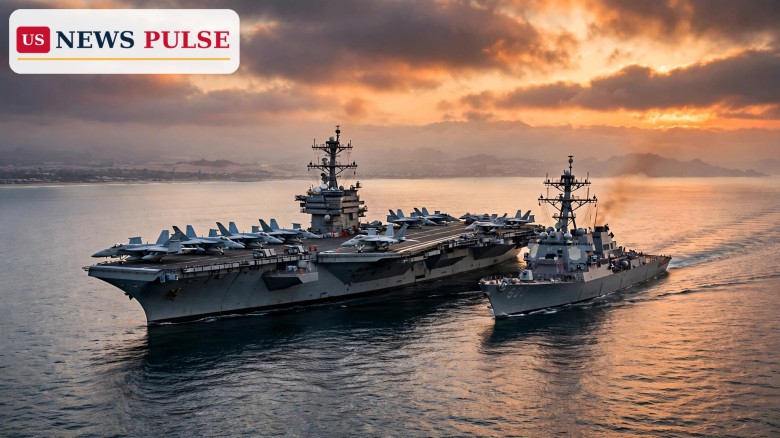
The naval build-up is equally striking. An additional aircraft carrier strike group and a Marine expeditionary unit are poised to join an armada of roughly 20 other warships already operating in the Middle East next month, although the report notes that some ships could rotate out. Taken together, the movements describe a force being positioned for a campaign that would be intense but, in the telling of the officials cited, short.
On the decision itself, the Journal is careful: Mr Trump has not decided to go ahead, but is leaning toward a large post-election attack that could target Iranian infrastructure and nuclear sites. The alternative, the report says, would be to try to cut a deal, and diplomatic efforts by regional mediators have continued — but had yet to bear fruit at the time of publication. The White House response was terse: it would not comment on "sensitive military plans that may or may not exist."
The warning does not come out of nowhere. It is the latest in a run of reports pointing the same way. Earlier this month, CNN reported that US forces could be ready to strike within 96 hours of a presidential order, with a major campaign eyed for after the November 3 vote and Israel pushing for a joint attack. The New York Times reported on October 21 that American and Israeli forces were conducting fighter-jet practice flights over Iraq with a short, intensive strike on Iran in mind.
Mr Trump himself has been signalling the possibility in public. At a midterm campaign rally in Fort Myers, Florida, on October 23, he told supporters: "We may do another little Epic Fury." Epic Fury is the name of the large-scale air campaign the US launched with Israel in the spring, which opened the war with Iran in late February. "Or they'll agree," he added, framing the choice for Tehran as a deal or another bombing campaign. He has also said the US could end the war "very quickly" if it chose to, and that oil continues to move through the Strait of Hormuz.
The war's costs are already enormous. The Pentagon has told Congress the Iran war has cost more than $47.1 billion as of October 16, and analysts cited in coverage of the new report note that during the most active phase of the fighting, the US and Israel struck Iran more than 20,000 times — yet Tehran continues to attack commercial vessels in the Gulf, keep US troops and ships in its sights, and make hard-line demands in negotiations. Shipping and maritime security officials say Iran is now attacking more ships in or near the Strait of Hormuz, and causing more severe damage, than earlier in the conflict, deploying guided missiles rather than attack drones.
Meanwhile, the political calendar is compressing everything. Israel has just voted in its first election since the October 7, 2023 Hamas attacks, and the count is still under way, with no bloc yet holding the 61 seats needed to govern. In the small hours of Wednesday, Prime Minister Benjamin Netanyahu told Likud supporters in Jerusalem that Israel faced "a historic, one-time opportunity along with our friend President Trump to remove the Iranian threat once and for all," adding: "Iran is weaker than ever, Israel is stronger than ever." The Journal also reports that Mr Netanyahu has identified targets and is pressing for strikes to resume.
The heart of the Journal's report is the message itself: Gulf states should be prepared. That matters because the Gulf is where any renewed war would be felt first. The region's monarchies host American bases, sit astride the Strait of Hormuz through which much of the world's oil moves, and have spent the war trying to avoid becoming targets themselves. A warning delivered through both diplomatic and military channels is designed to give them time to harden defences, protect shipping and prepare for the Iranian retaliation that would almost certainly follow any strike.
It also matters because it tests Gulf patience. Several Gulf officials are said to have a high degree of confidence that violence will resume, and some fear it could be worse than before the pause. One person familiar with Tehran's thinking has described the period between the US election and the seating of the new Congress in early January as the most difficult stretch of all, with a deal that lets both sides claim victory seen as the only way out. The warning, in that light, is both a military precaution and a diplomatic signal: Washington is telling its Gulf partners that the pause may be ending, and telling Tehran, indirectly, that the threat is real.
There is also a domestic American dimension. The midterms on November 3 will decide control of Congress, and the war has already driven fuel prices sharply higher in the US, with diesel at record levels. Mr Trump's own comments suggest strikes are unlikely before the vote, and the Journal's framing — a campaign after the election — fits that timetable. But it also means voters will cast ballots with the prospect of a renewed war hanging over the week after election day.
The White House would not confirm the report, but its language left the threat standing. "President Trump keeps all options on the table to ensure that Iran can never have a nuclear weapon," the White House said, in response to the Journal's account. That formulation — all options, never a nuclear weapon — has been the administration's constant throughout the war, and it neither confirms nor rules out the campaign the report describes.
From Jerusalem, Mr Netanyahu's election-night message dovetailed with the report's logic. "Israel is facing a historic, one-time opportunity along with our friend President Trump to remove the Iranian threat once and for all," he said at Likud headquarters, before joining supporters in song. "We have been able to overcome our enemies, and we will be able to in the future," he added. He stopped short of declaring victory in the election itself, saying: "We are still waiting for the true results," and "The Likud is the biggest party in Israel."
Iran's answer, delivered in recent days, has been its starkest deterrent language yet. Two senior Iranian officials told Reuters that Tehran has drawn up detailed plans targeting undersea cables in Gulf waters if the US and Israel attack again. "If Iran is attacked, there will be no more red lines," one official warned, "from undersea cables to military bases, including covert ones." Revolutionary Guards spokesman Brigadier General Hossein Mohebbi said Iran would achieve "absolute victory in this apocalyptic war" if attacked, and armed forces chief Major General Ali Abdollahi said US warships would not be allowed into the Persian Gulf "under any circumstances and at any time." Another Guards figure, Yadollah Javani, said Iran could target seven cables beneath the Strait of Hormuz, while Mohsen Rezaei threatened US-linked data centres and artificial intelligence facilities.
Analysts are divided on whether more bombing would work. Asli Aydintasbas, a Middle East expert at the Brookings Institution, told reporters: "All indications point to a resumption of war and a major bombing campaign, although the timing remains uncertain." Others cited in coverage of the report doubted that further strikes would force Iran to capitulate, pointing to the 20,000-plus strikes already absorbed and to Tehran's continued attacks on shipping. One analyst, Alex Vatanka, said Tehran's cable threats were aimed at getting Gulf states and corporate executives to press Mr Trump over the risks his policies pose to their investment plans.
This report matters for three reasons. First, it moves the Iran war from speculation to preparation. Warnings to allies, Patriot batteries, restocked munitions and a carrier group on the move are the practical furniture of a campaign, not just rhetoric at a rally. Even if Mr Trump ultimately chooses a deal, the region must now plan as if strikes are coming — and that planning itself, from air defences to shipping insurance, has real costs.
Second, it puts the Gulf states in an impossible position. They are being warned by their American security partner about a war they did not choose, while being threatened by Iran with retaliation — including against the undersea cables that carry the region's internet traffic — if that war happens. Their leverage is limited to persuasion: urging Washington toward a deal, and urging Tehran not to escalate. The warning gives them time, but it does not give them a choice.
Third, it frames the week after the midterms as a hinge moment. If the election produces a Congress hostile to the administration, a president who has just been rebuked at the ballot box would be launching a major war with a weakened hand at home. If it produces a Congress that backs him, he would have a freer hand — and a war already prepared. Either way, the period between November 3 and the seating of the new Congress in early January now looks like the window in which the war's next phase will be decided.
The immediate watch points are clear. The first is whether the additional carrier strike group and Marine expeditionary unit actually arrive in the Middle East next month, and whether the Patriot battery from Texas is confirmed in place in Israel. The second is whether regional mediators make any visible progress toward a deal — the Journal says their efforts have yet to bear fruit, but a breakthrough would change the calculus overnight.
The third is Iran's behaviour in the Gulf. Further attacks on commercial shipping, new threats against cables or bases, or a visible military mobilisation would all be read as Tehran preparing its own response — and could accelerate the American timetable. Conversely, a quiet week in the Strait of Hormuz would suggest both sides are still holding for the election.
The fourth is the American election itself. On November 3, voters will decide control of the House and Senate. Within days of the result, according to the report's logic, the president will face the decision he is said to be leaning toward: a large, short, intense campaign against Iranian infrastructure and nuclear sites, or a negotiated settlement. US News Pulse will update this story as the military movements, the diplomacy and the election result develop.
What did the US reportedly warn Gulf states about?
According to The Wall Street Journal, the US told several Gulf Arab countries through diplomatic and military channels to be prepared for a short, intense military campaign against Iran after the November 3 midterm elections.
Has President Trump decided to attack Iran?
No. The Journal reports he has not decided but is leaning toward a large post-election attack that could target Iranian infrastructure and nuclear sites. The alternative would be to try to cut a deal.
What military movements does the report cite?
An additional Patriot battery from Texas to Israel, troops moved off vulnerable Middle East bases, restocked munitions, bombers and fighters preparing for strikes, and an extra carrier strike group plus a Marine expeditionary unit joining roughly 20 warships next month.
What is Epic Fury?
Epic Fury is the name of the heavy US-Israeli bombing campaign launched in the spring that opened the war with Iran in late February. Mr Trump said at an October 23 rally: "We may do another little Epic Fury. Or they'll agree."
How has Iran responded?
Iranian officials have warned of retaliation with "no red lines", including targeting undersea cables in Gulf waters, and Guards spokesmen have spoken of "absolute victory in this apocalyptic war" if Iran is attacked.
Read more on US News Pulse: US Iran strike plans: forces ready within 96 hours of Trump order, reports say, Iran war cost tops $47 billion, Pentagon tells Congress and Israel election results 2026: Eisenkot claims win as deadlock leaves no bloc at 61.
Leave a Comment



 | Today's Date: