ICE arrests have surged across California in October 2026, rattling immigrant communities from Sacramento to San Diego just five days before the November 3 midterm elections, according to a New York Times report drawing on local groups that track enforcement. Along the Central Coast, advocates counted 200 arrests between October 1 and October 23, more than double the 93 recorded in the same period last year, while in Fresno, the largest city in the agricultural Central Valley, workers have stopped showing up for jobs, Latino business districts have emptied and school attendance has dipped.
From Sacramento to San Diego, the evidence of increased enforcement has mounted through October, the Times reported on October 27. Unmarked vehicles idled outside an election office in Northern California. Arrests emptied fields of workers in the state's agricultural heartland. Reports came in from all corners of the state of immigrants being stopped and pulled from their cars by agents.
Along the Central Coast, the regional nonprofit 805UndocuFund tallied 200 arrests in Santa Barbara, Ventura and San Luis Obispo counties between October 1 and October 23, compared with 93 for the same period last year. The city of Santa Maria, home to many immigrants who work in berry farms, has been hard hit, its executive director Primitiva Hernandez said.
"They are picking up random people waiting for rides, shopping and just walking in the street," Hernandez said.
In Northern California, NorCal Resist, a mutual aid organisation based in Sacramento, recorded 30 arrests in the two weeks between October 7 and October 21, compared with an average of 20 per month previously this year, according to programmes director Giselle Garcia.
In Sutter County, north of Sacramento, six unmarked SUVs with tinted windows idled for two hours in a parking lot outside a veterans hall and county election office on October 5, the first day polls opened there. Donna Johnston, the registrar of voters, said she saw a man in a camouflage vest inscribed with "Police", his face covered. She approached one of the vehicles, told the man that elections were taking place and passed him her card. He did not identify himself, she said. She later returned and handed him a state reference guide on rules for law enforcement activity near polling places.
The reported increase comes as the Trump administration has sought to unearth voter fraud in California and other states, with Homeland Security agents going door to door in search of noncitizens who were registered to vote. A federal judge ordered the administration to halt those operations last week, the Times reported. Allegations of election fraud have been a centrepiece of President Donald Trump's yearslong feud with California, which began after he lost the state by more than four million votes in 2016. Studies have shown noncitizen voting is exceptionally rare.
The California reports also mirror tactics immigration agents have deployed across the country in recent months, the Times said. Instead of hundreds of agents taking to the streets of major cities, operations have happened more quietly, with arrests occurring as people go about their daily lives. Most of those arrested had no criminal record but were accused of violating civil immigration laws.
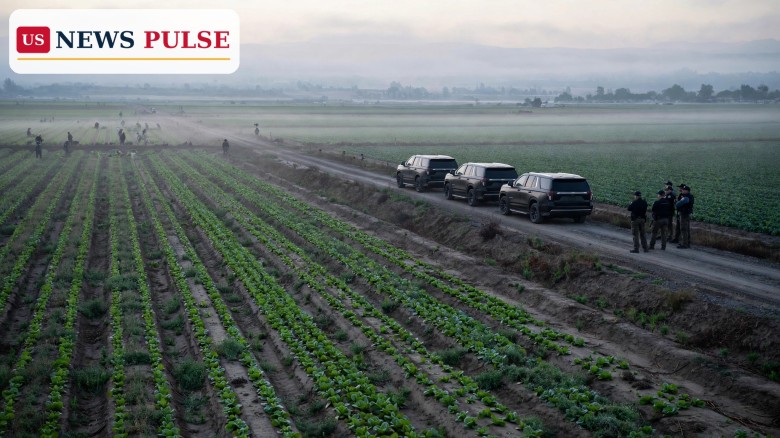
Traffic stops and other arrests by ICE near farms in central California, a relatively uncommon sight even during the mass deportation campaign, have unnerved immigrant workers and threatened the industry they sustain. Groups monitoring enforcement said that early this month they began noticing more unmarked SUVs with out-of-state licence plates, suggesting additional agents had been deployed to California. In San Diego, advocates said they encountered agents from Texas.
On the morning of October 7, unmarked vehicles surrounded the almond orchard where Pablo Perez Hernandez, 58, worked in Kerman, near Fresno, according to his nephew Lionel Perez, 21. Others managed to flee, but Perez Hernandez, who was undocumented, and another man were arrested. Perez Hernandez was his family's breadwinner and principal caregiver for his autistic adult son, his nephew said. He was taken to a detention centre outside Fresno. The Department of Homeland Security did not comment on his case.
Joe Garcia, whose labour contracting firm places 4,000 workers on farms in the Central Valley and Central Coast, warned that continued enforcement could disrupt the food supply "because people will be too scared to go to work". Garcia, also president of the California Farmworker Foundation, said the group had been trying to assure workers that enforcement was targeted and agents would not enter farms.
Early on October 21, Erik Zepeda, a 20-year-old American, was tackled by agents as he walked to school, according to the district, which called 911 after he managed to reach campus. He was treated for injuries at a local hospital. His arms were bandaged and his face appeared bruised and swollen in images on a local television report. The Department of Homeland Security acknowledged that agents had mistaken Zepeda for their target but blamed him for assuming "a fighting stance".
In another Santa Maria arrest, federal agents detained a man on October 5 after he pulled into a college's parking lot to drop off his daughter. Federal agents have typically refrained from enforcement on college campuses. Lauren Milbourne, public affairs and communications director at Allan Hancock College, provided a photo of the encounter and a statement condemning the enforcement. She said ICE representatives had told regional law enforcement officials in April that they would not enter the campus. The department said claims the man was arrested on a college campus were false, and said he would remain detained until his immigration case was resolved because he had not agreed to be deported.
In San Diego, Arturo Gonzalez, 24, who alerts residents with a bullhorn when ICE is nearby and informs hundreds of thousands of followers on social media of sightings, shared videos he filmed in early October of an agent who confirmed he was from Texas and said, "We're here making America great." On Wednesday, while on the phone with a reporter, Gonzalez filmed an agent inside his vehicle who pulled his gun out of his holster and placed it on his lap when Gonzalez taunted him. The same day, Alberto Ramirez, a US citizen who encountered ICE agents when he pulled into the parking lot of a breakfast place in San Diego, was pepper-sprayed after he began recording them with his phone, he said. The department did not comment on the interactions with Gonzalez and Ramirez.
"This is just about the worst surge of ICE activity we have seen," said Lucas Zucker, co-executive director at CAUSE, a social justice organisation in Ventura.
In Fresno, city councilman Miguel Arias said workers have stopped showing up for jobs, Latino business districts have emptied or shuttered, and school attendance has dipped. "I think the economic impact and the fear has never been worse than now," Arias said.
"We cannot normalize this brutality," said Gloria Soto, a local council member in Santa Maria, after the Zepeda incident.
The Department of Homeland Security said in a statement: "Every day, D.H.S. enforces the laws of the nation across the country including in California." It has not released arrest data since August, and in response to questions said it would not disclose operations.
Back in Fresno, school students have participated in walkouts and people have protested outside the downtown ICE facility. On October 11, some 300 people packed a local church to discuss how to help affected immigrants. Attendees learned how they could join mutual aid efforts offering rides and delivering groceries to those too afraid to leave home. Organisers also recruited people to patrol the streets for ICE activity. "We've never had 100 people in the same room care about immigration," Arias said. "We had 350 people that don't look like us."
The timing matters because the surge is unfolding five days before voters decide control of Congress, and because California is both the nation's largest agricultural state and a central battleground in the administration's voting-fraud claims. If farmworkers stay home, growers warn of disruption to harvests and the food supply. If families avoid schools, clinics and workplaces, the effects spread beyond those arrested to children, employers and whole neighbourhoods. And if unmarked vehicles appear near an election office on the first day of voting, even without proof of intent, election officials and voters may read the presence itself as pressure.
The official silence on numbers also matters. Without arrest data since August, the public record rests on counts kept by nonprofits, local officials and journalists, which the department can neither confirm nor easily rebut in detail. That gap fuels competing claims: advocates describe a surge and a chilling effect, while the department describes routine nationwide enforcement and declines to discuss operations. What is not in dispute in the Times reporting is that individual cases — a breadwinner taken from an orchard, a US citizen tackled on his way to school, a father detained while dropping off his daughter — have become the public face of the October enforcement wave.
Watch for three things before and just after November 3. First, whether the department releases any arrest figures or responds in detail to the Central Coast and Northern California counts. Second, whether courts revisit the door-to-door voter-registration checks after last week's halt order, and whether any further ruling touches enforcement near polling places. Third, whether the reported Central Valley absences ease after Election Day or harden into a longer labour shortage, with growers, schools and mutual aid groups already warning that fear, once established, does not lift overnight.
Related coverage: ICE protest at Monterey County Jail, California ballots ruling: judge rejects DOJ bid to set aside 20,000 votes, and DOJ charges green card holders with illegal voting in 5 states.
Advocates counted 200 arrests on the Central Coast from October 1 to October 23, 2026, against 93 in the same period last year, and 30 arrests in Northern California from October 7 to October 21, above a previous average of about 20 a month. The department has not released official arrest data since August, so these counts come from local tracking groups, not the federal government.
Yes, according to Sutter County registrar of voters Donna Johnston: six unmarked SUVs idled for two hours outside a veterans hall and county election office on October 5, the first day polls opened there. A man in a camouflage "Police" vest did not identify himself when Johnston approached him.
Erik Zepeda, a 20-year-old American, was tackled by agents as he walked to school in Santa Maria on October 21 and treated at a hospital. The department acknowledged agents had mistaken him for their target but blamed him for assuming "a fighting stance". Separately, US citizen Alberto Ramirez said he was pepper-sprayed in San Diego after recording agents with his phone.
The Times reports the enforcement increase coincides with the administration's effort to find noncitizen voting in California, including door-to-door checks that a federal judge ordered halted last week. Studies cited in the report say noncitizen voting is exceptionally rare, and officials have not publicly tied specific arrests to voter-fraud investigations.
Labour contractor Joe Garcia, whose firm places 4,000 workers in the Central Valley and Central Coast, warned continued enforcement could disrupt the food supply "because people will be too scared to go to work". Fresno councilman Miguel Arias said the economic impact and fear have never been worse.
Leave a Comment



 | Today's Date: