
UN Cuba Embargo Vote Today: World to Judge US Blockade After Fiery UN Clash
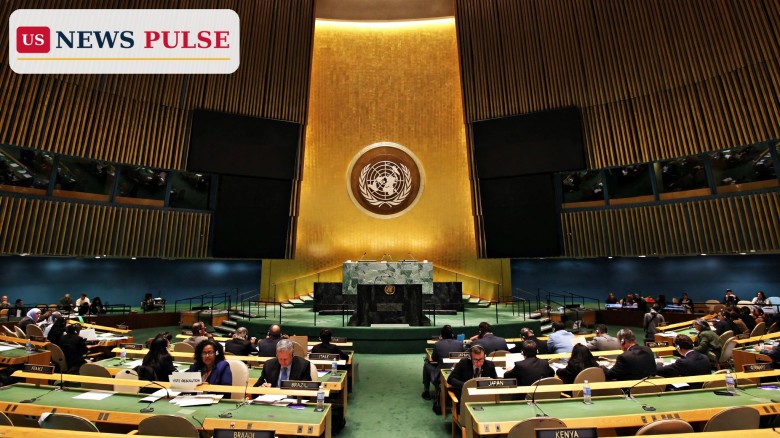
The United Nations General Assembly votes on Wednesday, October 28, 2026, on a resolution calling for an end to the United States embargo on Cuba, in a test of how much of the world's near-unanimous opposition to the six-decade-old policy survives the Trump administration's hardest-ever pressure campaign. The UN Cuba embargo vote comes a day after the chamber itself became the story, when US Ambassador Mike Waltz and Cuban Foreign Minister Bruno Rodríguez clashed in a shouting match on the General Assembly floor, and it comes as Cuba endures its worst fuel and power crisis in decades under what Washington now openly calls a maximum-pressure policy.
The resolution is expected to pass, as it has every year for more than three decades. What Washington is watching is the margin. Last year the text passed 165-7, with 12 abstentions, a sharp fall from 187-2 a year earlier, after an aggressive US lobbying effort persuaded five countries to join the United States and Israel in voting no. The Trump administration has spent the past year trying to push that number down further, pairing diplomatic arm-twisting at the UN with an energy blockade that has cut off almost all of Cuba's imported fuel. Havana, meanwhile, is counting on the vote as proof that the world still regards the embargo as illegitimate, even if the resolution itself cannot lift a single sanction.
Key Points
- The UN General Assembly votes Wednesday, October 28, 2026, on ending the US economic, commercial and financial embargo against Cuba.
- Last year's resolution passed 165-7 with 12 abstentions, down from 187-2 in 2024, after US lobbying won over Argentina, Hungary, Paraguay, North Macedonia and Ukraine.
- On Tuesday, US Ambassador Mike Waltz and Cuban Foreign Minister Bruno Rodríguez clashed on the Assembly floor, with Rodríguez calling Waltz a liar and Waltz telling him to back away from the podium.
- Since January 2026, Washington has halted Venezuelan oil shipments to Cuba and threatened tariffs on any country that sells oil to the island, leaving Cuba with rolling blackouts.
- The resolution is non-binding: only the US Congress can lift the core statutory embargo, so the vote is a diplomatic verdict, not a legal remedy.
What Happened
The annual vote is one of the General Assembly's most ritualised events, and one of its most lopsided. The resolution, formally titled the "necessity of ending the economic, commercial and financial embargo imposed by the United States of America against Cuba", has been put before the Assembly's 193 member states every year since 1992, and every year it has passed by an overwhelming margin. Last year's vote, on October 29, 2025, was adopted 165 votes in favour, seven against and 12 abstentions, according to the UN's recorded vote. The seven against were the United States, Israel, Argentina, Hungary, Paraguay, North Macedonia and Ukraine. The 12 abstentions came from Albania, Bosnia and Herzegovina, Costa Rica, Czechia, Ecuador, Estonia, Latvia, Lithuania, Morocco, Poland, Moldova and Romania.
That result was itself the story. A year earlier, in 2024, the same resolution had passed 187-2, with only the United States and Israel opposed and a single abstention, from Moldova. The loss of 22 yes votes in one year, and the first-ever no vote from Argentina under President Javier Milei, was read in diplomatic circles as the clearest sign yet that Washington's lobbying, backed by the return of Donald Trump to the White House, was moving votes that had been automatic for a generation. This year's question is whether that trend continues, stalls, or reverses, and whether Western allies that abstained last year drift further towards Washington or back towards Havana.
The drama arrived a day early. On Tuesday, as the Assembly debated the embargo resolution, Waltz began criticising Cuba's socialist government from the podium. Rodríguez walked down to the podium, called Waltz a liar while seeking a point of order from the presiding official, and a shouting match followed as UN security and staff tried to intervene. "This individual needs to back away from this podium. He's not going to intimidate me in the United States of America," Waltz said. "You understand who you're dealing with? This is America. Back up." Rodríguez later wrote on X that Waltz was speaking at the United Nations, not at a White House national security meeting, and accused Washington of launching "another desperate attempt to justify its economic aggression against Cuba and its criminal energy blockade".
It was the second such confrontation in a week. On October 19, Waltz hosted an invitation-only event at UN headquarters titled "Cuba Libre: The Oppression Havana Hides", featuring Cuban dissidents and former prisoners who described repression and imprisonment. Cuba's UN ambassador, Ernesto Soberón Guzmán, confronted Waltz outside the panel, and the two men argued in the corridor. The episode, like Tuesday's floor clash, broke sharply with the decorum the General Assembly usually maintains, and both sides have since used the footage and the headlines to make their case to the undecided delegations casting Wednesday's votes.
Background and Context
The embargo is older than most of the diplomats who will vote on it. Washington first imposed restrictions in 1960, after Fidel Castro's revolution toppled dictator Fulgencio Batista and nationalised properties belonging to US citizens and companies, and the embargo was tightened into a near-total trade ban in 1962. Congress later locked much of it into law, most notably through the Helms-Burton Act of 1996, which means a president can ease parts of the sanctions regime by executive action but cannot repeal its core provisions without Congress. That legal fact shapes everything about Wednesday's vote: Havana can win the Assembly by 180 votes and wake up on Thursday under the same embargo, while Washington can lose the vote and keep every sanction in place.
What changed in 2026 is the intensity of the pressure, and its target. In late January, after a US operation captured Venezuelan leader Nicolás Maduro, the Trump administration halted all oil shipments from Venezuela to Cuba, long Havana's most important supplier. On January 29, Trump signed Executive Order 14380, declaring a national emergency and authorising secondary tariffs on countries that supply petroleum products to Cuba. Mexico halted shipments from its state oil company Pemex on January 27, and since the blockade began, only a single oil tanker from Russia has reached Havana, according to reporting on the fuel crisis. A second order, Executive Order 14404, signed on May 1, authorised sanctions against foreign entities operating in Cuba's energy, defence, mining, finance and security sectors, and exposed foreign banks to US enforcement for doing business with Havana.
The effect on daily life in Cuba has been severe. The island's ageing, fossil-fuel-dependent grid already struggled before 2026, and the loss of imported fuel has brought rolling blackouts that disrupt cooking, water supply, internet and telephone services, public transport and hospital care. Cuba's energy minister, Vicente de la O Levy, told Reuters that the country faces "long hours of blackouts and lack fuel for cooking and transportation", while insisting that Cuba is "surviving and moving forward, little by little". Havana has responded by accelerating a renewable energy programme, with 144 solar farms totalling about 1,418 megawatts installed in recent years, most of the panels supplied by China. Even so, only about 40 percent of Cuba's electricity comes from domestic oil production, according to the International Energy Agency, and renewables covered only about nine percent of the country's energy consumption as of 2023.
The political context in Washington is equally stark. On September 22, Trump told the General Assembly that Cuba was a "completely failed state", while also disclosing that Secretary of State Marco Rubio was "deeply engaged in negotiations and conversations with Cuba". Last week, Trump again raised the prospect of US military intervention, saying US warships could stop over in Cuba on their way back from the war with Iran. Rubio, a Florida Republican of Cuban descent who has driven Cuba policy for much of his career, has argued that Havana will not implement the reforms Cubans need "as long as it believes it has the backing of the international community" — an argument that makes Wednesday's vote, in Washington's telling, not just a referendum on the embargo but a lever to deny Havana that backing.
UN Cuba Embargo Vote: Why the 2026 Count Matters
The 2026 count matters because it is the first hard measurement of whether the Trump administration's two-track strategy — diplomatic pressure at the UN plus an energy blockade at home — is actually moving the world. Last year's drop from 187 to 165 yes votes showed the strategy could move votes; a further drop this year, especially if it comes from European or Latin American countries that abstained last year, would let Washington claim that the international consensus against the embargo is cracking. A stabilisation or recovery in the yes vote would let Havana claim the opposite: that the world sees the energy blockade for what it is, and is not prepared to endorse it.
The lobbying has been unusually public. Cuba's foreign ministry has accused Washington of a "brutal and unprecedented deployment of pressure, intimidation, and toxicity" to influence the outcome, and former Caribbean leaders have written to governments urging them to resist "the blandishments and pressures currently being deployed by the USA to derail and defeat the proposed UNGA Resolution". All 14 Caribbean Community member states voted in favour last year, and the Caribbean bloc has been among Havana's most consistent supporters. On the other side, more than 550 Cuban activists and organisations, including dissidents José Daniel Ferrer, Orlando Gutiérrez Boronat and Jorge Luis García Pérez, known as "Antúnez", issued a letter on Tuesday urging democratic governments to vote against the resolution or abstain, arguing that supporting it aids the regime rather than the Cuban people. The letter, led by the Cuban Resistance Assembly and the Patriotic Union of Cuba, has gathered more than 1,000 endorsements in total.
The vote also matters for what it reveals about the Trump administration's broader approach to the United Nations. Waltz, who lost his job as national security adviser to Rubio in May 2025 before becoming UN ambassador, has turned the Cuba file into a personal campaign, hosting dissident events, confronting Cuban diplomats in public, and framing the embargo debate as a contest between freedom and dictatorship rather than between sanctions and sovereignty. That framing is deliberate: it shifts attention from the humanitarian effects of the fuel blockade, which Havana wants the debate to be about, to the Cuban government's human rights record, which Washington wants it to be about. Wednesday's speeches, and the margin, will show which framing carried the room.
Reactions and Quotes
The sharpest exchanges have already happened, and they are on the record. Waltz's words on Tuesday — "This individual needs to back away from this podium. He's not going to intimidate me in the United States of America... This is America. Back up" — were delivered on the Assembly floor, in front of the delegations whose votes he is trying to win, and they have since been replayed across social media by both sides. Rodríguez's reply on X was equally blunt: "With his crude lies at the UN General Assembly, the US government has launched another desperate attempt to justify its economic aggression against Cuba and its criminal energy blockade."
Havana's broader case has been made by Soberón Guzmán, who told the Assembly that sanctions amount to collective punishment of the Cuban people, and by the Cuban foreign ministry, which has described Washington's campaign as pressure, intimidation and toxicity aimed at bending the vote. Washington's case has been made by Waltz and by Rubio, who argues that international backing only entrenches the regime, and by the dissidents Waltz has platformed at UN headquarters, who have described imprisonment and repression in personal terms. Neither side has left much room for the middle ground that abstention represents, and the 12 abstentions last year suggest many delegations are already uncomfortable with being forced to choose.
Regional voices have added their own pressure. The former Caribbean leaders' letter frames the vote as a test of solidarity with the Cuban people and of resistance to US pressure, concluding: "Let us all stand with Cuba and humanity on this matter." The activists' letter frames it in opposite terms, as a test of whether democratic governments will stop lending legitimacy to a government they accuse of systematic abuse. Both letters will be in the minds of ambassadors as they press their voting buttons on Wednesday, and both illustrate why a resolution that changes no law can still generate this much heat.
Why It Matters
Wednesday's vote matters first because of what it measures. For 33 years, the embargo resolution has been the General Assembly's most reliable barometer of world opinion on US sanctions policy, and the margin has always been overwhelming. If that margin keeps shrinking, it will be cited by Washington as evidence that its maximum-pressure approach is working, and by Havana's critics as evidence that the regime's international standing is eroding. If it holds or recovers, it will be cited by Havana as a rebuke of the energy blockade, and by Washington's critics as evidence that pressure is backfiring. Either way, the number will travel further than the resolution itself.
It matters second because of the human stakes behind the diplomacy. The fuel crisis is not an abstraction in Cuba: it determines whether lights stay on, whether buses run, whether hospitals have power, and whether families can cook. The embargo debate is often conducted in the language of resolutions and statutes, but its consequences are measured in blackout hours and fuel queues, in a mandatory petrol-app waiting list that stretches for weeks, and in airlines suspending flights for lack of aviation fuel. A vote that cannot lift the embargo can still shape the political space in which the blockade is debated, and the space in which ordinary Cubans live.
It matters third because of the precedent it sets for how the United States uses the United Nations. The public confrontations of the past week — a shouting match on the Assembly floor, a corridor argument outside a dissident panel — are not how the world's largest diplomatic body usually conducts its business, and they reflect a deliberate choice by the Trump administration to fight the Cuba debate in public rather than in the quiet corridors where UN votes are usually won. Whether that approach wins votes on Wednesday will be read by every delegation in the building, and by every government watching from a capital, as a signal about how American diplomacy works in this era.
What Happens Next
The vote itself takes place on Wednesday at UN headquarters in New York, with the result expected during the morning session, Eastern Time. Once the numbers are announced, both sides will claim them within minutes: Havana will emphasise the size of the majority, Washington will emphasise any further erosion in it, and analysts will compare the count with 165-7 last year and 187-2 the year before. The precise breakdown — who voted no, who abstained, and who switched sides — will matter more than the headline result, and it will be pored over in foreign ministries for days.
Beyond the vote, the embargo itself will not change on Thursday. Lifting its core provisions requires Congress, and there is no sign of a congressional majority for repeal. What could change is the intensity of the surrounding pressure: the administration has tied its Cuba policy to the broader confrontation with Iran, to the post-midterm calendar, and to Rubio's parallel disclosures about negotiations with Havana, and any of those tracks could move independently of the UN vote. Watch, too, for whether the fuel blockade tightens further, whether more tankers attempt the run to Havana, and whether Cuba's solar programme can dent the blackout crisis before it deepens.
The longer question is whether the General Assembly's annual ritual still means what it once did. For three decades it has been a near-unanimous rebuke of a policy Washington kept anyway, and its power was always symbolic. The past two years have tested whether that symbolism can survive a US administration willing to lobby, threaten and confront in public to shrink it. Wednesday's count will answer that question for 2026. It will not end the argument, but it will tell both sides, and the world, how much ground the argument has left to run.
Frequently Asked Questions
What is the UN voting on regarding Cuba?
The General Assembly is voting on a resolution titled the "necessity of ending the economic, commercial and financial embargo imposed by the United States of America against Cuba". It calls for an end to the US embargo, which has been in place in various forms since 1960.
Is the UN Cuba embargo resolution binding?
No. General Assembly resolutions are non-binding, and this one does not compel Washington to lift any sanctions. Lifting the core statutory provisions of the embargo would require action by the US Congress.
How did last year's vote go?
In October 2025 the resolution passed 165-7, with 12 abstentions. The seven countries voting against were the United States, Israel, Argentina, Hungary, Paraguay, North Macedonia and Ukraine. In 2024 it had passed 187-2, with one abstention.
What happened between Mike Waltz and Bruno Rodríguez?
On Tuesday, October 27, 2026, during debate on the embargo resolution, Cuban Foreign Minister Bruno Rodríguez walked to the podium where US Ambassador Mike Waltz was speaking, called him a liar and sought a point of order. Waltz told him to back away from the podium, saying "This is America. Back up." Rodríguez later accused Washington on X of trying to justify its "economic aggression" and "criminal energy blockade".
Why is Cuba facing fuel shortages and blackouts?
Since January 2026, the Trump administration has halted Venezuelan oil shipments to Cuba and threatened tariffs on any country that sells oil to the island, under Executive Order 14380. With Mexico also halting shipments and only one Russian tanker reported to have reached Havana since, Cuba's ageing, fuel-dependent power grid has suffered rolling blackouts affecting cooking, water, transport and communications.
Related coverage on US News Pulse: US warns Gulf states of possible short, intense Iran war after November midterms; China visa-free travel suspended for Northern Mariana Islands over security fears; Trump methane rules rollback: EPA proposes easing oil and gas leak curbs.
© 2026 US News Pulse. All rights reserved.
 Print
 Save