
Trump White House Press Ban Fight Grows as CNN, MS NOW, Politico Seek Permanent Order
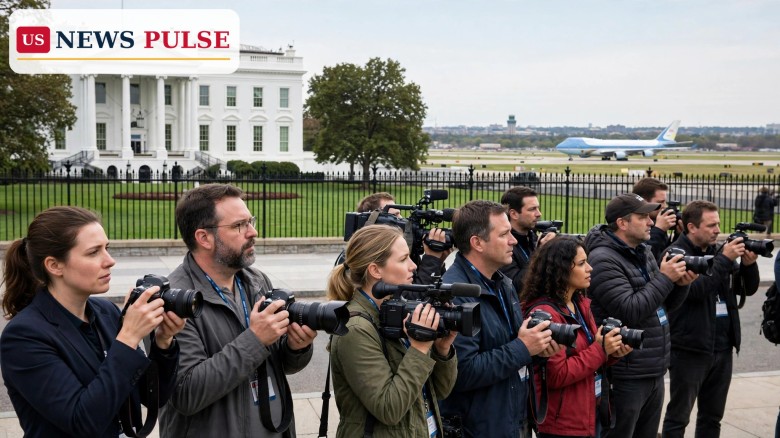
CNN, MS NOW and Politico have escalated their legal fight against President Donald Trump's White House press ban, asking a federal court on Wednesday, October 28, 2026, to declare the ban unlawful and to impose a permanent injunction. The Trump White House press ban, the outlets argue, has not ended despite a court order restoring their credentials: instead, they say, the administration has simply shifted its retaliation to the press pool, quietly barring their reporters from Air Force One, the Oval Office and other close-quarters coverage of the president.
The amended complaint, filed in federal court in Washington, marks the sharpest turn yet in a dispute that began when Trump announced the ban on September 18, 2026. It accuses the administration of "continued retaliatory and viewpoint-discriminatory deprivation" and of violating both the First and Fifth Amendments. The outlets insist they are not asking for unlimited access to the president. Their argument is narrower and, they say, harder to dismiss: once the White House opens the Oval Office and Air Force One to selected journalists for newsgathering, it cannot exclude others because it dislikes their coverage.
The filing lands just five days before the November 3 midterm elections, in a campaign season in which access to the president — and who gets to question him up close — has become a fight in its own right. The White House, asked for comment on Wednesday, dismissed the outlets in blunt terms. "The Fake News has no place demanding a spot in the President's Oval Office," a White House official told CNN.
Key Points
- CNN, MS NOW and Politico filed an amended complaint on October 28, 2026, asking a federal judge to declare President Trump's White House press ban unlawful and to grant permanent injunctive relief.
- The outlets say the administration complied with an earlier court order by restoring press credentials, but then retaliated by disrupting their press pool assignments.
- CNN has been barred from Air Force One on all six occasions it was scheduled to serve as the designated television network pooler since the ban was announced on September 18.
- Politico has been barred twice from scheduled out-of-town pool assignments in recent weeks, and MS NOW has not taken part in the secondary television pool since September 18.
- US District Judge Timothy P. Kelly granted a preliminary injunction two weeks earlier, finding the ban likely violated the First Amendment; the administration is appealing that ruling.
What Happened
The amended lawsuit is the next step in a case the three outlets first brought in September, weeks after Trump announced that CNN, MS NOW and Politico would be barred from White House press areas. The original lawsuit challenged the ban as punishment for coverage the president disliked. On Wednesday afternoon, the outlets widened the case to cover what they describe as the administration's conduct since the courts first intervened.
The new complaint focuses on the press pool, the decades-old rotation under which news organisations take turns covering the president in small groups — in the Oval Office, on Air Force One and on trips where only a handful of journalists can physically fit. Pool coverage is the backbone of day-to-day White House reporting: a small group witnesses events, takes notes and shares its account with the wider press corps. Being cut out of the pool does not merely cost a news organisation a seat; it costs it first-hand access to the president's words and actions.
According to the amended complaint, CNN has been barred from travelling aboard Air Force One on every one of the six occasions when it was scheduled to serve as the designated television network pooler since September 18. The television pool role, the filing notes, is one CNN has fulfilled for more than four decades, under a well-established rotation among the five major US television networks — and the other networks have shown support for CNN amid the dispute.
Politico, meanwhile, has been barred twice from its scheduled out-of-town pool assignments in recent weeks. MS NOW, the filing states, "has not participated in the secondary television pool since September 18," the day Trump announced the ban. The secondary pool spot is selected by the White House itself, the lawsuit notes.
The outlets' outside counsel, Ted Boutrous, warned the administration last week that further legal action would follow if the exclusions continued. He asked for confirmation that the White House would "abandon any policy of excluding CNN from the Oval Office and Air Force One" and stop preventing assigned pool reporters from doing their duties. The administration did not respond, the outlets say — so Wednesday's filing followed.
"To be clear," the expanded lawsuit states, the news outlets "do not claim an unrestricted right to enter the Oval Office or travel aboard Air Force One. But once the White House opens those spaces to selected journalists for newsgathering and reporting, the White House may not exclude plaintiffs because it dislikes their coverage."
Background: How the Ban Reached This Point
The dispute began on September 18, 2026, when Trump announced the ban on CNN, MS NOW and Politico from White House press areas. The three outlets sued days later, on September 21, arguing that the ban was a direct assault on the First Amendment and a violation of due process, intended to punish reporting the president did not like and to intimidate journalists covering his administration.
US District Judge Timothy P. Kelly, a Trump appointee who previously handled the 2018 case in which CNN's Jim Acosta had his press badge restored by temporary court order, took up the case. Kelly first issued a temporary restraining order on Fifth Amendment grounds, and then, two weeks before Wednesday's amended filing, granted a preliminary injunction restoring the outlets' White House access, finding that Trump's ban likely violated the First Amendment by discriminating against journalists based on their coverage of his administration.
The White House complied with Kelly's order and reinstated the journalists' press credentials late last month. But the outlets say compliance stopped there. Credentials restored the right to enter the briefing room; they did not restore the pool assignments that put reporters beside the president. That distinction is now the centre of the case.
The administration appears to be leaning on a separate, ongoing court case involving The Associated Press. The AP sued last year after Trump blocked its reporters from limited-space pool areas because the wire service did not immediately adopt his new name for the Gulf of Mexico. In June 2025, an appeals court panel partially lifted a stay obtained by the AP and said the news wire was not likely to succeed on the merits "because these restricted presidential spaces" like Air Force One and the Oval Office "are not First Amendment fora opened for private speech and discussion."
Boutrous, in a letter last week, called that ruling "non-binding and non-precedential," arguing it does not control this case. The revised lawsuit makes the same point in substance: the question is not whether any journalist has an automatic right to board Air Force One, but whether the government, having opened those spaces to a chosen press group, may then pick and choose among journalists based on viewpoint.
Trump White House Press Ban: The Numbers Behind the Argument
The outlets' filing leans heavily on a striking statistic about where presidential news actually happens. While the James S. Brady Press Briefing Room "remains a critical forum for reporters to gather and report the news," the lawsuit states, of the nearly 5,000 questions the president has entertained from reporters in traditional press areas, 97 per cent were either in the Oval Office or in connection with his travel aboard Air Force One.
That figure is the outlets' answer to any suggestion that restored briefing-room credentials settled the matter. If almost all direct questioning of the president happens in the Oval Office and on Air Force One, then exclusion from those spaces is exclusion from the story itself — even with a valid credential in hand.
The filing describes the Oval Office and Air Force One as "two of the primary spaces for journalists to interact with, gather news about, and publish reporting on President Trump and other officials." The pool system, built over decades, exists precisely because those spaces are small: a rotating few report for the many. When the rotation is broken for selected outlets, the filing argues, the public loses reporting it would otherwise have had.
The history matters too. CNN's television pool role stretches back more than forty years, through administrations of both parties. The five major US television networks have long shared the burden and the privilege of pool coverage on rotation, and the outlets note that the other networks have rallied behind CNN during this dispute — a sign, they suggest, that the pool system itself, not just three newsrooms, is at stake.
Reactions and Quotes
The outlets' lawyer framed the amended complaint as a defence of the public's right to know, not merely of three news organisations. "These exclusions, intended to punish and chill coverage of the administration that the President doesn't like, make it harder for the press to cover some of the most important events in the world for the benefit of the American people," Boutrous said in a statement on Wednesday. "CNN, MS NOW and Politico will continue to fight to vindicate their rights to report the news."
Boutrous added that by excluding the banned outlets from spaces like Air Force One, the administration is continuing "to violate the First Amendment and due process." The amended complaint asks the court to "declare unlawful the President's ban of plaintiffs and the White House's further unconstitutional actions, including its continued exclusions of plaintiffs from specific White House press areas for retaliatory and viewpoint-discriminatory reasons, and enter permanent injunctive relief in favor of CNN, MS NOW, and Politico."
The White House response was terse. When a CNN reporter asked for comment about the amended lawsuit on Wednesday, a White House official said: "The Fake News has no place demanding a spot in the President's Oval Office." The administration is separately appealing Judge Kelly's preliminary injunction, setting up a parallel appellate fight over whether the original ban itself can stand.
The outlets' original lawsuit, filed in September, carried a similar message from Boutrous: "The President's ban of CNN, MS NOW and POLITICO from the White House is a direct assault on the First Amendment and a blatant violation of due process. The President has been explicit that this ban is intended to punish reporting he doesn't like and to intimidate journalists and news organizations covering him and his administration. This ban on the free press harms the American people, who are entitled to rigorous, fact-based coverage of the President of the United States."
Why It Matters
This case now tests a question no court has fully answered in the second Trump term: how far can a president go in choosing which journalists get close to him? The White House has broad discretion over its own spaces, and no news organisation has an automatic right to ride on Air Force One. But the outlets' argument — backed so far by Judge Kelly's preliminary ruling — is that discretion ends where viewpoint discrimination begins. A government that opens a forum to some journalists cannot shut out others for the content of their reporting.
The stakes extend well beyond three newsrooms. The pool system is how the entire press corps, including local newspapers and smaller outlets that could never staff the White House full-time, learns what the president said and did in rooms too small for everyone. If pool assignments can be used to reward friendly coverage and punish critical coverage, the shared record itself becomes skewed — and the public's picture of the presidency with it.
Timing sharpens the point. With the November 3 midterms five days away, the president is travelling, rallying and speaking constantly, and much of that campaigning happens in exactly the spaces at issue: aboard Air Force One, in Oval Office remarks, in pool-covered remarks on the road. Reporters barred from those settings must rely on second-hand accounts, official summaries or the accounts of competitors — a weaker form of coverage at the moment voters most need a direct one.
The case also sits inside a wider pattern of press-access litigation in this administration. The Associated Press fought a similar battle last year over pool access after the Gulf of Mexico naming dispute, and six private citizens sued separately over White House media bans, arguing a public right to know. Courts have largely sided with journalists so far, but the administration's appeal of Kelly's injunction — and its reliance on the AP appellate ruling — shows it intends to keep contesting the ground.
What Happens Next
The immediate question is whether Judge Kelly will convert his preliminary injunction into a permanent order, as the outlets now request, and whether he will rule that the continued pool exclusions are themselves unlawful. A permanent injunction would bar the administration from excluding CNN, MS NOW and Politico from press areas on retaliatory or viewpoint-discriminatory grounds, and would give the outlets a durable court order rather than a temporary one.
At the same time, the administration's appeal of the preliminary injunction will proceed, potentially putting the case before an appeals court while the trial-level fight continues. If the appeals court sides with the White House's reading — that restricted presidential spaces are not First Amendment forums — the outlets' position would weaken considerably. If it affirms Kelly, the ban's legal foundation would crumble further.
Watch, too, for the practical test in the coming days: whether CNN is allowed aboard Air Force One the next time its turn in the television pool rotation comes up, whether Politico's out-of-town assignments proceed without interference, and whether MS NOW returns to the secondary television pool. Each assignment will be evidence in the case the outlets are building — and each exclusion, they will argue, fresh proof of retaliation.
The broader docket will also matter. The AP case continues in parallel, and any appellate ruling there could shape how judges view the CNN, MS NOW and Politico claims. For now, the outlets say they will keep fighting, and the White House shows no sign of backing down — leaving the courts to draw the line between a president's control of his surroundings and the press's right to report on him without fear of punishment.
Frequently Asked Questions
What did CNN, MS NOW and Politico ask for in the amended lawsuit?
They asked a federal court to declare President Trump's White House press ban unlawful and to grant permanent injunctive relief, arguing the administration has continued to exclude them from press pool areas for retaliatory and viewpoint-discriminatory reasons.
What is the White House press pool?
The press pool is a decades-old rotation in which a small group of journalists covers the president in close quarters — in the Oval Office, aboard Air Force One and on trips — and shares its reporting with the wider press corps, which cannot all fit in those small spaces.
How have the outlets been excluded since their credentials were restored?
According to the amended complaint, CNN has been barred from Air Force One on all six occasions it was scheduled as the designated television pooler since September 18, Politico has been barred twice from out-of-town pool assignments, and MS NOW has not taken part in the secondary television pool since September 18.
What has the court already decided?
Judge Timothy P. Kelly first issued a temporary restraining order on Fifth Amendment grounds and then granted a preliminary injunction restoring the outlets' access, finding the ban likely violated the First Amendment. The administration is appealing that ruling.
What does the White House say?
A White House official told CNN on Wednesday: "The Fake News has no place demanding a spot in the President's Oval Office." The administration is appealing the preliminary injunction and appears to rely on an appeals ruling in the Associated Press case.
Related coverage on US News Pulse: DHS Data Breach Exposes 40,000 Employees Including ICE Agents, Epstein Files: Democrats Demand Special Counsel to Probe Trump Ties, and Supreme Court SNAP Payments Block Extended as Shutdown Deal Heads to House Vote.
© 2026 US News Pulse. All rights reserved.
 Print
 Save