
Hurricane Isaias Disaster Declaration: Trump Approves Aid for 15 Florida Counties
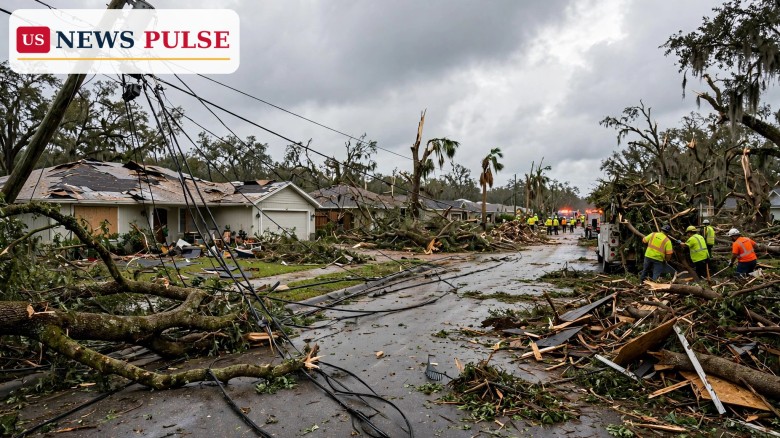
President Donald Trump has approved a major disaster declaration for 15 Florida counties battered by Hurricane Isaias, unlocking federal public assistance for clearing debris and repairing storm-damaged infrastructure across the Florida Panhandle. The Hurricane Isaias disaster declaration, granted on October 27, 2026, comes nearly three weeks after the Category 2 storm came ashore near Destin on October 9, and it moves the recovery from emergency response to rebuilding.
The declaration, designated DR-4955-FL by the Federal Emergency Management Agency, covers Bay, Calhoun, Escambia, Franklin, Gadsden, Gulf, Holmes, Jackson, Jefferson, Liberty, Okaloosa, Santa Rosa, Wakulla, Walton and Washington counties. Local governments and certain nonprofits there can now seek reimbursement for emergency work and for repairing or replacing disaster-damaged facilities.
Key Points
- Trump approved a major disaster declaration on October 27, 2026, for 15 Florida counties hit by Hurricane Isaias.
- It unlocks FEMA public assistance for debris removal and infrastructure repairs; individual assistance for households remains under review.
- Isaias made landfall near Destin on October 9 as a Category 2 storm, with gusts of 117 mph reported in Oriole Beach.
- Insured losses in Florida approach $582 million, with more than 55,000 claims filed, including 26,000 in Santa Rosa County.
- Local governments face an estimated $99 million in debris removal alone; Pensacola estimates up to $47 million in damage and cleanup.
What Happened
The Federal Emergency Management Agency announced that federal public assistance funding is available for emergency work and repairs to infrastructure damaged by Hurricane Isaias in the 15 designated counties. The move follows an initial emergency declaration issued on October 9, the day of landfall, which mainly covered immediate response and protective measures. The major disaster declaration goes further, opening the door to longer-term recovery and repairs to public infrastructure.
Under public assistance, local governments can seek reimbursement for cleanup and for repairing or replacing damaged facilities. Certain nonprofits, including hospitals, shelters, food banks, schools and churches, can also apply. FEMA said the federal government pays 75 percent of eligible costs and the state pays another 12.5 percent.
What the declaration does not yet do matters just as much for residents waiting for help. Individual assistance, which provides aid directly to residents and households, remains under federal review, as does hazard mitigation funding for work to reduce future risk. Homeowners therefore cannot yet apply for individual assistance, and local officials say they have received no word on when public assistance programmes will open, or whether more documentation will be needed to win individual assistance.
Pensacola Mayor D.C. Reeves said on October 28 that the city estimates its direct damage and cleanup at up to $47 million, and that the declaration will ease that burden on local taxpayers.
Background and Context
Hurricane Isaias made landfall on Friday, October 9, near Destin as a Category 2 storm. It spared Pensacola from its worst surge and flooding but not from violent winds, with gusts of 117 mph in Oriole Beach, 116 mph near Santa Rosa Sound, 114 mph at Naval Air Station Whiting Field and 105 mph in eastern Ferry Pass.
More than 400,000 customers lost power across Florida at one point as winds toppled trees and power lines, while coastal flooding caused significant damage. Governor Ron DeSantis announced that six storm-related deaths had been reported.
On October 16, DeSantis announced that Florida had requested a major disaster declaration seeking roughly $237 million for northwest Florida, including public assistance for 15 counties and individual assistance for residents in eight designated counties, plus temporary housing through Emergency RV for displaced Floridians.
The scale of damage was already clear. Insured losses in Florida so far approach $582 million, with more than 55,000 claims filed, including 26,000 in Santa Rosa County and nearly 17,000 in Escambia County, according to the News Service of Florida. Local governments face an estimated $99 million in debris removal alone, while repairing public and private buildings will cost hundreds of millions of dollars.
Hurricane Isaias Disaster Declaration: What It Covers
The distinction matters for every community in the 15 counties. Public assistance is aimed at governments and eligible nonprofits, reimbursing emergency work, debris removal and repairs to storm-damaged structures and infrastructure. Individual assistance is aimed at people, helping residents who were underinsured or face expenses insurance may not cover.
For now, only the first door is open. FEMA's fact sheet notes that individual assistance is still under review, and the Pensacola News Journal reported that residents in Escambia and Santa Rosa counties cannot yet apply for it. Officials advise homeowners to photograph damaged homes and belongings, list damaged or lost items, and file insurance claims now, so applications can move faster if individual assistance is approved.
That advice reflects Hurricane Sally in 2020, when FEMA required additional documentation and thousands of residents submitted photographs. Reeves said that experience drove officials to urge the public after Isaias to submit photographs to Escambia County. Escambia and Santa Rosa suffered the most severe damage, but the declaration reaches inland Panhandle communities too.
Reactions and Quotes
Florida lawmakers welcomed the declaration quickly. Congressman Byron Donalds, a Republican from Florida, confirmed the approval and thanked Trump and DeSantis, saying he had worked closely with the White House to secure the aid. "Great news for Florida! President Trump has approved critical disaster assistance for 15 counties impacted by Hurricane Isaias," Donalds wrote on X on October 28, adding that he was grateful to the president and the governor for their leadership and commitment to helping Florida families and communities recover.
Senator Ashley Moody thanked the president for responding to DeSantis's request, saying the approval would bolster recovery efforts in the Panhandle. In Milton, the reaction was wearier. Spears told FOX Weather: "A lot of the resources are starting to dry up and go away. We are still here, knee-deep in it every day." Reeves added: "Obviously, we know individual assistance is under review, and we continue to advocate for it," while saying the city was very appreciative of the public assistance declaration.
Why It Matters
The declaration matters because hurricane costs do not end when power is restored. Debris removal alone is estimated at $99 million, and Pensacola's $47 million estimate shows how one city's bill can strain a local budget. Without federal reimbursement, those costs land on local taxpayers. The 75 percent federal share, plus the state's 12.5 percent, changes that arithmetic materially.
It also matters because the Atlantic hurricane season does not end until November 30, yet Panhandle recovery will run well past the season's end. The declaration gives counties a funding route for work that would otherwise compete with every other local priority.
The unresolved individual assistance question is the declaration's biggest gap. Public assistance helps governments rebuild roads, buildings and infrastructure. It does not directly help a homeowner whose house is uninhabitable, whose insurer paid only part of the loss, or who is living in temporary housing. Until FEMA decides, those residents remain in limbo.
What Happens Next
Local governments and eligible nonprofits will now document emergency work and damage to seek reimbursement, though Pensacola had received no word on timing as of October 28. FEMA will keep reviewing individual assistance and hazard mitigation; if individual assistance is approved, residents can apply for help with expenses insurance does not cover. Residents should watch for county announcements on debris collection, programme openings and any individual assistance decision.
Frequently Asked Questions
Which Florida counties are covered by the Hurricane Isaias disaster declaration?
Fifteen counties are designated for public assistance: Bay, Calhoun, Escambia, Franklin, Gadsden, Gulf, Holmes, Jackson, Jefferson, Liberty, Okaloosa, Santa Rosa, Wakulla, Walton and Washington. Escambia and Santa Rosa suffered the most severe damage.
Can Florida residents apply for FEMA individual assistance for Hurricane Isaias yet?
Not yet. Individual assistance is still under federal review. Residents should photograph damage, list damaged items and file insurance claims now so they are ready to apply quickly if it is approved.
What does FEMA public assistance pay for?
It reimburses local governments and eligible nonprofits for emergency work and for repairing, restoring, reconstructing or replacing disaster-damaged facilities and infrastructure. The federal government pays 75 percent of eligible costs and the state pays 12.5 percent.
When did Hurricane Isaias hit Florida, and how strong was it?
Isaias made landfall near Destin on October 9, 2026, as a Category 2 storm, with gusts of 117 mph in Oriole Beach, 116 mph near Santa Rosa Sound and 114 mph at Naval Air Station Whiting Field. Six storm-related deaths were reported in Florida.
How much damage did Hurricane Isaias cause in Florida?
Insured losses approach $582 million, with more than 55,000 claims filed, and local governments face an estimated $99 million in debris removal alone. Pensacola alone estimates up to $47 million in direct damage and cleanup.
Related coverage: Daytona coastal flood warning: 11-foot surf threatens the Florida coast until October 30, Western US winter storm brings up to 14 inches of snow before Halloween, and Minneapolis tornado threat puts Twin Cities on alert for rare late-October storms.
© 2026 US News Pulse. All rights reserved.
 Print
 Save