
California Rocket Launch Record: SpaceX Passes Florida With 72nd Launch
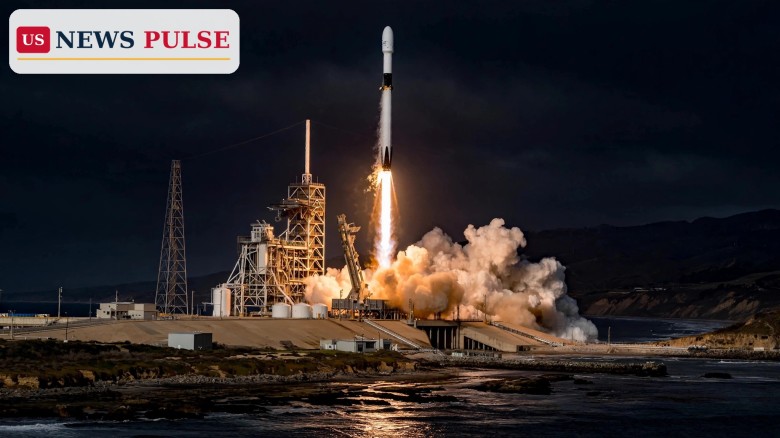
The California rocket launch record fell in the early hours of Tuesday, October 27, 2026, when a SpaceX Falcon 9 lifted off from Vandenberg Space Force Base carrying 27 Starlink internet satellites. It was the 72nd rocket launch from California this year, passing the state's previous annual record of 71 set in 2025 — with more than two months of the year still to go — and it put California ahead of Florida for the first time since the 1970s in the annual launch count.
The milestone was not just a number on a scoreboard. It marked a real shift in American spaceflight: Starlink launches have moved almost entirely to the West Coast while SpaceX prepares its giant Starship rocket for Florida, and California's coastal range has become, in the words of its commander, the busiest spaceport in the world. Florida, which set its own record with 109 launches in 2025, had counted only 60 launches by late October 2026, and no Florida launch was on the schedule for weeks.
Key Points
- SpaceX's Falcon 9 launched 27 Starlink satellites from Vandenberg Space Force Base at 12:26 a.m. PT on Tuesday, October 27, 2026.
- The mission, Starlink 15-16, was California's 72nd launch of 2026, breaking the state's annual record of 71 set in 2025.
- California now leads Florida, which had counted only 60 launches by late October after a record 109 in 2025 — the first such California lead since the 1970s.
- The flight used a booster on its 26th flight, which landed on the Pacific drone ship Of Course I Still Love You for reuse.
- Space Force officials say about 80 launches could take place from Vandenberg by the end of 2026, with a path toward 100 in 2027.
What Happened
Most people in California were asleep when the record fell. SpaceX's two-stage Falcon 9, standing 230 feet tall, lifted off from Space Launch Complex 4-East (SLC-4E) at Vandenberg, the pad SpaceX leases from the U.S. Space Force in Santa Barbara County. The rocket travelled on a southeast trajectory, delivering its batch of 27 Starlink broadband satellites to low-Earth orbit, the region of space closest to the atmosphere.
After stage separation, the upper stage continued into space while the first-stage booster returned to land on SpaceX's drone ship Of Course I Still Love You, stationed in the Pacific Ocean, so it can be flown again. The booster was making its 26th flight — a figure that would once have been unthinkable for an orbital rocket, and one that explains much of the launch surge: reusable boosters, plus a satellite production line fast enough to keep pads busy, are what allow a single range to launch week after week.
The launch had been targeted for a window opening at 9:45 p.m. PT on Monday, October 26, and closing at 1:45 a.m. on Tuesday, October 27. It flew at 12:26 a.m. PT on Tuesday, mere days after SpaceX had helped California match the 71 launches recorded in all of 2025. Space Launch Delta 30, the Space Force unit that manages Vandenberg, confirmed the milestone the same day, noting that the range had surpassed its 2025 total with more than two months remaining in 2026.
Background/Context
Vandenberg has long been America's West Coast spaceport, prized for a coastline that allows rockets to head south into polar orbits — the orbits used by Earth-observation, weather and many Starlink satellites — without flying over populated land. For decades, however, Florida's Cape Canaveral was the busier coast, and in 2025 Florida set a modern record with 109 launches, almost all of them SpaceX Falcon 9 flights carrying Starlink satellites.
That balance flipped in 2026 for a deliberate reason. SpaceX has shifted its Falcon 9 Starlink launches entirely to California as it prepares to bring Starship, its far larger next-generation rocket, to Kennedy Space Center in Florida. The last Starlink mission from Cape Canaveral launched on August 25, 2026. SpaceX vice president of launch Kiko Dontchev acknowledged the change at an October 21 speaking engagement at the Cocoa Village Playhouse in Florida, asking the audience: "I think you Floridians are noticing we're not launching Falcon 9 as much right now, right?" He said the slowdown was part of preparation to bring Starship to Florida, and Florida Today reported that the next Starlink launch from Florida will be on a Starship.
Falcon 9 has not vanished from Florida. It still launches from Launch Complex 40 at Cape Canaveral Space Force Station, carrying NASA, Space Force and private-company payloads, and SpaceX still launches the occasional Falcon Heavy from Kennedy Space Center. But the routine, high-cadence Starlink work — the flights that drove Florida's 2025 record — now belongs to Vandenberg, and California's count has climbed accordingly.
Florida's other rockets have also been quiet. United Launch Alliance's Vulcan has been grounded for most of the year after a February solid rocket booster mishap; although it has rolled out for testing and the first batch of Amazon Leo satellites for it is already on site, ULA has given no return-to-flight date. Blue Origin's New Glenn, which began launching from Cape Canaveral Launch Complex 36, was grounded after a late-May explosion during a routine test destroyed its launch pad; a faulty liquid oxygen valve on a BE-4 engine was identified as the cause. Teams are working around the clock to get Launch Complex 36A operational by the end of the year, with 36B to follow. Both rockets are tapped to launch Amazon's Leo internet constellation, a competitor to Starlink, and smaller companies such as Relativity and Stoke are also banking on debuts from Cape Canaveral sites.
California Rocket Launch Record: What the Milestone Means
Col. James Horne III, commander of Space Launch Delta 30, called the 72nd launch a triumph for the unit and for commercial partners such as SpaceX. "Today's historic 72nd launch does more than break a 50-year record," Horne said in a statement to the USA TODAY Network. "It highlights Vandenberg's position as the busiest spaceport in the world."
The numbers support the claim in one sense: no other single range is launching at Vandenberg's 2026 pace, and Space Force officials have previously indicated that around 80 rockets could launch from the base before the year ends. That would be a remarkable total for a range that, only a few years ago, launched a fraction as often. It also reflects a structural change in the industry: launches are no longer rare, government-only events, but a regular industrial operation, with ranges, pads, boosters and satellites all treated as production lines.
There is a second, quieter meaning. California's record is not only about SpaceX. It shows how quickly a region's fortunes in the space economy can change when a dominant operator moves its work. Florida's Space Coast, which celebrated 109 launches in 2025, now faces a fallow period while it waits for Starship — a rocket that has not yet arrived in Florida, although a tool that loads Starlink satellites into Starship ahead of launch already has. SpaceX officials continue to say they are targeting a Florida Starship launch by the end of the year. Until then, the centre of gravity for American launches sits on the California coast.
Reactions/Quotes
Horne framed the record as the start of something larger, not a finish line. "As we build a sustainable gateway to the stars and chart a path toward 100 annual launches by 2027, we are proving that rapid, agile space access can go hand-in-hand with faithful stewardship of our coastline," he said. "The future of space is unfolding right here on the West Coast."
Dontchev's Florida remarks, a week before the record flight, were more practical. By telling a Florida audience plainly that Falcon 9 flights had thinned out because Starship was coming, he gave the Space Coast a reason for the quiet — and a date to look forward to. Florida Today noted that, looking ahead, a Florida SpaceX launch was not on the schedule for weeks, a striking sentence for a coast that launched more than 100 times the previous year.
The broader industry reaction, as reflected in the reporting, is one of watchfulness rather than celebration on the East Coast. Blue Origin and ULA have not announced return dates, and their Amazon Leo work — the most direct commercial challenge to Starlink — remains grounded. For satellite-internet customers, the practical effect is limited: Starlink satellites are reaching orbit from California just as they once did from Florida. For Florida's launch workforce and suppliers, the wait for Starship is the story.
Why It Matters
The California record matters for three reasons. First, it confirms that reusable rockets have changed the economics of spaceflight. A booster flying for the 26th time, landing on a drone ship and flying again, is the reason a single pad can support dozens of launches a year. Without reuse, 72 launches from one state in ten months would have required 72 new rockets — an impossible production feat.
Second, it matters for national security and for science. Vandenberg's polar-orbit access is essential for weather, Earth-observation and defence satellites, and a high-cadence range gives the Space Force flexibility it did not have a decade ago. The same pads that launch Starlink also support government missions, and the expansions now under way — new complexes being built, disused pads being rebuilt — will increase that capacity further.
Third, it matters for the competition over satellite internet. Starlink's lead over Amazon's Leo constellation is partly a launch lead: SpaceX can put up satellites faster than its rivals can, because it owns the rockets. Every month that New Glenn and Vulcan stay grounded, and every Starlink batch that flies from Vandenberg, widens that gap. When Leo finally flies, it will enter a market where Starlink already has thousands of satellites in orbit.
What Happens Next
California's count will keep climbing. With more than two months left in 2026 and Space Force officials pointing to around 80 launches by year-end, the new record of 72 is a floor, not a ceiling. SpaceX is also set to take over management of the refurbished Space Launch Complex-6 at Vandenberg, which will be outfitted for its larger Falcon Heavy rocket — a vehicle that has never launched from California. Blue Origin and ULA are also expected to move into Vandenberg in the years ahead, and the Space Force recently sought applications from aerospace companies interested in leasing a new site, Space Launch Complex-9, in the northern region of the base for small- and medium-class rockets.
In Florida, the next chapter depends on Starship. The first Starship has not yet arrived at Kennedy Space Center, but SpaceX officials continue to target a Florida launch by the end of the year, and the satellite-loading tool is already on site. If that flight happens, it will mark a new era for the Space Coast: Starship is far larger than Falcon 9, and a single Starship flight can carry many more Starlink satellites than a Falcon 9. If it slips into 2027, Florida's quiet period will stretch further — and California's lead will grow.
For watchers on both coasts, the question for 2027 is the one Horne posed: can Vandenberg reach 100 launches in a year? The expansions under way suggest the range is being built for exactly that. Whether the satellite demand, the booster fleet and the range crews can sustain it will be the test of whether 2026 was a peak or, as Horne suggested, a gateway.
Frequently Asked Questions
What is the California rocket launch record? California recorded its 72nd rocket launch of 2026 on October 27, passing the previous annual record of 71 set in 2025. The record flight was a SpaceX Falcon 9 carrying 27 Starlink satellites from Vandenberg Space Force Base.
Why has California passed Florida in launches? SpaceX shifted its Falcon 9 Starlink launches entirely to California while it prepares Starship for Florida. Florida, which had 109 launches in 2025, had counted only 60 by late October 2026, and its other rockets, New Glenn and Vulcan, are grounded.
When was the record launch? The Falcon 9 lifted off at 12:26 a.m. PT on Tuesday, October 27, 2026, from Space Launch Complex 4-East at Vandenberg Space Force Base in Santa Barbara County.
How many launches could California reach in 2026? Space Force officials have previously indicated around 80 rockets could launch from Vandenberg by the end of 2026, with a path toward 100 annual launches in 2027.
When will Starship launch from Florida? SpaceX officials continue to target a Florida Starship launch by the end of 2026. The first Starship has not yet arrived at Kennedy Space Center, but a Starlink loading tool for it already has.
Related coverage on US News Pulse: SpaceX Florida launch pause: six quiet weeks before Starship debut, NASA Swift Observatory ends 22-year mission as spacecraft falls back to Earth.
© 2026 US News Pulse. All rights reserved.
 Print
 Save