
Halloween Weather Forecast 2026: Rain, Storms and Flood Risk Hit Texas and the Plains
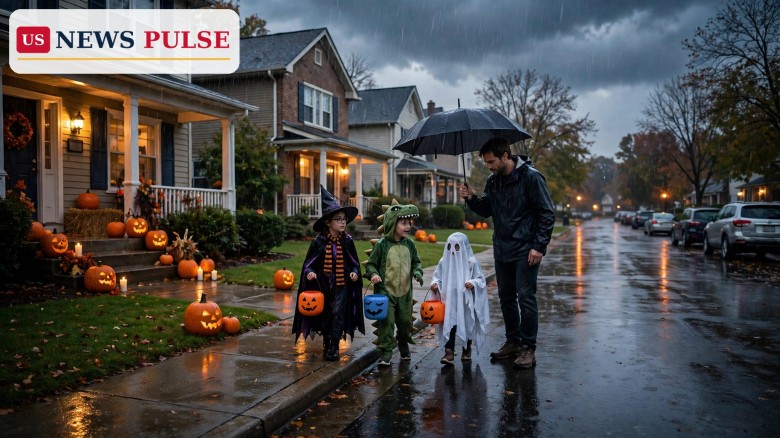
Halloween weather forecast 2026 brings a split-screen holiday weekend for the United States: heavy rain, thunderstorms and a flash-flood risk across Texas and parts of the Plains, while much of the East and the Great Lakes stay unusually warm and dry. With Halloween falling on Saturday, October 31, forecasters say the difference between a dry costume parade and a soggy trick-or-treat night will come down to where you live, and families in the southern Plains should plan for umbrellas, raincoats and a backup indoor option.
According to the forecast published by AccuWeather, the main complications will be concentrated in the Great Plains, especially in parts of Texas, where moisture arriving from the Gulf and from tropical regions is expected to feed days of showers and storms. AccuWeather warns that, from Thursday through Halloween, precipitation could accumulate enough to cause flash flooding in some towns, a warning that turns an ordinary costume night into a safety question for low-lying neighbourhoods and flood-prone roads.
Key Points
- Southern Texas faces the highest Halloween rain risk, with heavy rain expected to complicate outdoor festivities, and storms also forecast for San Antonio, Houston and New Orleans.
- West and central Kansas face rain complications, especially on Friday, October 30, while southern Louisiana faces thunderstorms with heavy rain.
- California, eastern Oklahoma and Texas and the middle to lower Mississippi Valley might have a wet Halloween, National Weather Service meteorologist Brad Pugh told USA TODAY.
- Much of the East Coast, northern Florida to New England and the Great Lakes should stay dry, with temperatures several degrees above normal for late October.
- Montana, Idaho, Wyoming and parts of eastern Washington and Oregon will be colder, with wind chills of 30 to 40 degrees Fahrenheit, and clocks fall back one hour at 2 a.m. on Sunday, November 1.
What Happened
The Halloween outlook sharpened this week as forecasters pieced together the holiday weekend pattern. AccuWeather's latest update, reported on October 27, puts southern Texas at the centre of the wettest zone, with heavy rains expected that could affect outdoor activities from Thursday through Halloween itself. West and central Kansas are also in the risk area, with precipitation most likely to complicate festivities on Friday, October 30, and southern Louisiana faces thunderstorms accompanied by heavy rain. Cities named in the forecast include San Antonio, Houston and New Orleans, where storms could accompany the precipitation.
Beyond the highest-risk zone, the forecast anticipates scattered rain in other parts of the country. Isolated rain is expected between Friday, October 30 and Saturday, October 31 in the Rocky Mountains, the Florida peninsula and coastal areas of the Northwest. In California, some precipitation could reach the southern part of the state during Halloween, including Los Angeles and San Diego. In Hawaii, heavy rains and possible flash flooding are expected in the days leading up to Halloween, associated with Tropical Storm Olana, although conditions could improve by the weekend.
The timing matters because Halloween 2026 falls on a Saturday, giving families and communities a full weekend for trick-or-treating, costume parties, haunted attractions and outdoor festivals. That is good news for organisers in dry areas, but it also means more children will be out after dark in the wettest states, when visibility drops and roads are slickest. Forecasters stress that the exact timing of showers on Halloween remains uncertain in some areas, so local forecasts closer to Saturday will matter more than any national map.
Background and Context
Halloween weather has been a moving target all month. On October 24, National Weather Service meteorologist Brad Pugh told USA TODAY that California, eastern Oklahoma and Texas and the middle to lower Mississippi Valley might have a wet Halloween. AccuWeather lead long-range forecaster Paul Pastelok agreed that a southerly flow of air in the central and southern Plains, mixed with an expected cool front, could bring rain to the central and southern Plains. Pastelok predicted showers and possible thunderstorms for Dallas and Oklahoma City, and even Miami, noting that a few showers are possible in the lower Florida Peninsula along with breezy conditions.
The broader pattern behind the forecast is a familiar late-October set-up: warm, moist air streaming north from the Gulf of Mexico meets an approaching cool front and a dip in the jet stream, and the collision produces showers and thunderstorms. In the Brazos Valley of Texas, local forecasters note that Pacific Tropical Storm Vance is feeding moisture into disturbances over Texas, giving Halloween Saturday about a 30 percent chance of rain there, with most of the area staying dry overall. That local detail captures the national story well: the ingredients for rain are present, but whether any one neighbourhood gets soaked depends on small-scale timing.
NOAA's Climate Prediction Center adds another layer. Its 6-to-10-day outlook favours above-normal precipitation across the Southwest during the October 31 to November 4 period, and above-normal temperatures across much of the central and eastern United States over the same stretch. Daytime highs could reach the 70s as far north as the Upper Great Lakes, while portions of the Mississippi Valley could reach the 80s, with some locations running 15 to 20 degrees above average during the week. In the Northern Plains, milder-than-usual temperatures are expected, although breezy conditions and developing showers remain possible.
Halloween Weather Forecast 2026: State-by-State Outlook
Texas: The wettest Halloween outlook in the country. Southern Texas faces heavy rain, and storms are expected around San Antonio and Houston. South-central Texas may see locally heavy rainfall earlier in the week, with precipitation potentially expanding into other portions of the Plains by Saturday. Trick-or-treaters should expect wet pavements, ponding on roads and the chance of a thunderstorm interrupting the evening.
Kansas and Oklahoma: West and central Kansas face rain complications, especially on Friday, October 30. Showers and possible thunderstorms are also forecast for Oklahoma City. Eastern Oklahoma is named by the National Weather Service among the areas that might have a wet Halloween.
Louisiana and the Mississippi Valley: Southern Louisiana faces thunderstorms with heavy rain, and New Orleans is among the cities where storms could accompany the precipitation. The middle to lower Mississippi Valley is also on the wet list, and the Mississippi Valley could see daytime highs in the 80s despite the rain threat.
California and the West: Southern California could see precipitation during Halloween, including Los Angeles and San Diego, as a storm system pushes in late in the weekend. Fox Weather reports that both Northern and Southern California will face another round of moderate-to-heavy rain, with potential mountain snow in parts of the Sierra, as tropical moisture from the remnants of Olana is funnelled along the Pacific jet stream. Montana, Idaho and Wyoming, by contrast, will be colder, with wind chills of 30 to 40 degrees Fahrenheit.
Florida and the East: Northern Florida to New England and the Great Lakes region should see the best conditions for outdoor activities, with temperatures several degrees above normal. The lower Florida Peninsula may see a few showers and breezy conditions, and the East Coast should largely escape the rain, although costumes in northern New England may need an extra layer underneath. No widespread, extreme cold is expected anywhere in the Lower 48 states, Pugh said, and forecast confidence is high that mild temperatures will prevail at the end of October.
Reactions and Quotes
"California, eastern Oklahoma and Texas, and the middle to lower Mississippi Valley might have a wet Halloween," National Weather Service meteorologist Brad Pugh told USA TODAY. Pugh added that forecast confidence is high that mild temperatures will prevail at the end of October, and that no widespread, extreme cold is expected anywhere in the Lower 48 states.
AccuWeather lead long-range forecaster Paul Pastelok warned families in the Plains to prepare for wet costumes. "There may be a need for umbrellas, raincoats or clear ponchos. A thunderstorm cannot be ruled out as well," Pastelok told USA TODAY. "Halloween is one of those holidays when the weather can make a big difference in how families plan their evening," he added. "With chilly conditions expected across the Northeast and Great Lakes and the possibility of rain in the Plains, some families may need to rethink what goes underneath or over their costumes. A little preparation can go a long way, especially for younger children spending an hour or two outdoors."
Pastelok also noted that snow could fall in the higher elevations of Colorado, although it was too soon to say whether snow levels would reach Denver's elevation, adding that "it will be close." That high-country snow risk is a reminder that Halloween weekend weather is not only a rain story: elevation and latitude still decide whether precipitation falls as rain, snow or something in between.
Why It Matters
Halloween is one of the few nights of the year when large numbers of children are on foot after dark, crossing streets in costumes that can limit vision and movement. Rain makes that riskier in concrete ways: drivers see less, braking distances grow, puddles hide kerbs and drains, and a thunderstorm can send crowds scattering for shelter. Flash flooding is the sharpest danger, because water covering a road can hide its depth, and forecasters repeatedly warn against driving through flooded streets. A forecast of heavy rain is therefore not just an inconvenience for costume plans; it is a safety briefing.
The forecast also matters for the thousands of small businesses and community groups behind haunted houses, pumpkin patches, fall festivals and trunk-or-treat events. A wet Saturday can cut attendance, force last-minute moves indoors and leave organisers choosing between cancelling and running a reduced event. In dry, warm areas, the same weekend is a gift: above-normal temperatures from northern Florida to New England and across the Great Lakes mean longer, more comfortable evenings outdoors, and organisers there can plan with unusual confidence for late October.
Finally, the Halloween outlook is a preview of a busier pattern ahead. The same moisture feed and jet-stream dip bringing rain to Texas and California point toward a wet start to November in the Southwest, and NOAA's outlook keeps above-normal precipitation favoured there through November 4. Families planning travel after Halloween, and drivers heading home from holiday weekends, should expect the unsettled pattern to linger past Saturday night.
What Happens Next
Forecasts will keep updating through the week, and the most useful update will be the local forecast on Friday, October 30 and again on Halloween morning, when short-range models can pin down which towns get rain and when. Anyone in Texas, Kansas, Louisiana, Oklahoma or southern California should check their local National Weather Service forecast before heading out, and watch for any flash-flood watches or warnings that replace a general rain outlook with a specific danger area.
On Sunday, November 1, daylight saving time ends at 2 a.m., when clocks fall back one hour, giving an extra hour of sleep after Halloween night but also bringing earlier sunsets for the week ahead. That shift, combined with the end of the holiday weekend, marks the real start of late-autumn evenings, and it is a good moment to check smoke-detector batteries and outdoor lighting before the darker evenings settle in.
For trick-or-treaters in the wettest areas, the practical plan is simple: choose a waterproof layer that fits over the costume, carry a flashlight or glow stick, stick to well-lit streets, avoid flooded roads and low-water crossings, and have an indoor backup ready if a thunderstorm arrives. In dry areas, the plan is simpler still: enjoy the warm evening, add a light layer for northern New England, and keep an eye on the sky in the Rockies and the Northwest, where isolated rain remains possible.
Frequently Asked Questions
Will it rain on Halloween 2026? It depends on where you live. Southern Texas, parts of Kansas, southern Louisiana, eastern Oklahoma and southern California face the highest rain chances, while much of the East Coast, the Great Lakes and northern Florida should stay dry.
Which cities are most likely to see Halloween storms? San Antonio, Houston and New Orleans are named in the AccuWeather outlook, along with Dallas and Oklahoma City in earlier forecasts. Los Angeles and San Diego could also see precipitation during Halloween.
Is flash flooding a real risk on Halloween? Yes, in some towns. AccuWeather warns that precipitation from Thursday through Halloween could accumulate enough to cause flash flooding in parts of the southern Plains. Never drive through flooded roads, and never walk children through moving water.
Where will Halloween be warmest? The Midwest, Great Lakes and the East should be several degrees above normal, with highs in the 70s as far north as the Upper Great Lakes and 80s in parts of the Mississippi Valley.
When do the clocks change after Halloween? Daylight saving time ends at 2 a.m. on Sunday, November 1, 2026, when clocks fall back one hour.
Related coverage on US News Pulse: Hawaii Flood Watch: Olana Remnants Bring 5-8 Inches of Rain to Islands, Santa Fe Tornado: Rare EF-1 Storm Hits New Mexico City First Time in 50 Years and Heber-Overgaard Tornado: Hobbs Declines Arizona Emergency Declaration Bid.
© 2026 US News Pulse. All rights reserved.
 Print
 Save