
Katie Zacharia Breaks Silence on Five-Day White House Exit and Her Kids
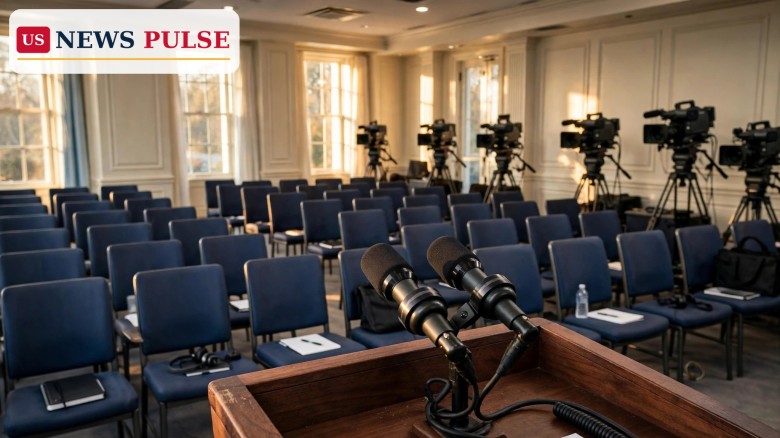
Katie Zacharia breaks silence for the first time since her five-day spell as White House press secretary came to an abrupt end, and the story she tells is less about politics than about family. Speaking to The California Post from her home in Southern California, the former press secretary said her four young children watched her become an international meme, and that holding on to her character through that ordeal mattered more than any verdict on her performance. It is the fullest account yet of one of the shortest tenures in the history of the job, and it reframes a week of mockery as, in her telling, a lesson in loyalty and integrity.
Key Points
- Katie Zacharia has spoken publicly for the first time since leaving the White House after just five days as press secretary.
- She told The California Post her children saw her mocked online, including by people she thought would support her family.
- Her departure on October 16 followed a single, roughly 14-minute first briefing on October 13 and intense scrutiny of her legal credentials.
- Zacharia said she had only a few hours of briefing material before facing reporters, and that former press secretaries reached out to support her.
- She vowed to remain an outspoken ally of President Donald Trump from outside the executive branch.
What Happened
The interview, published by The Economic Times on October 27, 2026, drawing on Zacharia's conversation with The California Post, is her first public account since she left the role. Zacharia described a final night that she called tough, coming a day after her eldest son's birthday, when a dinner with Vice President JD Vance brought home how serious the situation had become. "It was a tough night," she said. What followed, in her account, was not a row about policy or messaging, but a decision shaped by the sheer weight of public attention falling on her family.
At the centre of her account is her children. "What they witnessed was a mother standing strong while she is an international meme, or when everyone is making fun of her, including people who we thought would be on our side," she told the Post. "If I went through that entire thing only to teach my kids to have integrity and to have loyalty, then I think it was worth it." It is a striking framing: the job lasted five days, but the lesson, she argues, will last far longer for her family.
Zacharia also addressed the criticism of her one briefing directly. She said she had received "only a few hours of actual briefing material" before stepping up to the lectern, and she rejected suggestions that favouritism had won her the post. She maintained that Trump had personally selected her, citing her experience with television appearances and early-morning cable news programmes. She added that she intended to stay a vocal supporter of the president, saying: "I vow to remain an outspoken Trump ally from outside the executive branch."
Background/Context
The timeline is unusually compressed. Trump announced Zacharia's selection on October 9, 2026. She began work on October 12, replacing Karoline Leavitt, and gave her first formal briefing the following day, October 13. That session lasted about 14 minutes, according to the Associated Press, and she took only a handful of questions, telling reporters she had kept it brief so Trump could take questions later that morning, and that she had not been fully briefed. By Friday, October 16, a White House official had confirmed to Reuters that she was being let go.
The scrutiny that filled those days went beyond the briefing itself. Zacharia earned a Juris Doctor from Pepperdine School of Law in 2011, but she failed the bar exam that year and did not take it again, and public records showed no licence to practise law in any state. She had worked at the Zhong Lun law firm in China from 2011 to 2013, in a role that did not involve practising Chinese law, and later served as general counsel for Fix California, a nonprofit founded by Richard Grenell, from January 2024 to March 2025. A watchdog group filed a complaint with the California State Bar on October 14, asking whether she had presented herself as entitled to practise law, an allegation she has disputed in substance by pointing to the nature of her roles.
Trump himself publicly defended her while also casting doubt on her future in the role. Moments before her departure was confirmed, he said: "I said to Katie just two minutes ago, I said, Katie, you know, you don't have to do this... the news has been so nasty to her. I've never seen anything like it. And I said, I said to her honestly, if I were you, I'd reconsider." He added that she had "a beautiful husband and family". Zacharia recalled his parting advice in the interview as: "You know, there are other ways to make a living."
Katie Zacharia Breaks Silence: What She Said About Character
The interview's most repeated line is also its thesis. "What I will mark is that maintaining your character, no matter the circumstances, for me, is what defined the entire process," Zacharia told the Post. She returned to the point more than once, presenting composure under ridicule not as spin but as the whole purpose of the episode, at least as her children will remember it. For a former press secretary, it is an unusual definition of success: not a message landed, not a news cycle won, but a family watching their mother refuse to bend.
She also described the practical aftermath of sudden fame. Reports in the interview spoke of unwanted visitors and people described as stalkers appearing in her neighbourhood, with neighbours stepping in to help protect her family's privacy. That detail, more than any briefing-room anecdote, explains why the story has travelled so far: the cost of a five-day public job did not end when the job did. It followed her home, and it involved her children, who are young enough that the experience will likely shape how they remember this period of their lives.
Zacharia said she also received support from people who had done the job before her. Former White House press secretaries Kayleigh McEnany, Sarah Huckabee Sanders, Ari Fleischer and Sean Spicer reached out, according to the account, and acknowledged the limited time she had to prepare. That support matters because it separates two different criticisms: one about readiness, which even sympathetic predecessors appear to have recognised, and one about character, which Zacharia firmly rejects.
Reactions/Quotes
Trump's own words remain the most quoted part of the episode. His "if I were you, I'd reconsider" remark, delivered in public before her exit was confirmed, was widely read as the moment her fate was sealed, even as he insisted he had not hired her to work as a lawyer and considered the criticism unfair. The tension in that position, defending her personally while advising her to walk away, is exactly what made the week so hard to read at the time, and it is what Zacharia's interview now tries to resolve on her own terms.
The reaction since the interview has split along familiar lines. Supporters have shared her remarks about her children and integrity as evidence that the mockery went too far. Critics have pointed back to the briefing and the credentials questions, arguing that sympathy for her family does not answer questions about vetting for one of the most visible jobs in Washington. One lighter footnote also travelled widely: on October 25, White House Communications Director Steven Cheung joked on social media that pop star Nicki Minaj, who had flown aboard Air Force One to a Michigan rally, might be the next press secretary, after she praised Trump's work ethic and business record on camera. Cheung's post was presented as a joke, but it underlined how quickly the search for a successor had become part of the entertainment cycle around the job.
Zacharia herself refused the framing that she was a victim of the process alone. She insisted the selection was Trump's own, based on her television experience, and she pushed back on the idea that connections rather than the president's judgement put her there. "I vow to remain an outspoken Trump ally from outside the executive branch," she said, a line that keeps her inside the president's political world even as she leaves his administration.
Why It Matters
The story matters for three reasons. First, the press secretary is the public face of a presidency, and a five-day tenure, the shortest in modern history, is itself a significant event: it raises questions about how the White House vets, prepares and supports the person it puts in front of the cameras. A briefing that lasts 14 minutes because the briefer says she had only a few hours of material is not just an embarrassing clip; it is a sign of a process failure somewhere between appointment and debut.
Second, the credentials row touches a wider debate about honesty in public life. Eligibility to practise law is not a requirement for the press secretary's job, and nobody has suggested it should be. The issue was presentation: whether Zacharia was described, including repeatedly on television, as a lawyer when she held no licence. That distinction, between a law degree and a licence, is easy to blur in a fast-moving news cycle and hard to correct once it has travelled, which is why the watchdog complaint and the press scrutiny landed so heavily.
Third, Zacharia's interview shows how quickly a political story becomes a family story in the age of memes. Her children did not choose the job, yet they watched the jokes. Whether readers sympathise with her or not, her account is a reminder that the people around a public figure absorb the costs of public failure, and that the internet does not distinguish between a performance and a person. That is why a story about a 14-minute briefing is still being read, shared and argued about nearly two weeks later.
What Happens Next
Zacharia says she will pursue opportunities outside the executive branch while remaining a vocal Trump supporter, so the next chapter is likely to be on television and in conservative media rather than inside the White House. The administration, meanwhile, must settle the press secretary role for the longer term, with the midterm elections on November 3, 2026, now just days away and the briefing room under close scrutiny. Whoever takes the lectern next will inherit both the job and the memory of this five-day tenure, and reporters will measure their preparation against it.
Two open questions remain. The first is whether the California State Bar complaint leads anywhere, or whether it fades now that Zacharia has left public office. The second is whether Zacharia's own account, with its emphasis on character over performance, changes how her week is remembered, or whether the meme remains the dominant memory. Interviews like this one are an attempt to rewrite that memory, but the internet rarely lets a story be rewritten by its subject alone. For now, the fullest version of events belongs to Zacharia herself, and it is notably more human than the clips that made her famous.
Frequently Asked Questions
Who is Katie Zacharia?
Katie Zacharia is a former White House press secretary who served for five days in October 2026, from October 12 to October 16, after being selected by President Donald Trump to replace Karoline Leavitt.
Why did Katie Zacharia leave the White House after five days?
Her departure followed a brief first briefing on October 13 that lasted about 14 minutes and intense scrutiny of her legal credentials. Trump publicly suggested she reconsider the role, and the White House confirmed she was leaving on October 16.
What did Katie Zacharia say in her first interview since leaving?
She told The California Post that her children saw her mocked online, that a final dinner with Vice President JD Vance was a tough night, and that maintaining her character defined the whole experience. She said she would remain an outspoken Trump ally from outside the executive branch.
Was Katie Zacharia a lawyer?
She earned a Juris Doctor from Pepperdine School of Law in 2011 but failed the bar exam that year and did not retake it, and public records show no licence to practise law in any state. A law degree alone does not make someone a licensed lawyer.
What happens to the White House press secretary role now?
The administration must settle the role for the longer term, with the November 3, 2026, midterm elections days away. Zacharia says she will pursue opportunities outside the executive branch while continuing to support Trump publicly.
Related coverage on US News Pulse: Oval Office Prayer Row: White House Defends Trump After Archbishop Apology, Trump Fires Back at Obama Over Cheesecake Factory White House Renovation Jibe, and Trump Texas Rallies: Paxton, Methane Plan and a Talarico Surge on Oct. 27.
© 2026 US News Pulse. All rights reserved.
 Print
 Save