
Rule of Law Project: Former DOJ Prosecutors Build Cases Trump DOJ Won't Touch
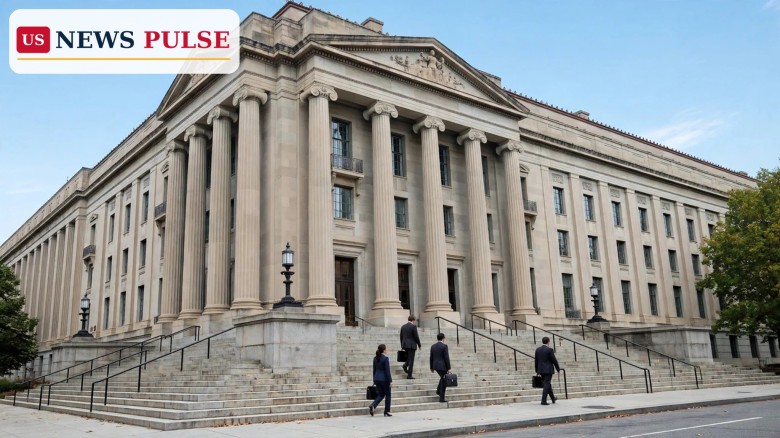
A new nonprofit staffed by former federal prosecutors and human rights lawyers is setting out to do work it says President Donald Trump’s Justice Department will not do: investigate political corruption and law enforcement violence, build complete case files, and hand them to prosecutors who will act. The Rule of Law Project, whose launch was reported on October 26, 2026, plans to assemble what it calls “prosecution-ready case files” from evidence and witness statements, then deliver them to state and local prosecutors — or hold them for a future Justice Department it hopes will be less partisan than the current one.
The launch lands one week before the November 3 midterm elections, at a moment when the Justice Department itself is at the centre of several overlapping fights: the prosecutions of former FBI Director James Comey, a court order reinstating his daughter, former prosecutor Maurene Comey, and a wave of departures from federal prosecutors’ offices across the country. The group’s founders say they are not waiting for Washington to change course. They are building the cases now, in the open, and daring the system to ignore them.
Key Points
- The Rule of Law Project is a new nonprofit launched by former federal prosecutors and human rights lawyers to investigate political corruption and law enforcement violence.
- It will gather evidence and witness statements and assemble “prosecution-ready case files” for state and local prosecutors, or for a future Justice Department.
- Founder Brad Adams spent 20 years at Human Rights Watch overseeing investigations of state violence; lead investigator Mark Blumberg spent nearly 30 years in the Justice Department’s Civil Rights Division.
- The group says it will investigate corruption in both parties, is funded by private donors it has not named, and will have no subpoena power.
- Attorney General Todd Blanche has complained that departed prosecutors “hate us” and have “basically unionized” into an organisation targeting the current department.
What Happened
According to the October 26 report by MS NOW, carried by Raw Story, the Rule of Law Project is a nonprofit organisation created to investigate two categories of alleged wrongdoing that its founders say the Trump Justice Department is ignoring: political corruption and violence by law enforcement officers. Rather than lobbying Congress or filing lawsuits, the group intends to do the groundwork of a prosecution itself — collecting documents, interviewing witnesses, and organising the material into files a prosecutor could pick up and use.
The files would go to state and local prosecutors first, the report said, or be preserved for a future Justice Department that the group describes as potentially less partisan. The group also expects to work with congressional investigators where appropriate, giving its findings more than one route into official hands.
The project’s founder is Brad Adams, who spent two decades at Human Rights Watch overseeing investigations of state violence. Adams framed the effort as a response to a climate in which, in his words, “senior officials openly engage in corruption and federal agents beat and kill innocent people with impunity.” He pointed to recent reports of graft among politicians and to shootings involving Immigration and Customs Enforcement officers as examples of the conduct the group wants examined.
“The rule of law is on life support, but it’s all of our responsibility to make sure it doesn’t die,” Adams said. “I do not think we can break the cycle in this country without criminal accountability.”
The team’s lead investigator is Mark Blumberg, who spent nearly 30 years in the Justice Department’s Civil Rights Division investigating and prosecuting official misconduct. Blumberg also served on the FBI’s Shooting Investigation Review Group and on Customs and Border Protection’s National Use of Force Review Board, two bodies that review how federal officers use force. He will lead a team of former federal prosecutors and investigators.
“People need to trust that the game is not rigged against them, that the law applies to everyone,” Blumberg said. “Our public officials should model the best behavior for our country, not milk it dry for power and riches.”
Background and Context
The Rule of Law Project does not arrive in a vacuum. It comes after a year in which the Justice Department has been reshaped, publicly and contentiously, under Trump’s second presidency. More than 5,000 employees resigned, retired or were fired from the department during Trump’s first year back in office, according to CBS News reporting from February 2026 cited in recent coverage. In Minnesota, 14 attorneys left a single U.S. Attorney’s Office in one month, including six veteran prosecutors who resigned over department directives tied to an immigration crackdown, the Minnesota Star Tribune reported earlier in 2026.
The department’s handling of the Comey family has become a symbol of that turmoil. On October 26, a federal judge in Manhattan ruled that the Justice Department unlawfully dismissed Maurene Comey, a former assistant U.S. attorney in the Southern District of New York who worked on the prosecutions of Jeffrey Epstein, Ghislaine Maxwell and Sean Combs. Judge Jesse Furman ordered her retroactive reinstatement with back pay, rejecting the department’s argument that leadership could dismiss line prosecutors at will. The department said it disagrees with the decision and will appeal.
Her father, former FBI Director James Comey, is meanwhile fighting his third federal criminal case of the current administration: Espionage Act charges, unsealed on October 26, accusing him of transmitting national defence information in October 2016. Comey’s lawyers have moved to dismiss that case, arguing the ten-year limitations period has run because prosecutors filed a criminal information rather than obtaining a grand jury indictment. The department disputes that reading and says the practice is widely recognised in federal court.
Against that backdrop, the new group’s premise is blunt: if the current Justice Department will not pursue certain cases, someone else should prepare them anyway. The effort also comes as state and local prosecutors investigating violence involving ICE officers have faced obstacles obtaining evidence from the federal government, according to the launch report. News reports have separately described FBI corruption investigations shut down by Trump officials.
Justice Department officials deny they are ignoring potential crimes and say they assess every case on its merits, the report noted.
The Rule of Law Project’s Plan for Prosecution-Ready Cases
The group’s stated targets are officials who appear to have used their offices for personal gain. That includes officials who solicit or accept something of value in exchange for official acts, who improperly try to influence executive or legislative decisions, or whose official acts affect their own finances. Those categories track the classic elements of public-corruption law: a quid pro quo, an improper influence attempt, or a personal financial interest in an official decision.
Two limits shape what the project can do. First, it will be funded by private donors it has not named, which means its independence will rest on donors it has chosen not to identify publicly. Second, it will not have subpoena power — it cannot compel testimony or documents the way a grand jury or a congressional committee can. Its files will therefore depend on voluntary witnesses, public records, and evidence that state or local prosecutors can later compel through their own authority.
The group says it will investigate corruption in both parties, a pledge meant to answer the obvious charge that it is simply a partisan vehicle. Whether that pledge holds will be judged by its first case files: who they target, how strong the evidence is, and whether prosecutors of either party find them usable.
The model itself is unusual but not unprecedented. Private organisations have long investigated misconduct and referred findings to prosecutors; what is distinctive here is the staffing — career Justice Department veterans building files to the standard they once applied inside the department — and the explicit plan to wait out the current administration if necessary. A file prepared now could, in theory, be picked up years later, subject to statutes of limitations and the availability of witnesses.
Reactions and Quotes
The sharpest reaction so far has come from Attorney General Todd Blanche himself, who was confirmed in August 2026. In an interview on the Ruthless podcast, Blanche was asked to name the biggest challenge of his time in the job. He said most of the department’s prosecutors and agents are “great,” but that changing the “perception of the culture” has been his hardest task.
“So the prosecutors that left over the past year and a half, they hate us,” Blanche said. “They basically unionized. And so it’s formed an organization whose sole mission is to go after the current Department of Justice. So pushing back on that perception is a constant challenge.” Blanche did not name the group in those remarks.
Blanche also insisted the prosecutors who remain “love their jobs,” telling the podcast hosts he visits U.S. attorneys’ offices several times a month, and he dismissed the portrayal of the department as being in a bad place as “a lie to the American people.”
The group’s founders, by contrast, describe their work as non-partisan and driven by accountability rather than revenge. Adams said the rule of law is “on life support” and argued that criminal accountability is the only way to break what he called a cycle of impunity. Blumberg stressed public trust, saying people need to believe “the law applies to everyone” and that officials should not use office to enrich themselves.
Neither the White House nor the Justice Department has issued a detailed response to the launch beyond the department’s general position that it assesses every case on its merits. Congressional reaction is likely to split along familiar lines: Democrats sympathetic to the project’s critique of the department, Republicans dismissing it as a partisan operation by disgruntled former officials.
Why It Matters
The Rule of Law Project matters for three reasons. First, it tests whether accountability can be outsourced. If career prosecutors working outside government can produce files that real prosecutors adopt, the project could become a pipeline for cases that would otherwise never be charged. If prosecutors decline the files, it will be dismissed as advocacy dressed up as prosecution.
Second, it sharpens the political stakes of the Justice Department’s own choices. Every case the department declines to bring — and every case it brings against its critics — will now be measured against an outside group’s competing docket. That comparison could embarrass the department, or it could harden its position that its critics are simply partisans.
Third, the project’s timing matters. With the midterms on November 3, the launch feeds directly into the election-year argument over whether federal law enforcement is being weaponised. Trump has spent months accusing Democrats of cheating and promising a $1 million reward for voter-fraud tips leading to arrest and conviction. Democrats have countered with reports on the president’s ties to Jeffrey Epstein and demands for an independent special counsel. The Rule of Law Project inserts a new actor into that fight: not a campaign, not a committee, but a group of former prosecutors claiming to do the department’s job for it.
There is also a longer-term question. If the project’s files are used by a future administration, its work could shape prosecutions years from now. If they are not, the project will still have created a public record — witness statements, documents, timelines — that journalists, historians and future investigators can use. Either way, the act of building the files is itself a form of accountability, even before any charge is filed.
What Happens Next
The immediate next steps are practical: the group must staff up, choose its first targets, and produce its first files. Its credibility will depend on those early choices. A first file built on thin evidence would confirm its critics’ suspicions; a first file built on documents and credible witnesses would force prosecutors to answer for whatever they do with it.
State and local prosecutors will be the first test. Some may welcome well-prepared files on corruption or officer violence within their jurisdiction; others may resist being drawn into federal political fights. The group’s promise to work with congressional investigators could give it a second audience, particularly if Democrats gain control of either chamber of Congress on November 3.
The Justice Department’s response will also matter. If the department attacks the group publicly, it risks confirming the group’s claim that it fears outside scrutiny. If it ignores the group, the files may accumulate quietly until a prosecutor — state, local or federal — decides to act on one. Either way, the project has already achieved one of its apparent goals: forcing a public argument about which cases the Justice Department chooses to pursue, and which it chooses to leave alone.
Watch for the group’s first announced investigation, any response from state attorneys general or district attorneys, and whether congressional committees seek its findings after the midterms. Those will be the real measures of whether the Rule of Law Project is a footnote or a force.
Frequently Asked Questions
What is the Rule of Law Project?
It is a new nonprofit launched by former federal prosecutors and human rights lawyers to investigate political corruption and law enforcement violence that they say the Trump Justice Department is ignoring, and to assemble “prosecution-ready case files” for other prosecutors.
Who runs the Rule of Law Project?
Founder Brad Adams spent 20 years at Human Rights Watch overseeing investigations of state violence. Lead investigator Mark Blumberg spent nearly 30 years in the Justice Department’s Civil Rights Division and served on the FBI’s Shooting Investigation Review Group and Customs and Border Protection’s National Use of Force Review Board.
Can the Rule of Law Project bring charges itself?
No. It is a private nonprofit with no subpoena power and no prosecutorial authority. It can only investigate, gather evidence and witness statements, and hand completed files to state and local prosecutors or to a future Justice Department.
Does the group only target Republicans?
The group says it will investigate corruption in both parties. Its founders describe the effort as non-partisan, though critics, including Attorney General Todd Blanche, have portrayed departed prosecutors as organised against the current department.
What has the Justice Department said about the project?
Department officials deny ignoring potential crimes and say every case is assessed on its merits. Blanche has separately complained that departed prosecutors “hate us” and have formed an organisation aimed at the current department, without naming the group.
Related coverage on US News Pulse: the Justice Department’s third criminal case against former FBI Director James Comey (Comey third case), the $1 million voter-fraud reward announced before the midterms (Trump $1 million reward), and House Democrats’ demand for a special counsel over the Epstein files (Epstein files report).
© 2026 US News Pulse. All rights reserved.
 Print
 Save