
Queen Creek Water Bill Shock: $130 to $500 as Arizona's Cheap Water Ends
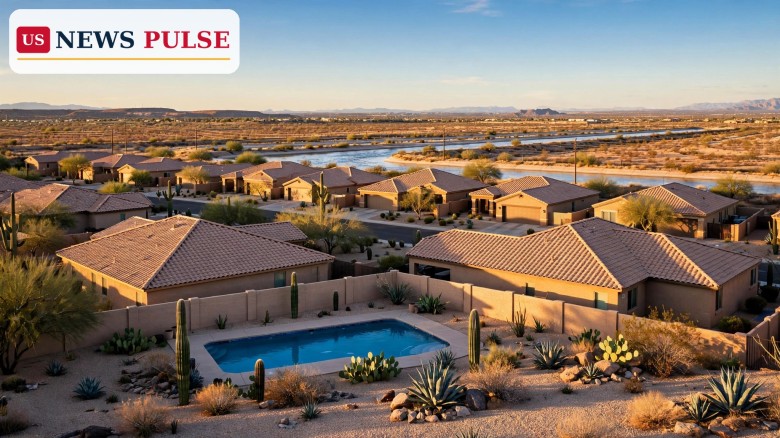
In Queen Creek, Arizona, the Queen Creek water bill has become the clearest sign yet that the Southwest's era of cheap water is ending. Ron Rios treasures the backyard pool that makes Arizona's triple-digit summer heat bearable, but he was furious to learn that his bill in the fast-growing Phoenix suburb could climb from about $130 a month to, eventually, more than $500 a month. Town leaders say the increase is the price of securing a water supply for the next 100 years as the Colorado River shrinks and the town keeps growing.
The story, reported by The Washington Post, has struck a nerve far beyond one suburb. Queen Creek is one of America's fastest-growing cities, and its dilemma is shared by communities across the arid Southwest: how to keep growing when the water that made that growth possible is getting scarcer and more expensive. The town's answer is a new dedicated water resource fee, a public hearing on November 18, 2026, and a historic bet on ancient groundwater from the Harquahala Valley west of Phoenix.
Key Points
- Queen Creek's proposed water resource fee starts at $3.07 per 1,000 gallons, adding about $30.70 a month for a home using 10,000 gallons, or $18.42 with a wastewater credit.
- The Washington Post reports one resident's bill could eventually rise from about $130 to more than $500 a month as phased increases take effect over the coming years.
- The fee replaces Central Arizona Groundwater Replenishment District (CAGRD) charges on property tax bills and pays for a 1.7-million-acre-foot Harquahala water supply described as a 100-year, drought-proof source.
- Queen Creek now gets only about 10 percent of its water from the Colorado River, with 68 percent from Harquahala, 16 percent from treated wastewater and 6 percent from local groundwater.
- A public hearing is set for November 18, 2026, with the earliest effective date in January 2027; the town has about 91,000 residents today and expects roughly 150,000 within a decade.
What Happened
Queen Creek's town council has been moving through a formal process to create a dedicated water resource fee. At a September 2 meeting, staff presented a recommended fee of $3.07 per 1,000 gallons of metered water use, according to the town and to reporting by The Arizona Republic. Town finance director Scott McCarty told the council that the average residential customer could pay as much as $30.70 extra per month, with customers who receive wastewater services from Queen Creek getting a credit that would reduce the impact to $18.42 per month for a 10,000-gallon household.
The town could also phase in five additional increases over the next five years, McCarty said at the September 2 presentation, a design meant to help customers adjust while allowing Queen Creek to recoup its costs over time. The council was scheduled to consider a notice of intent for the fee on September 16, with a public hearing on November 18, 2026, and the earliest effective date in January 2027, the town said. Residents have been invited to open houses through the autumn, including sessions on October 28 and November 17, before that hearing.
The Washington Post's account, published October 25 and headlined "Cheap water is over," put a human face on the numbers. Rios, whose pool helps his family endure summers that regularly top 100 degrees, reacted with fury to the prospect of a bill above $500 a month. Town utility director Marc Skocypec summed up the town's position in the same stark terms, telling the Post: "Cheap water is over." City leaders told the paper the investment was necessary to fund sweeping work to secure the town's supply for the next century, as the Colorado River continues to shrink.
Background and Context
Queen Creek's water story begins with Arizona's groundwater law. The 1980 Arizona Groundwater Management Act requires every gallon of water pumped to be replenished, and nearly all Queen Creek customers are enrolled in CAGRD, the Central Arizona Groundwater Replenishment District, to handle that replenishment. Enrolled customers pay an annual membership fee on their property tax bill plus a fee based on water consumed the previous year.
Since 2018, the town council has applied groundwater credits at the maximum allowable amount to reduce those CAGRD assessments for customers, saving them $71 million, the town says. But officials describe that subsidy as an interim measure that cannot continue indefinitely, because CAGRD fees have risen and are projected to keep rising. The new water resource fee would replace the CAGRD assessment on customer property tax bills, including the amount the town has been offsetting on behalf of customers since 2018, and would instead fund long-term supplies, related infrastructure, remaining replenishment and water resource programmes.
The centrepiece of that long-term plan is Harquahala. In 2025, Queen Creek made what the town calls a historic investment, securing 1.7 million acre-feet of water from Harquahala Valley, a state-designated water storage and transportation basin west of Phoenix. One acre-foot is roughly the amount of water used by three single-family homes in a year, according to the Arizona Department of Water Resources. The town was the first entity to purchase this water for transport, getting it at the lowest rate, and says the supply is drought-proof and will last 100 years. The water will travel via the existing Central Arizona Project canal, which runs north of Harquahala Valley and passes the eastern border of Queen Creek.
The shift has transformed the town's portfolio. In 2018, Queen Creek got about 90 percent of its water from groundwater pumping. Today, according to town statistics reported by The Arizona Republic, it gets about 6 percent from local groundwater pumping, 68 percent from Harquahala, 16 percent from treated wastewater and 10 percent from the Colorado River. That low river reliance is deliberate: the town planned for Central Arizona Project cuts of 30 to 50 percent before federal cuts were announced, and it now describes its supply as safe, reliable and not subject to cuts.
Queen Creek Water Bill: What Residents Will Actually Pay
The most important distinction in this story is between the first-year fee and the long-run bill. In year one, the town's own figures put the residential impact at $30.70 a month for a household using 10,000 gallons, or $18.42 with the 40 percent wastewater credit for residential customers. The $500 figure in the Post's reporting is a longer-run prospect for a heavier-use household, such as one with a pool, once the phased increases over the next five years and beyond are layered on top of existing charges. The town has not published a single official "$500 bill" figure, and residents' actual bills will vary with metered use, account type and credits.
Two other charges add to the confusion. Queen Creek already approved a separate 15 percent water rate increase that took effect on August 27, 2025, the town's first residential utility rate adjustment in more than 15 years, worth roughly $3 to $6 a month for most homes. That increase covers infrastructure, operations and rising renewable-supply costs and is distinct from the new resource fee. Separately, the council is considering higher water capacity fees for new development, one-time charges paid by builders rather than existing customers, with a hearing also set for November 18 and a possible effective date of December 21, 2026.
For households, the practical question is usage. A home using 10,000 gallons faces the $30.70 figure; a larger home with a pool, extensive landscaping or a big family will use far more, and the per-1,000-gallon fee scales with every gallon. The town offers a monthly resource calculator for residential customers based on the proposed $3.07 rate and the wastewater credit, and it is evaluating a credit for septic customers. Residents who want a precise number before the November hearing can use that calculator or contact customer service at 480-358-3450.
Reactions and Quotes
Skocypec, the town's utility director, framed the fee as a choice between paying now and paying more later. "Queen Creek wants to have a long-term, locally controlled stable water resource," he told The Arizona Republic, explaining that the regional groundwater agency prices its replacement fees on 10-year cycles, which leaves the town vulnerable to volatility in the water market. Switching to Harquahala and controlling its own groundwater recharging makes Queen Creek less reliant on both the Colorado River and CAGRD, he said.
McCarty, the finance director, stressed phasing. The five additional increases over five years are designed, he said, to help customers adjust to the new cost while the town recoups its expenses over time. The town's broader message is that owning a 100-year water portfolio, even at a high upfront cost, is cheaper in the long run than remaining exposed to a groundwater market and a river whose price, in the town's words, has continued to rise and will only rise further as uncertainty grows.
Residents are less convinced. Rios's reaction, captured by the Post, reflects a common complaint in fast-growing desert suburbs: families bought homes, pools and landscaping on the assumption that water would stay affordable, and now face bills that rival or exceed their electricity costs. A resident of nearby Gilbert wrote online that his own water bill had doubled and now exceeds his electricity bill even after solar savings, a reminder that Queen Creek is not alone. The town's open houses and the November 18 hearing are the formal venues where that anger will be tested against the town's arithmetic.
Why It Matters
Queen Creek matters because it is a preview of the Southwest's future. The federal Bureau of Reclamation announced on August 21, 2026, that Arizona, California and Nevada will cut a combined 1.25 million acre-feet from the Colorado River in 2027 and 2028, with Arizona taking the largest share at 760,000 acre-feet, California about 440,000 and Nevada 50,000, on top of a voluntary 700,000-acre-foot cut. The Upper Basin states of Colorado, New Mexico, Utah and Wyoming face no mandatory cuts under the plan. Arizona sits at the front of the cut line because much of its supply, including the Central Arizona Project canal that feeds Phoenix and Tucson, holds the lowest-priority rights on the river.
Arizona has pushed back. On October 16, the state asked to join Nevada's lawsuit challenging the federal operating plan, arguing the framework could impose cuts beyond those the Lower Basin states agreed to and could threaten the Central Arizona Project. State water director Tom Buschatzke said he remains "very optimistic" that a three-state agreement softening the cuts will be finished before deliveries change on January 1, 2027, but he also warned cities to keep planning for deep cuts in 2027 and 2028. Water has become a centrepiece of Arizona's 2026 governor's race between Democratic Governor Katie Hobbs and Republican Representative Andy Biggs.
Against that backdrop, Queen Creek's bet looks both expensive and rational. A town expecting to grow from 91,000 to about 150,000 people in a decade cannot gamble its future on a river under federal cuts and a groundwater market priced in volatile 10-year cycles. Buying a century of drought-proof water, even at a price that shocks current residents, is a hedge against a future in which water could be far scarcer and far dearer. The open question is fairness: whether today's residents, many of whom bought in when water was cheap, should bear the full cost of a supply that will serve the next generation of newcomers as well.
What Happens Next
The immediate next step is the public hearing on November 18, 2026, at the Queen Creek council meeting, where the water resource fee could be approved, amended or rejected. If approved, the earliest effective date is January 2027. Residents can attend open houses on October 28 and November 5, 9 and 17, use the town's monthly resource calculator, and submit comments before the hearing. The council will also consider development-related water capacity fees at the same meeting.
Beyond Queen Creek, watch the three-state Colorado River negotiations and the Nevada lawsuit, both of which will shape how much river water Arizona can count on in 2027 and 2028. If the Lower Basin states finish their parallel agreement, Arizona's cuts will be managed rather than imposed; if they do not, the federal framework stands and the pressure on towns like Queen Creek to find their own water will only intensify. Either way, the message from Queen Creek's utility director is likely to echo across the desert: cheap water is over.
Frequently Asked Questions
Why is the Queen Creek water bill going up?
Queen Creek is replacing CAGRD groundwater replenishment charges with a dedicated water resource fee of $3.07 per 1,000 gallons to pay for a 1.7-million-acre-foot Harquahala water supply, related infrastructure and remaining replenishment, after years of subsidising CAGRD costs for customers.
How much will the average household pay in the first year?
For a home using 10,000 gallons, the town estimates $30.70 extra per month, or $18.42 with the residential wastewater credit. Actual bills vary with metered use, and heavier users, such as homes with pools, will pay more.
Where does the $500-a-month figure come from?
The Washington Post reported that one resident's bill could eventually rise from about $130 to more than $500 a month as phased increases take effect over the coming years. It is a long-run prospect for a heavier-use household, not the first-year fee for an average home.
When will the new fee take effect?
A public hearing is scheduled for November 18, 2026. If the council approves the fee, the earliest effective date is January 2027.
Is Queen Creek running out of water?
No, according to the town. Queen Creek says it owns a safe and reliable supply not subject to cuts, with only about 10 percent coming from the Colorado River and a 100-year Harquahala supply. The fee debate is about the cost of that security, not an imminent shortage.
Related coverage: Hawaii Flood Watch: Olana Remnants Bring 5-8 Inches of Rain to Islands and Santa Fe Tornado: Rare EF-1 Storm Hits New Mexico City First Time in 50 Years.
© 2026 US News Pulse. All rights reserved.
 Print
 Save