
Ukraine Refinery Strike Ends Pause as Fire Hits Russian Oil Plant
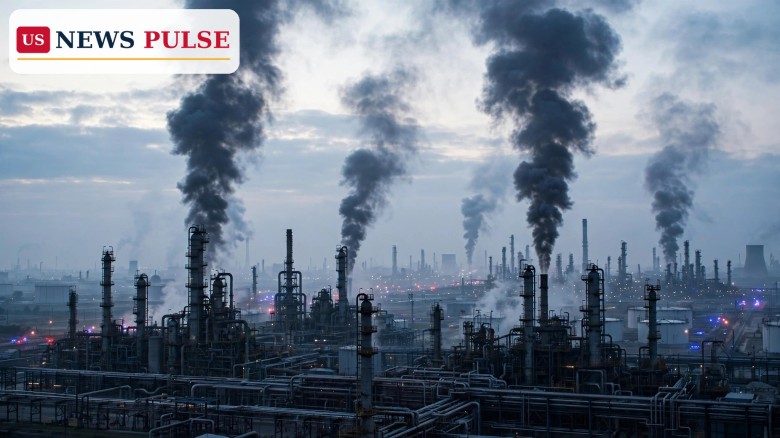
A Ukraine refinery strike hit Russia's Novokuibyshevsk oil refinery before dawn on Friday, October 30, 2026, setting off fires at the plant and ending nearly two weeks without a reported attack on Russian refining. The strike landed only hours after a report that Kyiv had informally paused such attacks under pressure from the Trump administration, and it immediately raised the question that now dominates the story: was the pause over, or was this a single operation that slipped through it?
Ukrainian drone maker Fire Point said Ukraine's defence forces struck the Rosneft-owned plant in Samara Oblast with FP-1 long-range drones, and that one unit hit processes diesel fuel. Russian regional authorities did not confirm damage to the refinery itself, but the region's governor said air defences had destroyed dozens of drones, and photographs shared by residents showed smoke columns rising over the plant. Ukraine's General Staff had not commented on the strike at the time of reporting.
Key Points
- Ukrainian drones struck the Novokuibyshevsk refinery in Samara Oblast early on October 30, 2026, starting fires at the plant, according to Fire Point and resident photographs geolocated by open-source analysts.
- The strike is the first reported fire at a Russian refinery since October 15 and the first reported strike on Russia's oil industry since October 20, ending a pause reported by The Wall Street Journal.
- The Journal reported on October 29 that Kyiv had informally paused refinery strikes under pressure from President Donald Trump, with the pause expected to last past the November 3 US midterms.
- Samara Governor Vyacheslav Fedorishchev said dozens of drones were destroyed over the region and reported no casualties in preliminary assessments, without confirming refinery damage.
- Russia said it downed 1,043 Ukrainian drones overnight across 19 regions, and all four Moscow airports faced flight restrictions as drone activity surged around the capital.
What Happened
Residents of Novokuibyshevsk reported drones, explosions and a fire before dawn on Friday. A Ukrainian Telegram channel posted the first photographs at 05:24 Kyiv time, and a Russian Telegram channel geolocated the fire to the refinery from residents' photographs. By morning, the Ukrainian channel counted at least 11 separate fires at the plant, although the footage published so far shows several smoke columns without making clear which units burned.
Fire Point, the Ukrainian company that makes the FP-1 drone, said its drones scored numerous hits on the refinery grounds and that one of the units struck hydrotreats diesel fuel. That claim, if confirmed, would point to damage to a commercially important part of the plant rather than a glancing hit on its perimeter. The refinery, owned by Russian state-controlled Rosneft, has a design capacity of 8.8 million tonnes of crude oil a year and produces petrol, diesel, aviation fuel, lubricants and other products. Open-source analysts say it is a main producer of jet fuel for Russia's military.
The plant lies about 910 kilometres from the front line, a distance that underlines how far Ukraine's long-range drone campaign now reaches inside Russia. Ukrainian forces hit the same plant in August and caused a fire there, according to Ukraine's military, so Friday's strike was a return to a known target rather than a first attempt. A separate fire was also reported overnight at a food plant in Starodub, in Bryansk Oblast about 35 kilometres from the Ukrainian border, which open-source analysts said makes canned food for the Russian army, although that footage had not been verified.
The wider overnight picture was far larger than one refinery. Russia's Defence Ministry said it downed 1,043 Ukrainian drones overnight over 19 regions, including Samara, the Moscow region and Tatarstan, after claiming 1,214 the night before. Moscow Mayor Sergei Sobyanin said 862 drones flew toward the Moscow region between 20:30 on October 29 and 07:30 on October 30, that most were downed on the far approaches, and that 170 were downed on approach to the capital. Russia's aviation agency restricted flights at all four Moscow airports, and more than 460 flights had been delayed or cancelled at Moscow and St. Petersburg airports the day before.
Background/Context
Ukraine's campaign against Russian refineries has been one of its most effective long-range operations. By hitting the plants that turn crude oil into fuel and revenue, Kyiv aims to cut both the money that pays for Russia's war and the fuel that supplies its military. Russia, meanwhile, has been pounding Ukraine's power grid and cities ahead of winter, with a mounting civilian toll that included 14 people killed at a crowded railway platform in Dnipro on October 29.
The Wall Street Journal reported on October 29 that Ukrainian long-range units had been told in mid-October that the refinery campaign was effectively on hold once missions already under way were completed. Two military officials were cited, and the report said the unofficial pause began early the previous week and was expected to last until after the US midterm elections on November 3, and possibly deeper into November. Units were told, in effect, to stop adding new refinery targets while the pause held.
The pressure behind that pause, according to the Journal, came from Washington. President Trump has pressed Kyiv for weeks to stop refinery strikes, blaming them for high global fuel prices, although international energy economists attribute the price rises primarily to the separate US military conflict with Iran. US Special Envoy Jared Kushner repeated the demand at a meeting with President Volodymyr Zelenskyy in Oslo on October 20, in a conversation one US official described as very tough. Kushner, who joined remotely because of illness, said he and Special Envoy Steve Witkoff were spending large amounts of time, energy and aviation fuel shuttling in negotiations with Moscow, and framed a 30-day pause as a way for Ukraine to show gratitude.
Zelenskyy, for his part, had asked for something in return, the Journal reported: a mutual energy ceasefire with Russia, Patriot missiles to protect Ukraine's grid, or permission to use Starlink inside Russia so drones could destroy Russian missile launchers. None of those ideas went far. Some of Kyiv's European backers also nudged Zelenskyy to hold off until after the midterms, a senior European official said, worried about the political sensitivity of US energy prices before the vote. The pause showed up in the market data: Russian refinery utilisation at the end of October was 25 percent higher than at the start of the month as drone attacks subsided, according to Reuters reporting cited by The Moscow Times.
Ukraine Refinery Strike and the Novokuibyshevsk Fire
The Novokuibyshevsk fire matters because of its timing as much as its target. It was the first fire at a Russian refinery since October 15, when Ryazan's governor reported one at that city's refinery, and the first reported strike on Russia's oil industry since October 20, when Ukrainian drones hit a Druzhba pipeline pumping station in Tambov Oblast. The Journal called that Tambov strike the last before the pause, which makes Friday's Samara strike the first clear break in the pattern.
Yet the strike does not, by itself, settle whether the pause is over. Kyiv has not said so, and Zelenskyy's own words on October 27 left room for exactly this kind of ambiguity. He told reporters in Kyiv that Ukrainian forces had been trying to be a little more careful in recent days, but that they did not have an order not to attack refineries. He also said drone units were hitting other kinds of targets inside Russia. One source cited by the Journal said Zelenskyy had consented to a recommendation from Defence Minister Yevhen Khmara to refrain temporarily from targeting refineries because of a delicate diplomatic environment, while stressing that commanders retained latitude to resume strikes whenever deemed militarily necessary.
That distinction — between a formal order and an informal understanding — is now the centre of the debate. If commanders kept discretion, a strike on a high-value diesel unit could be presented as a military decision taken within that discretion. If the understanding with Washington was firmer, the same strike could be read in Washington as a breach of trust days before an election. Neither reading can be confirmed from the public record alone, and both will be tested by what happens next: whether further refinery strikes follow in the coming nights, or whether Novokuibyshevsk stands alone.
Reactions/Quotes
President Zelenskyy, speaking in Kyiv on October 27, said: "Our guys have been trying to be a bit more careful these days. But they have no order not to attack oil refineries." The remark, reported by the Journal, has become the key public statement in the argument over whether a pause ever formally existed.
Samara Governor Vyacheslav Fedorishchev said air defence systems and mobile fire groups had destroyed dozens of drones over the region, reported no casualties in preliminary assessments, and said emergency services were dealing with the aftermath of the attack. He did not confirm damage to the refinery or identify the intended targets, a pattern common in Russian regional statements after drone attacks, where the fact of an attack is acknowledged while its effect on a specific plant is left unstated.
Fire Point's statement was more direct. The company said Ukrainian defence forces successfully struck the refinery using FP-1 long-range attack drones, and that one of the units hit hydrotreats diesel fuel. The company did not publish battle-damage imagery that would independently confirm which unit burned, and the open-source photographs so far show smoke rather than a confirmed unit-level assessment.
Moscow Mayor Sergei Sobyanin gave the capital's own numbers for the night: 862 drones flew toward the Moscow region between 20:30 on October 29 and 07:30 on October 30, most downed on the far approaches, with 170 downed on approach to the capital. The scale of that figure, if accurate, shows a drone campaign operating at a volume far beyond a single refinery raid, and it helps explain why Moscow's airports were restricted for a second night running.
Why It Matters
The strike matters for three reasons. First, it tests the Trump administration's leverage over Kyiv at a sensitive moment. Washington has linked its diplomatic effort with Moscow, and its domestic energy politics, to a halt in refinery strikes. A visible resumption days before the midterms puts that linkage under strain and forces both sides to decide how much the informal understanding was worth.
Second, it matters for Russia's fuel system. All three Rosneft refineries in Samara have now been reported offline or reduced after recent drone activity, according to follow-up reporting, and a hit on a diesel hydrotreating unit at Novokuibyshevsk would affect a product Russia's military and civilian economy both need. Even a short outage at a plant of this size ripples into regional supply, repair schedules and the broader refinery utilisation recovery seen during the pause.
Third, it matters for Ukraine's winter. Russia's attacks on Ukraine's power grid are intensifying as cold weather approaches, and Kyiv's argument throughout the refinery campaign has been that pressure on Russian energy is one of its few levers to make Moscow feel a cost for that strategy. A pause that produced no reciprocal energy ceasefire, no new Patriot deliveries and no Starlink permission, as the Journal reported, left Kyiv with little to show for restraint. That context makes a return to refinery targets understandable from Kyiv's perspective, even if it complicates its relationship with Washington.
What Happens Next
The next test is simple to watch and hard to predict: whether more refinery strikes follow. A second or third strike in the coming nights would suggest the pause has ended in practice, whatever language was used in mid-October. A return to quiet on refineries, with drones redirected to other target sets, would suggest Novokuibyshevsk was an exception — perhaps a mission already under way, a commander's discretionary call, or a deliberate signal that restraint is conditional.
Washington's response will also be watched closely. The administration has not yet publicly characterised Friday's strike, and its reaction — a public rebuke, a private message, a change in the pace of arms or intelligence support, or silence — will shape how Kyiv calibrates the next round. European allies, who urged restraint until after the midterms, face a similar choice about how loudly to press Kyiv now that the vote is days away.
On the ground, the immediate questions are practical: how much damage the Novokuibyshevsk fire actually caused, how long any affected unit will be offline, and whether Russian refinery utilisation, which had recovered during the pause, falls back again. Satellite imagery and further open-source analysis in the coming days should give a clearer picture than the first smoke photographs, and Ukraine's General Staff may yet comment. Until then, the fire at Novokuibyshevsk stands as a single, vivid data point in a campaign whose rules are still being negotiated in public and in private.
Frequently Asked Questions
What happened at the Novokuibyshevsk refinery on October 30, 2026?
Ukrainian drones struck the Rosneft-owned Novokuibyshevsk refinery in Samara Oblast before dawn, starting fires at the plant. Fire Point said FP-1 drones hit the site, including a unit that hydrotreats diesel fuel. Russian authorities confirmed dozens of drones were destroyed over the region but did not confirm refinery damage, and no casualties were reported in preliminary assessments.
Was Ukraine supposed to have paused refinery strikes?
The Wall Street Journal reported on October 29 that Kyiv had informally paused refinery strikes under pressure from President Trump, with the pause expected to last past the November 3 midterms. President Zelenskyy said on October 27 that forces had been more careful but had no order not to attack refineries, leaving the exact status of the pause ambiguous.
Why does the Novokuibyshevsk refinery matter?
It processes about 8.8 million tonnes of crude oil a year, produces petrol, diesel and aviation fuel, and is described by open-source analysts as a main producer of jet fuel for Russia's military. It lies about 910 kilometres from the front line and was previously hit by Ukrainian forces in August 2026.
How big was the overnight drone attack?
Russia's Defence Ministry said it downed 1,043 Ukrainian drones overnight over 19 regions. Moscow's mayor said 862 drones flew toward the Moscow region, with 170 downed on approach to the capital, and all four Moscow airports faced flight restrictions.
What happens next for the refinery campaign?
Watch whether further refinery strikes follow in the coming nights. More strikes would suggest the pause has ended; a return to quiet on refineries would suggest Novokuibyshevsk was an exception. Washington's public or private response, and any damage assessment for the plant, will also shape the next phase.
Related coverage on US News Pulse: the reported pause that preceded this strike (Ukraine pauses refinery strikes after Trump pressure), Saudi Arabia's plea for diplomacy before any new Iran strikes (Saudi Arabia urges Trump to give diplomacy a chance), and how war-driven fuel prices have fed US oil profits (US oil profits hit $130 billion in Iran war).
© 2026 US News Pulse. All rights reserved.
 Print
 Save