
Trump Xi Trade Deal Cuts China Tariffs to 47% After Busan Breakthrough
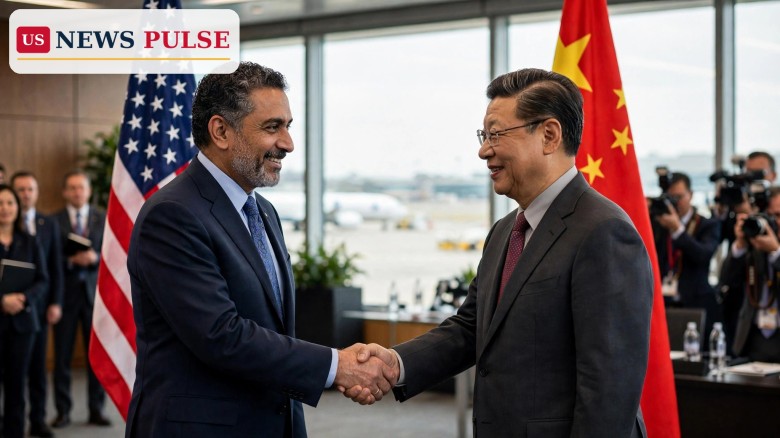
President Donald Trump and Chinese President Xi Jinping have sealed a Trump Xi trade deal in Busan, South Korea, cutting overall United States tariffs on Chinese goods from 57% to 47% and pausing Beijing's new rare-earth export controls for a year. The agreement, struck on Thursday at a South Korean air base on the sidelines of the Asia-Pacific Economic Cooperation forum, averts Trump's threatened 100% tariff on Chinese goods and extends a fragile trade truce between the world's two largest economies for about a year.
The Trump Xi trade deal was the finale of Trump's whirlwind Asia trip, on which he also touted trade breakthroughs with South Korea, Japan and Southeast Asian nations. After nearly two hours of face-to-face talks, their first since 2019, Trump rated the outcome "a 12 out of 10" and called it an "outstanding group of decisions." China, in return for the tariff cut, will crack down on fentanyl precursor chemicals, resume purchases of American soybeans and keep rare-earth minerals flowing to American factories, carmakers and weapons makers.
Key Points
- The Trump Xi trade deal cuts the overall US tariff rate on Chinese imports from about 57% to about 47%, by halving the fentanyl-related tariff from 20% to 10%.
- China agreed to a one-year pause on export controls unveiled this month on rare earth minerals and magnets, plus general licences for rare earths, gallium, germanium, antimony and graphite for US end users.
- Beijing will resume buying US soybeans, including at least 12 million metric tons by year-end and at least 25 million metric tons in each of the following three years, and will resume sorghum and hardwood log purchases.
- China will suspend all retaliatory tariffs announced since March 4, and the US will pause for a year an expanded technology blacklist and new port fees on Chinese-linked ships.
- The deal averts a threatened 100% US tariff from November 1, but markets reacted cautiously, with analysts calling it a tactical pause rather than a structural breakthrough.
What Happened
Trump and Xi met on Thursday at Gimhae air base in Busan, their first face-to-face meeting since the Group of 20 summit in Osaka in June 2019. The meeting lasted more than an hour and a half, and Trump spoke to reporters afterwards aboard Air Force One, where he declared the rare-earth dispute settled. "The rare earth issues are fully resolved, and the barrier has been removed," he said.
The White House later released a detailed fact sheet setting out the terms. The centrepiece is the tariff cut: the United States will halve the 20% tariff on Chinese goods linked to supplies of fentanyl precursor chemicals, a duty first imposed in February. That single change cuts the overall US tariff rate on Chinese imports to about 47% from 57%, according to US officials. That total includes duties of about 25% imposed during Trump's first term, the reduced 10% "reciprocal" tariff imposed in April, and previous most-favoured-nation tariff rates.
On rare earths, China agreed to a one-year pause on controls unveiled this month that would have required export licences for products containing even trace amounts of a larger list of elements, aimed at preventing their use in military products. The White House said China will also issue general licences for exports of rare earths, gallium, germanium, antimony and graphite for the benefit of US end users and their suppliers, amounting to what it called "the de facto removal of controls China imposed in April 2025 and October 2022."
China also agreed to suspend all retaliatory tariffs it has announced since March 4, including duties on US chicken, wheat, corn, cotton, sorghum, soybeans, pork, beef, aquatic products, fruits, vegetables and dairy products. Beijing will likewise suspend or remove all retaliatory non-tariff countermeasures taken since March 4, such as listing certain American companies on its end-user and unreliable-entity lists.
For its part, Washington agreed to a one-year pause on an expanded Commerce Department blacklist of companies barred from buying US technology goods, including semiconductor manufacturing equipment. The expanded list would have automatically covered firms more than 50% owned by companies already on the list, banning US exports to thousands more Chinese firms. The Trump administration also agreed to pause for one year new port fees on Chinese-built, owned and flagged ships, fees that took effect on October 14 alongside 100% tariffs on Chinese-built ship-to-shore cranes and quickly disrupted cargo flows, pushing up container rates as shippers avoided China-linked vessels.
Background and Context
The Busan meeting came at the end of a year of escalating tariff warfare. In February, Trump imposed the 20% fentanyl-related tariff, accusing Beijing of failing to stop precursor chemicals reaching North America. In April came the "reciprocal" tariff, and in May the two sides agreed in Geneva to cut tariffs that had exceeded 100% by 115 percentage points. But the truce frayed: China froze soybean orders and added US firms to its entity lists, and this month unveiled sweeping new rare-earth export controls, prompting Trump to threaten a 100% tariff from November 1.
Rare earths are the quiet centre of the dispute. The minerals and magnets are vital for cars, planes, electronics and weapons, and China dominates their processing, giving Beijing its most potent source of leverage. American manufacturers had warned that the new licensing regime could choke supplies of components they cannot quickly source elsewhere, which is why the one-year pause, and the general licences for US end users, matter more to factories than the headline tariff number alone.
Soybeans are the political centre. China had largely stopped buying US soybeans this autumn, purchasing none in September after sourcing its beans from Brazil and Argentina. That hurt American farmers, a key Trump constituency, who had complained loudly in Washington. The White House said China agreed to buy at least 12 million metric tons of US soybeans in the final two months of this year, as well as at least 25 million metric tons in each of the following three years, and to resume purchases of US sorghum and hardwood logs. Analysts noted that those commitments only bring China back to roughly its prior levels: in 2024, the US exported nearly 27 million tons of soybeans to China, and Beijing never met the vastly expanded targets of the "Phase One" deal that paused the trade war in 2020.
The fact sheet also covers smaller but telling items: China will take measures to resume trade from chipmaker Nexperia's facilities in China, allowing production of critical legacy chips to flow to the rest of the world; Beijing will extend its market-based tariff exclusion process for US imports, with exclusions valid until December 31, 2026; and China will end antitrust, anti-monopoly and anti-dumping investigations targeting US firms in the semiconductor supply chain.
Trump Xi Trade Deal: What Each Side Gave Up
Read as a ledger, the deal trades American tariff relief for Chinese supply-chain relief. Washington gives up 10 points of tariff leverage and pauses two pressure tools, the expanded technology blacklist and the port fees, for a year. Beijing gives up its newest leverage, the rare-earth controls, suspends its retaliation since March, and commits to farm purchases and fentanyl enforcement.
The fentanyl chapter is where the politics and the policy meet. China agreed to take "significant measures" to end the flow of fentanyl to the US, including halting shipments of certain precursor chemicals to North America and strictly controlling exports of other chemicals worldwide. Trump said Xi would work "very hard to stop the flow." US Treasury Secretary Scott Bessent told Fox Business Network that working groups from the two countries would "set very objective measures" in the coming weeks to judge whether flows are actually falling, a test that matters because fentanyl is blamed for tens of thousands of US overdose deaths every year, and because the administration had previously said the tariffs would stay until Beijing took concrete measures.
Trump also announced the diplomatic sequel: he plans to visit China in April next year, to be followed by a reciprocal visit from Xi to Washington, DC, or Palm Beach, Florida. Those visits will be the real test of whether Busan was a reset or a pause, since every major item in the deal carries a one-year clock.
Reactions and Quotes
Trump's own verdict was characteristically maximal: he described the meeting as "a 12 out of 10" and an "outstanding group of decisions," and said of rare earths that "the rare earth issues are fully resolved, and the barrier has been removed." Xi urged further cooperation in comments carried by Chinese state media after the meeting, while China's Commerce Ministry confirmed the one-year pause on rare-earth controls.
Markets were less euphoric. Asian stocks veered between gains and losses after the announcement, and then sold off, as traders worried that the tariff detente could prove fleeting. One widely quoted analyst assessment called the meeting "a tactical pause or temporary de-escalation, rather than a structural breakthrough," warning that a shift in tone, particularly from Trump, could quickly reignite tariff threats and trigger risk-off sentiment.
That caution reflects the deal's design: almost everything is paused, not repealed. The tariff cut is real but partial, the rare-earth controls are suspended rather than abolished, and the soybean targets restore rather than expand past trade. Supporters of the deal argue that a year of stability is itself valuable for businesses planning orders and for farmers planning planting; critics argue that China extracted breathing room while keeping its structural leverage intact.
Why It Matters
For American shoppers, the deal removes the worst near-term risk: a 100% tariff from November 1 would have raised prices on a vast range of Chinese-made goods just before the holiday season. A 10-point cut in the overall rate will not by itself bring prices down sharply, but analysts cited in early reaction suggested tariff relief could shave pressure off consumer goods prices, and it at least stops the escalation that was pushing inflation higher.
For American industry, the rare-earth pause is the most consequential clause. Carmakers, defence contractors and electronics firms get a year in which licensed supply continues, time they can use to diversify sourcing. For farmers, the soybean commitments restore a market that had effectively closed this autumn, weeks before the November 3 midterm elections in which rural votes matter. And for the Federal Reserve, which held rates this week while warning that inflation remains high, calmer trade policy removes one source of upward price pressure, even if it does not settle the December rate debate.
For the world, Busan extends the truce between the two economies that set the terms of global trade. Trump also finalised details of a trade deal with South Korean President Lee Jae Myung on the same trip, and touted breakthroughs with Japan and Southeast Asian nations, presenting the Asia tour as a string of deals. Whether that string holds depends on the working groups now measuring fentanyl flows, the licences actually issued for rare earths, and the soybean ships actually loaded.
What Happens Next
Three tests come first. In the coming weeks, US and Chinese working groups will set objective measures for fentanyl flows, and their verdict will decide whether the tariff cut survives contact with reality. In parallel, traders and manufacturers will watch whether general licences for rare earths, gallium, germanium, antimony and graphite are issued promptly and in usable volumes. And farmers will watch the ports: the first soybean cargoes under the new commitment must move before year-end to hit the 12-million-ton target.
Beyond that, the one-year clocks start ticking together: the rare-earth pause, the blacklist pause and the port-fee pause all expire around the same time, setting up a fresh negotiation in late 2027 unless the April visit produces something more durable. The mid-November deadline that once loomed, when a "superhigh tariff suspension" was set to expire, has been overtaken by the Busan framework, but the underlying disputes over technology, shipping and market access remain unresolved.
Domestically, the deal lands four days before the November 3 midterm elections, giving Trump a foreign-policy achievement to carry into the final weekend of campaigning, including his Friday night rally in Daytona Beach, Florida. Democrats are likely to argue that the deal restores the status quo rather than winning new ground; Republicans will argue that averting a 100% tariff while reopening the soybean market is a win for farmers and shoppers alike. Voters will judge it, in part, by prices and paychecks rather than communiqués.
Frequently Asked Questions
What is the Trump Xi trade deal? It is the agreement reached by Presidents Donald Trump and Xi Jinping in Busan, South Korea, cutting US tariffs on China from about 57% to about 47%, pausing China's rare-earth export controls for a year, and restoring US soybean purchases.
How much did tariffs fall? The fentanyl-related tariff was halved from 20% to 10%, which cuts the overall US tariff rate on Chinese imports by 10 percentage points, from about 57% to about 47%.
What did China promise on rare earths? A one-year pause on new export controls, plus general licences for rare earths, gallium, germanium, antimony and graphite for US end users and their suppliers.
How many soybeans will China buy? At least 12 million metric tons by year-end and at least 25 million metric tons in each of the following three years, plus resumed sorghum and hardwood log purchases.
Does the deal end the trade war? No. It averts a threatened 100% tariff and extends the truce for about a year, but the pauses expire together in late 2027 and analysts describe it as a tactical pause, not a structural breakthrough.
Related coverage on US News Pulse: Trump and Xi's planned nuclear talks, the near-finished US-India trade deal, and the Canada-US trade stalemate.
© 2026 US News Pulse. All rights reserved.
 Print
 Save