
DOJ Election Monitors: 1,000 Federal Observers to Watch Polls in All 50 States
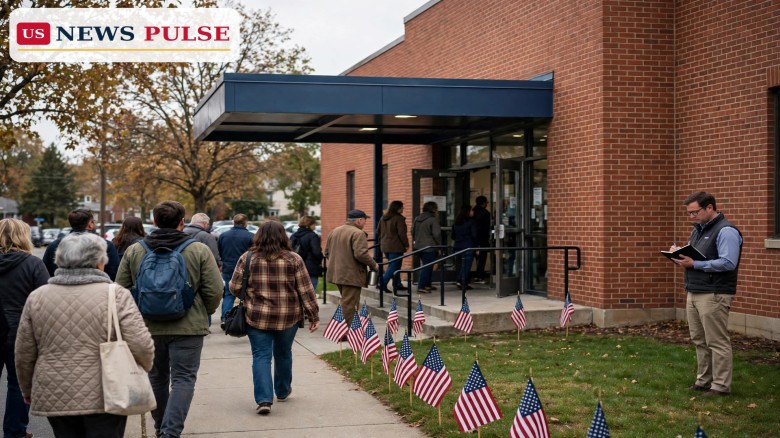
The Justice Department will send about 1,000 DOJ election monitors to polling places in all 50 states on Election Day, Tuesday, November 3, 2026, in the largest federal election-monitoring deployment of the midterm cycle. The plan, confirmed in letters to state election officials and in reporting by the Philadelphia Inquirer, CBS News and the Pennsylvania Capital-Star, puts federal observers in four Pennsylvania counties — Allegheny, Lehigh, Luzerne and Philadelphia — and in cities across Michigan and other battleground states, just four days before voters decide control of Congress.
The monitors are not poll workers, not police officers and not partisan poll watchers. According to the Justice Department's own letters, they will observe, take notes and report anything they see to the department. They may not speak to voters inside polling places, carry firearms, wear anything identifying them as Justice Department employees, or interfere with voting in any way. That distinction matters, because the scale of this deployment — roughly triple the number sent in 2022 and well above the 714 sent in 2024, according to CBS News — has already sparked a sharp argument about whether the federal presence reassures voters or unsettles them.
Key Points
- The Justice Department plans to deploy about 1,000 election monitors across all 50 states on November 3, 2026, the largest such deployment in recent midterm history.
- In Pennsylvania, monitors will observe polling places in Allegheny, Lehigh, Luzerne and Philadelphia counties, after a formal notice to Secretary of the Commonwealth Al Schmidt.
- Monitors are plainclothes, unarmed observers: they introduce themselves to poll managers, take notes and report problems, but they may not speak to voters inside polling places or interfere with voting.
- The department says monitors enforce federal voting laws, including the Voting Rights Act, the National Voter Registration Act, the Civil Rights Act and the Americans with Disabilities Act.
- Pennsylvania officials stress that federal monitors have no greater access than any member of the public and must follow state law, while the ACLU of Pennsylvania will send its own observers.
What Happened
The Justice Department notified Pennsylvania Secretary of the Commonwealth Al Schmidt last week that it would send election monitors to polling places in four counties on Election Day. The counties span the state: Allegheny, home to Pittsburgh, in the west; Philadelphia in the east; and Lehigh and Luzerne in the northeast, both perennial battlegrounds in statewide races. The notice was part of a nationwide effort overseen by Harmeet Dhillon, the assistant attorney general for the Civil Rights Division, who has said the department intends to send out 1,000 monitors across all 50 states.
Justice Department attorney James T. Catania has been designated the regional coordinator for Pennsylvania and has also communicated with officials in Michigan and Ohio, according to the Inquirer. At least five other Justice Department attorneys have sent similar letters to election officials in Georgia, Indiana, Maine, Colorado and Washington. In Michigan, the state attorney general's office said cities including Detroit, East Lansing, Flint, Grand Rapids, Hamtramck, Lansing and Warren were notified that monitors would be present at their polling locations.
The letters set out the ground rules in unusually plain language. "Our monitors only observe and take notes," the letter to Schmidt said. "They do not intrude or interfere in any way in the voting process. Monitors follow all the rules of the state and jurisdiction." Monitors will introduce themselves to poll managers on arrival, according to the letter obtained by PhillyVoice, but they will be dressed in plain clothes and may not wear pins identifying them as Justice Department employees. They are not permitted to speak with voters inside polling stations or to carry weapons. If they observe an issue, they notify the Justice Department, which may then contact the jurisdiction concerned.
The Pennsylvania Department of State responded with a statement of its own, making clear where it believes the line falls. "The Pennsylvania Department of State expects everyone working in, voting in, and observing polling places to follow all applicable state and federal laws," it said. "DOJ monitors are not legally entitled to any greater access to polling places than members of the general public and we encourage them to coordinate with local election offices where they will be present to ensure that their activities do not disrupt the voting process."
Background
Federal election monitoring is not new. The Justice Department has sent monitors to polling places in virtually every election under both Democratic and Republican administrations, to watch for compliance with federal voting-rights laws. What is new is the scale. CBS News reported that a little less than 300 people served as election monitors nationwide in the 2022 midterms, and 714 in the 2024 general election. The Inquirer reported that the Biden administration dispatched fewer than 400 monitors. A deployment of about 1,000 would therefore be the largest in recent memory, and it comes in an election already saturated with federal legal activity.
That context is important. In the past week alone, federal prosecutors have sought to set aside ballots in California and Washington, subpoenaed voter records in multiple states, and, in a separate development reported this week, left FBI agents fearing they could be ordered to seize voting machines or ballots. A federal judge in Los Angeles rejected the Justice Department's bid to block counting of more than 20,000 California mail ballots, finding the department likely lacked standing and that its emergency request was "solely due to its own neglect." Against that backdrop, even a routine monitoring programme is being read through a political lens by both parties.
Pennsylvania is also a familiar stop for federal monitors. Luzerne County Manager Romilda Crocamo told a virtual press conference organised by the nonpartisan elections education group Keep Our Republic that the Justice Department sent election monitors to her county in the 2022 and 2024 elections as well. Philadelphia election officials have described earlier federal monitoring as routine and unobjectionable. The difference this time, critics argue, is not the presence of monitors but their number, their plainclothes appearance and the climate in which they arrive.
The timing adds to the stakes. More than 40 million Americans had already voted early by October 29, according to the University of Florida Election Lab, putting this midterm on pace to rival or exceed the early vote of 2022. Pennsylvania's polls will be open from 7 a.m. to 8 p.m. on Tuesday, November 3, and anyone in line by 8 p.m. can still vote. Schmidt has urged patience, warning that accuracy matters more than speed and that close races may not be called on election night because some ballots, including overseas absentee ballots, are counted as they arrive at county election offices.
DOJ Election Monitors: What They Can and Cannot Do
The rules governing DOJ election monitors are narrower than many voters assume, and they are worth setting out precisely. Monitors can enter polling places as members of the public, observe the voting process, take notes and report what they see to the Justice Department. They are tasked with watching for compliance with the Voting Rights Act, the National Voter Registration Act, the Civil Rights Act and the Americans with Disabilities Act — laws that protect access to the ballot, voter registration and assistance for voters with disabilities.
Monitors cannot do far more. They cannot speak to voters inside polling places, cannot challenge a voter's eligibility, cannot handle ballots, cannot direct poll workers and cannot carry firearms. They have no power to stop voting, close a polling place or overrule a state election official. Pennsylvania law separately allows candidates and political parties to appoint poll watchers, who can raise challenges about a voter's identity or continued residence in a district — but those watchers must be identified, credentialed by the county in advance and registered electors of the county, and their numbers at each polling place are limited. Federal monitors are not poll watchers and do not carry those challenge rights.
State law also sets a physical boundary around polling places. Pennsylvania bars police officers from coming within 100 feet of a polling place unless they are voting, serving a warrant or preventing a disturbance, and prohibits military personnel from infringing on elections. Those rules apply to everyone, and the state says they apply to federal monitors too. The practical question on Tuesday will be whether the monitors' plainclothes, unbadged presence is experienced by voters as invisible — or as something else entirely.
Reactions and Quotes
State officials have struck a careful tone: cooperative, but firm about the limits. The Pennsylvania Department of State's statement that monitors have "no greater access to polling places than members of the general public" is the clearest official line, and its encouragement that monitors coordinate with local election offices reads as a request that the federal presence be predictable rather than surprising.
Civil-liberties groups have gone further. A spokesperson for the ACLU of Pennsylvania said the organisation will send its own observers to polling stations, and stressed that federal monitors carry no special authority. "They do not have any special authority conferred by federal law, and they are subject to all the same rules and restrictions as any other person regarding proximity to the polls, intimidation and all other general rules regarding polling place conduct in Pennsylvania," the spokesperson said in an email. "The only thing these monitors should expect to see is hard-working poll workers administering a fair and free election."
Supporters of the deployment argue the opposite: that a larger federal presence deters wrongdoing and gives voters confidence that federal law is being enforced, particularly in counties where past elections have drawn complaints. The Justice Department itself has framed monitoring as a long-standing, bipartisan practice, and Dhillon's office has pointed to the department's responsibility to enforce the federal voting laws on the books. Neither the department nor the White House has suggested that monitors will take any enforcement action at polling places themselves; their role, on the department's own account, ends at observation and reporting.
Why It Matters
The deployment matters for three reasons, and none of them is about what a single monitor does on Tuesday. The first is scale: 1,000 monitors is a deliberate statement of federal attention, and in a midterm where Democrats lead the generic ballot and several Senate races in traditionally Republican states have tightened, every federal action is scrutinised for intent. The second is geography: the counties and cities named — Philadelphia, Pittsburgh, Detroit, Flint, Grand Rapids — are heavily Democratic urban centres, which is why critics ask whether the deployment is targeted, while the department notes that monitors go to places with past voting-rights complaints and large voter populations.
The third reason is trust. Elections are administered locally, by county officials and poll workers, and most voters' experience of Election Day is shaped by those local workers, not by Washington. A federal presence that is quiet and rule-bound can reinforce confidence; a presence that feels opaque can erode it, even if nothing improper happens. That is why both the department's letter and the state's response keep returning to the same words — observe, take notes, do not interfere — and why the ACLU's decision to send its own observers matters: Tuesday will be watched by more than one set of eyes.
There is also a practical consequence. With early voting already past 40 million and Election Day turnout expected to be heavy, polling places will be busy. Any confusion about who a plainclothes observer is, or what authority they hold, could slow lines or prompt complaints that then have to be resolved by local officials in real time. Clear introductions to poll managers, as the department's letter promises, will matter more than the number 1,000.
What Happens Next
On Tuesday, November 3, monitors will fan out to polling places across all 50 states, including the four Pennsylvania counties and the Michigan cities already notified. Polls in Pennsylvania open at 7 a.m. and close at 8 p.m., with voters in line at closing time entitled to cast a ballot. After polls close, monitors' notes will feed back to the Justice Department, which can contact jurisdictions about any issues observed — but any legal action would come later, through the courts, not at the polling place.
Results will take time. Schmidt has already warned that close races may not be called on election night, and Pennsylvania's history of slow counts in tight statewide races means the monitors' deployment could still be a topic of argument days after voting ends. If any county reports interference or intimidation, expect swift statements from the state, the ACLU and the department — and expect the dispute to be fought over the same question at the heart of this story: whether 1,000 quiet observers reassured voters, or made them uneasy.
Frequently Asked Questions
How many DOJ election monitors are being deployed?
About 1,000 monitors across all 50 states on November 3, 2026, according to the Justice Department and reporting by the Philadelphia Inquirer and CBS News. That is more than the fewer than 300 sent in 2022 and the 714 sent in 2024.
Which Pennsylvania counties will have federal monitors?
Allegheny, Lehigh, Luzerne and Philadelphia counties. The Justice Department notified Secretary of the Commonwealth Al Schmidt, and monitors will also be present in Michigan cities including Detroit, Flint, Grand Rapids, Lansing and Warren.
Can election monitors talk to voters or stop someone from voting?
No. Monitors may not speak to voters inside polling places, carry firearms, handle ballots or interfere with voting. They observe, take notes and report issues to the Justice Department. They have no greater access than any member of the public, according to Pennsylvania officials.
Is this the first time the Justice Department has sent monitors?
No. Federal election monitors have been deployed in virtually every election under both Democratic and Republican administrations. Luzerne County, for example, had federal monitors in 2022 and 2024. What is new is the scale of this deployment.
When do Pennsylvania polls open and close on Election Day?
Polls are open from 7 a.m. to 8 p.m. on Tuesday, November 3, 2026. Voters in line by 8 p.m. can still vote, and close races may not be called on election night as counties count absentee and overseas ballots.
Related coverage: Early voting passes 40 million as midterm ballots surge before Nov. 3, Judge rejects DOJ bid to set aside 20,000 California ballots and FBI agents fear voting-machine seizures could disrupt Election Day.
© 2026 US News Pulse. All rights reserved.
 Print
 Save