
Villa Vie Odyssey Strands 203 Residents in Cambodia as Fuel Costs Halt Cruise
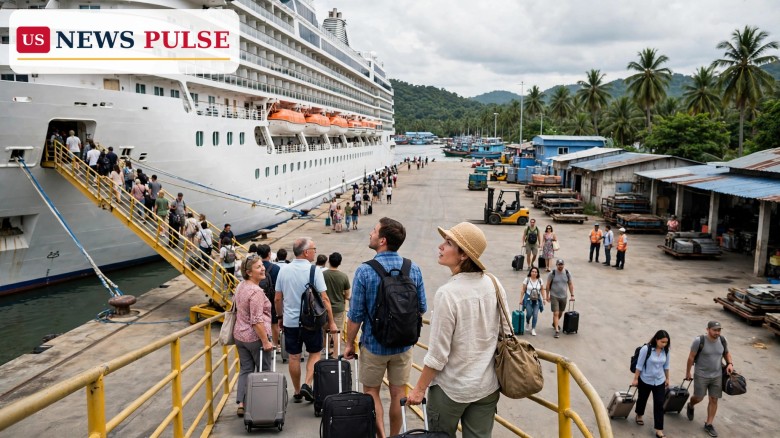
The Villa Vie Odyssey, the ship that promised its residents a home that never stopped travelling, has stopped. On Tuesday, October 27, 2026, Villa Vie Residences suspended operations during a scheduled stop in Sihanoukville, Cambodia, and told the 203 passengers on board to disembark, leaving many retirees and remote workers suddenly without a home thousands of miles from where they started.
For Lynn Montoya, 64, the order was brutally simple and brutally short. She and her husband Paul had about seven hours to pack a life they had carried around the world for two years. They took roughly two weeks of clothing, vitamins and medicines, and left the rest behind in the cabin they had bought as their retirement home.
“It’s our home, so it would kind of be like trying to pack up your whole home in seven hours,” Lynn told USA TODAY. “We’re technically homeless right now.”
Key Points
- Villa Vie Residences suspended operations on October 27, 2026, in Sihanoukville, Cambodia, citing soaring fuel costs linked to the war in Iran.
- 203 passengers and 156 crew members were on board; residents were given about seven hours to leave, according to Cambodian officials and passengers.
- Monthly fuel expense per cabin rose from about $1,800 to an estimated $6,000 to $8,000 in parts of Asia, the company said.
- Many residents had sold homes to buy cabins costing from $119,999 to $439,999, plus monthly fees; refunds and belongings remain uncertain.
- Founder Mike Petterson told CBS News the company plans to file for Chapter 11 bankruptcy, while Villa Vie says it is assessing restructuring over 60 days.
What Happened
The Bahamas-flagged Odyssey had arrived in Sihanoukville from Thailand on October 23, 2026, and had been due to sail on to Vietnam. Instead, a notice from the company’s chief executive appeared on the ship’s internal messaging board at 7:08 a.m. on Tuesday, October 27, telling residents they had to be off by 2 p.m., passenger and cruise blogger Randy Cassingham reported.
Long Dimanche, deputy governor of Preah Sihanouk province, said 203 guests and 156 crew members were on board. Some passengers took flights out of Cambodia at once. Others stayed in Sihanoukville, waiting in hotels while they worked out what came next. The ship itself was due to refuel and leave on October 31, local officials said, although that departure would not carry its residents with it.
Cassingham wrote that residents could not simply walk out of the port. Shuttle buses dropped them in the middle of Sihanoukville, he said, without at first even a list of hotels, let alone help reaching them or paying for them. He later updated his account to say the company had provided passenger assistance and a hotel list, but 27 hours after passengers left the ship.
“The sudden order to disembark has left many retirees and remote workers homeless thousands of miles from their home countries,” Dimanche said in a statement.
The Montoyas are staying in a hotel in Sihanoukville and plan to travel to Phnom Penh and Kuala Lumpur while they await answers. Passengers may return to the ship during certain hours, but the couple had not yet gone back at the time USA TODAY spoke to them.
Background and Context
The Odyssey billed itself as an intimate residential cruise ship offering a new way to live, and as the world’s longest cruise, with stops on five continents. It set sail from Belfast, Northern Ireland, on October 3, 2024, after a delay of about four months, for a first around-the-world voyage meant to last three and a half years, through November 9, 2027, with a further journey planned through 2030. The intention was to circumnavigate the globe every three and a half years.
That start was itself difficult. Villa Vie bought the ship in 2023 after it had sailed as MS Braemar for Fred Olsen Cruise Lines. Founder Mike Petterson told USA TODAY in August 2024 that the company had “been quite humbled by the scale of what it takes to reactivate a 30-year-old vessel from a four-year layup”, adding that after the lapse of all class certifications the ship was treated as new, with all machinery and equipment required to work as if new.
The ship can house 650 people, but it never reached that figure. Cassingham said it peaked at around 350 residents, while Paul Montoya said it typically carried around 300 residents, a number that had been falling in recent months as more people lost confidence that the voyage would continue.
Permanent residency started at between $119,999 and $439,999 depending on room type, according to the most recent figures on Villa Vie’s website, with five-year residency and rental options also available. The Montoyas initially paid $179,000 for their cabin, plus about $6,000 a month in maintenance fees. One passenger told The Times in January 2026 that life on board removed the usual bills: “We don’t have a car to pay for. We don’t have a mortgage, property taxes, maintenance or insurance. We don’t have to shop for groceries. No bills for utilities or internet.”
For some, that bargain meant selling everything. The Montoyas sold their home in Wyoming to spend their retirement on the ship. Starr Davis, 58, downsized from an 1,800-square-foot apartment in Florida to a cabin of roughly 120 square feet before the trip began, and has since visited more than 60 countries.
Villa Vie Odyssey: How Fuel Costs Sank the Never-Ending Cruise
Villa Vie blamed “extraordinary increases” in fuel costs following the war in Iran, which tightened maritime traffic and petroleum supplies through the Strait of Hormuz. In its October 27 statement, the company said: “Fuel costs have risen sharply in the regions where the company has been operating. On an equivalent per-cabin basis, monthly fuel expense that historically averaged approximately $1,800 has recently reached an estimated $6,000 to $8,000 in parts of Asia. The company cannot simply pass increases of that scale on to residents, and the resulting shortfall has placed its current operating model under unsustainable financial pressure.”
The company said it had tried to conserve fuel by slowing its itinerary and spending more time in port, but that was not enough. Passengers noticed the strain long before the halt. Davis said that after a late-July meeting at which ship management said it needed to raise around $1.5 million to keep operating, residents made donations, and she noticed the ship lingering longer in ports and appearing to bunker fuel less often. Onboard supplies also seemed to thin out.
“We’d kind of joke that we were getting slim pickings as far as the buffet went,” Davis said. “So you could definitely see that everything was reduced.”
More “cash calls” followed. As the ship approached Ha Long Bay in Vietnam, Davis recalled, residents were told: “They’re like, oops, we can’t afford to dock here. We need to raise $159,000 in order to dock.” People gave the money, she said, through creative fundraising.
In spring 2026, the company asked residents to commit to one-year loans with interest paid back monthly, according to Paul Montoya, 68. He estimated that he and Lynn loaned Villa Vie $100,000, but said they had not yet received any repayment. Around the same time, Villa Vie announced plans to expand its fleet with a second ship, noting that more than 85 percent of the Odyssey’s available residences had been sold.
“I mean, all of us drank the Kool-Aid enough to want to keep it going,” Davis said. “There was hope for an investor to come on board and take over and save us. But literally, it was just, do you want to shut the lights out now, or do you want to make a donation to keep going?”
Reactions and Quotes
American Randy Cassingham and his wife Kit had been on the ship since it left Belfast in October 2024, spending around $1 million on the all-inclusive trip they had hoped would last at least 15 years. “It was great, for a while,” he told AFP by telephone from his Sihanoukville hotel. “My wife and I really enjoy travelling. But we really hate airports and airlines. This was a way that you could unpack once, you can sleep in your own bed every night and wake up in a new place every few days.”
Despite being left in Cambodia, Cassingham said he had no regrets and would go back on board if the cruise restarted. “Money aside, it was a fantastic adventure,” he said.
Cassingham also accused the company of doing “absolutely nothing to help” stranded passengers in the first hours, and wrote that a few fellow passengers were “shell-shocked because they spent the majority of their nest-eggs to be here, and don’t know how or where they’ll live”.
Villa Vie, for its part, said it recognised a difficult and disruptive period for residents, crew and employees. “We are working with residents to coordinate disembarkation and temporary living arrangements, and are supporting residents, crew, and employees as we evaluate restructuring and recapitalization alternatives over the next 60 days,” its website update said.
Davis had already left the ship before it stopped sailing, planning her own land tour around Southeast Asia, a return to the United States to see family, and a reunion with the vessel in Phuket. “And it blew up in my face,” she said. She said the halt was not a total shock, given the warnings through the year, but she still does not know when, or if, she will recover the rest of her belongings from the ship. She brought two suitcases with her most important items when she left.
“One of the big lessons I’ve learned is that things aren’t as important as you think they are,” Davis said. “That is pretty phenomenal, and what an amazing adventure. So you know, I hate that this is the way it ended, but if this is the end, I really and truly can’t complain.”
Why It Matters
The Odyssey was not a conventional cruise that went wrong for a week. It was a test of a new business model: selling homes, not holidays, on a ship that kept moving. Its collapse therefore matters beyond one company’s balance sheet, because it exposes how fragile that model is when a single input cost moves violently. Fuel is not a minor line item for a ship that must keep sailing to justify its premise; when the per-cabin monthly fuel bill more than triples, there is no easy way to pass the cost on without breaking the promise that drew residents in the first place.
It also matters because of who bore the risk. Residents were not short-term holidaymakers who could be rebooked onto another sailing. Many had sold houses, downsized their lives and committed six-figure sums plus monthly fees on the understanding that the ship would be their home for years. When that home stopped, they were left in a foreign port with suitcases, hotel bills and no clear legal route to a refund yet. The planned Chapter 11 filing, if it proceeds, will test how those residents rank against other creditors, and whether loans and donations made to keep the ship afloat are treated differently from cabin purchases.
More broadly, the episode shows how a distant war can reach into a retirement plan. Fuel prices in Asia, shipping constraints around the Strait of Hormuz and the wider Iran conflict were, for most residents, background news. For Villa Vie, they became the difference between sailing and stopping. Any future residential cruise venture will have to answer a question this collapse poses plainly: what happens to people’s homes when the economics of moving them stop working?
What Happens Next
Over the next 60 days, Villa Vie says it will evaluate restructuring and recapitalization alternatives. That window, and the Chapter 11 process Petterson described to CBS News, will determine whether the Odyssey can sail again, whether another operator or investor steps in, or whether the voyage ends for good.
In the short term, the practical questions are more urgent: temporary housing, flights home, access to belongings still on board, and refunds for cabin purchases, monthly fees, loans and donations. Neither the Montoyas nor Davis had learned whether passengers will receive refunds when USA TODAY reported their stories. Residents who left for hotels in Sihanoukville, Phnom Penh and beyond will be watching for a concrete assistance plan, not just a statement of support.
The ship’s own next move is also unclear. Cambodian officials said it was due to refuel and leave Sihanoukville on October 31, but that is a movement of the vessel, not a resumption of its residential voyage. Crew members, 156 of whom were on board, face their own uncertainty about pay and future employment.
For the wider residential cruise market, the next test will be disclosure. Future buyers are likely to ask harder questions about fuel hedging, cash reserves, contingency ports and what happens if a ship must stop mid-voyage. The Odyssey’s residents learned those answers only when they needed them.
Frequently Asked Questions
Why did Villa Vie Odyssey stop sailing? Villa Vie Residences said soaring fuel costs, linked to the war in Iran, made its operating model unsustainable. Monthly fuel expense per cabin rose from about $1,800 to an estimated $6,000 to $8,000 in parts of Asia.
How many people were on board? Cambodian officials said 203 passengers and 156 crew members were on board when operations were suspended in Sihanoukville on October 27, 2026.
How much notice did residents get? Passengers reported a notice at 7:08 a.m. requiring them to leave by 2 p.m. the same day, giving them less than seven hours to pack.
Will residents get refunds? That remains unclear. Villa Vie says it is assessing restructuring over 60 days, and founder Mike Petterson told CBS News the company plans to file for Chapter 11 bankruptcy. Residents interviewed so far said they had not learned whether refunds would be paid.
Can the cruise restart? Villa Vie has not ruled it out, saying it is evaluating restructuring and recapitalization alternatives. No restart date has been announced, and no outcome is assured.
Related coverage on US News Pulse: Amazon Q3 earnings beat forecasts as AWS surges 39% to $46 billion, Nasdaq falls 1.4% as Alphabet rout drags Wall Street lower, and Iran attack options briefed to Trump by top admiral.
© 2026 US News Pulse. All rights reserved.
 Print
 Save