
FCC Bans Chinese Labs From Testing US Electronics in Sweeping Security Move
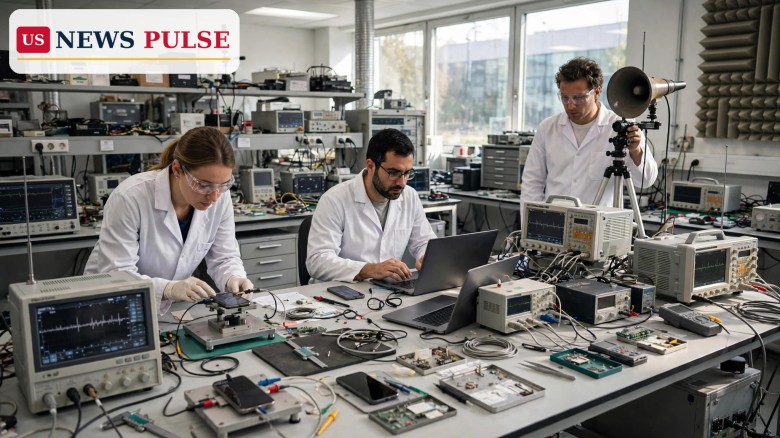
The Federal Communications Commission voted on Thursday, October 29, 2026, to bar all Chinese laboratories from testing electronic devices for use in the United States, in one of the most far-reaching technology-security steps the agency has taken against Beijing. The FCC Chinese labs ban covers smartphones, cameras, computers and other electronics, and it expands an earlier, narrower restriction that applied only to laboratories owned or controlled by the Chinese government.
Under the decision, the FCC will prohibit test laboratories and certification bodies in countries, including China, that deny reciprocal treatment to United States-based test laboratories. The prohibitions are slated to take effect in December 2028, giving manufacturers, laboratories and certification bodies a transition period of a little more than two years to move their testing work elsewhere. The agency also streamlined its approval process for devices tested in US laboratories or in laboratories in countries not considered to pose national security risks, a move designed to make the shift away from China faster and less bureaucratic.
Key Points
- The FCC voted on October 29, 2026, to bar all Chinese labs from testing electronic devices, including smartphones, cameras and computers, for use in the United States.
- The ban also covers test labs and certification bodies in countries that deny reciprocal treatment to US-based test labs, and it takes effect in December 2028.
- FCC Chair Brendan Carr said 82% of electronics were tested in China in 2025, while only about 4% were tested in laboratories inside the United States.
- The decision expands a 2025 ban on testing by labs owned or controlled by the Chinese government, under which several dozen labs were barred.
- The FCC separately streamlined approvals for devices tested in US labs or labs in countries not posing national security risks, and China has not yet responded publicly.
What Happened
The vote, reported by Reuters from Washington, is the latest move by Washington to crack down on China over technology issues and equipment. It does not ban the sale of Chinese-made devices as such. Instead, it targets a less visible but critical gateway: the laboratories that test devices before they can legally be sold in the United States, and the certification bodies that review those test results.
Almost every electronic product sold in the US must go through some form of FCC authorisation before it reaches the market. Devices that generate or use radio-frequency energy — from phones and routers to laptops, cameras, drones and wireless earphones — must be assessed for electromagnetic compatibility and radio emissions, to make sure they work properly in their intended environment without interfering with other equipment. Manufacturers submit test reports from an accredited laboratory, and, for products that require certification, a Telecommunications Certification Body reviews the package and issues a grant of equipment authorisation. Without that grant, a product cannot legally be marketed in the US.
That process is why the location of the testing matters so much to the FCC. A laboratory does not simply run a pass-or-fail check on a finished gadget. It receives detailed technical information about the product, including internal and external photographs, schematics, block diagrams, parts lists and descriptions of how the device operates — often months before the device enters the market. Whoever runs the test therefore sees, in detail, what a company is about to launch.
The new rule changes who may perform that work. From December 2028, Chinese laboratories will no longer be recognised for testing devices destined for the US market, and certification bodies in countries that refuse reciprocal treatment to American laboratories will also be barred. The FCC has paired that restriction with a faster approval track for devices tested in the United States or in countries it does not regard as national security risks, signalling that it wants the industry to move, not merely to stop using Chinese labs.
Background: How Testing Became a Security Question
The October 29 vote did not come out of nowhere. In 2025, the FCC banned testing of US electronics by laboratories owned or controlled by the Chinese government, and several dozen laboratories were barred under that earlier action. The new decision goes much further: it covers all Chinese laboratories, regardless of ownership, and it frames the issue as one of reciprocity as well as security. China, the FCC said, does not have an agreement with the United States on testing, and it denies reciprocal treatment to US-based laboratories.
The scale of the existing concentration is striking. Chair Brendan Carr said that in 2025, 82% of electronics were tested in China, while about 4% of all electronic devices were tested in laboratories inside the United States. That imbalance is the practical heart of the story. For years, manufacturers have routed testing through China because the capacity was there, the infrastructure was established and the costs were competitive. The result is that a huge share of the world's consumer electronics passed through Chinese laboratories on their way to American shelves.
The FCC's action also sits inside a wider sequence of restrictions on Chinese technology. In December, the agency banned the import of all new models of Chinese drones, and it has also banned imports of new models of Chinese-made consumer routers — the boxes that connect computers, phones and smart devices to the internet. In July, the FCC voted to bar sales of devices in the US that contain key hardware from Chinese companies deemed to be national security risks. The laboratory ban extends that logic from the products themselves to the system that certifies them.
That sequence matters because it shows a shift in how Washington thinks about technology risk. Earlier restrictions tended to focus on finished products or on named companies. The testing ban focuses on the supply chain of trust itself: the laboratories, certification bodies and paperwork that stand between a factory and an American consumer. If that gateway is compromised, the FCC's argument runs, then restrictions on individual products matter less, because insecure or misrepresented gear could still slip through.
FCC Chinese Labs Ban: Why the Agency Says It Had to Act
Chair Carr put the FCC's case in blunt terms. "These labs are a critical gateway into American communications infrastructure — and their privileged role gives them access to sensitive and confidential information about electronic products often months before the devices enter the market," he said. He added that such access could "allow insecure gear into the US market, disrupt communications networks, or even steal intellectual property."
Each of those three warnings points to a different risk. Insecure gear entering the market would mean devices that do not meet American emissions or safety standards, or that carry hidden vulnerabilities, reaching consumers and businesses. Disrupted communications networks would follow if poorly tested equipment interfered with other devices or with network infrastructure. And the theft of intellectual property would exploit the months-long head start that a testing laboratory enjoys: it learns about a rival's unreleased product, its design choices and its technical trade-offs, long before the public does.
The FCC has not, in the reporting of the vote, publicly accused any specific Chinese laboratory of stealing intellectual property or of approving insecure gear. The argument is structural rather than accusatory: a system in which 82% of testing flows through one country, without reciprocal access for American laboratories, concentrates both knowledge and leverage in a single place. The ban is presented as a way to break that concentration before it is tested by a crisis, rather than after one.
The reciprocity argument is equally important to the FCC's framing. The prohibition applies not only to China but to test labs and certification bodies in any country that denies reciprocal treatment to US-based labs. That framing lets the agency present the rule as a matter of fairness as well as security: American laboratories, it argues, should be able to test devices for other markets on the same terms that foreign laboratories test devices for the American market. Where that reciprocity is refused, the FCC says, recognition will be withdrawn.
Reactions and Quotes
The clearest on-the-record voice in the reporting of the vote is Chair Carr himself, whose statement frames the decision as a security measure and a gateway question. His figures — 82% tested in China in 2025, about 4% tested inside the United States — are likely to become the most quoted numbers in the debate that follows, because they make the scale of the transition concrete.
The Chinese Embassy in Washington did not immediately respond to a request for comment, according to Reuters. That silence leaves the most important counter-argument unvoiced for now: whether Beijing will treat the ban as a legitimate security measure, as a trade barrier dressed up as security, or as a further step in a wider decoupling of the two countries' technology systems. Any formal Chinese response, when it comes, will shape how manufacturers read the December 2028 deadline — as a firm date to plan around, or as the opening move in a negotiation.
No manufacturer or industry-group reaction was included in the Reuters reporting of the vote, and it would be wrong to invent one. But the questions manufacturers will ask are easy to foresee. They will want to know how much testing capacity exists outside China, how long re-routing will take, whether costs will rise, and whether products already in the pipeline will be affected. The FCC's streamlined approval process for devices tested in US labs or in labs in countries not posing national security risks is, in part, an answer to those questions — but only a partial one, because streamlining approvals does not by itself create new laboratory capacity.
Why It Matters
For American consumers, the ban will probably be invisible at first. It does not remove any product from shelves, and it does not take effect until December 2028. Its effects will arrive gradually, through the choices manufacturers make about where to test their next generation of devices, and through any changes in price or launch timing that follow from moving that work.
For manufacturers, the stakes are higher and more immediate. Testing is not an afterthought in product development; it is built into launch schedules, with test reports, certification applications and grants of authorisation sequenced months ahead of release. A company that today tests in China must now plan a transition: find accredited laboratories elsewhere, build relationships with new certification bodies, and re-time its product pipeline so that the December 2028 deadline does not catch a flagship launch mid-certification. Companies with long product cycles — phones, laptops, networking equipment — will feel that pressure first.
For the United States, the ban is also an industrial-policy signal. Only about 4% of devices are tested domestically today. If the FCC wants testing to return to the United States or to trusted partners, it will need more than a ban: it will need laboratories, engineers, accreditation capacity and, most likely, investment. The streamlined approval process is a start, but the real test will be whether testing capacity outside China grows fast enough to absorb the volume that currently flows through Chinese facilities without creating bottlenecks or delays.
For US-China relations, the vote adds another layer to an already tense technology relationship. It follows drone and router import bans and the July hardware restriction, and it arrives alongside wider trade and security disputes. Each step on its own can be defended on security grounds; taken together, they describe a steady separation of the two countries' technology ecosystems, in which even the shared infrastructure of testing and certification is being divided.
What Happens Next
The most immediate question is how the FCC will implement the December 2028 deadline. Manufacturers and laboratories will look for detailed guidance on which labs and certification bodies are affected, how existing test reports will be treated, and what happens to products already in the certification pipeline when the prohibition takes effect. Clarity on those points will determine whether the transition is orderly or chaotic.
The second question is capacity. The industry will watch whether laboratories in the United States and in other trusted countries expand quickly enough to handle the redirected volume, and whether the FCC's streamlined approvals genuinely shorten timelines. If capacity lags, manufacturers may face longer waits, higher costs or delayed launches — and pressure on the FCC to extend the deadline or soften the rule will grow.
The third question is Beijing's response. A formal Chinese reaction, retaliatory restrictions on American laboratories or companies, or a new push for a reciprocal testing agreement could all change the picture. So could a legal challenge from affected laboratories or manufacturers, testing whether the FCC's security and reciprocity arguments hold up in court.
Finally, watch for the FCC's next steps in the same direction. The agency has moved, in sequence, from government-owned labs to all Chinese labs, from drones and routers to the hardware inside devices, and now to the testing system itself. The pattern suggests further action on other gateways into American communications infrastructure is possible — and that companies should treat technology-security compliance as a permanent feature of their planning, not a one-off disruption.
Frequently Asked Questions
What did the FCC vote to ban?
The FCC voted on October 29, 2026, to bar all Chinese laboratories from testing electronic devices, including smartphones, cameras and computers, for use in the United States, and to bar test labs and certification bodies in countries that deny reciprocal treatment to US-based labs.
When does the ban take effect?
The prohibitions are slated to take effect in December 2028, giving manufacturers and laboratories a transition period of a little more than two years.
How much electronics testing currently happens in China?
FCC Chair Brendan Carr said that in 2025, 82% of electronics were tested in China, while about 4% of all electronic devices were tested in laboratories inside the United States.
Is this the first FCC ban on Chinese testing labs?
No. In 2025, the FCC banned testing of US electronics by labs owned or controlled by the Chinese government, and several dozen labs were barred. The October 2026 vote expands that ban to all Chinese labs.
Does the ban remove Chinese devices from US shelves?
Not directly. It targets the testing and certification gateway rather than the sale of finished devices, but it will force manufacturers to move their testing work out of China by December 2028, which could affect launch timing and costs.
Related coverage on US News Pulse: DHS Data Breach Exposes 40,000 Employees Including ICE Agents, Epstein Files: Democrats Demand Special Counsel to Probe Trump Ties, and Anthropic IPO Filing: Claude Maker Seeks Nasdaq Listing in $2 Trillion Test.
© 2026 US News Pulse. All rights reserved.
 Print
 Save