
Phoenix Heat Deaths Surge Past 2025 Total as Arizona's Summer Turns Deadlier
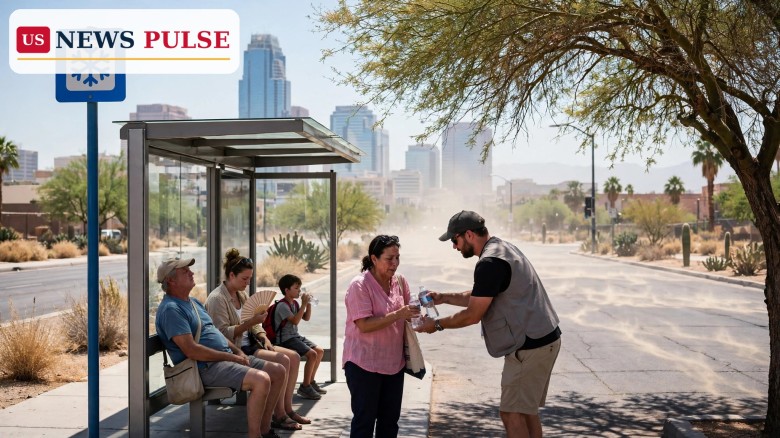
Phoenix heat deaths have already surpassed last year's entire toll, and the final count is still climbing. Maricopa County has confirmed 462 heat-related deaths so far in 2026, more than the 430 recorded in all of 2025, with another 285 deaths still under investigation, according to the county's annual heat report, which is still being finalised. The grim milestone, reported by The Arizona Republic on Thursday, October 29, 2026, reverses a celebrated improvement last year and puts the Phoenix region on track for one of its deadliest heat seasons on record.
Key Points
- Maricopa County has confirmed 462 heat-related deaths in 2026, already above the 430 total for all of 2025, with 285 more deaths under investigation.
- Phoenix recorded its second warmest summer on record, averaging 97 degrees from June through August, with nine more 100-degree days than last year.
- More than two-thirds of this year's heat deaths happened outdoors, and unhoused people are 200 times more likely to die from extreme heat than sheltered people.
- Indoor deaths now make up 30 percent of cases, the highest share in seven years, as energy prices spike and broken air conditioning claims lives.
- Funding for the county's heat relief network has ended after a three-year run, with no replacement funding secured for next summer.
What Happened
The numbers come from Maricopa County's annual heat report, which public health officials are still finalising. Even before that report is complete, the confirmed death toll of 462 has overtaken the whole of 2025. The 285 deaths still under investigation make the final figure likely to rise substantially: at this point last year, the number of suspected deaths was roughly the same, yet confirmed deaths then stood at only about half of the eventual total.
"That is a concern for us, because we have been putting a lot of extra effort and funding into heat relief," said Nick Staab, the chief medical officer for Maricopa County Public Health, who worked on the report. The reversal is especially striking because it follows a year hailed as a policy success. In 2023 and 2024, Maricopa County recorded more than 600 heat deaths each year. A flurry of government initiatives then cut the figure by a third in 2025. This year, the trend has turned back in the other direction, and researchers are now working to pin down exactly why.
Experts already have their suspicions, and they go well beyond the thermometer. They point to broader structural failures: too little affordable housing, rising living costs, and a warming climate that delivers more days of extreme heat every year. The result is a crisis that hits hardest exactly where protection is thinnest.
Background: A Summer for the Record Books
Metro Phoenix has always been warm, but 2026 was one for the books. The summer was the city's second warmest on record, with an average temperature of 97 degrees across June, July and August. Last year's summer average was 96.2 degrees. That small difference translated into nine extra days above 100 degrees this year compared with last, and every extra day of extreme heat is a survival challenge that can tip a person's fate from life to death.
The city's paved landscape makes the danger worse: Phoenix runs as much as 21 degrees hotter than surrounding rural areas. Night brought little relief. Phoenix endured 101 days this year when overnight temperatures never sank below 80 degrees, four more nights than last year, and on July 24 the city tied its record for the warmest low before sunrise, at 97 degrees. When overnight temperatures stay above 80, the body cannot shed the day's heat stress, and the damage keeps building.
Perhaps the biggest sign of a shifting climate was the extraordinary heat wave in March and April. Arizona recorded its warmest March on record, and March 18 became the earliest day of the year ever to post triple-digit temperatures. That month alone recorded at least six heat deaths, compared with only one March fatality in the six years before it. Climate projections say Arizona will only get hotter: Phoenix saw 47 heat warning days this year, a number that could rise to 80 by 2050.
Phoenix Heat Deaths Hit the Most Vulnerable Hardest
Among this year's victims, Black and Indigenous people are overrepresented by three to seven percentage points compared with the region's demographic breakdown. Studies trace the inequity to historical redlining in neighbourhoods of colour, where there are fewer green spaces and more traffic. Older adults, people with cardiovascular conditions and those on metabolic medications are also more susceptible, because the body's cooling processes, such as increased blood circulation and sweating, are often impaired and slow to kick in.
But the starkest divide is between those with a roof and those without one. More than two-thirds of this year's heat deaths in Maricopa County occurred outdoors, and the rising number of outdoor deaths reflects a growing homelessness problem in metro Phoenix. Unhoused individuals are 200 times more likely to perish from extreme heat than sheltered people, said Will Humble, executive director of the Arizona Public Health Association. Since 2020, the number of homeless people in the county has ballooned by 30 percent, and the annual point-in-time count has hovered at around 9,700 in the last two years. More than half of this year's heat deaths involved drug use, which further increases susceptibility to heat.
Crystal Martin has lived on the streets of Phoenix for six years, and every late spring the mortal struggle with the heat begins anew. She does her best to get by, seeking shade or a cooling centre nearest to wherever she happens to be, hopping between them on foot, which exposes her to hazardous doses of heat. Hovering over her is the knowledge that her uncle recently died from heat stroke while working at a cemetery. "It kind of sucks," Martin said. "I try to just go places where I know people will let me in."
Corrine Stewart, a case manager at Phoenix Rescue Mission, drives up to 50 miles a day through Phoenix to connect with people looking to transition out of homelessness, handing out bottles of water and offering rides to cooling centres, a request that comes often on hot days. During the hottest months, the mission runs vans to ferry unsheltered people to and from heat relief centres. Workers like Stewart solve several of the biggest challenges homeless people face in staying alive in the heat: the lack of water and transport between relief sites, and the burden of carrying all their belongings under a heat-strained body. "The longer you're out here, the more you're exposed to the higher risk of death," Stewart said, herself formerly homeless. "You try to see what's going on, what can we do today to make the step in the right direction."
Reactions and Quotes
Public health leaders are blunt that seasonal measures alone will not solve the crisis. "Yes, you can drive down the number of heat-related deaths by passing out water and building cooling stations," Humble said. "But if you really want to make a difference, then you've got to do something about the homelessness issue." That would mean building more affordable housing to overcome the rise in rent prices and mortgage rates driving homelessness in the first place. The state is currently short by 270,000 homes against ballooning demand.
Ladd Keith, director of the University of Arizona's Heat Resilience Initiative, said the toll would have been higher without the county's heat relief network. Using a 3 million dollar federal grant, the county created the network in 2024, establishing more than 200 cooling centres throughout the Valley, several open overnight, while workers and volunteers distributed millions of bottles of water. "Although heat deaths spiked this year, the number would have been much higher without the heat relief network," Keith said.
Rebecca Sunenshine, medical director at Arizona State University's Health Observatory, flagged the indoor death trend as the report's most troubling new feature. "You have to ask yourself, why was their air conditioning not functioning? Why weren't they able to get it fixed?" she said. "We're going to have to do a lot of looking back at the data to try to understand why we're seeing a higher percentage of indoor deaths than usual." She added: "If ever there was a problem that requires a village, it's heat. It takes every component of our government, our nonprofits, our universities working together to prevent heat-related illnesses."
Why It Matters
The most notable feature of this year's heat report is the large fraction of deaths that occurred indoors. Making up 30 percent of all cases as of late October, indoor deaths climbed to their highest share in the last seven years. Researchers point to the rising cost of living as a driver. Inflation soared to 3.74 percent in the past year, with energy prices spiking as much as 20.45 percent, driven by grid upgrades and increased demand for energy from data centres. The war in Iran has also thrown off global energy markets, and since the conflict began in late February, household expenditures have leapt nearly 2,000 dollars from the war's hit on everyday costs.
As people scramble to cut spending, some penny-pinching strategies may involve turning up the thermostat. Heat experts suspect that may have added to the bump in indoor deaths. Two-thirds of indoor fatalities originated from a broken air conditioning unit, and nearly a fifth happened where cooling was turned off. That pattern turns a broken AC unit from a maintenance problem into a life-or-death emergency, especially for older residents living alone.
The stakes extend far beyond Arizona. Extreme heat is the number one weather-related killer in the entire country, taking more victims than all other extreme weather disasters combined. Yet the resources dedicated to heat death prevention fall far short of the spending on droughts, hurricanes, floods and wildfires. Hundreds of thousands of personnel specialise in those disasters in Arizona, Keith noted, yet only a few dozen workers deal in extreme heat. Unlike one-off storms, extreme heat is diffuse, regular and chronic, requiring safeguards baked into housing, labour safety, social services, public facilities and urban planning. "Because heat affects so many aspects of society, and so many different populations are vulnerable, we need to do a better job of addressing everything," Keith said.
What Happens Next
It will take a few more months before experts finalise the 2026 tally, and the final number is expected to be significantly higher than 462 once the 285 deaths under investigation are resolved. Researchers will also dig into the data to identify the driving forces behind the rise, including why indoor deaths surged and which neighbourhoods and populations bore the heaviest burden.
The more urgent question is funding. Money for Maricopa County's heat relief network has ended after its three-year run, and so far there is no replacement funding for the future. Arizona appointed Dr. Eugene Livar as the state's first chief heat officer in 2024, the first such position in the country, though reviews of his performance have been mixed. The county has also revamped emergency cooling protocols for first responders, offered emergency home AC repair and provided energy bill assistance. Whether those measures survive into next summer, and whether the state tackles the 270,000-home housing shortfall behind the outdoor death toll, will decide whether 2027 repeats this year's tragedy.
For residents, the immediate defences remain the cooling centre network, libraries and volunteer-run spaces, checking on older neighbours, and never leaving children or pets in parked cars. If an air conditioning unit fails during extreme heat, it should be treated as an emergency, not an inconvenience.
Frequently Asked Questions
How many heat deaths has Phoenix recorded in 2026?
Maricopa County has confirmed 462 heat-related deaths so far in 2026, already more than the 430 total for all of 2025, with another 285 deaths still under investigation. The final tally, due in a few months, is expected to be higher.
Why are Phoenix heat deaths rising this year?
A combination of record heat and structural pressures. Phoenix had its second warmest summer on record at 97 degrees on average, with nine extra 100-degree days, while homelessness has grown 30 percent since 2020, energy prices have spiked more than 20 percent, and affordable housing remains short by 270,000 units statewide.
Who is most at risk from extreme heat?
Unhoused people face the greatest risk, at 200 times the likelihood of dying from heat compared with sheltered people. Older adults, people with cardiovascular conditions, those on metabolic medications, and Black and Indigenous residents are also overrepresented among victims.
Why are so many heat deaths happening indoors?
Indoor deaths now make up 30 percent of cases, the highest share in seven years. Two-thirds of indoor fatalities involved a broken air conditioning unit and nearly a fifth occurred where cooling was turned off, a pattern experts link to rising energy costs and households cutting spending.
Where can people in Phoenix get help during extreme heat?
Maricopa County's heat relief network operates more than 200 cooling centres across the Valley, alongside libraries, churches and volunteer programmes offering water, shade and transport. Emergency home AC repair and energy bill assistance are also available to eligible residents.
Related coverage: Typhoon In-Fa Warning: Category 4 Storm Nears Northern Mariana Islands, Western US Winter Storm Brings Up to 14 Inches of Snow Before Halloween, and Los Angeles Halloween Rain: First Wet Oct. 31 Since 2014 Hits SoCal Trick-or-Treat.
© 2026 US News Pulse. All rights reserved.
 Print
 Save