
Vance Iran Letter: Trump Confirms Secret Peace Overture to Tehran Hardliner
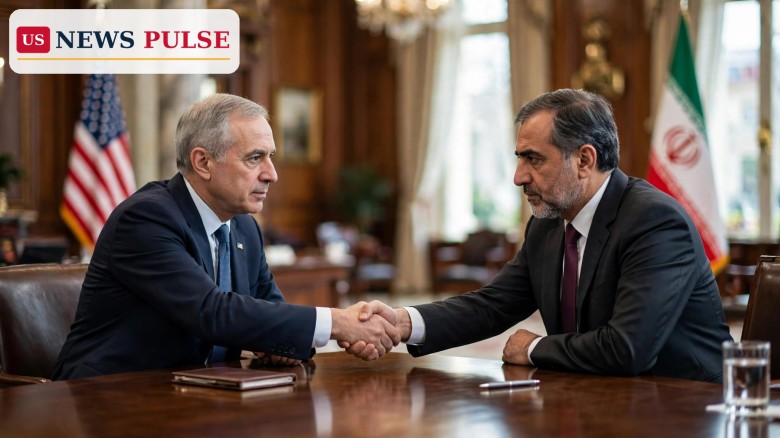
President Donald Trump has confirmed that Vice President JD Vance wrote a letter to one of Iran's most powerful hardliners, Mohsen Rezaei, in a new American peace overture that arrived just days before the November 3 midterm elections. The Vance Iran letter, first reported by The Wall Street Journal, proposes a new framework for negotiations with Tehran at the very moment Washington is warning Gulf allies to prepare for a fresh round of strikes on Iran after the voting is over.
Trump confirmed the outreach on Wednesday, October 28, 2026, telling reporters that Vance had sought his blessing before writing. The disclosure opens a striking two-track picture of American policy toward Iran: a private diplomatic approach to a man who has publicly threatened to widen Iranian attacks across the region, running alongside military preparations for what Trump himself has called another "little Epic Fury."
Key Points
- Trump confirmed on Wednesday that Vice President JD Vance wrote to Mohsen Rezaei, secretary of Iran's Supreme National Security Council, proposing a new framework for negotiations.
- Rezaei is a former Islamic Revolutionary Guard Corps commander whose influence is rising in Tehran; he has threatened this month to expand Iranian attacks on targets in neighbouring Arab countries, including data centres and internet cables.
- The precise timing of Vance's outreach and the full content of the letter are not yet known, and Tehran has not publicly responded to it.
- The letter follows the collapse of a preliminary peace deal in July and months of failed diplomacy, including 21 hours of talks in Islamabad in April that ended without an agreement.
- At the same time, the US has warned Gulf states to brace for a brief, intense spate of attacks on Iran after the November 3 midterms, and Trump has said he may renew bombing once the elections are over.
What Happened
The Wall Street Journal reported that Vance had sent a letter to Rezaei, and Trump confirmed the account when reporters asked him about it on Wednesday. "He asked me what I thought and I said if you want to do that that's OK," Trump said, according to the New York Post's account of his remarks.
Trump did not describe what the letter said beyond what the Journal reported: that it mentioned a new framework for negotiations. Neither the White House nor Vance's office has released the letter itself, and it is not clear when exactly it was sent or whether Rezaei has replied. The Journal's reporting is the sole public source for the letter's existence so far, and this article treats its contents beyond the reported "new framework" as unconfirmed.
The choice of recipient is itself the story. Rezaei is not one of the Iranian officials who led earlier rounds of talks. Those were handled by parliament speaker Mohammad Bagher Ghalibaf and foreign minister Abbas Araghchi, who met Vance and special envoys Steve Witkoff and Jared Kushner for 21 hours during April talks in Islamabad. Rezaei, by contrast, is a former commander of the Islamic Revolutionary Guard Corps and a member of the Expediency Discernment Council, and the Journal described his influence as rising in Tehran. He met on Sunday with a delegation from Pakistan, Saudi Arabia and Turkey, a sign of the regional role he now plays.
Vance was campaigning in Kinston, North Carolina, on Wednesday, rallying for Republican candidates ahead of the midterms, when the story broke. Trump, meanwhile, was in Chillicothe, Ohio, for his own campaign rally on Wednesday evening. The letter's emergence in the final week of the campaign means it will be read in Washington both as diplomacy and as politics, six days before voters decide control of Congress.
Background and Context
The war between the United States, Israel and Iran began on February 28, 2026, when the US and Israel launched joint strikes on Iran. The conflict killed Iran's Supreme Leader and many other officials, drew Iranian missile and drone strikes against Israel, US bases and US-allied countries, and saw Iran close the Strait of Hormuz, the waterway through which about a fifth of the world's energy supplies pass.
A two-week ceasefire agreed on April 8, 2026, and mediated by Pakistan, briefly paused the fighting. Days later, Vance, Witkoff and Kushner travelled to Islamabad for the first face-to-face talks between the US and Iran since the 1979 Islamic Revolution. The Iranian delegation, led by Ghalibaf and Araghchi, spent 21 hours in continuous discussions before walking away, with Iranian state media citing what it called unreasonable American demands. The talks ended without a deal, and the fragile ceasefire did not hold into a lasting peace.
A preliminary peace deal then collapsed in July, when Tehran resumed attacks on commercial shipping in the Strait of Hormuz, according to the New York Post's summary of the Journal's reporting. Witkoff and Kushner later engaged Iranian leaders in Qatar-mediated negotiations on the sidelines of last month's United Nations General Assembly in New York, but no major progress was reported from those contacts either.
Since then the military track has gathered pace. The Trump administration has privately warned several Gulf Arab governments to prepare for another intensive American military campaign against Iran following the November 3 elections, the Journal reported on Wednesday, citing people briefed on the discussions. American forces are reinforcing Israel's missile defences, restocking weapons and shifting troops away from exposed bases. The US military is also shipping an additional Patriot system to Israel, according to flight-tracking data and officials cited by the Journal. A third aircraft carrier strike group and 10,000 additional sailors and Marines have been sent toward the Persian Gulf, and Defence Secretary Pete Hegseth made an unannounced stop in Israel to meet Prime Minister Benjamin Netanyahu.
Trump has not officially approved an operation, the Journal reported, but is leaning toward attacks on Iranian infrastructure and nuclear facilities. The White House has told the Daily Caller News Foundation that no attacks will happen before the midterm elections, while pointedly not saying they will not happen after them.
Vance Iran Letter: Why This Channel, Why Now
Writing to Rezaei rather than to Araghchi or Ghalibaf suggests Washington is testing a different door in Tehran. Rezaei sits at the intersection of Iran's security establishment and its political leadership: a former Revolutionary Guard commander who now runs the Supreme National Security Council, the body that coordinates defence and foreign policy. If anyone in Tehran can speak for the hardline security camp that has resisted concessions, it is Rezaei.
That is also what makes the overture so uncertain. The Journal reported that Rezaei has been hostile to negotiations with the US and threatened this month to expand Iranian attacks on targets in neighbouring Arab countries, including data centres and internet cables. A letter proposing a new framework lands, in other words, with a man who has publicly argued for escalation rather than accommodation. Whether he reads it as a genuine opening or as a pressure tactic designed to accompany the threat of renewed bombing is unknown, and Tehran has said nothing about it publicly.
The timing sharpens the question. With six days to the midterms, Trump is simultaneously campaigning on strength abroad and warning of war after the vote. At a rally in Fort Myers, Florida, on Friday, he said: "We may do another little Epic Fury, or they'll agree. If they're smart, they'll just say, let's get down to business. But, you know, I doubt they'll do that because perhaps they're not smart." Operation Epic Fury is the US military's name for its war against Iran. A private letter offering a framework for talks and a public threat of bombing are two sides of the same strategy: negotiate, but from a position backed by force.
There is also a regional audience. Rezaei's Sunday meeting with a delegation from Pakistan, Saudi Arabia and Turkey shows that Tehran's neighbours are already involved in the diplomacy around the conflict. Saudi Arabia, which has been drawn into the wider war through Houthi attacks on Riyadh airport and energy facilities, has its own interest in any path that avoids a new bombing campaign. A letter to Rezaei may be aimed as much at those capitals, and at Gulf governments now being warned to prepare for strikes, as at Tehran itself.
Reactions and Quotes
Trump's confirmation was brief and characteristically casual. Asked about Vance's letter, he said: "He asked me what I thought and I said if you want to do that that's OK." The remark confirms the vice president acted with the president's knowledge, but it offers no detail about what the administration hopes the letter will achieve.
Trump's earlier public language about Iran has been far blunter. At the Fort Myers rally he said: "We may do another little Epic Fury, or they'll agree. If they're smart, they'll just say, let's get down to business. But, you know, I doubt they'll do that because perhaps they're not smart." The White House has since said no attacks will happen before the midterm elections, without ruling them out afterwards.
Analysts quoted in recent reporting are sceptical that diplomacy alone can break the deadlock. Trita Parsi, executive vice president of the Quincy Institute for Responsible Statecraft, told the Daily Caller News Foundation: "The forces pulling matters toward another round of war are much stronger than the forces pushing back." That assessment captures the mood in Washington: the letter is real, but so are the aircraft carriers, the Patriot batteries and the warnings to Gulf capitals.
Neither Tehran nor Rezaei has publicly responded to the letter as of Wednesday evening. Iran's foreign ministry has not commented, and no Iranian outlet has confirmed receipt. Until Tehran speaks, the letter's significance remains a matter of interpretation rather than fact.
Why It Matters
The Vance Iran letter matters because it is the first known American diplomatic approach to Iran's security establishment since the war began, and because it arrives at the most dangerous moment of the conflict: the week before an election after which bombing may resume. If Rezaei engages, it could open a channel that bypasses the foreign ministry negotiators who walked away in April. If he ignores it or rejects it, the administration will be able to say it tried diplomacy before returning to force.
It matters for American voters too. The war has already affected gas prices and dominated the closing weeks of the midterm campaign, with Trump arguing that strength abroad is inseparable from strength at home. A letter that becomes public days before the vote will be presented by supporters as evidence of a president pursuing peace, and by critics as a last-minute gesture designed to soften the image of a coming war.
It also matters for the region. Gulf states that have been warned to prepare for strikes are watching for any sign that the bombing can be avoided. A credible negotiation framework, even one whose details remain secret, gives them something to point to when urging restraint on both sides. And for Iran, the letter is a test of whether its hardline camp is willing to talk at all, or whether the only language it will accept is force.
Finally, it matters because of what it reveals about Vance's role. The vice president led the failed Islamabad talks in April and is now, apparently, running his own channel to Tehran's security chief. That makes him the administration's central figure on Iran, for better or worse, and it ties his political fortunes to an outcome nobody can yet predict.
What Happens Next
The immediate question is whether Rezaei replies, and whether any reply becomes public. A response could take days or weeks, and it may arrive through an intermediary such as Pakistan or Qatar rather than directly. Watch for statements from Iran's Supreme National Security Council or its foreign ministry, and for any sign of renewed contacts involving Witkoff and Kushner.
The second question is what happens on November 3. If Republicans perform well in the midterms, Trump may feel freer to act on the military track he has been preparing. If they perform poorly, the political cost of a new war rises, and the letter may gain importance as an alternative. Either way, the period between the election and the seating of the new Congress in early January 2027 has been identified by people familiar with Tehran's thinking as the most difficult stretch of the conflict.
The third question is the Strait of Hormuz. Any negotiation framework will have to address the waterway's reopening, Iran's nuclear programme and the future of Iranian attacks on shipping and on Gulf targets. Those were the issues that sank the April talks and the July peace deal, and they remain unresolved. Until they are addressed, the letter is an opening move, not a breakthrough.
For now, the facts are narrow: a letter was written, the president approved it, and its contents beyond a "new framework" remain secret. Everything else, including whether it prevents another round of war, is still to be decided.
Frequently Asked Questions
Who is Mohsen Rezaei?
Mohsen Rezaei is the secretary of Iran's Supreme National Security Council and a former commander of the Islamic Revolutionary Guard Corps. He is also a member of the Expediency Discernment Council, and his influence in Tehran is described as rising.
What did JD Vance's letter to Iran propose?
According to The Wall Street Journal's reporting, the letter mentioned a new framework for negotiations. The precise timing of the outreach and the full content of the letter have not been made public.
Did Trump approve the letter?
Yes. Trump confirmed on Wednesday that Vance asked his opinion before writing, saying: "He asked me what I thought and I said if you want to do that that's OK."
Has Iran responded to the letter?
As of Wednesday evening, Tehran had not publicly responded, and no Iranian official had confirmed receipt of the letter.
Does this mean the US will not bomb Iran after the midterms?
No. The White House has said only that no attacks will happen before the November 3 elections. Trump has said he may renew bombing afterwards, and the US has warned Gulf states to prepare for a fresh campaign.
Related coverage on US News Pulse: US Iran strike plans: forces ready within 96 hours of Trump order, reports say; Netanyahu treason probe demanded as army chief resisted Iran strike before vote; Saudi Houthi $1 billion offer: Riyadh reportedly seeks truce to stop attacks.
© 2026 US News Pulse. All rights reserved.
 Print
 Save