
White House Press Access Lawsuit Expands as CNN, Politico and MS NOW Fight Pool Bans
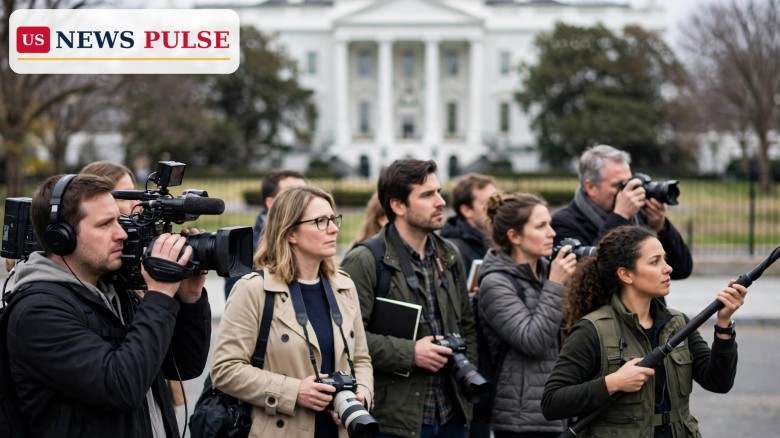
The White House press access lawsuit at the heart of one of the biggest press-freedom fights of Donald Trump's second term escalated sharply on Wednesday, October 28, 2026, as CNN, MS NOW and Politico filed an expanded legal challenge accusing the administration of continuing to punish them for their coverage even after a federal judge ordered their White House access restored. The amended complaint, filed in federal court in Washington, says the White House has kept the three outlets out of the Oval Office and off Air Force One, disrupting the press pool system that has let a rotating group of journalists cover the president at close quarters for decades.
The move comes two weeks after US District Judge Timothy P. Kelly granted a preliminary injunction restoring the outlets' access, finding that Trump's ban likely violated the First Amendment because it discriminated against journalists over their reporting. The administration is appealing that ruling. But the outlets say the victory on paper has not matched reality on the ground: CNN has been barred from travelling aboard Air Force One on all six occasions when it was scheduled to serve as the designated television network pooler since Trump announced the ban on September 18, and Politico has been barred twice from its scheduled out-of-town pool assignments in recent weeks.
Key Points
- CNN, MS NOW and Politico amended their lawsuit on Wednesday, October 28, 2026, accusing the Trump White House of "continued retaliatory and viewpoint-discriminatory deprivation" of press access.
- The outlets ask the court to declare the ban unlawful, condemn the continued exclusions from the Oval Office and Air Force One, and grant permanent injunctive relief.
- CNN has been barred from Air Force One on all six occasions it was scheduled to serve as TV network pooler since the September 18 ban; Politico has been barred twice from out-of-town pool assignments.
- MS NOW has not participated in the secondary television pool since September 18, a spot selected by the White House itself, the revised lawsuit states.
- Judge Timothy P. Kelly's preliminary injunction two weeks ago found the ban likely violated the First Amendment; the administration is appealing, and the White House says "the Fake News has no place demanding a spot in the President's Oval Office."
What Happened
The amended complaint, filed on Wednesday afternoon, is the next step in a legal battle that began when President Trump announced on September 18 that he was "banning" Politico, CNN and MS NOW from the White House, a move legal experts at the time called unconstitutional. The three outlets sued on September 21, alleging violations of the First and Fifth Amendments. Judge Kelly first issued a temporary restraining order on Fifth Amendment due-process grounds, requiring the administration to reinstate the journalists' press badges, and then, two weeks ago, granted a preliminary injunction on First Amendment grounds.
The White House complied with the court orders in one respect: it reinstated the journalists' press credentials late last month, and reporters from the three outlets returned to the White House complex. But the outlets say the administration then drew a new line, treating access to the White House complex as different from access to the tight, restricted spaces where the president is actually covered at close quarters: the Oval Office and Air Force One. When CNN reporters were scheduled to travel as the television pool, they were kept off the plane. When Politico's turn came as print pool representative, it too was barred.
"To be clear," the expanded lawsuit states, the news outlets "do not claim an unrestricted right to enter the Oval Office or travel aboard Air Force One. But once the White House opens those spaces to selected journalists for newsgathering and reporting, the White House may not exclude plaintiffs because it dislikes their coverage."
The filing asks the court to "declare unlawful the President's ban of plaintiffs and the White House's further unconstitutional actions, including its continued exclusions of plaintiffs from specific White House press areas for retaliatory and viewpoint-discriminatory reasons, and enter permanent injunctive relief in favor of CNN, MS NOW, and Politico."
Background and Context
The press pool is a decades-old tradition, not a perk invented for this dispute. A small rotating group of journalists, drawn from the major television networks, wire services, newspapers and other outlets, covers the president in spaces too small for the full press corps: the Oval Office, Air Force One, motorcades and overseas trips. The pooler then shares notes, photographs and video with every other outlet, so the public gets a record of what the president said and did even when only a handful of reporters could physically be present.
CNN's television pool role is one the network "has fulfilled for more than four decades," the revised lawsuit points out, and the five major US television networks operate a well-established pool rotation. The other networks have shown support for CNN amid the dispute, according to CNN's reporting. The secondary television pool spot, in which MS NOW has not participated since September 18, is selected by the White House itself, which makes the exclusion harder to explain as a neutral scheduling decision.
Judge Kelly's reasoning has been the outlets' strongest weapon so far. In granting the preliminary injunction two weeks ago, he found that Trump's own comments explaining the ban showed a "likely causal link between Plaintiffs' protected First Amendment speech and his revocation of their hard passes," and wrote that "President Trump likely banned Plaintiffs from the White House because he believes that their reporting is generally inaccurate and biased against him." He also rejected the Justice Department's claim that national security concerns at least partly motivated the ban, writing that there was "no evidence in the record that President Trump made the decision to revoke Plaintiffs' hard passes on national security grounds from the get-go, nor at any time has he directly stated that national security was the reason for his decision."
The administration has appealed Kelly's ruling, and its public position has hardened rather than softened. When a CNN reporter asked the White House for comment about the amended lawsuit on Wednesday, a White House official said, "the Fake News has no place demanding a spot in the President's Oval Office." Communications director Steven Cheung has previously drawn the same distinction the outlets are now challenging in court, saying the judge "basically ordered them to renew their access back to the White House, but that's different than allowing the pool into the events in the Oval Office or on Air Force One." A White House spokesperson told CNN on an earlier occasion: "Many outlets including Politico are granted access to attend and cover presidential events unilaterally, but traveling with the President of the United States aboard Air Force One is a privilege not a right."
White House Press Access Lawsuit: The Pool Fight Explained
The reason the pool fight matters so much is that the Oval Office and Air Force One are not side rooms in presidential coverage; they are where the coverage happens. The revised lawsuit asserts that the two spaces have been "two of the primary spaces for journalists to interact with, gather news about, and publish reporting on President Trump and other officials." It adds a striking statistic: of the nearly 5,000 questions the president has entertained from reporters in these traditional areas, 97 percent were either in the Oval Office or in connection with his travel aboard Air Force One. The James S. Brady Press Briefing Room, the lawsuit concedes, "remains a critical forum," but it is not where most presidential answers are given.
That is why the outlets argue that restoring a hard pass to the White House complex while barring them from the pool is a distinction without a practical difference. A reporter who can enter the building but cannot travel with the president, or stand in the Oval Office when he takes questions, is cut off from the moments that define a presidency, and the pool reports that reporter would have filed for every other news organisation never get written.
The administration's legal argument appears to lean on an ongoing case involving The Associated Press, which sued last year when Trump blocked AP reporters from restricted pool spaces after the wire service did not immediately adopt his new name for the Gulf of Mexico. In June 2025, an appeals court panel partially lifted the stay obtained by AP and said the wire service was not likely to succeed on the merits "because these restricted presidential spaces" like Air Force One and the Oval Office "are not First Amendment fora opened for private speech and discussion." But that ruling was "non-binding and non-precedential," as the outlets' outside counsel Ted Boutrous pointed out in a letter last week, so it does not bind Judge Kelly or any other court hearing the CNN, MS NOW and Politico case.
Boutrous had warned last week that further legal action would follow if the White House continued to bar reporters from specific areas. He asked for confirmation that the administration would "abandon any policy of excluding CNN from the Oval Office and Air Force One" and stop preventing assigned pool reporters from doing their duties. The administration did not respond, and Wednesday's filing was the answer.
Reactions and Quotes
"These exclusions, intended to punish and chill coverage of the administration that the President doesn't like, make it harder for the press to cover some of the most important events in the world for the benefit of the American people," Boutrous said in a statement on Wednesday. "CNN, MS NOW and Politico will continue to fight to vindicate their rights to report the news." He added that by excluding the outlets from spaces like Air Force One, the administration is continuing "to violate the First Amendment and due process."
"The law is absolutely clear. The harm to our clients, the First Amendment, and the public as a whole is profound," Boutrous said in an earlier statement when Politico was first barred from a pool assignment. "It is critical that the White House is enjoined to keep this unconstitutional ban on the free press out of commission."
The White House's response on Wednesday was blunt. "The Fake News has no place demanding a spot in the President's Oval Office," a White House official told CNN. President Trump himself, when asked by reporters from TIME last week whether he was ignoring the court order, said no, before Cheung supplied the administration's distinction between complex access and pool access.
CNN chairman and editor-in-chief Mark Thompson has previously called Kelly's preliminary injunction ruling "a really big boost" and "a vote of confidence in free speech" and the public's right "to hear their political leader held to account by the press." He has also acknowledged that, eventually, "there may be a trial" in the case.
The dispute also echoes an earlier press-freedom case from this administration's first weeks in the current term: the Associated Press fight over the Gulf of Mexico name, which established the administration's willingness to use pool access as leverage against coverage it dislikes, and which the courts have so far treated as a separate, unresolved question.
Why It Matters
This case matters far beyond three newsrooms because it will help define whether a president can use access to his own movements as a tool to reward friendly coverage and punish critical coverage. The First Amendment does not give any journalist a right to ride on Air Force One. But once the government opens a space to selected journalists for newsgathering, the outlets argue, it cannot pick and choose among them based on whether it likes what they write. If the administration's distinction prevails, a president could in practice restore credentials while keeping disfavoured outlets away from every event that matters, and the public record of the presidency would be written only by reporters the White House prefers.
The timing adds to the stakes. The amended complaint lands six days before the November 3 midterm elections, in the middle of a campaign in which Trump has been criss-crossing battleground states, including Texas and Ohio, and in which pool coverage of his rallies and remarks is the main way most voters see him unfiltered. Every pool exclusion in this final week is a gap in that record.
There is also a practical consequence for every other news organisation. Pool reports are shared across the industry: when CNN is barred from Air Force One, it is not only CNN's audience that loses the reporting, because the pool notes, photographs and video that CNN would have supplied to its rivals never exist. The five major television networks' shared rotation only works if every network takes its turn, which is why the other networks have backed CNN in this dispute.
What Happens Next
Judge Kelly will now consider the amended complaint alongside the administration's appeal of his preliminary injunction. The outlets are seeking a declaration that the ban and the continued exclusions are unlawful, plus permanent injunctive relief that would bar the White House from keeping them out of pool assignments. The administration, for its part, is expected to argue that restricted presidential spaces are not public forums and that the president retains discretion over who travels with him.
Further pool exclusions in the coming days, especially during the final midterm campaign swing, would likely be added to the case and could prompt the outlets to seek emergency relief. A trial remains possible if the case is not resolved on the injunction and appeal track, and the AP's parallel litigation over restricted spaces will continue to shadow the arguments on both sides.
For now, the positions are set and the gap between them is stark. The outlets say a restored credential that does not include the pool is not restored access at all. The White House says travelling with the president is a privilege, not a right, and that "the Fake News" cannot demand a seat. Judge Kelly, who has already ruled once that the ban likely violated the First Amendment, will decide which argument wins.
Frequently Asked Questions
What is the White House press access lawsuit about?
CNN, MS NOW and Politico sued after President Trump announced on September 18, 2026, that he was banning them from the White House. They allege the ban violates the First and Fifth Amendments because it retaliates against their coverage. Their amended complaint of October 28 adds the claim that the White House has continued to exclude them from Oval Office and Air Force One pool assignments even after a judge ordered their access restored.
What did Judge Kelly rule?
US District Judge Timothy P. Kelly first issued a temporary restraining order on Fifth Amendment due-process grounds, then granted a preliminary injunction finding the ban likely violated the First Amendment by discriminating against journalists based on their coverage. The administration is appealing the ruling.
What is the press pool, and why does it matter?
The press pool is a rotating group of journalists who cover the president in spaces too small for the full press corps, such as the Oval Office and Air Force One, and share their reporting with all other outlets. The outlets say 97 percent of the nearly 5,000 questions Trump has answered from reporters in traditional areas came in the Oval Office or aboard Air Force One, so pool exclusion cuts them off from most presidential coverage.
What do the outlets want now?
They want the court to declare the ban and the continued exclusions unlawful and to grant permanent injunctive relief, meaning a lasting court order barring the White House from keeping them out of pool assignments because of their coverage.
What does the White House say?
The White House says travelling with the president aboard Air Force One is "a privilege not a right," and that restoring the outlets' White House complex credentials is different from admitting them to pool events in the Oval Office or on Air Force One. Asked about the amended lawsuit, a White House official said "the Fake News has no place demanding a spot in the President's Oval Office."
Related coverage on US News Pulse: Democrats demand a special counsel to probe Trump ties in the Epstein files, Trump's Texas rallies for Paxton amid a tightening Senate race, and Kristi Noem fake press release row.
© 2026 US News Pulse. All rights reserved.
 Print
 Save