
South Carolina Senate Poll: Graham and Andrews Tied 48-48 Before Midterms
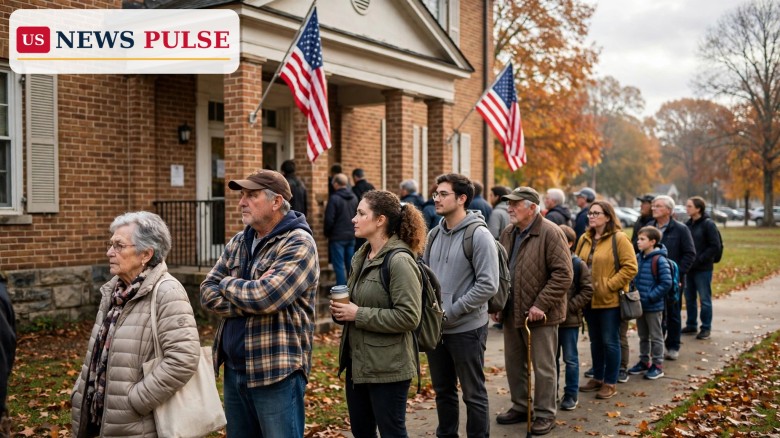
The South Carolina Senate poll that landed on Wednesday, October 28, 2026, has turned one of America's reddest Senate seats into a genuine toss-up. A New York Times/Siena University survey of likely voters puts Republican Senator Darline Graham and Democratic challenger Dr Annie Andrews tied at 48% each, less than a week before voters go to the polls on November 3, 2026, in a race for the seat once held by Graham's late brother, Lindsey Graham.
The South Carolina Senate poll is not a single outlier. Two other surveys released in the same week point in the same direction: a Citadel poll of registered voters gives Graham a four-point lead, 43% to 39%, with 15% undecided, while a South Carolina Policy Council Fall Poll puts Graham ahead by a single point. The Decision Desk HQ polling average has Graham ahead by roughly one point, about 45% to 44%. Taken together, the polls describe a race that is effectively tied in a state Donald Trump carried by nearly 18 points in 2024 — and that has not elected a Democrat to the United States Senate since 1998.
Key Points
- South Carolina Senate poll: New York Times/Siena, released October 28, 2026, ties Darline Graham and Annie Andrews at 48% each among likely voters, with Graham ahead by less than one point before rounding.
- The Citadel poll of registered voters, also released October 28, puts Graham ahead 43% to 39%, with 15% undecided; the South Carolina Policy Council poll puts her ahead by one point.
- Andrews leads among independent voters 57% to 37% and draws 7% of Republican voters in the Times/Siena survey; 51% of voters say Graham lacks the experience to be an effective senator.
- Fundraising is lopsided: Federal Election Commission filings to October 14 show Graham raised $1.2 million against Andrews' $23.8 million, while advertising spending is about $30 million for Andrews and her allies against $21 million for Graham's side.
- Nonpartisan forecasters Cook Political Report and Sabato's Crystal Ball have moved the race from "likely Republican" to "lean Republican"; Decision Desk HQ still gives Graham a 67% chance of winning.
What Happened
The Times/Siena poll, conducted October 19-26 among 707 South Carolina voters, was published on October 28 alongside surveys of Florida and Minnesota, and it immediately became the story of the final week of the midterm campaign. Siena Research Institute executive director Don Levy said: "As the battles wage across the map for control of the U.S. Senate, South Carolina now jumps to centerstage. Republican Darline Graham, recently appointed to the senate, is locked in a toss-up race with Democrat Annie Andrews as Graham leads by less than one point."
The details beneath the headline tie explain why Republicans are worried. Andrews, a 45-year-old paediatrician from the Charleston area, leads among independent voters by 20 points, 57% to 37%, and wins 7% of Republican voters. On experience — the central question of the race — 51% of respondents, including 18% of Republicans, said Graham lacked the experience needed to be an effective senator, while 54%, including 22% of Republicans, said Andrews had the necessary experience.
The racial and educational breakdowns show where Graham's old coalition has thinned. She leads white voters 62% to 35%, well short of the roughly 72% to 27% margin the Times estimated Trump won among the same group in 2024. Among white voters with a four-year college degree, her lead narrows to 50% to 47%. Black voters favour Andrews by 93% to 4%. About a quarter of respondents said they had not heard of Andrews or could not offer an opinion about her — a reminder that, for all the money spent, the challenger is still introducing herself to part of the electorate.
The other two polls temper, but do not contradict, the Times/Siena result. The Citadel's survey of registered voters, released the same day, found Graham ahead 43% to 39% with 15% undecided — a lead inside any normal margin of error for a race this close, and a sign that a large undecided bloc could still decide it. The South Carolina Policy Council Fall Poll, first reported on October 26 by FOX Carolina and published the following day, found Graham ahead by one percentage point. A Constitution Party candidate, a Libertarian nominee and a lesser-known Democrat are also on the ballot, and in a race this tight, even a small third-party vote could matter.
Background and Context
South Carolina's Senate seat came open in tragic circumstances. Lindsey Graham, who had held it for more than two decades and won his 2020 re-election bid by more than 10 points, died on July 11, 2026. His sister Darline Graham, 62, who had previously led the South Carolina Commission for the Blind, was appointed to fill the seat for the remainder of the term and is now seeking a full six-year term. She had never held elected office before her appointment, and she entered the race with President Donald Trump's encouragement.
Andrews is a relatively known quantity in South Carolina politics. She lost a House race to outgoing Representative Nancy Mace in 2022 and originally announced her candidacy in May 2025 to run against Lindsey Graham. When the seat came open, she became the Democrat best placed to contest it. "Whether you voted for Donald Trump, Lindsey Graham, or anyone else, if you care more about your bills than the politics in Washington, this campaign is for you," Andrews said in a statement carried by USA TODAY.
The Republican primary was bitter. Graham, endorsed by Trump, won the August 11 primary over Representative Russell Fry, who later endorsed her, and Representative Ralph Norman, who lost an August 25 runoff to Graham. Norman had been backed in the primary by Mace and by former Governors Mark Sanford and Nikki Haley, who had backed Norman over Trump in 2024. Norman pledged to support Graham this week but said on the right-leaning radio programme "The Nashional Briefing" that his family would not, raising questions about whether Norman's supporters will turn out for Graham. In an op-ed for the South Carolina independent site FITSNews published October 23, Norman's son Warren Norman endorsed Andrews and warned that the Senate seat could belong to Graham for 24 years or more, adding: "If Annie Andrews wins and doesn't stand up to her party the way she has promised, South Carolina voters can hold her accountable and replace her with a strong conservative in six."
South Carolina's history makes the closeness of this race striking. The state has not elected a Democrat to the Senate since Ernest Hollings won his final term in 1998, and no South Carolina Senate race has been decided by fewer than 10 points since 2004. Trump won the state by nearly 18 points in 2024. That a race here is tied five days before Election Day is, by itself, a measure of how far the national mood has shifted in the closing weeks of the 2026 midterm cycle, when Trump's national approval rating has sunk to record lows.
South Carolina Senate Poll: What the Numbers Show
Read together, the three polls tell a consistent story with an important caveat. The Times/Siena survey of likely voters is the most favourable to Andrews; the Citadel and Policy Council surveys of registered voters both give Graham a small lead. Likely-voter screens tend to favour the party whose supporters are more motivated, and registered-voter polls leave more room for undecided voters — 15% in the Citadel survey — to break late. The Decision Desk HQ average, at roughly 45% to 44% for Graham, sits between the two readings, and its 67% win probability for Graham reflects the state's Republican history as much as the current polling.
The money story cuts the other way. According to Federal Election Commission filings as of October 14, Graham had raised $1.2 million while Andrews had raised $23.8 million, and USA TODAY reports Graham's war chest at less than $2 million against $24 million in campaign cash for Andrews. AdImpact data cited in reporting on the race puts advertising spending and reservations at about $30 million for Andrews and her allies against roughly $21 million for Graham and hers, with Republicans increasing their spending to more than $20 million in recent weeks. Graham has, in the words of The Hill's reporting, had difficulty raising money during the campaign, and the gap helps explain why Andrews has been able to introduce herself statewide while Graham has relied more on outside help and on Trump's visits.
The same Times/Siena survey also measured the governor's race, where Republican Attorney General Alan Wilson leads Democratic state Representative Jermaine Johnson 51% to 44%. That seven-point margin, in the same sample that ties the Senate race, suggests the Senate contest is being driven by the candidates themselves — Graham's experience questions and Andrews' bipartisan pitch — rather than by a uniform swing against Republicans in the state.
Andrews has leaned into that bipartisan pitch. An advertisement released October 26 features former Republican Governor David Beasley and former Democratic Governor Jim Hodges, who defeated Beasley in 1998, speaking together in her support. Beasley had earlier, on October 5, criticised Trump on X for using an anti-trans slur to describe Andrews, a slur later repeated by Senator Tim Scott, the state's senior senator. Graham, for her part, refers to Andrews as a "liberal" with a "radical agenda" for South Carolina, while Andrews recasts herself as a moderate mother working to bring down costs, fight corruption and put South Carolina first. In a closing advertisement surrounded by her three children, Andrews said: "For 18 months, I've traveled this state and looked you in the eye. Darline Graham has looked down at a script, written by Washington insiders trying to buy this seat."
Reactions and Quotes
The White House has taken notice. Trump has already campaigned once in South Carolina for Graham and, according to The Hill, is due to return to the state on Thursday, a few days before the midterm elections. USA TODAY likewise reports a second Trump trip planned to back Graham this week. In a state Trump won by 18 points, a second presidential visit in the final week is itself a signal: safe seats do not usually need rescuing.
National Democrats began targeting Lindsey Graham's old seat in the wake of his death, and the new polls have given that effort fresh energy. The Times/Siena surveys released the same day also showed competitive races elsewhere: in Florida, Republican Senator Ashley Moody leads Democratic state Representative Angie Nixon 50% to 44%, while in Minnesota, Democratic Lieutenant Governor Peggy Flanagan leads Republican former television sports broadcaster Michele Tafoya 54% to 40%. The three-state picture is of a Senate map that has widened for Democrats, with South Carolina the most surprising addition to it.
Forecasters have responded cautiously. Cook Political Report and Sabato's Crystal Ball have both shifted South Carolina from "likely Republican" to "lean Republican" — a meaningful move that still leaves Graham as the favourite. Decision Desk HQ's 67% win probability for Graham tells the same story in numbers: she is more likely than not to win, but a race that was once considered safe is now one in which a Democratic victory would no longer shock the political world.
Graham's campaign did not respond to USA TODAY's request for comment on the new polls. Andrews' campaign, by contrast, has treated the tie as validation of a strategy built on kitchen-table issues. Her closing message — bills before politics, costs before Washington arguments — is aimed squarely at the independent voters who, in the Times/Siena poll, are breaking for her by 20 points.
Why It Matters
The South Carolina Senate race matters far beyond South Carolina because control of the Senate may turn on seats like this one. The 2026 midterms will decide whether Trump's Republican Party retains its majorities in Congress for the final two years of his presidency. Democrats need to defend their own seats and flip a small number of Republican ones; a competitive race in South Carolina, alongside tighter-than-expected contests in Florida and elsewhere, widens their path in a way few forecasters imagined at the start of the cycle.
It matters, too, as a test of what voters punish and what they forgive. Graham's experience problem is specific to her: a first-time candidate, appointed rather than elected, who conceded during an August primary debate that she was "not that informed on national security." But the forces dragging on her are national — record-low presidential approval, rising prices, and a midterm electorate that historically punishes the party in power. If a candidate with Graham's profile can be held to a tie in South Carolina, Republican strategists will read the result as a warning for every other red-state race on the ballot.
For South Carolina itself, the race is a referendum on a political dynasty of sorts. Lindsey Graham held the seat for 23 years; his sister's appointment, followed by a primary win, raised questions about whether the seat was being passed within a family rather than earned at the ballot box. Andrews has made that argument explicitly, and Warren Norman's warning that the seat could belong to Graham for 24 years or more gives it a Republican voice. Voters on November 3 will decide whether that argument matters more than party loyalty in a state that has voted Republican for a generation.
What Happens Next
The final days will be dominated by turnout. Early voting began in South Carolina on October 19, and both campaigns will spend the remaining days chasing the undecided voters — 15% in the Citadel poll — and making sure their supporters actually cast ballots. Trump's return visit on Thursday is designed to do for Graham what his earlier visit could not fully accomplish: close the enthusiasm gap and bring home Norman primary voters whose support remains in doubt.
More polls are likely before Election Day, and each will be read for movement rather than for its topline alone: whether Andrews' lead among independents holds, whether Graham's experience numbers improve after a week of presidential campaigning, and whether the undecided bloc breaks toward the challenger, as late undecided voters often do, or toward the incumbent party. The Decision Desk HQ average will tighten or widen accordingly, but with the race inside the margin of error in every recent survey, the honest forecast is that nobody knows.
On November 3, South Carolina will answer a question that would have sounded fanciful a year ago: can a Democrat win a Senate seat in a state that has not sent one to Washington since 1998? If Andrews wins, it will be remembered as the night the 2026 map broke open. If Graham holds on, Republicans will call it proof that even a difficult year and a difficult candidate cannot flip a state this red. Either way, the polls of October 28 have already changed the race — from a formality into a contest.
Frequently Asked Questions
Who is leading in the South Carolina Senate race? The latest New York Times/Siena poll, released October 28, 2026, ties Darline Graham and Annie Andrews at 48% each among likely voters. Two other polls give Graham a small lead: the Citadel, 43% to 39%, and the South Carolina Policy Council, by one point.
When is the South Carolina Senate election? Election Day is November 3, 2026. Early voting in South Carolina began on October 19, 2026.
Why is Darline Graham running for the Senate? She was appointed to fill the seat after her brother, longtime Senator Lindsey Graham, died on July 11, 2026. She is now seeking a full six-year term.
Who is Annie Andrews? Andrews, 45, is a paediatrician from the Charleston area. She lost a House race to Nancy Mace in 2022 and announced her Senate candidacy in May 2025.
Has a Democrat won a South Carolina Senate race recently? No. South Carolina has not elected a Democrat to the US Senate since Ernest Hollings won his final term in 1998, and no Senate race there has been decided by fewer than 10 points since 2004.
Related coverage on US News Pulse: Trump Texas rallies: Paxton, methane plan and a Talarico surge on Oct 27, Trump $5,000 dividend promise back in spotlight seven days before midterms, and Supreme Court SNAP payments block extended as shutdown deal heads to House vote.
© 2026 US News Pulse. All rights reserved.
 Print
 Save