
Fed Meetings 2027: Warsh Cuts Rate Votes to Seven, Six in 2028 Amid Inflation Fight
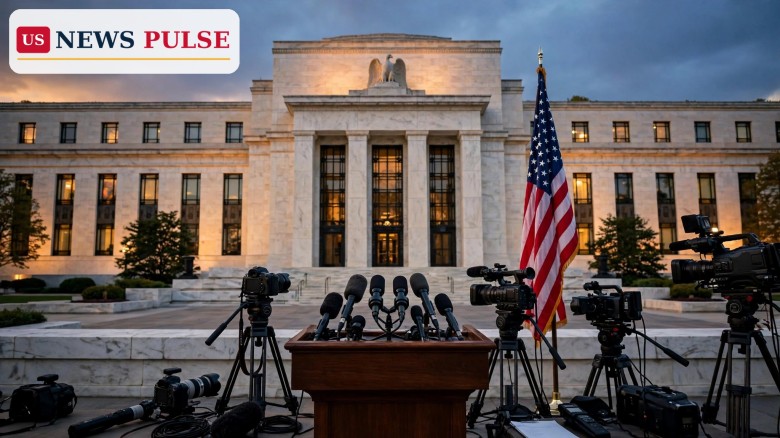
Fed meetings 2027 will look different from the calendar markets have known for decades. Federal Reserve Chair Kevin Warsh announced on Wednesday, October 28, 2026, that the central bank will hold fewer meetings at which it votes on interest rates, cutting the number of rate-setting sessions to seven in 2027 and six in 2028, even as it kept its benchmark rate unchanged at 3.75% to 4.00% in a 10-2 vote. The announcement came at Warsh's news conference after the Federal Open Market Committee's October decision, and it immediately became the most consequential part of a day that traders had expected to be uneventful.
The change does not reduce how often the committee meets. Warsh was explicit that the committee will still gather eight times a year, which he called the right number. What changes is what happens at some of those gatherings. In 2027, one of the eight meetings will be devoted entirely to broad monetary policy strategy, with neither a vote on the federal funds rate nor a policy statement expected. In 2028, two meetings will take that form, leaving six for setting policy. The strategy sessions will also carry no news conference afterwards, and Warsh said he does not expect a policy decision to be made at them, although the Fed could still act through an emergency meeting if enough members believed a change was warranted.
Key Points
- Fed Chair Kevin Warsh announced on October 28, 2026, that the Fed will cut rate-setting meetings to seven in 2027 and six in 2028, with the remaining gatherings devoted to broad strategy.
- The committee still voted 10-2 on Wednesday to hold its benchmark rate at 3.75% to 4.00%, with Governor Lisa Cook and Cleveland Fed President Beth Hammack dissenting in favour of an immediate quarter-point hike.
- Warsh said eight meetings a year remains the right number, but the Fed needs time for strategic deliberation over longer horizons, in his words focusing on "the left side of the decimal point".
- Markets took the day in stride: stocks rose modestly as Warsh spoke, Treasury yields barely moved, and traders still priced roughly a 90% chance of a December rate hike.
- Warsh said the "medicine" of tighter policy is starting to work, but stressed there are "no firm conclusions now about monetary policy" and that quashing inflation "is not about a fixed calendar date".
What Happened
The day began with the decision itself, announced at 2 p.m. Eastern Time. The Federal Open Market Committee held its benchmark interest rate steady in the 3.75% to 4.00% range, the level reached at the September meeting when the committee raised rates by a quarter point for the first time since 2023. The statement described economic activity as expanding at a "strong" pace, an upgrade from the "solid" expansion described in September, and said investment remained robust and job gains had kept pace with the workforce. Its central warning was unchanged in substance: "Inflation remains elevated. The accumulation of more information will help the Committee determine the policy stance appropriate to ensure a timely return of inflation to the Committee's 2 percent goal. The Committee will deliver price stability."
The two dissents were the day's first signal that the committee is not of one mind. Governor Lisa Cook, whom President Donald Trump has been trying to remove from the Board of Governors since August 2025 over mortgage-fraud allegations she denies, dissented in favour of a quarter-point increase, as did Cleveland Fed President Beth Hammack, who had dissented on the same grounds in July. Cook's dissent drew particular attention because dissents by sitting governors are rare, and because her fight with the administration has become a running test of Federal Reserve independence. The Supreme Court has blocked her removal, saying Trump could only fire her "for good reason", and her lawyer, Abbe Lowell, has called the administration's newly created "committee of inquiry" into the allegations "demonstrably biased", saying the earliest Cook could appear before it is after the Fed's December meeting.
Warsh's news conference, which began at 2:30 p.m. Eastern Time, then supplied the day's real news. After defending the decision to wait, he turned to the calendar. "We believe eight meetings per year is the right number for the FOMC," he said, "however in 2027, one meeting will focus solely on broad monetary policy strategy, with neither a vote on the federal funds rate nor a policy statement anticipated. The rest will be routine FOMC policy setting meetings, and I anticipate that in 2028 we'll have two meetings devoted to conversations of strategy and six for setting policy." He added that the change had been the subject of a "robust conversation" inside the committee over several meetings, and that he first proposed reducing the number of policy meetings at the July meeting so that more economic data could accumulate between decisions.
Background and Context
The Fed's eight-meeting calendar has been a fixture of American economic life for so long that any change to it counts as institutional news. For decades, each of the eight gatherings has ended with a decision, a statement, and, four times a year, a news conference and economic projections. The October meeting itself produced no new projections and no dot plot, which is why Warsh's words carried unusual weight: with no fresh forecasts to parse, the press conference became the market's main source of guidance, and Warsh used it to reshape the calendar itself.
The economic backdrop explains both the hold and the dissents. Consumer inflation rose 3.7% over the twelve months through September, edging back toward a three-year high, while producer prices jumped 6.3% over the same period, a sign that cost pressures could keep climbing through the holiday season. Warsh acknowledged the tension directly. He said growth had strengthened, with first-half gross domestic product revised up from an earlier estimate of 1.8% to about 2.4%, and third-quarter growth likely above 3%, led by healthy consumer spending and business investment rising at roughly a double-digit pace, with capital expenditure at historically high levels. Employment, he said, had been "quite positive", with the jobless rate lower than a year ago and the four-week average of unemployment insurance claims at what he described as the most affordable level in generations. At the same time, he said inflation was too high, energy and related prices had moved higher again in recent weeks, credit conditions had tightened for some households and businesses, and the committee's job was to make sure inflation does not broaden out.
The political calendar mattered too. Traders had anticipated a hold partly over fears that a hike less than a week before the November 3 midterm elections could look politicised, and affordability has taken centre stage in the campaign, with Democrats pulling ahead in some early polls as Americans grow frustrated with high prices at petrol pumps and grocery stores. The war with Iran has added to the pressure: it has cost the United States military at least 47.1 billion dollars as of mid-October, according to a new estimate from United States Central Command reported by several news outlets, and higher energy costs are one reason traders price a December hike. On the same day as the Fed decision, Canada's central bank raised its key rate to 2.5%, its first hike since July 2023, a reminder that the inflation problem is not only American.
Fed Meetings 2027: What Changes
Under the new format, the mechanics of Fed-watching will change in practical ways. In 2027, markets will get seven rate decisions instead of eight, and one meeting will pass with no vote, no statement and no press conference. In 2028, there will be six decisions and two strategy sessions. Warsh framed the shift as a matter of quality over frequency. "Getting policy right involves assessing near term developments at timely, regular, and information rich intervals," he said. "But it's equally important we reserve time and space as an intellectually diverse group for strategic deliberations, for thinking anew about big questions, looking out over longer time horizons, focusing, as I say, on the left side of the decimal point." The phrase was his way of saying the committee should spend less time fine-tuning the second decimal place of a rate decision and more time on the larger question of whether its framework is right.
Warsh also tried to close off the obvious worry: that a strategy meeting could become a back door for a surprise decision. He said he does not "prepare for" making a policy decision during these sessions, and that further details on the format of the new meetings will be released, with no policy statements expected at strategy meetings. The Fed could still raise or lower rates through emergency meetings if enough members believed a change was warranted, preserving the escape hatch it has used in past crises. What the change does remove is a scheduled opportunity for the market to reprice: one fewer decision date in 2027, two fewer in 2028, and longer gaps between votes in which data, rather than the calendar, must do the talking.
The market reaction on Wednesday was notably calm, which itself said something about how the announcement landed. United States stock indexes rose after Warsh began speaking, with the Nasdaq composite and the S&P 500 up 0.2%. Treasury yields pulled back after the press conference began, with the two-year yield most sensitive to Fed policy down one basis point to 4.726%, the ten-year yield up one basis point to 5.007% and the thirty-year yield up two basis points at 5.325%. The United States dollar index was off 0.02%, and the Bloomberg Dollar Spot Index trimmed its earlier gains to trade at 102.339, down 0.03%. Bitcoin rose modestly in the minutes following the decision, climbing to about 81,000 dollars. Bond traders, according to Bloomberg, were pricing roughly a 90% probability of a Fed rate hike in December, with about 22 basis points of tightening priced for the December 9 meeting, a level of conviction that barely budged on the calendar news.
Reactions and Quotes
Warsh's most quoted lines were his most human ones. Asked why the committee had not raised rates on Wednesday when two of its members wanted to, he took what one live account called a long victory lap for September's hike, then said: "In September we removed a dose of accommodation," and that inflation expectations had moved in the right direction since then. "I feel good about the signposts," he said. "The period in front of us is information rich. I'm encouraged by the progress we've made in a short period." His summary of the committee's mood was blunter: "The overwhelming consensus is the monetary medicine we've used is that it's worked some." But he paired that with a refusal to pre-commit: "There's no firm conclusions now about monetary policy," he said, and, on the inflation fight, "quashing inflation is not about a fixed calendar date."
Outside the press room, the reaction split between the decision and the calendar. Chris Rupkey, chief economist at FWDBONDS, said it was "very rare" to see a Fed governor dissent, and suggested Cook's vote could have been a protest against the administration's effort to remove her as much as a judgment that inflation demanded a hike. Wendy Edelberg, a senior fellow at the Brookings Institution, had said before the meeting that a hold after September's hike was potentially contradictory: "In terms of the economics of it, I don't totally understand the logic. If there was a reason to raise interest rates at the last meeting, I think there's just as compelling of an economic reason to raise interest rates at this meeting." On the calendar change, early coverage treated it as a genuine institutional reform rather than a technical tweak, with Barron's and MarketWatch both leading on the reduction in rate votes, and analysts noting that fewer scheduled decisions could make each remaining one matter more.
The White House dimension was never far away. Trump has argued for months that the Fed should lower interest rates, not raise them, and another hike could invite fresh blowback from the president. Warsh, who has chaired the Fed through the September tightening, has instead built his tenure around the argument that the September dose needs time to work. His press conference performance, calm on the hold, expansive on the calendar, and insistent that the committee's independence rests on its willingness to wait for data, read as an attempt to defend both the decision and the institution in the same appearance.
Why It Matters
The calendar change matters for borrowers, savers and investors in a way that goes beyond one meeting. Fewer rate votes means fewer scheduled moments when mortgage rates, credit-card rates and business borrowing costs can be repriced by a Fed decision, and longer stretches in which the market must live with the last decision. For households already squeezed by 3.7% consumer inflation, that could mean a slower path to relief if the Fed is wrong about waiting, or a steadier path if it is right that September's hike is still working its way through the economy. Warsh himself flagged the stakes when he noted that higher rates jack up other costs, particularly mortgages and credit-card rates, which act as a drag on consumers.
It also matters for the Fed's own credibility. A central bank that changes its meeting format is making a statement about how it thinks: that eight votes a year can produce haste, that strategy deserves protected time, and that the institution is confident enough to give up two of its most market-moving moments. Critics will ask whether the change is really about better deliberation or about giving a committee divided by dissents fewer chances to disagree in public. Supporters will say that a committee which has just raised rates for the first time in three years, in the middle of a war-driven energy shock and a week before a midterm election, is entitled to build pauses into its own calendar. Either way, the 2027 calendar is now a policy decision in its own right, and it will be judged by whether the seven votes that remain are better ones.
Finally, the announcement reframes the December meeting. With only seven votes scheduled for 2027, the December 2026 decision becomes the last scheduled opportunity of the year to act on the inflation data that arrives in the meantime, including the personal consumption expenditures price index and third-quarter gross domestic product figures due on Thursday, October 29. If those numbers come in hot, the case for a December hike, already priced at roughly 90%, will harden further. If they cool, Warsh's argument that the medicine is working will gain its strongest evidence yet, and the committee will head into its new, leaner calendar with a hold it can defend.
What Happens Next
The next data points arrive fast. Thursday brings the PCE inflation report and the third-quarter GDP estimate, the two releases Warsh's committee will weigh most heavily before December. The Fed will also release further details on the format of the new strategy meetings, including which 2027 gathering becomes the first strategy session and whether any account of those discussions will be published. Five internal Fed task forces are also at work, Warsh said, with some on track to meet a year-end deadline, and their findings could shape what the strategy sessions actually discuss.
Beyond the data, the political calendar will keep intruding. The midterms on November 3 will determine whether the administration's critics or its allies control Congress, and the Fed's December meeting, scheduled for December 9, will be its first decision after the votes are counted. Cook's position will also remain in focus: her lawyer has said the earliest she could appear before the administration's committee of inquiry is after the December meeting, which means the dissenting governor will still be voting when the committee makes its final scheduled decision of the year. And the Chillicothe rally, the House shutdown vote and the World Series will all have played out by then, leaving the Fed, for once, as the week's main event rather than one item among many.
For markets, the practical adjustment is simple: mark seven decision dates in 2027, not eight, and six in 2028, and treat the strategy meetings as information events rather than trading events. For everyone else, the adjustment is slower and more personal: a mortgage quote, a credit-card statement, a small-business loan, each now priced against a central bank that has deliberately chosen to decide less often, in the hope of deciding better.
Frequently Asked Questions
How many Fed rate meetings will there be in 2027?
Seven. The committee will still meet eight times in 2027, but one meeting will be devoted entirely to broad monetary policy strategy, with no vote on the federal funds rate and no policy statement expected.
How many rate decisions will the Fed make in 2028?
Six. Warsh said he anticipates two meetings in 2028 will be devoted to strategy discussions and six to setting policy, out of eight meetings in total.
Did the Fed change interest rates on October 28, 2026?
No. The committee voted 10-2 to hold its benchmark rate at 3.75% to 4.00%. Governor Lisa Cook and Cleveland Fed President Beth Hammack dissented in favour of a quarter-point increase.
Will the strategy meetings have press conferences?
No. According to early reporting on Warsh's announcement, the strategy sessions will not include votes, policy statements or news conferences afterwards, though the Fed could still act through an emergency meeting if warranted.
What is the market expecting for December?
Bond traders were pricing roughly a 90% probability of a rate hike in December after Warsh's press conference, with about 22 basis points of tightening priced for the December 9 meeting. The PCE inflation report and third-quarter GDP figures due October 29 will be key inputs.
Related coverage on US News Pulse: Fed holds rates at 3.75% to 4% in 10-2 vote, Big Tech earnings test: Alphabet, Amazon and Apple face AI spending verdict, and Meta's $95 billion AI raise leads a $198 billion day of AI spending.
© 2026 US News Pulse. All rights reserved.
 Print
 Save