
US Iran War Warning: Washington Tells Gulf to Brace for Short, Intense Campaign
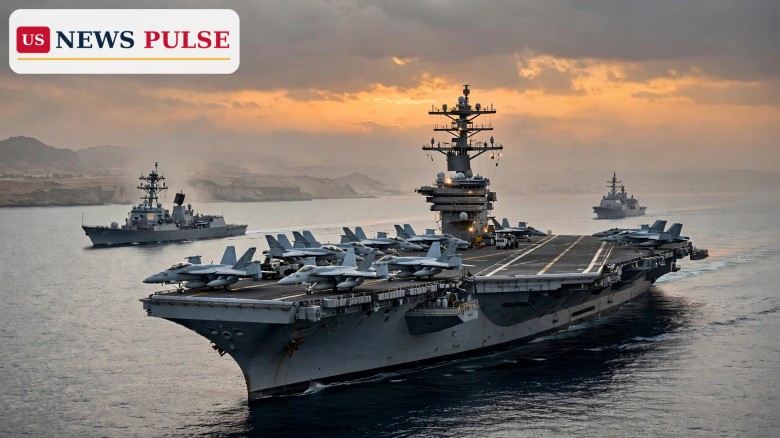
The United States has warned several Gulf Arab countries to prepare for a possible short, intense military campaign against Iran after the November 3 midterm elections, according to a Wall Street Journal report published on Tuesday, October 27, 2026. The US Iran war warning, delivered through diplomatic and military channels, is the strongest public signal yet that Washington and Israel are readying a new round of heavy combat operations against Tehran — even as President Donald Trump has not yet made a final decision to strike.
The warning does not mean war is certain. People familiar with the president's thinking told the Journal that Trump is leaning toward a large post-election attack that could target Iranian infrastructure and nuclear sites, but that he has also kept open the alternative of a deal. What has changed, the report says, is the scale of the military preparations now visible around the region — and the fact that Gulf governments, which would sit in the blast radius of any Iranian retaliation, are now being told to get ready.
Key Points
- The US has told several Gulf Arab countries to prepare for a short, intense campaign against Iran after the November 3 midterms, the Wall Street Journal reported.
- Trump has not made a final decision, but people familiar with his thinking say he is leaning toward a large post-election attack on Iranian infrastructure and nuclear sites.
- The US is sending an additional Patriot missile-defence system from Texas to Israel, has moved troops off vulnerable Middle East bases, and is restocking munitions.
- An extra aircraft carrier strike group and a Marine expeditionary unit are poised to join roughly 20 other US warships in the Middle East next month.
- The White House declined to comment on what it called sensitive military plans that may or may not exist, saying Trump keeps all options on the table.
- Trump has said he will not attack Iran before the midterms, but told a Lubbock rally on Tuesday: "You'll see Iran in a couple of weeks, if you don't mind."
What Happened
According to the Journal, the messages to Gulf capitals were conveyed through both diplomatic and military channels. The newspaper cited people briefed on the conversations, and officials with knowledge of the military movements. The report was published on Tuesday and widely picked up on Wednesday, October 28, 2026, by news organisations around the world.
The military details in the report are specific. The US military is sending an additional Patriot system to Israel from Texas to strengthen the country's missile defences, according to flight-tracking data and two officials with knowledge of the movement. US forces have also moved troops off bases in the Middle East where they were vulnerable in preparation for an escalation — a step that, in military terms, is about reducing the targets Iran could hit first if it retaliates.
At the same time, US forces in the region have been restocking their munitions, and bomber aircraft and jet fighters are preparing for strikes, officials told the Journal. An additional aircraft carrier strike group and a Marine expeditionary unit are also poised to join an armada of roughly 20 other warships operating in the Middle East next month, although some ships could rotate out. Taken together, the movements describe a force being positioned so that the president has a credible strike option the moment the election is over.
Israel, too, has prepared plans and targets for a new attack, the Journal reported, with Prime Minister Benjamin Netanyahu continuing to push for a resumption of strikes. That detail matters because the spring campaign was a joint US-Israeli operation, and any new round would almost certainly be joint again.
The White House response was deliberately non-committal. It said it would not comment on "sensitive military plans that may or may not exist," adding that "President Trump keeps all options on the table to ensure that Iran can never have a nuclear weapon." That formulation neither confirms nor denies the report — which is, itself, a familiar pattern when a military option is being kept deliberately ambiguous.
Background and Context
The warning lands eight months after the United States and Israel launched a war against Iran on February 28, 2026. That campaign, known as Operation Epic Fury, was a heavy joint bombing effort that Trump has repeatedly described as a success. In June, a memorandum of understanding was signed to pave the way for a final peace agreement, but the process collapsed amid disagreements, including over navigation through the Strait of Hormuz, the strategic waterway Tehran effectively closed during the fighting.
Since then, both sides have been rebuilding. The Journal's reporting, as summarised by other outlets, notes that Iran has rebuilt missiles and defences during the lull, while international inspectors still cannot access damaged nuclear sites. That is a central part of the US case for renewed pressure: if the spring campaign degraded Iran's programme but did not end it, and if inspectors cannot verify what remains, Washington argues the threat has not gone away.
The political calendar is equally central. Trump has said repeatedly that he will not attack Iran before the midterms, and the Journal report frames the possible campaign as a post-election operation. The November 3 vote, in which control of Congress is at stake, is the hard dividing line in every version of the story: preparations now, decision after the ballots are counted. That is also why Gulf governments are being warned in advance rather than after the fact — they need time to protect their own territory, airspace and energy infrastructure.
There is a longer history here that shapes how the warning is read in the Gulf. During the spring war, Tehran retaliated with missile and drone attacks across the region, and Gulf states absorbed much of the risk. Iran has now warned, according to summaries of the Journal report, that it would hit economic and civilian targets across the region in any new round, and it retains hundreds to thousands of missiles. For Gulf capitals, that is not an abstract threat: their oil terminals, ports, airports and desalination plants are all within range.
The economic stakes extend well beyond the Gulf. Oil traders are already positioning for a potential return of military hostilities in the Middle East after the midterms, according to a note from ING commodity strategists cited in market round-ups this week. If those anticipated clashes fail to materialise after voters cast their ballots, crude prices will likely reverse and slide, the note said — a reminder that the market is treating the warning as a real, if not certain, risk.
US Iran War Warning: What Trump Himself Has Said
Trump has been unusually open about the possibility of a second round, even while insisting it will not come before the election. At a Republican campaign rally in Fort Myers, Florida, last week, he said: "We may do another little Epic Fury, or they'll agree. If they're smart, they'll just say, let's get down to business."
He returned to the theme at his Lubbock, Texas, rally on Tuesday, October 27, the same day the Journal report appeared. "You'll see Iran in a couple of weeks, if you don't mind," he told the crowd. He added: "We obliterated Iran's nuclear enrichment capacity with Operation Midnight Hammer and Operation Epic Fury and defeated them militarily, financially and otherwise. And it will all end very soon." He also said: "It could be over whenever I wanted it to be over."
Those remarks sit alongside a parallel diplomatic track that has not yet produced results. Diplomatic efforts by regional mediators continued, the Journal reported, but had yet to bear fruit. Washington insists on discussions about Iran's nuclear programme, while Tehran has put forward tough conditions for resuming negotiations. The gap between those positions is the space in which a military option is being prepared.
One of Trump's envoys added to the sense of imminence last week. Tom Barrack, the US ambassador to Turkey and the administration's point man on Syria — who does not have a direct role on Iran — said on a podcast during a visit to the Gulf: "Could there be a strike this weekend? Absolutely." He added that Trump "is very clear. He's open and available and accessible to a deal and we've been at the table for months and months and months." The remark was not an official announcement, but it reinforced the message that the administration wants Tehran to believe a strike is a live possibility.
Reactions and Quotes
The White House, as noted, declined to discuss the reported plans in detail. Its full line, as carried by several outlets, was: "President Trump keeps all options on the table to ensure that Iran can never have a nuclear weapon." That sentence is the administration's standing formulation on Iran, and its reuse here signals that the president wants both tracks — pressure and negotiation — to remain visible at once.
Trump's own words remain the most direct public evidence of his thinking. "We may do another little Epic Fury," he said in Florida, framing a possible second campaign as a smaller, sharper version of the spring operation. "Or they'll agree," he added — the deal, in his telling, is the alternative to the bombing, not a separate process.
In Lubbock, the tone was more triumphalist. "We obliterated Iran's nuclear enrichment capacity with Operation Midnight Hammer and Operation Epic Fury and defeated them militarily, financially and otherwise," he said. "And it will all end very soon." Supporters at the rally cheered the lines, which were delivered in the same appearance in which Trump announced the rollback of methane rules and campaigned for Texas Senate candidate Ken Paxton.
Analysts quoted in coverage of the report were more sceptical about what a second campaign could achieve. Many believe further strikes are unlikely to force Iran to capitulate, and note that Tehran has continued to attack commercial vessels in the Gulf, keep US troops and ships in its sights, and make hard-line demands in negotiations even after the spring campaign. That scepticism is not a prediction that no strike will happen — it is a warning that a strike, if it comes, may not settle the question it is meant to answer.
Gulf governments themselves have not publicly confirmed the warnings. The Journal's sources were people briefed on the conversations, speaking on condition that the discussions remain private. That silence is normal for this kind of military-diplomatic messaging: the point of the warning is preparation, not publicity.
Why It Matters
This report matters for three reasons. First, it moves the Iran question from speculation to preparation. Earlier reporting this month said US forces would be ready within 96 hours of a Trump order; this report adds the diplomatic layer — Gulf states being told, in advance, to brace — and the specific hardware: a Patriot system from Texas, an extra carrier group, a Marine expeditionary unit, restocked munitions, bombers and fighters on standby. That is the anatomy of a campaign being assembled, not merely discussed.
Second, it clarifies the timeline. The midterms on November 3 are the pivot. Everything in the report points to a decision after the election, which means the next week is a window in which diplomacy still has room — but also a week in which every public statement from Washington, Tehran and Jerusalem will be read as a signal of intent. Markets, militaries and mediators will all be watching the same calendar.
Third, it raises the stakes for the region's civilians. A "short, intense" campaign sounds contained, but the spring war showed how quickly a campaign against Iran spreads: missile and drone retaliation across the Gulf, a closed Strait of Hormuz, and energy markets in turmoil. Gulf states were warned precisely because they would bear the first consequences of Iranian retaliation. The human cost of that retaliation — to workers at ports and plants, to travellers, to families near military bases — is the part of the story that rarely appears in a strike plan.
For the United States, the warning also carries domestic political weight. Trump is campaigning on the claim that he defeated Iran militarily and financially, and that the war "will all end very soon." A second campaign after the midterms would test that claim in public, at a moment when voters are already judging his handling of the economy, energy prices and the war itself. The decision to warn the Gulf now, rather than after the election, suggests the administration wants allies prepared — and wants Tehran to know that preparation is under way.
What Happens Next
Watch four things in the days ahead. First, whether any Gulf government publicly acknowledges the warning or quietly steps up its own defences — air-defence alerts, naval movements, or advisories to shipping in the Gulf. Second, whether regional mediators report any movement in the stalled talks, or whether Tehran hardens its conditions further. Third, whether the additional carrier strike group and Marine unit actually arrive in Middle East waters next month, as the report anticipates, or whether their deployment is delayed. And fourth, what Trump says about Iran on the campaign trail between now and November 3 — his rally remarks have become one of the most reliable, if informal, indicators of his intentions.
The most likely near-term outcome, on the evidence available, is neither an immediate strike nor a breakthrough deal, but a week of intensifying signals: more deployments, more warnings, more mediation, and more rally rhetoric. The Journal report itself leaves the door open to both outcomes, noting that Trump has not decided and that the alternative to an attack is a negotiated settlement. That ambiguity is deliberate — it is what keeps pressure on Tehran while preserving the president's freedom to choose.
If a strike does come after the midterms, the report suggests it would be large, aimed at Iranian infrastructure and nuclear sites, and framed as a short, intense operation designed to degrade Tehran's strength and push it toward negotiations. If a deal comes instead, it would have to bridge the same gap that has blocked talks for months: Washington's insistence on the nuclear programme, and Tehran's tough conditions for returning to the table. Either way, the warning to the Gulf means the region is now officially on notice.
Frequently Asked Questions
What did the US reportedly warn Gulf countries about? That they should prepare for a possible short, intense military campaign against Iran after the November 3 midterm elections, according to the Wall Street Journal, citing people briefed on the conversations.
Has Trump decided to attack Iran? No. The report says he has not made a final decision, but is leaning toward a large post-election attack on Iranian infrastructure and nuclear sites. He has said he will not attack before the midterms.
What military preparations are reported? A Patriot missile-defence system moving from Texas to Israel, troops moved off vulnerable Middle East bases, restocked munitions, bombers and fighters preparing for strikes, and an extra carrier strike group plus a Marine expeditionary unit joining roughly 20 US warships next month.
What is Operation Epic Fury? The joint US-Israeli bombing campaign against Iran launched on February 28, 2026. Trump has referred to a possible second round as "another little Epic Fury."
Could diplomacy still prevent a strike? Regional mediators are still trying to revive talks, but the Journal reported they had yet to bear fruit. Washington wants nuclear-programme talks; Tehran has set tough conditions for resuming negotiations.
Related coverage on US News Pulse: US Iran strike plans: forces ready within 96 hours of Trump order, reports say; Putin-Zelensky meeting "very soon", Trump says progress made on Ukraine peace talks; Trump weighs RDIF sanctions relief for Putin's "slush fund" amid diesel deal.
© 2026 US News Pulse. All rights reserved.
 Print
 Save