
Trump Weighs RDIF Sanctions Relief for Putin's 'Slush Fund' Amid Diesel Deal
The Trump administration is reviewing a request to lift sanctions on Russia's flagship state investment fund, the Russian Direct Investment Fund (RDIF), a multibillion-dollar institution the United States once branded a "slush fund" for President Vladimir Putin. The review, reported by The New York Times on Tuesday, October 27, 2026, would mark one of the sharpest reversals yet in Washington's economic pressure campaign against Moscow — and it is unfolding alongside a controversial deal to bring Russian diesel fuel into American ports, just six days before the November 3 midterm elections.
No decision has been made, and the administration has not said when one might come. But the fact that the request is under formal consideration at the Treasury Department, confirmed by a US official speaking on condition of anonymity because of the sensitivity of the talks, signals how far the White House's approach to Russia has shifted: from punishing Moscow for its full-scale invasion of Ukraine to courting it with commercial deals in the hope that closer business ties will help end the war.
That shift is now the central question in the story. Supporters inside the administration argue that giving Russia a stake in trade with the United States could pull Putin toward a settlement. Critics warn that easing sanctions before any peace deal would hand Moscow a major prize — restored access to Western finance and fresh investment partnerships — without securing a single concession on Ukraine.
Key Points
- The Trump administration is reviewing the RDIF's request for sanctions relief, The New York Times reported on October 27, 2026, citing people familiar with the negotiations.
- A US official confirmed the review is under way through established procedures, saying it is part of efforts to "improve U.S.-Russia relations and help end the war."
- Russian officials pressed for the relief during talks over the fund's role in shipping Russian diesel to the United States, after Trump suspended sanctions on Russian diesel on October 9.
- The Biden administration sanctioned the RDIF on February 28, 2022, four days after Russia's full-scale invasion of Ukraine, calling it Putin's "slush fund" and a symbol of "Russia's broader kleptocracy."
- No decision or timeline has been announced, and critics warn that delisting the fund before a Ukraine settlement would weaken US leverage.
What Happened
According to the Times report, Russian officials have been pushing for sanctions on the RDIF to be lifted as part of broader negotiations over the fund's involvement in supplying Russian diesel fuel to the United States. A US official confirmed to the newspaper that the administration is considering the fund's application for sanctions relief, and praised the fund's chief, Kirill Dmitriev, describing him as a "helpful envoy" in talks aimed at ending the war in Ukraine.
The same official gave a similar account to the New York Post, saying the administration was reviewing the fund's request to remove sanctions through established procedures and that the move was part of efforts to "improve U.S.-Russia relations and help end the war." The official also praised Dmitriev, Putin's economic envoy to Washington, for his role in the negotiations.
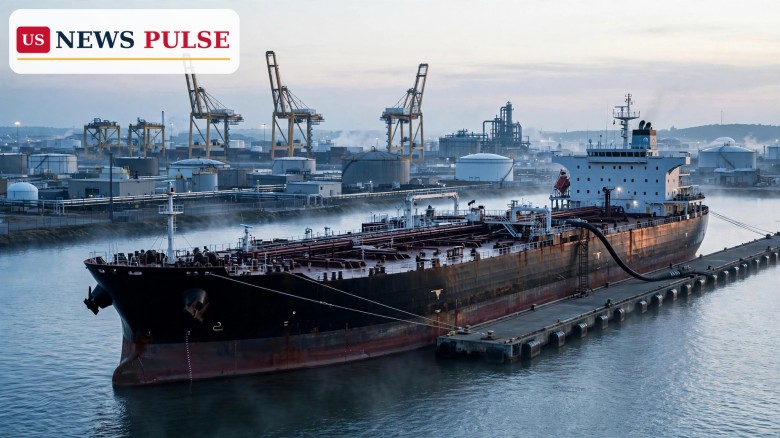
The timing is tied directly to the diesel deal. Trump abruptly struck an arrangement with Putin on October 9 to allow Russian diesel into the United States, suspending sanctions on those shipments for six months under a Treasury general licence. The fund has since helped line up the first shipments: Russian officials said three tankers carrying Russian diesel left for the US this month, and Deputy Prime Minister Aleksandr Novak credited the fund with providing "significant support" to the arrangement.
Details of the shipments reported this week underline how advanced the trade already is. One tanker, the Agioi Fanendes, loaded about 40,000 tonnes of diesel at the Russian port of Primorsk on October 22, while other vessels have signalled for Norfolk, Virginia, and Corpus Christi, Texas. The Times reported that the diesel shipped before any American buyer had paid for it — an unusual structure that has drawn scrutiny from lawmakers in both parties.
The Treasury Department has said the October 9 suspension of sanctions already allows the diesel transactions to go ahead, which raises an obvious question: if the fuel can already flow, why does the RDIF need full sanctions relief? The answer, analysts say, lies in what delisting would unlock beyond a single fuel deal — restored access to Western financial markets, the ability to move money through international banks, and the freedom to strike investment partnerships that are currently blocked.
Background/Context
The RDIF was created in 2011, by order of then-President Dmitry Medvedev and then-Prime Minister Vladimir Putin, to attract foreign investment into Russia. It presents itself as a sovereign wealth fund, a state-owned vehicle that invests in companies and projects, often alongside investors from other countries, including the Middle East. One of its better-known projects was its role in developing Russia's Sputnik V Covid-19 vaccine.
Washington's view of the fund changed overnight with the invasion of Ukraine. On February 28, 2022, four days after Russian forces launched their full-scale assault, the Biden administration imposed sanctions on the RDIF and on Dmitriev himself. The Treasury Department said that "while officially a sovereign wealth fund, RDIF is widely considered a slush fund for President Vladimir Putin and is emblematic of Russia's broader kleptocracy."
Eric Green, who oversaw Russia policy at the White House National Security Council at the time, told the Times that targeting the fund was an early priority precisely because its access to Western financial markets could help Russia fund its war. Cutting the fund off, in that logic, was not a symbolic gesture but a practical one: it denied Moscow a channel for raising money and projecting influence abroad.
That logic is now being tested from the opposite direction. The Trump administration sees business deals with Russia as a possible way to improve ties with Moscow and persuade Putin to end the war. Dmitriev has become an important Russian representative in economic talks with Washington, and he has found a warm reception in Trump's orbit. Special envoy Steve Witkoff told Putin at a negotiating table in St. Petersburg last week: "It's been really, really good dealing with Kirill."
The diesel deal is the clearest example of that approach in action — and also its most controversial. Trump has argued that Russian diesel will help bring down fuel prices for American consumers, a potent issue six days before voters choose a new Congress. But the deal has alarmed lawmakers who note that the United States banned Russian oil imports in 2022, and that the new arrangement effectively reopens a door Congress thought it had closed. Bipartisan letters dated October 24, released by the Senate Foreign Relations Committee, warned major banks, ports and fuel distributors to preserve records dating back to September 1 and to confirm by October 28 whether they are involved, citing laws including the 2022 Ending Importation of Russian Oil Act.
The RDIF review does not stand alone. The Times reported that, in recent weeks, Trump envoys and Putin have also discussed the sale of a stake in a major Russian oil company to a group of influential investors, a natural gas production project in Alaska from which several executives withdrew over concerns about covert Russian financing, and a proposal to increase Russian gas exports to Europe that caught European governments by surprise. Taken together, those discussions suggest a broader commercial opening to Moscow, not a one-off fuel shipment.
RDIF Sanctions Relief: What Is Actually on the Table
It is important to be precise about what "sanctions relief" would mean here. The RDIF is not asking for a waiver on a single transaction — the diesel shipments already have one, through the October 9 suspension. It is seeking delisting: removal from the Treasury Department's sanctions list through the department's standard procedures. That would restore the fund's ability to operate in the Western financial system, hold assets, and transact with American and allied firms without the legal risk that currently attaches to dealing with it.
For Russia, the prize is substantial. The fund handles billions of dollars and has invested billions more in Russian companies, often alongside foreign partners, helping to expand Russia's global influence. Lifting sanctions would let it rebuild those partnerships and raise money in markets that have been closed to it since February 2022. For the United States, the decision would signal a fundamental change in the sanctions regime built up over nearly five years of war — a regime that was designed to stay in place until there was a settlement in Ukraine.
That is why the review has drawn such a sharp reaction even before any decision. Green, the former NSC official, warned that lifting the sanctions would send "a real strong message that we are relaxing the previous position that we weren't going to relax the economic sanctions and other costs until there was a settlement in Ukraine." In other words, the message would be read in Moscow — and in Kyiv and European capitals — as a change of American strategy, not just a technical adjustment.
The administration's counter-argument, as described by the unnamed US official, is that commercial engagement is itself a path to peace. The theory is that business agreements can show Russia the benefits of closer ties with the United States, giving Putin an incentive to settle that sanctions alone have not provided. Dmitriev has made a similar case publicly. Speaking at a Moscow conference on October 16, he said nothing about his push for relief, but bragged that the diesel deal was helping convince Americans that sanctions are "philosophically wrong."
What remains unknown is what, if anything, Russia has offered in return for delisting. The reporting reviewed for this article contains no account of a Russian concession on Ukraine tied to the RDIF request — no ceasefire commitment, no territorial offer, no timetable for talks. That absence is the heart of the criticism: relief first, settlement later, with no guarantee the second ever arrives.
Reactions/Quotes
The US official who confirmed the review framed it as diplomacy, not concession. The administration is considering the fund's request, the official told the Times, as part of efforts to "improve U.S.-Russia relations and help end the war." The official praised Dmitriev as a "helpful envoy" in the negotiations to end Russia's war against Ukraine — language that marks a striking contrast with the Biden-era description of the fund as a symbol of kleptocracy.
Witkoff's praise for Dmitriev was even warmer. "It's been really, really good dealing with Kirill," the special envoy told Putin at the negotiating table in St. Petersburg last week, according to the Times. The remark captures the personal chemistry that has come to define the economic track of the talks, in which Dmitriev acts as Putin's economic envoy to Washington.
Dmitriev himself has argued openly against the sanctions regime. "Sanctions are, in principle, philosophically wrong," he has said, and at the October 16 Moscow conference he presented the diesel deal as evidence that Americans were beginning to agree. His pitch, in essence, is that trade can replace pressure — and that the RDIF, as the vehicle for that trade, should no longer be treated as a pariah.
Ukrainian President Volodymyr Zelenskyy has pushed back against that logic. He has said the United States may continue to ease sanctions on Russia, calling the diesel deal only a first step that will not force Putin to end the war. Kyiv's fear is straightforward: each commercial opening reduces the economic cost of continuing the war, while delivering nothing that shortens it.
Green, speaking from the other side of the American debate, put the warning in strategic terms. Lifting the sanctions, he said, would send "a real strong message that we are relaxing the previous position that we weren't going to relax the economic sanctions and other costs until there was a settlement in Ukraine." For Green, the issue is not the fund itself but the precedent: once sanctions begin to unwind without a settlement, the leverage they were meant to preserve starts to disappear.
No statement from the Treasury Department announcing a decision, and no public comment from the White House beyond the unnamed official's account, had been reported at the time of writing. The review, for now, remains exactly that — a review, with its outcome undecided and its critics already mobilised.
Why It Matters
The RDIF decision matters for three reasons, each larger than the fund itself. First, it would reshape the economics of the Ukraine war. Sanctions have been the West's main non-military tool against Moscow, and the RDIF was one of the earliest and most symbolic targets. Unwinding that designation before a peace deal would tell markets, allies and Moscow that the pressure campaign is negotiable — and that commercial access can be bought back through diplomacy rather than earned through a settlement.
Second, it matters for American consumers and for the midterm campaign. Russian diesel is being sold as a way to ease fuel prices, and fuel prices have become a political liability for Republicans amid the war in Iran and wider energy costs. But if the diesel arrives through a fund accused of serving Putin's inner circle, the political benefit comes with a ready-made attack line for Democrats: that the administration is enriching the Kremlin to win an election argument about petrol prices.
Third, it matters for the peace talks themselves. Trump said on Wednesday, October 28, at Joint Base Andrews, that a meeting between Putin and Zelensky will be set up "very soon," claiming "a lot of progress" toward ending the war, ahead of trilateral talks expected in November. If sanctions relief is granted in the same window as those talks, Kyiv and European allies will read it as a signal about where Washington's priorities lie — engagement first, conditions later. If relief is withheld, it will be read as proof that the administration still holds leverage in reserve. Either way, the RDIF file is now part of the diplomacy, not separate from it.
What Happens Next
The immediate next step is the Treasury Department's review itself, which the administration says is proceeding through established procedures. No deadline has been publicly announced, and the reporting reviewed does not give a date by which a decision is expected. Readers should therefore treat any claim of an imminent delisting with caution until the Treasury acts or the White House says so on the record.
Two parallel tracks will shape the context. The first is the diesel trade: banks and ports that received the bipartisan October 24 letters were asked to confirm their involvement by October 28, and lawmakers have warned of penalties of up to 20 years for violations of the import ban. How those institutions respond — and whether any enforcement follows — will show whether the diesel deal is being treated as a lawful, licensed exception or as a grey zone.
The second track is the November diplomacy. Zelensky has said a trilateral meeting of Kyiv, Washington and Moscow will take place in November to restart stalled peace talks, and the Kremlin has pointed to the United Arab Emirates as a venue, with technical-level talks expected in Abu Dhabi in the first half of the month. Any RDIF decision taken before or during those talks will inevitably be interpreted as part of the negotiation, whatever the administration says about its separate, procedural character.
For now, the story sits at a hinge point: a sanctions regime built over nearly five years, a commercial deal already moving fuel across the Atlantic, and a peace process that has produced promises of a leaders' meeting but no confirmed summit. Whether the RDIF is delisted, and on what terms, will be one of the clearest early tests of which direction the Trump administration's Russia policy is really heading.
Frequently Asked Questions
What is the RDIF? The Russian Direct Investment Fund is Russia's state-backed sovereign wealth fund, created in 2011 to attract foreign investment into Russian companies and projects. It has invested billions of dollars, often alongside investors from the Middle East and other regions, and played a role in developing Russia's Sputnik V Covid-19 vaccine.
Why was the RDIF sanctioned? The Biden administration sanctioned the fund on February 28, 2022, four days after Russia's full-scale invasion of Ukraine. The Treasury Department called it a "slush fund" for President Vladimir Putin and a symbol of "Russia's broader kleptocracy," arguing that its access to Western finance could help fund the war.
What is the Trump administration reviewing? The administration is reviewing the fund's formal request for sanctions relief — delisting — through the Treasury Department's established procedures, according to a US official cited by The New York Times. The official said the review is part of efforts to "improve U.S.-Russia relations and help end the war." No decision has been announced.
How is this connected to Russian diesel? Russian officials pressed for RDIF relief during talks over the fund's role in shipping Russian diesel to the United States. Trump suspended sanctions on Russian diesel on October 9, and three tankers have since left for US ports, with the fund credited by Russia's deputy prime minister with providing "significant support" to the arrangement.
Would lifting sanctions end the Ukraine war? There is no evidence in the reporting reviewed that delisting is tied to a Russian concession on Ukraine. Critics, including former US officials and President Zelenskyy, warn it could ease pressure on Moscow without securing peace; the administration argues commercial engagement could encourage a settlement. The outcome of the November trilateral talks will be the first real test of that argument.
Related coverage on US News Pulse: Russian diesel deal: banks and ports warned over Trump plan, Putin-Zelensky meeting "very soon," Trump says progress made on Ukraine peace talks, and Venezuelan oil arrives in Texas as first NABEP cargo goes to Exxon and Citgo.
© 2026 US News Pulse. All rights reserved.
 Print
 Save