
Putin Zelensky Meeting 'Very Soon': Trump Says Progress Made on Ukraine Peace Talks
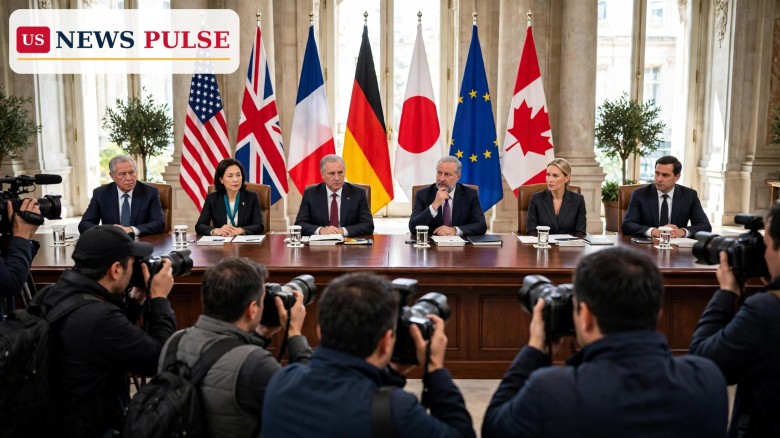
US President Donald Trump has said a meeting between Russian President Vladimir Putin and Ukrainian President Volodymyr Zelensky will be set up “very soon”, claiming that Washington is making significant progress toward ending Russia’s war in Ukraine. The announcement, made on Wednesday, October 28, 2026, immediately raised the stakes for a round of trilateral diplomacy expected in November — even though neither Moscow nor Kyiv has publicly confirmed that the two leaders have agreed to sit down together.
Trump spoke to reporters on the morning of October 28 after stepping off Air Force One at Joint Base Andrews in Maryland, on his return from campaigning in Texas ahead of the November 3 midterm elections. Asked about the state of the Ukraine talks, he said the United States was making “a lot of progress” with Russia-Ukraine, and then went further than he had in recent weeks.
“There’ll be a meeting set up very soon and I think a lot of progress could be made,” Trump told reporters. When a reporter asked which meeting he meant, he replied: “(A meeting with) President Putin and President Zelenskyy. and I think a lot of progress is being made.”
The remarks were brief, and they left the most important details unanswered: no date, no venue, and no indication of whether Trump himself would attend. That gap matters, because a Putin-Zelensky meeting has been one of the most elusive goals of the war. Putin, who ordered the full-scale invasion of Ukraine in February 2022, has consistently rejected face-to-face talks with Zelensky, and has insisted that Moscow intends to seize the rest of eastern Ukraine. Any meeting between the two men would therefore be a breakthrough in itself — if it happens at all.
Key Points
- Trump said on October 28, 2026 that a Putin-Zelensky meeting will be set up “very soon”, after returning from Texas to Joint Base Andrews.
- He claimed “a lot of progress” is being made on Russia-Ukraine, but gave no date, venue, or confirmation that either leader has agreed to meet.
- Zelensky said on Sunday that a trilateral meeting of Kyiv, Washington and Moscow would take place in November to restart stalled peace talks.
- The Kremlin has previously said a three-country meeting is planned in the United Arab Emirates in November, with technical-level talks expected in Abu Dhabi in the first half of the month.
- Russian presidential aide Yuri Ushakov said on October 25 that Russia is ready to resume trilateral talks after National Unity Day on November 4.
What Happened
Trump’s comments came in a short exchange with reporters on the tarmac at Joint Base Andrews on the morning of October 28. The president had spent the previous day campaigning in Texas, including rallies in Corpus Christi and Lubbock, and he was returning to Washington for a packed Wednesday schedule that included a trip to Chillicothe, Ohio, for a 7 p.m. midterm rally.
Speaking about Russia-Ukraine, Trump said: “And I think with Russia we are making a lot of progress — with Russia-Ukraine. There will be a meeting set up very soon, and I think a lot of progress is being made.” Pressed to clarify, he named the two leaders directly: Putin and Zelensky.
The wording was deliberately optimistic but notably imprecise. Trump did not say the meeting had been agreed, did not say whether it would be a bilateral Putin-Zelensky encounter or a trilateral session involving the United States, and did not say where it would take place. Reporting of the remarks stressed the same caveat: Trump’s statement does not mean a leaders’ summit has been definitively agreed.
That distinction is important for readers following the story. In diplomatic language, a meeting being “set up” can mean anything from an idea under discussion to invitations already issued. Until Kyiv and Moscow confirm attendance, Trump’s announcement is best understood as a public push — an attempt to create momentum, and pressure, for a meeting that has not yet been locked in.
The timing is also political. The remarks came just six days before the November 3 midterm elections, which will decide control of Congress, and at a moment when voters have repeatedly told pollsters that the cost of living, energy prices and the war in Iran weigh heavily on them. A visible step toward peace in Ukraine would be a welcome headline for the White House in the final week of the campaign.
Background/Context
The war in Ukraine is now in its fifth year. Russia launched its full-scale invasion in February 2022, and despite more than a year of US-led diplomatic efforts under Trump, who returned to office in January 2025 promising to end the war in 24 hours, no breakthrough has yet produced a lasting settlement. Tens of thousands of people have been killed, and the fighting has continued even as talks have started, stalled and restarted.
The diplomatic track has moved in fits and starts. Technical-level contacts between Ukraine, the United States and Russia have been reported for November, and the Kremlin has pointed to the United Arab Emirates as a venue for a three-country meeting. On October 25, Ushakov, a senior aide to Putin, said Russia was ready to resume trilateral talks after National Unity Day on November 4, adding that the first meeting after the break was likely to be “targeted” — focused, in other words, rather than a sweeping summit.
Zelensky, for his part, said on Sunday that a trilateral meeting between Kyiv, Washington and Moscow would take place in November, aiming to restart stalled peace talks. That statement, combined with Trump’s remarks on Wednesday, suggests the November window is now the focal point of the diplomacy — even if the format, level and agenda of the meetings are still being negotiated.
The immediate backdrop also includes a flurry of European diplomacy. On October 27, Finnish President Alexander Stubb and Norwegian Prime Minister Jonas Gahr Støre held a phone call with Putin lasting about 90 minutes, urging an end to the war, and then spoke with Zelensky afterward. One of the topics discussed was potential future negotiations involving Ukraine, the United States and Russia. That call was itself a follow-up to earlier contacts, and it underlines how many channels are now running in parallel.
Closer to the front lines, diplomacy has produced at least one small, tangible result this week. A local ceasefire brokered with the involvement of Melania Trump began at 3 a.m. on Tuesday, October 27, in southern Ukraine, ahead of an aid mission into Russian-occupied Oleshky later in the week, where up to 2,000 people have been stranded with dwindling food and medicine. That pause, due to run through Saturday or longer, is local and limited — and fighting elsewhere has continued — but it showed that even narrow humanitarian agreements remain possible.
Trump’s own recent posture toward Moscow has shifted more than once. In recent days he has pivoted back toward Putin, trumpeting what he said was a deal for Russia to sell diesel and reduce prices that have been sent soaring by his war with Iran. Critics of that approach argue that economic inducements to Moscow risk rewarding aggression; supporters argue that only engagement with Putin can end a war that sanctions and weapons alone have not stopped.
Putin Zelensky Meeting: What Trump Actually Announced
Strip away the optimism, and Trump’s announcement amounts to three concrete claims and several open questions. The claims are: progress is being made with Russia-Ukraine; a meeting involving Putin and Zelensky will be set up very soon; and a lot of progress could be made at that meeting. The open questions are: when, where, at what level, with what agenda, and with whose agreement.
That distinction is not pedantry — it is the story. A leaders’ meeting is the hardest format to arrange, because it requires both sides to accept not only the encounter but the political cost of being seen to talk. Putin has resisted a face-to-face meeting with Zelensky throughout the war, questioning Zelensky’s legitimacy and insisting on Russian territorial goals in eastern Ukraine. Zelensky, meanwhile, has said he is ready to meet Putin, but only in a format that does not pre-judge the outcome.
A trilateral format, with the United States at the table, changes the calculation. It gives both leaders political cover: neither is seen as conceding to the other, and Washington can present itself as the broker. That is why the November trilateral talks in Abu Dhabi matter so much. If technical-level officials can agree on an agenda and a framework, a leaders’ meeting becomes plausible. If they cannot, a leaders’ meeting announced in advance risks becoming another missed deadline.
Trump’s phrasing also leaves open whether he himself would attend a Putin-Zelensky meeting. His remarks referred to a meeting between the Russian and Ukrainian presidents, not explicitly to a three-way summit with him. The November trilateral process, by contrast, is described as involving Kyiv, Washington and Moscow — which suggests American officials will be present at least at the working level, even if the leaders’ encounter is bilateral.
For now, the most reliable reading is this: the United States is pushing hard for a leaders’ meeting, believes one can be arranged soon, and is using the November talks as the vehicle. Whether Putin and Zelensky both accept remains unconfirmed.
Reactions/Quotes
Trump’s own words are, so far, the fullest public record of the announcement. “There’ll be a meeting set up very soon and I think a lot of progress could be made,” he said at Joint Base Andrews on October 28. He added: “And I think with Russia we are making a lot of progress — with Russia-Ukraine.” When asked to clarify, he said: “(A meeting with) President Putin and President Zelenskyy. and I think a lot of progress is being made.”
Zelensky’s most recent public position, stated on Sunday, was that a trilateral meeting between Kyiv, Washington and Moscow would take place in November, aiming to restart stalled peace talks. He has not, in the reporting so far, publicly confirmed a separate bilateral meeting with Putin, nor commented directly on Trump’s “very soon” timetable.
The Kremlin’s most recent public position, via Ushakov on October 25, was that Russia is ready to resume trilateral talks on Ukraine after National Unity Day on November 4, with the first meeting after the break likely to be “targeted”. The Kremlin had previously said a meeting between the three countries was planned to take place in the United Arab Emirates in November.
European leaders involved in the latest round of calls have struck a more cautious tone in public. Stubb and Støre’s October 27 call with Putin was described as urging an end to the war, and their subsequent conversation with Zelensky covered potential future negotiations — language that suggests groundwork rather than a done deal.
No statement from Kyiv or Moscow confirming a Putin-Zelensky meeting had been reported at the time of writing, and that silence is itself part of the story. In past rounds, premature announcements of summits have collapsed when one side disowned the format or the agenda.
Why It Matters
A meeting between Putin and Zelensky would be the most significant diplomatic event of the war since the invasion began. It would not, by itself, end the fighting — leaders’ meetings often fail, and the gaps between Moscow and Kyiv on territory, security guarantees and accountability remain vast — but it would signal that both sides accept direct negotiation at the highest level, something Putin has resisted for years.
It matters for the United States, too. Trump staked his foreign-policy credibility on ending the war quickly, and the failure to do so after more than a year in office has become a vulnerability. A leaders’ meeting, even one that produces only a framework for further talks, would let the White House argue that its approach is working. Conversely, a meeting that is announced and then collapses would reinforce the scepticism of critics who say the diplomacy has produced headlines without results.
It matters for Europe and for the wider world because the war’s costs are no longer confined to Ukraine. Energy prices, driven higher by the war with Iran and by the disruption of Russian supplies, have fed inflation in the United States and beyond. The United States has warned Gulf states of a possible renewed military campaign against Iran after the midterms, and the administration’s attention is split between two wars. A credible path to peace in Ukraine would free diplomatic and military bandwidth — and reduce the risk of escalation elsewhere.
Finally, it matters for Ukrainians living under bombardment. The Oleshky ceasefire this week, however local, was a reminder that even small pauses can mean food, medicine and evacuation routes for people trapped near the front. A leaders’ meeting that produced a broader ceasefire, even a temporary one, would have immediate human consequences far beyond the negotiating table.
What Happens Next
The next test comes in November. Technical-level trilateral talks are planned in Abu Dhabi in the first half of the month, and Ushakov has said Russia is ready to resume trilateral contacts after November 4. Watch for three things from those talks: whether a date and venue for a leaders’ meeting are announced jointly, rather than by one side alone; whether the agenda is described in neutral terms both sides can accept; and whether any ceasefire or humanitarian step is agreed alongside the political talks.
Watch, too, for statements from Kyiv and Moscow in the coming days. If Zelensky confirms a meeting, and if the Kremlin confirms Putin’s attendance, the “very soon” timetable gains credibility. If either side stays silent, or qualifies Trump’s remarks, the announcement will look more like pressure than a plan.
The midterm elections on November 3 will also shape the timeline. Trump is campaigning hard in the final week, including Wednesday’s rally in Chillicothe, Ohio, and a peace announcement plays directly into that closing message. But diplomacy does not pause for elections, and the November talks will proceed — or stall — on their own logic, regardless of the American electoral calendar.
US News Pulse will update this story as Kyiv and Moscow respond, and as the November trilateral talks take shape.
Frequently Asked Questions
Will Putin and Zelensky actually meet?
Not yet confirmed. Trump said on October 28 that a meeting will be set up “very soon”, but neither Kyiv nor Moscow has publicly confirmed that both leaders have agreed to meet, and no date or venue has been announced.
When and where would the meeting take place?
No date or venue has been announced for a leaders’ meeting. Separately, trilateral talks involving Ukraine, the United States and Russia are planned in Abu Dhabi in the first half of November, and the Kremlin has previously pointed to the United Arab Emirates as a venue for a three-country meeting.
Is this the same as the November trilateral talks?
Not exactly. The November talks are described as trilateral contacts involving Kyiv, Washington and Moscow, initially at the technical level. Trump’s announcement referred to a meeting between Putin and Zelensky; whether Trump would attend that meeting has not been specified.
Why has Putin refused to meet Zelensky before?
Putin has consistently rejected face-to-face talks with Zelensky and has insisted Moscow intends to seize the rest of eastern Ukraine. He has also questioned Zelensky’s legitimacy, while Zelensky has said he is ready to meet in a format that does not pre-judge the outcome.
What would a meeting need to achieve to matter?
At minimum, agreement on a framework for further talks and, ideally, a ceasefire or humanitarian step. A photo opportunity without an agenda would be unlikely to change the course of the war, which is now in its fifth year.
Related coverage on US News Pulse: Melania Trump ceasefire brings hope to Oleshky as Ukraine aid mission begins, US Iran strike plans: forces ready within 96 hours of Trump order, reports say, and more world news.
© 2026 US News Pulse. All rights reserved.
 Print
 Save