
Cuban Diplomat Expelled After Shoving US Official at UN, Waltz Confirms
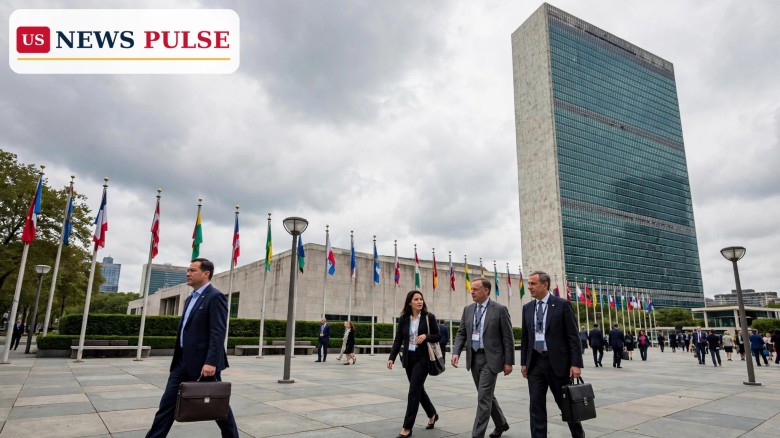
The Cuban diplomat expelled from the United States is Richard Tur de la Concepción, the First Secretary of Cuba's Permanent Mission to the United Nations, after he allegedly shoved and tried to assault an American diplomat who was filming a heated confrontation on the floor of the UN General Assembly. US Ambassador to the UN Mike Waltz announced the expulsion on Fox News' "Hannity" on Tuesday evening, saying Secretary of State Marco Rubio had signed the paperwork to eject the Cuban official from the country.
"He's gone. He's going to be on a plane to Havana within the next 24 hours," Waltz said. "You lay a hand on an American here in the United States, President Trump, Secretary Rubio, and myself — we're not going to stand for it."
The expulsion turns a shouting match inside the General Assembly Hall into a formal diplomatic rupture, just as the Assembly was debating the decades-old US embargo on Cuba. It also sets up an immediate test of how Havana responds: whether Cuba protests the decision, retaliates against American diplomats, or lets the episode pass as a one-off confrontation that got out of hand.
Key Points
- Secretary of State Marco Rubio signed paperwork expelling Richard Tur de la Concepción, First Secretary of Cuba's Permanent Mission to the UN, Ambassador Mike Waltz said on "Hannity" on Tuesday evening.
- Tur de la Concepción allegedly shoved and tried to assault US diplomat J.P. Freire, who was recording Waltz's confrontation with Cuban Foreign Minister Bruno Rodríguez Parrilla on his phone.
- Waltz said the Cuban official would be "on a plane to Havana within the next 24 hours" and warned: "You lay a hand on an American here in the United States, we're not going to stand for it."
- The clash erupted during the annual General Assembly debate on the US embargo on Cuba, after Waltz criticised what he called corrupt Cuban elites and displayed photographs of Fidel Castro and President Miguel Díaz-Canel wearing Rolex watches.
- No successful breach of US systems, no Cuban government response, and no independent account of the physical encounter beyond the video shared by Waltz had been reported in the coverage reviewed.
What Happened
The incident unfolded on Tuesday inside the General Assembly Hall in New York during the annual debate on the US embargo on Cuba. Waltz was delivering a speech sharply critical of the Cuban government when Rodríguez left his seat and approached the podium area, prompting General Assembly President Khalilur Rahman to temporarily suspend the session and instruct delegates to return to their seats.
As the confrontation escalated, Waltz told Rodríguez to back up. "Back up!" he said, according to reports of the exchange. Rodríguez, in turn, called the American ambassador a liar. Waltz answered that Rodríguez did not like hard truths and would not intimidate him in the United States "like he tries to intimidate political prisoners".
At the same time, on the floor of the hall, Tur de la Concepción moved toward Freire, Waltz's spokesperson, who was recording the exchange on his phone. Video shared by Waltz shows the Cuban official wagging a finger at Freire and pushing his phone away, while accusing him of violating his personal space. Waltz described the encounter in far stronger terms, saying the Cuban official "shoved and tried to assault" a member of the American delegation.
Waltz also accused the Cuban official of first trying to intimidate UN staff into cutting the microphones while he was speaking. "One of the Cuban regime's 'diplomats' tried to intimidate UN staff into cutting our microphones as I exposed the regime for the world to see," Waltz wrote on X on October 27. "When one of my American diplomats noticed what was happening, that same regime 'diplomat' tried to intimidate him, too."
Hours later, on "Hannity", Waltz announced the consequence. "Just before coming on air tonight, Secretary Rubio signed the documents to deport the diplomat who thought he could — this Cuban diplomat, the first secretary of their delegation — who pushed and attempted to assault one of our American diplomats," he said. The New York Post, which first reported the expulsion on Wednesday, quoted Waltz as confirming that Rubio had "signed the paperwork to eject" Tur de la Concepción from the United States.
Background/Context
The United States has maintained a trade embargo on Cuba for more than six decades, and the General Assembly debates the policy every year. The embargo, US sanctions, Cuba's human-rights record and the treatment of political prisoners are recurring flashpoints in the chamber, and the annual debate routinely produces sharp exchanges between the American and Cuban delegations.
This year's debate arrived at a moment of particular strain. The Trump administration has stepped up its rhetoric and pressure against Havana, and Waltz used his speech to attack what he called the corruption of Cuba's ruling elite. According to reports of the speech, he displayed a photograph of former leader Fidel Castro wearing two Rolex watches, then showed an image of current President Miguel Díaz-Canel wearing a Rolex, adding: "According to the regime's own statistics, that would pay for 55 years of an average Cuban wage."
"It didn't just start with Castro. This is the current Cuban President, also with a Rolex on," Waltz said, according to the reports. It was that line of attack — aimed directly at the wealth and lifestyle of Cuba's leaders — that drew Rodríguez out of his seat and turned a policy debate into a floor confrontation.
Tur de la Concepción's role, as identified by Cuban media and by an investigation cited in the coverage, was First Secretary of Cuba's Permanent Mission to the UN, overseeing issues related to the Fifth Committee, which handles the organisation's budget and administration. That made him a working-level diplomat rather than a figurehead, and his expulsion is therefore a practical as well as a symbolic step: the mission loses a senior official who handled day-to-day business in the organisation's budget committee.
Expulsions of diplomats are a well-established tool of diplomatic protest, but they are rarely triggered by an incident inside the General Assembly Hall itself, in full view of other delegations and on camera. The fact that this one was announced within hours, on prime-time television, underlines how quickly Washington wanted to frame the episode: not as a protocol dispute, but as an assault on an American that would not be tolerated.
Cuban Diplomat Expelled: What the Expulsion Means
The decision to expel Tur de la Concepción carries three immediate meanings. First, it draws a bright line around the physical safety of American diplomats on American soil. Waltz's repeated formulation — "You lay a hand on an American here in the United States" — was aimed as much at other missions as at Havana, signalling that Washington will treat any physical interference with its delegation as grounds for removal.
Second, it hardens the US position in the embargo debate itself. The General Assembly was due to vote on Wednesday on ending the US embargo on Cuba, a resolution the Assembly has backed for years over American opposition. By expelling a Cuban diplomat on the eve of that vote, the administration ensured the debate would be remembered for the confrontation rather than for the resolution's contents.
Third, it puts Havana in a difficult position. Cuba can protest the expulsion as disproportionate, arguing that the encounter was a brief push over a phone rather than an assault, and that the video shows a finger-wag and a shove of the device rather than an attack on a person. Or it can retaliate by expelling an American diplomat or restricting the US mission in Havana. Either course risks prolonging a confrontation that, for Cuba, overshadows the embargo debate it wanted the world to focus on.
What the expulsion does not do, at least on the evidence reported so far, is establish a settled factual record of the physical encounter. The accounts available come overwhelmingly from the American side: Waltz's television appearance, his social-media post and the video he shared. Tur de la Concepción's own account — that Freire was violating his personal space — was reported only in passing, and no Cuban government statement responding to the expulsion had appeared in the coverage reviewed. Readers should therefore treat the characterisation of the incident as "assault" as the American delegation's account, not as an independently adjudicated finding.
Reactions/Quotes
Waltz was unsparing in his language on "Hannity". "He's gone. He's going to be on a plane to Havana within the next 24 hours," he said. "You lay a hand on an American here in the United States, President Trump, Secretary Rubio, and myself — we're not going to stand for it."
He had used the same framing on social media the day before. "One of the Cuban regime's 'diplomats' tried to intimidate UN staff into cutting our microphones as I exposed the regime for the world to see," he wrote on X. "When one of my American diplomats noticed what was happening, that same regime 'diplomat' tried to intimidate him, too."
During the floor confrontation itself, Waltz's words to Rodríguez were equally blunt. "Back up!" he said, as Rodríguez approached the podium. "He doesn't like hard truths. You can come and intimidate all you want," he added, saying Rodríguez would not intimidate him in the United States "like he tries to intimidate political prisoners".
Tur de la Concepción, in the video shared by Waltz, accused Freire of "violating [his] personal space" as he pushed the phone away. No fuller statement from the Cuban official, and no statement from Cuba's Permanent Mission or its Foreign Ministry responding to the expulsion, had been reported in the coverage reviewed at the time of publication.
Why It Matters
The expulsion matters because it converts a familiar diplomatic ritual — the annual embargo debate, with its set-piece speeches and predictable vote — into a live bilateral incident with a deadline. A diplomat ordered out within 24 hours is not a symbolic gesture; it is a concrete rupture that requires Havana to decide, quickly, whether to escalate or absorb the blow.
It also matters for the precedent it sets inside the United Nations. Delegations routinely film, heckle and interrupt one another in the General Assembly, and physical contact between diplomats on the floor is extremely rare. If Washington treats a shove over a phone as grounds for expulsion, other missions will read that as a new, lower threshold for removal — and may apply the same logic to American diplomats elsewhere.
For the wider US-Cuba relationship, the episode fits a pattern of escalation rather than engagement. The administration has framed Cuba's government as a corrupt dictatorship sustained by propaganda and intimidation, while Havana frames US policy as a "criminal energy blockade" designed to strangle the island's economy. Neither side has shown interest in the kind of quiet diplomacy that might have defused a floor scuffle before it became an expulsion order.
Finally, the timing matters. The expulsion landed on the eve of the Assembly's embargo vote and less than a week before the US midterm elections on November 3, when Cuba policy, immigration and the administration's handling of Latin America are all live campaign issues. A story about an American diplomat being shoved at the UN, followed by a swift expulsion, is politically useful for an administration that wants to project toughness — and that political context is part of why the announcement came on prime-time television rather than through a routine State Department notice.
What Happens Next
The first test is the 24-hour clock. If Waltz's account holds, Tur de la Concepción will be on a flight to Havana within a day of the announcement, and the expulsion will be complete before the embargo vote's aftermath has faded. Any delay, legal challenge or change to that timetable will itself become news.
The second test is Havana's response. Cuba could lodge a formal protest with the UN Secretary-General or the State Department, demand evidence beyond the video, or retaliate against American diplomats in Havana. A retaliatory expulsion would turn a single incident into a tit-for-tat cycle, the kind of spiral that has previously frozen US-Cuba relations for months at a time.
The third test is the embargo vote itself. The Assembly was scheduled to vote on Wednesday on ending the US embargo, and the confrontation — and now the expulsion — will shape how that vote is reported, even if it does not change its outcome. Watch for whether other delegations mention the incident in their explanations of vote, and whether the United States uses the episode to argue that Cuba's behaviour in the chamber justifies continued pressure.
Longer term, the incident will be cited in future disputes about conduct on the UN floor. Missions will be reminded, in effect, that cameras are everywhere, that a delegate's phone is a sensitive object, and that a moment of physical contact in the General Assembly Hall can end a diplomatic posting within a day.
Frequently Asked Questions
Who was expelled? Richard Tur de la Concepción, identified by Cuban media as the First Secretary of Cuba's Permanent Mission to the United Nations, overseeing Fifth Committee issues covering the UN's budget and administration.
Why was he expelled? The United States says he shoved and tried to assault US diplomat J.P. Freire, who was recording a confrontation between Ambassador Mike Waltz and Cuban Foreign Minister Bruno Rodríguez Parrilla on the General Assembly floor. Tur de la Concepción was reported to have accused Freire of violating his personal space.
Who ordered the expulsion? Secretary of State Marco Rubio signed the paperwork, according to Waltz, who announced the decision on Fox News' "Hannity" on Tuesday evening and said the diplomat would be on a plane to Havana within 24 hours.
Does this affect the UN embargo vote? The General Assembly was scheduled to vote on Wednesday on ending the US embargo on Cuba. The expulsion does not change the vote itself, but it has overshadowed the debate and hardened the tone around it.
Has Cuba responded? No Cuban government response to the expulsion had been reported in the coverage reviewed at the time of publication. Havana's reaction — protest, retaliation or silence — is the key development to watch next.
Related coverage on US News Pulse: US-Iran strike plans, Melania Trump ceasefire brings hope to Oleshky and Israel election 2026.
© 2026 US News Pulse. All rights reserved.
 Print
 Save