
Trump Approves Flavio Bolsonaro Coming to US After Brazil Election Loss
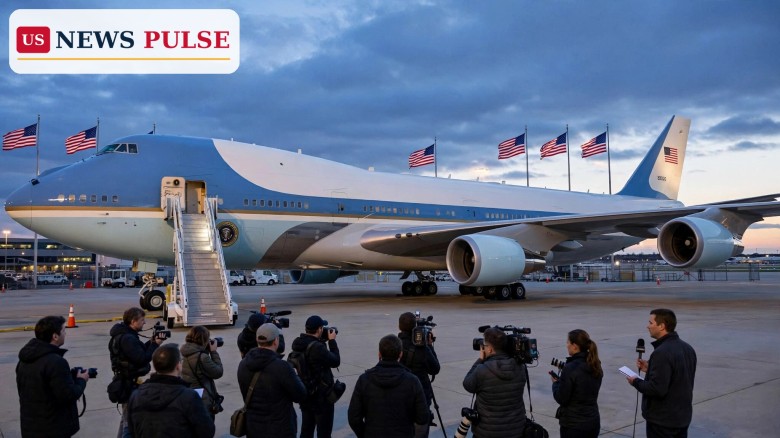
Trump approves Flavio Bolsonaro US entry, telling reporters on Wednesday that he would welcome the defeated Brazilian presidential candidate to the United States. President Donald Trump made the remarks on the tarmac at Joint Base Andrews on his return from a campaign trip to Texas, a day after reports that Senator Flávio Bolsonaro had left Brazil for the US following his loss in Sunday's presidential runoff.
"Well, I would approve," Trump said. "I think they're fine people. The election was very strange, and I thought it was terrible. It's gotten bad reviews. You look at what happened to their market."
The comment is the clearest public statement yet from Trump on a departure that has already raised difficult questions in Brasília and Washington. A senior US State Department official had told Reuters on Tuesday that the United States would grant entry visas to Bolsonaro and his family. CNN, citing a Trump adviser, went further, reporting that Trump had approved allowing Bolsonaro entry before he left Brazil.
Key Points
- Donald Trump said on Wednesday he approves of Flávio Bolsonaro coming to the United States after his election defeat.
- Trump spoke at Joint Base Andrews on his return from Texas, saying he had heard Bolsonaro was in Argentina.
- A Trump adviser told CNN that Trump had approved Bolsonaro's entry, and US officials said visas were being issued to him and his family.
- Bolsonaro left Brazil after refusing a Supreme Court order to surrender his passports within 24 hours; the passports were then cancelled.
- Bolsonaro has not conceded defeat to Luiz Inácio Lula da Silva, although his Liberal Party has since recognised Lula's victory.
What Happened
Trump was asked about Bolsonaro as he returned from Texas, where he had campaigned on Tuesday for Republican Senate candidate Ken Paxton. Speaking to reporters on the tarmac, Trump said he had heard Bolsonaro was in Argentina, a detail that remains unresolved. Argentine news outlet Infobae had reported that Bolsonaro left Brazil via Argentina, but Argentina's government said it had "no record of Flávio Bolsonaro entering" the country. Argentine authorities also checked a private plane at Iguazu airport on the Argentina-Brazil border, according to reports.
CNN reported that a person familiar with the situation said Bolsonaro had arrived in the United States on Tuesday afternoon, although it remained unclear where he landed. Other reports close to the Bolsonaro family said he arrived at around 4:20 p.m. accompanied by his wife, Fernanda, and their two daughters. The White House has not, in the reporting reviewed for this article, published a detailed account of his arrival, and it is unclear whether Trump and Bolsonaro spoke directly by telephone before the senator left Brazil.
What is clearer is the sequence in Washington. According to CNN, Trump administration officials were aware on Monday that Bolsonaro had roughly 24 hours to surrender his passport and made clear to him that he would be allowed entry into the United States. Two US officials told CNN that visas were being issued to Bolsonaro and his family. A Brazilian news outlet, Bahia Notícias, reported that US Secretary of State Marco Rubio was involved in facilitating the departure. That claim has not been confirmed by the US government in the reporting reviewed, and this article treats it as a report, not as an established fact.
Background and Context
Bolsonaro, a 45-year-old senator, lost Sunday's presidential runoff to leftist incumbent Luiz Inácio Lula da Silva. Lula won 51.79 percent of valid votes to Bolsonaro's 48.21 percent, a margin of about 4.4 million votes. It was the first runoff victory from second place in the first round since democracy returned to Brazil in 1985.
Bolsonaro first refused to concede and said he would seek annulment of the result, pointing in particular to a Supreme Court decision to extend voting by two hours. His Liberal Party later recognised Lula's victory while asking for its concerns to be clarified. Trump, for his part, had called the runoff "rigged" and "corrupt" on Monday, before his Wednesday remarks that he had not taken sides.
The passport dispute came on Monday, when Supreme Court Justice Alexandre de Moraes gave Bolsonaro 24 hours to surrender his passports. They were cancelled after the deadline lapsed. The court cited the risk of flight and his significant financial resources. The order is part of a money-laundering inquiry. Investigators are examining his alleged links to lawyer Willer Tomaz, who is accused of laundering more than $1 billion. Bolsonaro denies wrongdoing and has called the seizure an attempt at intimidation. In a video posted on Instagram on Monday, he denied intending to flee the country, according to CNN.
A Brazilian source close to Bolsonaro told CNN that the politician had feared arrest in Brazil. He is currently under investigation by the country's highest court for alleged acts of corruption, money laundering and currency evasion. No charges against him in that probe have been announced by authorities in the reporting reviewed, and no asylum request has been reported.
Trump Approves Flavio Bolsonaro US Entry: What It Means
Trump's approval matters for two reasons. First, it turns what might have been presented as a private journey into an act with explicit presidential backing. The CNN reporting suggests that backing was given before departure, not merely offered after arrival. Second, it puts the United States in the middle of a Brazilian legal dispute. Bolsonaro left while a Supreme Court order was running, and his passports were cancelled because he did not comply with it.
Trump sought to draw a line between personal sympathy and official involvement. "I think it's so terrible to see it. I didn't take sides, you know. I know them both. I know Lula. I know Flavio a little bit. I know the father very well," he said. He was referring to former President Jair Bolsonaro, whom he has previously alleged to have been a victim of judicial persecution in Brazil. "The father was treated really badly. I thought, but I wasn't involved," Trump added. "That's Brazil. It's a different country."
That framing may not settle the matter in Brasília. Lula's government has not, in the reporting reviewed, issued a formal response to Trump's approval remarks. The Liberal Party's recognition of Lula's victory also means Bolsonaro's own party has accepted the result he continues to dispute. His future role in Brazilian politics, and whether he intends to remain in the United States, to return, or to seek some other status, remains unclear.
Reactions and Quotes
Trump's own words dominate the record so far. Asked about Bolsonaro coming to the United States, he said: "Well, I would approve. I think they're fine people. The election was very strange, and I thought it was terrible."
The Trump adviser quoted by CNN put the decision in simpler terms: Trump approved allowing Bolsonaro entry following his election loss. US officials confirmed the practical step that followed, telling CNN that visas were being issued to Bolsonaro and his family.
In Argentina, the official response was narrow but pointed. The government said it had no record of Bolsonaro entering the country, leaving the reported Argentine transit route unconfirmed. Bolsonaro's campaign manager, Senator Rogério Marinho, said the departure surprised him, according to reports. That surprise underlines how quickly the move unfolded: from a 24-hour passport deadline on Monday to reported arrival in the United States on Tuesday afternoon.
Trump also used the same tarmac exchange to touch on other foreign-policy questions. He said he hoped to soon meet Russian President Vladimir Putin and Ukrainian President Volodymyr Zelenskiy, and that a lot of progress had been made towards resolving the war in Ukraine. Putin has said Russia is ready to resume US-mediated talks with Ukraine next month, calling for security guarantees for both countries and an overall security framework for Europe. Trump added that he has a meeting on nuclear disarmament scheduled with Chinese President Xi Jinping, and that he is set to visit Manila in November to attend a summit of the ASEAN regional bloc.
Asked about Israeli Prime Minister Benjamin Netanyahu's party losing seats in Israel's election, Trump said he had heard Netanyahu did very well. "You know, it's pretty close, which was very well," he said. "Because I think when the endorsement went out, it helped him a lot, but I actually heard he did pretty well. It might be winning or tie."
Why It Matters
The episode tests the relationship between Washington and Brasília at a sensitive moment. Lula, who turns to a new term after a narrow victory, must manage a defeated rival who has the public sympathy of the American president and who left Brazil in defiance of a court order. Trump, facing midterm elections in the United States next week, has repeatedly questioned election outcomes he dislikes, and his "very strange" description of Brazil's vote echoes his earlier "rigged" claim.
For American voters, the story also connects to the wider election-integrity debate. Trump has said he will respect the US midterm results only if the elections are honest, a formulation that has drawn criticism from Democrats and election experts. His willingness to welcome a foreign candidate who disputes his own country's result will be read by supporters as loyalty to an ally and by critics as a double standard.
For Brazil, the legal questions do not disappear because Bolsonaro is abroad. The money-laundering inquiry continues, his passports remain cancelled, and any future attempt to return could revive the flight-risk argument made by the Supreme Court. At the same time, his presence in the United States gives him a platform and a degree of protection from immediate arrest in Brazil, at least while he remains outside the country.
What Happens Next
Several questions remain open. First, where exactly Bolsonaro landed and where he is staying has not been confirmed in the reporting reviewed. Second, whether Trump will meet him, speak to him publicly, or offer any further support is unknown. Third, whether Brazil will seek any formal cooperation from the United States in the money-laundering inquiry has not been reported.
Lula is due to be sworn in for his new term on January 5, 2027, according to earlier reporting on the election outcome. Until then, the transition will unfold with the defeated candidate abroad and the winner seeking to consolidate a narrow mandate. In Washington, Trump travels to Chillicothe, Ohio, on Wednesday evening for a midterm rally, keeping the domestic campaign at the centre of his schedule even as the Brazil story develops.
Readers should also watch for any formal statement from Lula's government, from the Brazilian Supreme Court, or from the US State Department beyond the visa confirmation already reported. Those statements, if they come, will clarify whether Bolsonaro's stay is treated as a short visit, a longer exile, or something in between.
Frequently Asked Questions
Did Donald Trump approve Flávio Bolsonaro coming to the US?
Yes. Trump told reporters on Wednesday: "Well, I would approve." CNN also reported, citing a Trump adviser, that Trump had approved allowing Bolsonaro entry following his election loss.
Is Bolsonaro in the United States now?
Reports say he arrived in the United States on Tuesday afternoon, accompanied by his wife and two daughters. The exact landing place has not been confirmed in the reporting reviewed.
Why did Bolsonaro leave Brazil?
He left after losing Sunday's runoff to Lula and after refusing a Supreme Court order to surrender his passports within 24 hours. A source close to him said he feared arrest. He denies wrongdoing in a money-laundering inquiry and denies intending to flee.
Did Bolsonaro travel through Argentina?
That route has been reported but not confirmed. Infobae reported he left via Argentina, while Argentina's government said it had no record of him entering the country. Trump said he had heard Bolsonaro was in Argentina.
Has Bolsonaro conceded defeat?
No. Bolsonaro has yet to concede to Lula and sought annulment of the result. His Liberal Party later recognised Lula's victory while asking for its concerns to be clarified.
Related coverage on US News Pulse: Flavio Bolsonaro Leaves Brazil for US After Election Loss, Sources Say, Brazil Election 2026: Lula Wins Historic Fourth Term Against Bolsonaro, and Trump Brazil Election 'Rigged' Claim After Lula Beats Bolsonaro in Runoff.
© 2026 US News Pulse. All rights reserved.
 Print
 Save